
image

AeroGenie — 您的智能副驾驶。

询问一切。分析一切。立即行动。

热门趋势

Categories

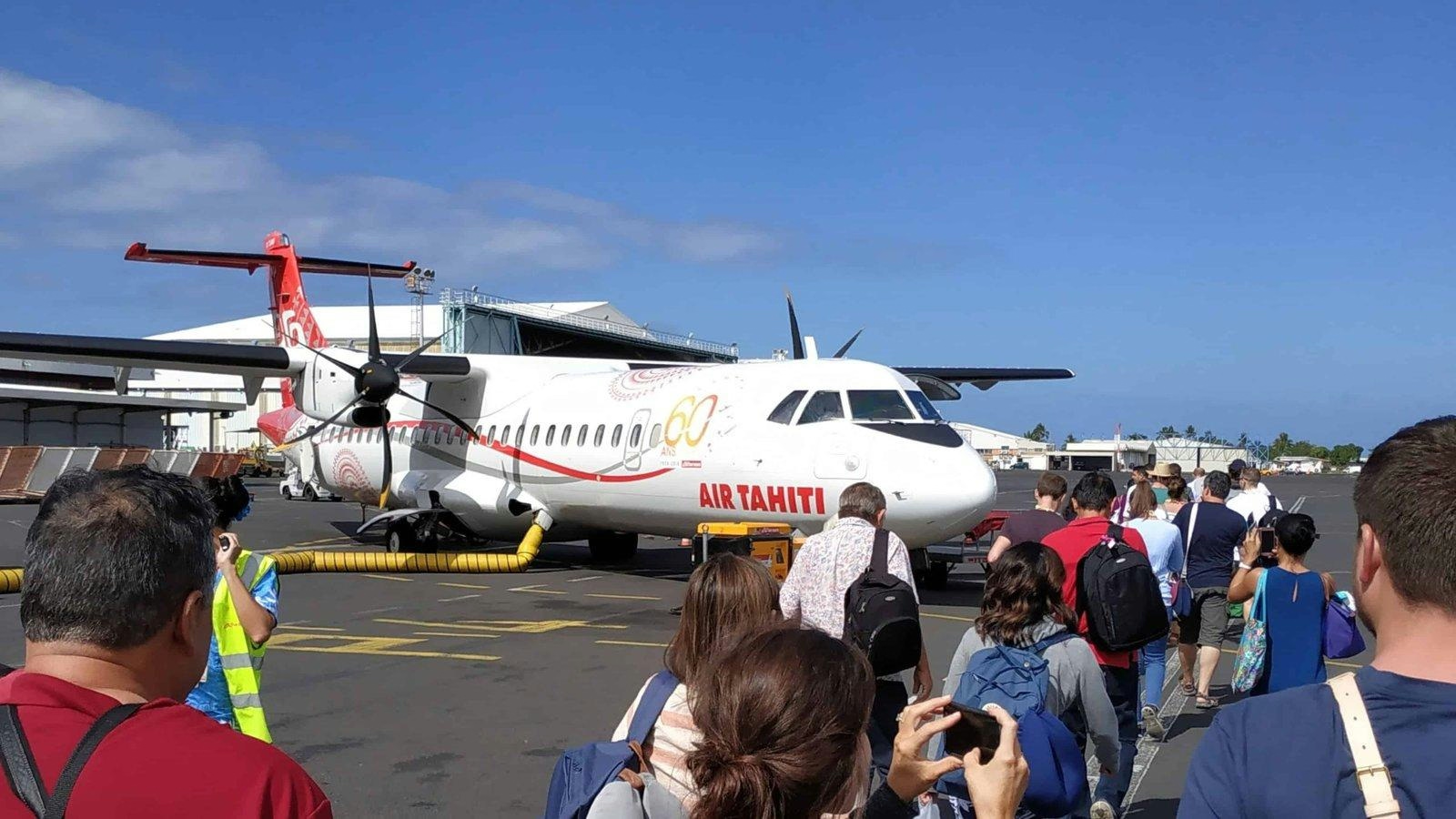
Air Tahiti Opens ATR Maintenance and Repair Center
October 28, 2025By ePlane AI
Air Tahiti Opens ATR Maintenance and Repair Center
0
0
Air Tahiti
ATR Aircraft
Maintenance Repair Overhaul

Air Tahiti Expands ATR Maintenance and Repair Capabilities

Air Tahiti has announced the expansion of its Maintenance, Repair, and Overhaul (MRO) center, aiming to establish a regional hub of excellence for ATR aircraft servicing. In collaboration with the government of French Polynesia and the French state, the airline plans to enhance its technical infrastructure to provide comprehensive maintenance and training services. This strategic development is intended to bolster Air Tahiti’s technical expertise and support the broader aviation sector across the Eastern Pacific.

Strategic Location and Regional Impact

The upgraded facility, situated at Tahiti-Faa’a Airport, will offer certified maintenance and training services to airlines operating throughout the Eastern Pacific region. Air Tahiti currently serves 48 destinations across five archipelagos in French Polynesia and the Cook Islands, a territory comparable in size to Europe or North America. The airline has cultivated significant in-house expertise in ATR aircraft maintenance, a capability born from its extensive operational experience and geographic isolation. This proficiency has earned recognition from ATR, the aircraft manufacturer, as well as from other regional carriers.

The project seeks to elevate Air Tahiti’s Technical Centre into a leading regional maintenance provider while also functioning as a training institution for young Polynesians. By offering aeronautical maintenance diplomas and career pathways, the initiative aims to create new opportunities for local youth and enhance the skills of existing technicians. The center’s adherence to the highest international standards is expected to benefit not only local and regional operators but also contribute to the economic and technical development of French Polynesia.

Market Challenges and Competitive Landscape

The launch of the expanded ATR MRO center occurs within a competitive market environment. Demand for ATR aircraft maintenance remains strong, supported by ongoing orders and service agreements. However, Air Tahiti faces competition from established MRO providers, which may lead to market saturation and resistance from incumbent players. Industry analysts highlight that Air Tahiti will need to demonstrate operational efficiency and cost-effectiveness to secure a sustainable market position. Competitors are likely to respond by enhancing their own service offerings or pursuing strategic partnerships to protect their market share.

To navigate these challenges, dedicated teams will be formed within the involved organizations to oversee the project’s implementation in close coordination with all stakeholders. As Air Tahiti advances this initiative, the expanded MRO center represents both a significant opportunity for regional growth and a critical test of the airline’s ability to compete in a crowded and dynamic market.

More news
IATA Projects Airline Profits of $41 Billion in 2026

IATA Projects Airline Profits of $41 Billion in 2026

IATA Projects Record $41 Billion Airline Profit in 2026 Amid Ongoing Industry Challenges The International Air Transport Association (IATA) has forecasted that global airlines will achieve a record net profit of $41 billion in 2026, an increase from $39.5 billion in 2025, while maintaining a net margin of 3.9%. This optimistic outlook is supported by strong air cargo performance and a weaker US dollar, which is expected to reduce costs for many carriers worldwide. Revenue Growth and Regional Profitability IATA anticipates total airline revenue to rise by 4.5% in 2026, reaching $1.053 trillion, outpacing the projected 4.2% increase in operating expenses. Passenger numbers are expected to climb to 5.2 billion, with an average load factor of 83.8%, while air cargo volumes are forecasted to reach 71.6 million tonnes. Passenger ticket revenue is projected at $751 billion, buoyed by a 4.9% increase in revenue passenger kilometers. Ancillary revenue is expected to total $145 billion, and cargo revenue $158 billion. European airlines are predicted to lead in profitability, contributing $14 billion to the global total, surpassing North American carriers, who are expected to earn $11.3 billion. Despite these record profits, IATA Director General Willie Walsh emphasized that industry margins remain thin compared to other sectors. He noted that airlines support nearly 4% of the global economy and 87 million jobs but continue to face a significant profitability imbalance. “Apple will earn more selling an iPhone cover than the $7.90 airlines will make transporting the average passenger,” Walsh remarked, highlighting the ongoing challenges within the aviation value chain. Industry Headwinds and Operational Constraints Walsh described the profit forecast as “welcome news considering the headwinds that the industry faces,” including rising costs driven by aerospace supply-chain bottlenecks, geopolitical tensions, sluggish global trade, and increasing regulatory burdens. He credited airlines’ “shock-absorbing resilience” for sustaining stable profitability but warned that persistent supply-chain constraints and slower aircraft deliveries could hinder the industry’s capacity to meet growing demand. Aircraft backlogs are expected to increase as new orders outpace production, pushing the global fleet’s average age beyond 15 years and limiting efficiency gains to just 1%. Fuel costs are projected to decline slightly to $252 billion in 2026, with Brent crude averaging $62 per barrel and jet fuel at $88 per barrel, accounting for 25.7% of total operating expenses. Non-fuel operating costs are expected to rise to $729 billion, with labor remaining the largest expense at 28%. Productivity challenges persist due to training bottlenecks and operational difficulties, while maintenance costs increase amid parts shortages and an aging fleet. Lease rates and airport charges also remain elevated. IATA further noted that a weaker US dollar may enhance profitability for carriers with costs denominated in other currencies, as 55 to 60% of airline expenses are in US dollars. Regulatory costs continue to pose concerns, with proposed reforms to EU261 passenger compensation rules and rising infrastructure charges at major hubs. Operational challenges such as airspace restrictions, GNSS interference, and rerouting requirements also weigh heavily on airline efficiency. Cargo Demand and Future Outlook Despite these challenges, the industry is poised for record profits, driven largely by robust cargo demand, particularly from e-commerce and semiconductor shipments linked to artificial intelligence investments, as well as shifting trade flows influenced by the US tariff regime. However, IATA underscored that ongoing supply-chain disruptions and persistently thin margins necessitate continued resilience and adaptation across the aviation sector.
Five Air Taxis Poised to Shape Urban Mobility by 2026

Five Air Taxis Poised to Shape Urban Mobility by 2026

Five Air Taxis Poised to Shape Urban Mobility by 2026 The autonomous air taxi sector is nearing a pivotal moment, with 2026 set to witness the commercial launch of electric vertical takeoff and landing (eVTOL) services in major cities worldwide. This transition from concept to operational reality is driven by leading manufacturers racing to obtain regulatory certifications, establish strategic partnerships, and develop the necessary infrastructure. Supported by advancements in airspace management and innovative landing solutions, these efforts indicate that air taxis will soon become an integral component of urban transportation networks. Leading eVTOL Aircraft and Their Progress Joby Aviation stands at the forefront with its S4 eVTOL aircraft, designed to carry one pilot and four passengers. The S4 cruises at speeds up to 200 miles per hour and offers a range of approximately 100 miles. Its six dual-wound electric motors deliver nearly twice the power of a Tesla Model S Plaid. Joby has showcased the S4 at the Dubai Airshow and secured exclusive agreements with Dubai’s Roads and Transport Authority (RTA) to commence commercial operations in 2026. The company has completed a significant point-to-point test flight in the UAE and is currently conducting power-on tests of its first aircraft conforming to Federal Aviation Administration (FAA) standards. Despite these advances, Joby continues to navigate regulatory, safety, and infrastructure challenges ahead of full-scale deployment. Archer Aviation is advancing its Midnight aircraft, which features 12 rotors and accommodates one pilot alongside four passengers. The aircraft is progressing through FAA certification and international regulatory processes. Demonstrating strong performance, Midnight completed a 55-mile flight in 31 minutes and achieved a climb to 7,000 feet. Archer plans to initiate passenger flights in Abu Dhabi in 2026, with commercial operations potentially commencing within the same year. The company aims to operate globally in parallel as it meets ongoing certification milestones. Vertical Aerospace is developing the VX4, available in both all-electric and hybrid-electric variants, with a seating capacity of five to six passengers and a range exceeding 100 miles. The VX4 completed its initial phase of piloted flight testing in 2024, conducting 20 flights to collect extensive performance data. With a payload capacity of 2,425 pounds and a potential range reaching up to 1,000 miles, the VX4 is designed for versatility across multiple sectors, including defense, healthcare, and logistics. Lilium focuses on regional air mobility with its six-passenger Lilium Jet, which employs ducted-fan technology to enable quieter and more efficient flights compared to traditional open-rotor designs. Manned flight testing is scheduled for early 2025, with first customer deliveries anticipated in 2026. Lilium is currently conducting parallel propulsion testing, gathering thousands of data points per second to optimize performance. The company plans to announce its initial launch market for 2026 by the end of the year. Innovations in Infrastructure and Airspace Management In addition to aircraft development, the industry is addressing critical challenges related to airspace integration and landing infrastructure. NASA has introduced its Strategic Deconfliction Simulation platform, designed to safely integrate electric air taxis and drones into congested urban airspace, targeting operational readiness by 2026. Concurrently, companies like AutoFlight are developing solar-powered mobile water platforms that serve as flexible, fast-charging vertiports, providing solutions to the scarcity of suitable landing sites in densely populated urban areas. As these technological advancements and regulatory frameworks converge, the prospect of autonomous air taxis seamlessly navigating urban environments is rapidly approaching, signaling a transformative shift in global urban mobility.
London Luton Airport and University of Bedfordshire Launch AI Partnership to Advance UK Aviation

London Luton Airport and University of Bedfordshire Launch AI Partnership to Advance UK Aviation

London Luton Airport and University of Bedfordshire Forge AI Partnership to Transform UK Aviation London Luton Airport (LLA) and the University of Bedfordshire have formalized a strategic partnership aimed at revolutionizing the UK aviation sector through the application of artificial intelligence (AI). The recently signed Memorandum of Understanding (MoU) outlines a collaborative framework designed to position LLA as a pioneer in integrating advanced AI technologies. This initiative is expected to yield substantial improvements in airport operations, passenger experience, and overall efficiency by 2025. Advancing AI Innovation in Airport Operations Guided by Luton AI, the University of Bedfordshire’s civic AI organisation, the partnership will concentrate on developing and piloting AI-driven solutions that address practical challenges faced by airports and travelers. London Luton Airport will function as a live innovation testbed, providing a dynamic environment where students and researchers can apply academic insights directly to operational issues. The collaboration targets several key areas to enhance airport performance. By leveraging AI to gain deeper customer insights, the partnership aims to better understand passenger behaviours and preferences, thereby improving the travel experience. AI will also be employed to optimise passenger flow, reducing wait times and enhancing convenience throughout the airport. Predictive operational capabilities will enable more accurate forecasting of demand, facilitating efficient resource allocation and timely responses to disruptions. Additionally, automation of repetitive tasks through AI is expected to minimise human error and increase operational efficiency. The development of AI-enabled decision support systems will further assist airport staff in making data-driven decisions, improving resource management and service delivery. Integrating Academic Research with Practical Application A distinctive feature of this partnership is the integration of academic research with real-world application. University of Bedfordshire students will engage directly with live projects within the airport environment, gaining valuable hands-on experience. This approach is designed to equip students with critical skills in AI, data science, and digital transformation, enhancing their employability and readiness for the evolving job market. Positioning Amidst a Competitive Landscape While this collaboration places LLA and the University of Bedfordshire at the forefront of AI innovation in aviation, it occurs within a competitive landscape where other UK airports and academic institutions are also investing heavily in similar technologies. Comparable partnerships, such as that between UBS and the University of Oxford in the financial services sector, underscore the growing trend of industry-academic alliances to advance AI capabilities. Market responses to the LLA initiative have been mixed. Some stakeholders regard the partnership as a forward-looking move to modernize aviation infrastructure and services, while others remain cautious about the immediate benefits and the allocation of resources. In reaction, competing airports may intensify their own AI investments or seek new collaborations with universities to maintain a competitive edge in this rapidly evolving sector. As the partnership progresses, its outcomes are likely to influence how UK airports and academic institutions approach AI-driven transformation, potentially shaping the future landscape of travel and airport operations across the country.
French Air Force E-3F Aircraft to Remain Under AFI KLM E&M Support Until Replacement

French Air Force E-3F Aircraft to Remain Under AFI KLM E&M Support Until Replacement

French Air Force Extends AFI KLM E&M Support for E-3F AWACS Amid Replacement Search The French Air and Space Force has secured continued maintenance and support for its fleet of four Boeing E-3F Airborne Warning and Control System (AWACS) aircraft through a new ten-year contract with Air France Industries KLM Engineering & Maintenance (AFI KLM E&M). Awarded by the Ministry of Armed Forces’ Aeronautical Maintenance Directorate (DMAé) on October 16 and formalized on November 25 at DMAé’s Paris headquarters, the agreement guarantees comprehensive support until the aircraft are retired. Sustained Maintenance and Engineering Support Under the terms of the contract, AFI KLM E&M will provide extensive engineering services covering both the airframes and their combat systems, logistical support at the operational base, and major maintenance operations at its own facilities. This partnership builds on over three decades of collaboration, during which AFI KLM E&M has overseen significant upgrades to the E-3F fleet, including the Mid-Life Update (MLU) and cockpit modernization programs. Marc Howyan, Director of Aeronautical Maintenance, emphasized the importance of this continued cooperation, noting that the combined expertise of AFI KLM E&M and DMAé has consistently ensured high operational availability despite the fleet’s long service life. The E-3F AWACS, derived from the U.S. Air Force’s E-3B/C models and based on the Boeing 707-320 airframe, entered French service in 1991. Powered by CFM56-2-A3 engines, all four aircraft operate from Air Base 702 in Avord, Cher. Strategic Context and Future Replacement Prospects The extension of AFI KLM E&M’s support contract occurs amid growing uncertainty within European NATO countries regarding the future of airborne early warning capabilities. NATO’s recent decision to abandon the Boeing E-7 Wedgetail procurement program has prompted a reassessment of replacement options across the continent. With the collapse of the E-7 initiative, new contenders have emerged: L3Harris is actively seeking European partnerships to promote its G6500 CAEW platform, while Airbus is positioning itself as an alternative provider. The strategic and financial justifications for the E-7 acquisition have diminished, leading NATO members to prioritize the development of a robust replacement solution by 2035. In parallel, France’s Defence Procurement Agency (DGA) has signed a Letter of Intent with Swedish manufacturer Saab to acquire two GlobalEye aircraft, with an option for two additional units. The GlobalEye, based on Bombardier’s Global 6000/6500 business jet, is equipped with the Erieye Extended Range AESA radar capable of detection ranges exceeding 550 kilometers, complemented by an advanced sensor suite and integrated command and control system. As the E-3F fleet nears retirement, the French Air and Space Force’s continued reliance on AFI KLM E&M ensures sustained operational readiness while the search for a next-generation airborne early warning platform intensifies amid evolving European defense priorities.
GE Aerospace Shares Rise on FAA LEAP Engine Directive and China Partnership

GE Aerospace Shares Rise on FAA LEAP Engine Directive and China Partnership

GE Aerospace Shares Rise on FAA LEAP Engine Directive and China Partnership GE Aerospace (NYSE: GE) shares experienced a notable increase of nearly 4%, closing at approximately $299.85 on Friday, December 12, 2025. The stock fluctuated between $289 and $301 during the session, extending its strong performance throughout 2025. This upward movement was driven by a combination of regulatory developments, positive analyst coverage, and strategic international partnerships, which collectively bolstered investor confidence and reignited discussions regarding the company’s valuation and growth potential. Regulatory and Strategic Catalysts Citi’s aerospace and defense analyst, John Godyn, recently initiated coverage on the sector with a bullish outlook, identifying aerospace as a long-term “megatrend” propelled by robust air travel demand, increased jet production, and advancements in defense and space technologies. Citi assigned GE Aerospace a Buy rating and set a price target of $386, one of the most optimistic on Wall Street. The firm emphasized GE’s leadership in engine technology and aftermarket services as key drivers of future growth. While such analyst endorsements do not immediately alter the company’s fundamentals, they often influence market sentiment and attract institutional investors, as reflected in recent positive earnings revisions and increased buying activity. Concurrently, the Federal Aviation Administration (FAA) issued Airworthiness Directive 2025-21-03 concerning certain CFM International LEAP-1A engines. This directive, effective December 29, 2025, responds to reports of in-flight shutdowns linked to cracks found in high-pressure turbine rotor blades. It mandates initial and recurring borescope inspections, with the possibility of more frequent checks or blade replacements depending on findings. Although these reliability concerns could dampen sentiment, the increased maintenance requirements may enhance GE’s aftermarket service revenues, a factor closely monitored by investors. Further strengthening its position, GE Aerospace announced a new strategic partnership with China, aimed at expanding its presence in the world’s fastest-growing aviation market. This collaboration is expected to open new growth opportunities and potentially mitigate near-term challenges arising from regulatory scrutiny or supply chain disruptions. Market Dynamics and Industry Outlook The recent surge in GE’s share price has sparked debate among analysts regarding the sustainability of its valuation. Some caution that the stock may be overextended following its strong performance in 2025, questioning whether it can maintain its premium valuation multiples. Continued operational execution, including securing new orders at major industry events such as the Dubai Airshow, will be essential to justify current price levels and support further gains. GE’s dominant position in the competitive engine market means that rival firms are likely to respond aggressively. The company’s ability to leverage industry trends, navigate regulatory challenges, and capitalize on high-profile partnerships will be critical to sustaining investor confidence in the months ahead. Conclusion Amid strong demand for air travel, evolving regulatory landscapes, and strategic international collaborations, GE Aerospace remains a central figure in the aerospace sector’s growth story. The coming period will be pivotal in determining whether the company can uphold its high expectations and maintain momentum within an increasingly dynamic and competitive environment.
AI-Driven Innovation Transforms the Airline Industry

AI-Driven Innovation Transforms the Airline Industry

AI-Driven Innovation Transforms the Airline Industry Artificial intelligence is rapidly revolutionizing the airline industry, moving beyond incremental enhancements to fundamentally alter how airlines operate and engage with customers. While many companies continue to treat AI as an add-on feature, a clear divide is emerging between those who merely augment existing systems and those who are reconstructing their platforms to embed intelligence at every level. A New Paradigm in Airline Technology IBS Software exemplifies this shift toward an AI-first approach. Instead of integrating AI into isolated functions, the company is redesigning its core architecture, data models, and workflows to make data, automation, and contextual decision-making foundational elements. Chris Branagan, CTO at IBS Software, emphasized that the industry remains dominated by “AI add-ons,” which no longer deliver meaningful transformation. He argued that teams must adopt an AI-first mindset rather than treating AI as a peripheral enhancement. This transformation demands a comprehensive reimagining of airline platforms, affecting everything from product design and pricing to how frontline employees interact with technology. The integration of AI at such a fundamental level presents significant challenges, including potential disruptions to company identity and established processes. Airlines that fail to adapt risk losing relevance and market share to AI-native competitors capable of delivering faster, more personalized experiences. Strategic Collaboration and Industry Impact To accelerate its AI-driven transformation, IBS Software has strengthened its partnership with Amazon Web Services (AWS) through a Strategic Collaboration Agreement (SCA). This partnership extends beyond conventional cloud hosting to a co-engineering relationship, with both companies collaborating closely on architecture, AI frameworks, and long-term product development. Branagan described AWS as “almost an extension of our architecture arm,” highlighting the active involvement of AWS teams in addressing complex design challenges and ensuring alignment with the latest cloud-native and AI-first standards. The collaboration also includes workshops, go-to-market support, and jointly developed frameworks that serve as blueprints for scaling the platform. Branagan noted that AWS is highly selective with SCAs, engaging in only a few in recent years, underscoring the significance of this partnership as a major opportunity to build a new generation of airline platforms. With this robust foundation, IBS is deploying AI across airline retailing and operations in ways that transcend simple automation. Product teams are redesigning workflows from the perspective of end users—such as crew schedulers and retail managers—to identify opportunities where AI can reduce friction and enable smarter decision-making. Early adopters of these AI-driven approaches have reported double-digit improvements in first-call resolution and upsell rates, resulting in enhanced customer service and increased loyalty. Industry leaders broadly agree that AI will redefine travel planning, booking, and the overall customer experience by 2026. However, uncertainties remain regarding customer acceptance of AI’s expanding role in travel and hospitality, alongside ongoing concerns about ensuring that AI-driven decisions remain consistent with brand values. As the airline industry accelerates its integration of AI, companies face a critical choice: to embrace AI as a core capability and navigate the challenges of transformation, or risk falling behind in a future where intelligence is embedded at every level. For those willing to lead, the potential rewards extend beyond operational improvements to reshaping the entire travel experience.
Beehive’s 3D-Printed Frenzy Engine Advances Toward 2026 Flight Tests

Beehive’s 3D-Printed Frenzy Engine Advances Toward 2026 Flight Tests

Beehive’s 3D-Printed Frenzy Engine Advances Toward 2026 Flight Tests High-Altitude Testing Marks a Key Milestone Additive manufacturing is revolutionizing military propulsion by drastically shortening the timeline from engine design to testing. This rapid development cycle aligns with the Pentagon’s objective to deploy quickly produced powerplants for a new generation of uncrewed aircraft. In this context, Beehive Industries has reached a significant milestone with the successful completion of high-altitude testing for its 200-pound-thrust, 3D-printed Frenzy engine, developed specifically for the US Air Force. The recent tests, conducted at a government facility in Ohio, represent a crucial step toward the engine’s planned flight trials in early 2026. Frenzy belongs to a new class of small jet engines created almost entirely through advanced digital modeling and additive manufacturing. This approach enables rapid prototyping, iterative modification, and streamlined production. Building on the success of Beehive’s earlier Rampart engine, Frenzy exemplifies the Pentagon’s pursuit of scalable propulsion solutions tailored for uncrewed systems. David Kimball, Chief Technology Officer at Beehive Industries, highlighted the significance of this achievement: “This milestone confirms Frenzy’s readiness for flight integration. In less than a year, we have gone from concept to proven high-altitude performance, ahead of schedule, thanks to our talented and determined team. Frenzy is now flight-ready, and our production system is prepared to scale alongside it.” Accelerated Development and Test Outcomes Beehive’s development timeline for the Frenzy engine has been notably compressed. Within four months, the company completed ground tests on six engines before shipping two prototypes to Ohio for altitude trials. During these tests, engineers assessed ignition behavior, low-pressure stability, fuel consumption, and thermal performance under demanding conditions. The engines demonstrated reliable ignition and operation across the full flight envelope, achieving rapid acceleration from light-off to full power. Turbine temperatures and fuel consumption metrics exceeded initial predictions, while the hardware remained in “like new” condition after runtime equivalent to a full mission life. These results are particularly significant given the unique stresses imposed by high-altitude environments on small turbine engines. Stable ignition and smooth acceleration are critical factors, especially for engines intended for high-volume, cost-sensitive uncrewed platforms. Kimball emphasized that the test campaign validated not only the engine’s capabilities but also Beehive’s broader development philosophy. “We are not just accelerating development timelines; we are ensuring America’s warfighters have the technology they need, when they need it most,” he stated. Future Challenges and Industry Implications Looking ahead, Beehive faces the challenge of integrating the Frenzy engine with its flight test vehicle and addressing any technical issues that may arise during upcoming flight trials. The successful demonstration has already attracted heightened interest from defense contractors and potential customers focused on autonomous fighter jets. This achievement is also expected to intensify competition within the industry. Major players such as Pratt & Whitney, GE Aerospace, Rolls-Royce, and Honeywell Aerospace are anticipated to accelerate their own engine development efforts, targeting the emerging market for autonomous military aircraft. Beehive’s “additive-first” strategy—emphasizing rapid cycles of printing, testing, refining, and reprinting engine components—continues to define its development pipeline. As the defense sector moves toward high-volume, rapidly evolving uncrewed systems, Beehive’s approach positions the company at the forefront of next-generation propulsion innovation.
CAAM and CRRG Form Alliance in Aviation Aftermarket

CAAM and CRRG Form Alliance in Aviation Aftermarket

CAAM and CRRG Form Strategic Alliance in Aviation Aftermarket China Aviation Aftermarket Holdings (CAAM), an affiliate of China Aircraft Leasing Group (CALC), has entered into a strategic cooperation agreement with China Resources Recycling Group International Investment (Shenzhen) (CRRG International Investment). This marks CAAM’s inaugural collaboration with CRRG and establishes a foundation for a long-term partnership focused on the aviation aftermarket sector. Partnership Objectives and Strategic Focus The alliance is designed to develop comprehensive solutions for managing retired aircraft, emphasizing bonded management of aircraft components, transparent acquisition procedures, and compliant sales of parts. By leveraging CAAM’s expertise in aviation asset management alongside CRRG’s strengths in international trade, resource recycling, and risk management compliance, the two companies aim to create a full-cycle ecosystem encompassing the import, asset management, disassembly, and recycling of retired aircraft. This integrated approach seeks to improve operational efficiency, ensure adherence to regulatory standards, and maximize the residual value of aircraft assets throughout their lifecycle. Furthermore, the partnership supports the advancement of a circular economy model within the aviation industry, promoting the high-value reuse of retired aircraft and components. Such initiatives align with China’s dual carbon goals by reducing resource consumption and environmental impact, while contributing to sustainable growth in aerospace through industrial upgrading. Challenges and Competitive Landscape Despite the promising outlook, the alliance faces significant challenges. Navigating complex regulatory approvals, harmonizing operational processes between the two organizations, and contending with competitive pressures from established industry players will be critical to its success. The global aviation aftermarket remains fiercely competitive, with major companies such as Rolls-Royce and Safran actively expanding their maintenance, repair, and overhaul (MRO) networks. Rolls-Royce recently strengthened its partnership with Emirates, while Safran is investing heavily in its MRO facility in India, underscoring the intensity of competition CAAM and CRRG will encounter. Market analysts have expressed reservations about the alliance’s capacity to achieve the anticipated efficiencies and cost savings, given the complexities involved in operational integration and compliance with stringent regulatory standards. Nevertheless, CAAM’s proven track record as CALC’s dedicated platform for managing mid-life, end-of-life, and used aircraft assets—successfully unlocking residual value through structured aftermarket solutions—positions it favorably for this new venture. The partnership not only consolidates CAAM’s position in the global aviation aftermarket but also opens avenues for broader cooperation, innovation, and future expansion in aircraft asset management and recycling. The alliance’s ultimate success will depend on its ability to surmount operational and regulatory obstacles while delivering measurable value in a rapidly evolving market.
New Aircraft Delivery Advances Training Program

New Aircraft Delivery Advances Training Program

New Aircraft Delivery Advances Training Program Diamond Aircraft has marked a significant milestone with the delivery of the first newly produced DA20i Katana since the model’s relaunch. The handover took place at a ceremony in Wiener Neustadt on 28 November, where the aircraft was presented to Aviation Academy Austria (AAA). This delivery represents a pivotal moment for both Diamond Aircraft and AAA, with the academy scheduled to receive a second DA20i in early 2026. Modern Trainer Meets Evolving Flight School Needs The DA20i Katana is a two-seat aircraft powered by a Rotax 912 iSc3 Sport engine and equipped with a Garmin G500TXi cockpit featuring touchscreen avionics. These specifications align closely with the current requirements of flight training institutions. Jane Wang, Director of Sales, Marketing and Flight Operations at Diamond Aircraft Austria, emphasized the significance of the relaunch and delivery, describing it as an exciting new chapter for the company and its customers. The aircraft’s composite structure, advanced avionics, and efficient powerplant are specifically designed to support the evolving demands of pilot training programs. Diamond Aircraft resumed production of the DA20i in Europe earlier this year, responding to increased demand from flight schools and private operators. This move comes amid broader challenges facing the aviation industry, including ongoing supply-chain disruptions that have slowed aircraft deliveries and delayed the introduction of more fuel-efficient jets. The International Air Transport Association (IATA) has highlighted these issues even as it forecasts record profits for airlines in the current year. Industry Challenges and Market Responses The aviation sector’s response to these challenges has been varied. Airbus has encountered confidence issues related to quality concerns with its A320 series, while Boeing’s stock performance has improved, buoyed by its 2026 cash-flow commitments. This optimism is supported by increased production rates of the 737 and 787 models, as well as progress on the certification of the 777X. Boeing has also completed ecoDemonstrator flights aimed at testing internet-based communications to enhance operational efficiency and flight safety. These initiatives underscore the industry’s ongoing focus on innovation despite persistent disruptions. The delivery of the DA20i Katana to AAA highlights the resilience of pilot training programs and the continued investment in next-generation training aircraft. As flight schools and operators navigate supply-chain uncertainties and shifting market dynamics, the introduction of advanced trainers like the DA20i is poised to play a crucial role in addressing the sector’s future requirements.
AI and Digital Twins Enhance Airport Operations Amid Global Challenges

AI and Digital Twins Enhance Airport Operations Amid Global Challenges

AI and Digital Twins Enhance Airport Operations Amid Global Challenges The global Airport IT Systems market is experiencing significant transformation, propelled by advancements in artificial intelligence (AI), digital twins, automation, and contactless technologies. These innovations are driving improvements in operational efficiency, weather disruption management, security enhancement, and passenger flow optimization. As major airports increasingly implement Airport Predictive Operations Centres (APOCs), biometric processing, and smart infrastructure, the sector is anticipated to expand at a compound annual growth rate (CAGR) of 3.3% between 2025 and 2031. AI-Driven Solutions Mitigate Weather and Operational Disruptions Airports around the world are adopting AI and predictive analytics to address operational challenges such as adverse weather conditions, thereby enhancing passenger experience and safety. Indira Gandhi International Airport in Delhi serves as a prominent example, utilizing AI-powered predictive models alongside three runways equipped with CAT-III Instrument Landing Systems to facilitate safe landings in dense fog. The airport’s APOC integrates real-time data streams, weather forecasts, and airside inputs to enable swift decision-making regarding runway utilization, gate assignments, and aircraft sequencing. Collaboration with the Indian Institute of Tropical Meteorology’s Winter Fog Experiment (WiFEX) further refines fog prediction capabilities, allowing for proactive allocation of resources. At a national level, the Airports Authority of India is modernizing air traffic management through the deployment of new automation tools and satellite-based navigation systems. These upgrades align with international standards and address recent technical glitches, underscoring the critical importance of resilient IT infrastructure and robust cybersecurity measures to maintain uninterrupted airport operations. Digital Twins and APOCs Revolutionize Airport Management Contemporary APOCs harness the power of digital twins, AI, machine learning, big data analytics, and the Internet of Things (IoT) to deliver comprehensive, real-time situational awareness across terminal, landside, and airside operations. Hyderabad Airport’s implementation of such technologies by WAISL exemplifies the benefits of integrated airport management, including improved queue management, enhanced disruption response, and progress toward sustainability objectives. Digital twins facilitate the simulation of emergencies, crowd dynamics, and spatial optimization, enabling a shift from reactive to predictive operational strategies. Noida International Airport is emerging as a fully digital facility, featuring innovations such as self-bag-drop counters, biometric boarding gates, and seamless connectivity designed to prioritize speed and passenger convenience. These advancements incorporate locational intelligence and mobile crowd data analytics, providing detailed insights that enhance operational efficiency and passenger throughput while reducing traditional bottlenecks. Enhancing Passenger Processing, Security, and Ethical Governance The adoption of contactless technologies—including biometric screening, mobile boarding passes, and touchless kiosks—addresses heightened hygiene concerns in the post-pandemic era while streamlining passenger processing. Strategic partnerships, such as that between SITA and Palo Alto Networks, are reinforcing cybersecurity frameworks amid escalating threats. Infrastructure upgrades at major hubs like Heathrow Airport further bolster network resilience. Security platforms now integrate AI-enhanced video analytics, perimeter intrusion detection systems, and zero-trust architectures to strengthen overall safety. Software solutions dominate the market landscape, with integrated management platforms serving airlines, ground handlers, and security personnel. Cloud-based data sharing and real-time decision support systems are becoming industry standards, while passenger information systems evolve into sophisticated cloud dashboards. Despite these technological advances, the rapid integration of AI and digital twins raises significant concerns. Industry leaders and surveys have highlighted risks related to data privacy breaches and algorithmic bias, fostering skepticism regarding the self-regulation practices of major technology providers. These challenges emphasize the necessity for robust ethical frameworks and transparent governance structures. In response, competitors are adopting AI-native Digital Business Support Systems (BSS) that enable continuous iteration and automation, leveraging digital twins to proactively enhance passenger experiences and incorporating richer urban insights through mobile crowd data. As airports continue to embrace these cutting-edge technologies, the emphasis remains on developing smart, resilient, and ethically governed systems that prioritize operational efficiency, safety, and passenger satisfaction within an increasingly complex global environment.
Ask AeroGenie









