
图像

将人工智能洞察转化为可执行行动

立即加入 AeroGenie 候补名单!

热门趋势

Categories

AirAsia Orders 150 Airbus A220 Jets Equipped with Pratt & Whitney GTF Engines
May 6, 2026By ePlane AI
AirAsia Orders 150 Airbus A220 Jets Equipped with Pratt & Whitney GTF Engines
0
0
AirAsia
Airbus A220
Pratt & Whitney GTF

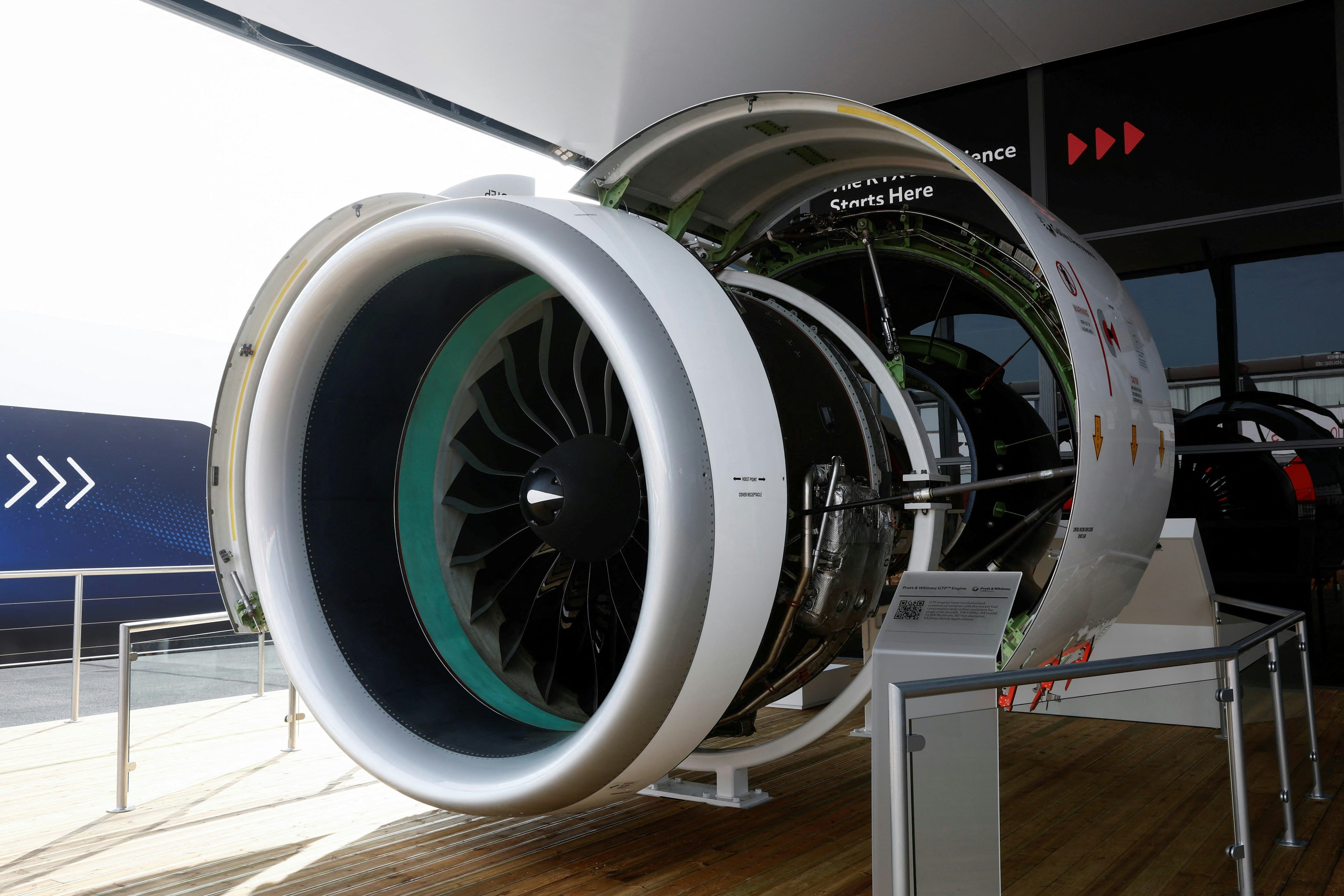
AirAsia Commits to 150 Airbus A220 Jets Powered by Pratt & Whitney GTF Engines

AirAsia X has announced a landmark order for 150 Airbus A220 aircraft, all equipped with Pratt & Whitney’s latest-generation GTF™ engines. This agreement, which includes a comprehensive 12-year EngineWise® maintenance contract, represents a pivotal move in AirAsia’s ongoing fleet modernization and expansion efforts. Deliveries are scheduled to commence in 2028, signaling a significant upgrade to the airline’s operational capabilities.

Strategic Implications and Operational Benefits

Rick Deurloo, president of Commercial Engines at Pratt & Whitney, a division of RTX, emphasized the significance of the deal, noting that it underscores AirAsia’s confidence in the GTF engine’s superior fuel efficiency and reduced noise emissions. He described the partnership as a foundation for sustained growth in the years ahead.

AirAsia Group CEO Bo Lingam elaborated on the strategic value of the new aircraft, highlighting its ability to support the airline’s ambition to build the largest and densest network in the region. With a range of up to seven hours enabled by the GTF engines, the A220 offers the flexibility to match capacity with demand more precisely and increase flight frequencies. Lingam underscored the airline’s mission to democratize travel across Asia by opening routes previously deemed unfeasible, and expressed intentions to extend this approach globally.

Market Impact and Challenges Ahead

The introduction of the A220 is expected to enhance AirAsia’s competitive position within the low-cost carrier segment by improving operational efficiency and passenger experience. Industry analysts predict a favorable market response, though the scale of the acquisition entails considerable financial investment. The airline will also face the challenge of training pilots and crew to operate the new aircraft and managing the logistical complexities of integrating the A220s into its existing fleet.

Competitors are likely to respond by accelerating their own fleet renewal initiatives or placing similar aircraft orders to maintain market share. While traditional carriers may focus on upgrading their fleets, other low-cost airlines could follow AirAsia’s lead in adopting more efficient aircraft.

Engine Performance and Industry Context

Pratt & Whitney’s GTF engines are recognized for delivering approximately 20% lower fuel consumption and a 75% reduction in noise footprint compared to previous engine generations. However, the engine has faced scrutiny due to reported reliability and maintenance challenges by some operators, raising concerns about potential operational impacts and long-term maintenance costs for AirAsia.

Globally, the GTF engine powers over 2,700 aircraft operated by more than 90 customers. Since its introduction a decade ago, the GTF fleet has accumulated 50 million flight hours, transported 1.9 billion passengers, and achieved fuel savings of 3 billion gallons. Pratt & Whitney has secured over 13,000 orders and commitments for GTF engines to date.

As a leading manufacturer of aircraft engines and auxiliary power units, Pratt & Whitney supports a global fleet of more than 90,000 in-service engines through its extensive maintenance network, reinforcing its position as a key partner in the aviation industry.

More news
Boeing to Sell Three eVTOL Subsidiaries to Archer Aviation

Boeing to Sell Three eVTOL Subsidiaries to Archer Aviation

Boeing to Divest Three eVTOL Subsidiaries to Archer Aviation Boeing has announced its intention to sell three subsidiaries specializing in electric vertical takeoff and landing (eVTOL) technology to Archer Aviation, signaling a strategic realignment for both companies within the burgeoning urban air mobility sector. The transaction, anticipated to conclude by the end of 2026 subject to regulatory approval, will transfer ownership of Wisk Aero, SkyGrid, and Insitu from Boeing to Archer. Strategic Implications and Transaction Details As part of the agreement, Boeing will acquire an equity stake of nearly 20 percent in Archer Aviation, along with warrants and a seat on Archer’s board of directors. Financial terms of the deal have not been publicly disclosed. The acquisition provides Archer with access to a portfolio of advanced technologies and businesses: Wisk Aero, which focuses on autonomous electric aircraft development; SkyGrid, a provider of air traffic management software tailored for urban air taxi operations; and Insitu, a manufacturer of high-altitude drones utilized by the U.S. Navy. This consolidation is expected to broaden Archer’s revenue base and expedite its efforts to commercialize electric air taxi services. Archer has previously outlined plans to initiate pilot air taxi operations in key U.S. markets, including New York, Texas, and Florida, by the end of the year. Additionally, the company is expanding its footprint in the defense sector, recently unveiling a new eVTOL aircraft developed in collaboration with Anduril, a defense technology firm founded by Palmer Luckey. For Boeing, the divestiture allows a sharpened focus on its core commercial and defense manufacturing operations. Despite the sale, Boeing will maintain access to Wisk’s autonomous flight systems through cross-licensing and technology exchange agreements, ensuring continued integration of these technologies into its current and future projects. Brian Utko, Boeing’s vice president of commercial aircraft product development, characterized the deal as “mutually beneficial,” highlighting the potential for both companies to strengthen their positions in the rapidly evolving eVTOL and urban air mobility markets. Industry Context and Outlook Analysts suggest that this partnership could enhance Archer’s competitive position in the race to launch commercial electric air taxi services, while enabling Boeing to retain exposure to next-generation aviation technologies without direct operational involvement. Boeing currently holds an order backlog valued at $715 billion, with over 6,200 aircraft pending production. The company continues to face heightened regulatory scrutiny following several high-profile safety incidents, including a 2024 event in which a section of a Boeing 737 Max fuselage detached during flight. This transaction reflects the dynamic shifts occurring within the aerospace industry, as established manufacturers and emerging startups compete to lead the future of urban air transportation.
Embraer Shares Rise Following Earnings Beat and Record Backlog

Embraer Shares Rise Following Earnings Beat and Record Backlog

Embraer Shares Rise Following Earnings Beat and Record Backlog Strong Quarterly Performance and Upgraded Guidance Brazilian aerospace manufacturer Embraer (EMBJ) experienced a notable surge in its share price, rising nearly 7% on Monday after reporting its strongest second-quarter results to date. The company exceeded analyst expectations across all major financial metrics, prompting an upward revision of its full-year guidance. This robust performance was largely driven by sustained demand for Embraer’s E2 series aircraft, which has been a key factor in the company’s expanding order backlog. Record Backlog and Market Position Embraer’s backlog reached an unprecedented level, supported by significant new orders, including a recent commitment from Abra for 20 E195-E2 jets. This influx of orders has reinforced Embraer’s standing as a dominant force in the regional jet market. The company’s stock has outperformed major aerospace competitors such as Boeing (BA) and Airbus (EADSY), highlighting its strong position within the global aviation sector. Analyst Sentiment and Potential Challenges Market analysts have responded favorably to Embraer’s results, maintaining a positive outlook on the company’s future prospects. Confidence in Embraer is underpinned by its predictable cash flow and clear operational guidance extending through 2026. However, some caution remains regarding the sustainability of the company’s current valuation multiples. Additionally, Embraer faces potential challenges from ongoing supply chain disruptions, which could impact production and delivery timelines. The elevated stock valuation may also lead to more conservative investor sentiment in the near term. Despite these headwinds, Embraer’s ability to secure substantial orders and deliver consistent financial results distinguishes it from competitors, many of whom continue to navigate operational difficulties and market uncertainties. As the company leverages strong demand for its next-generation jets, its record backlog and revised guidance indicate sustained momentum. Observers will be closely watching how Embraer’s rivals respond and whether the company can maintain its growth trajectory in an evolving aerospace landscape.
Public Council at Ministry of Finance Issues Tax Guidance on Aircraft Leasing

Public Council at Ministry of Finance Issues Tax Guidance on Aircraft Leasing

Public Council at Ministry of Finance to Clarify Taxation of Aircraft Leasing The Tax Committee of the Public Council under Ukraine’s Ministry of Finance is preparing to address the complex issue of taxation on aircraft leasing payments. This initiative aims to provide much-needed clarity on a subject that has long been fraught with legal ambiguity and regulatory challenges. Following its review, the Public Council intends to formally request comprehensive tax guidance from the Ministry of Finance, as confirmed by Tetiana Shevtsova, a member of the Public Council, certified auditor, and tax consultant. Upcoming Deliberations and Stakeholder Engagement Shevtsova revealed that she will submit all pertinent documentation concerning the taxation of leasing transactions involving non-resident entities to the Ministry of Finance within the week. An imminent meeting of the Tax Committee will focus on obtaining the Ministry’s official position regarding the appropriate tax treatment of these payments. “At the committee meeting, we will discuss the issue with the Ministry of Finance and request a written response outlining their position on the taxation of these payments,” Shevtsova stated. She emphasized the importance of a thorough examination to fully understand the Ministry’s perspective. The Tax Committee’s conclusions will subsequently be presented to the full Public Council for further evaluation. Representatives from the Ukrainian Air Transport Association, who have previously advocated for a unified approach to international aircraft leasing taxation, are expected to participate in the discussions. Additionally, officials from the State Tax Service and the Economic Security Bureau may be involved to ensure a comprehensive and coordinated review. Should the Council reach consensus, it will formally initiate the process for the Ministry of Finance to issue an official tax clarification. “If we reach an agreed position, we will request a tax clarification from the Ministry of Finance, which will then be binding for other government bodies,” Shevtsova noted. Legal Distinctions and Industry Implications A pivotal issue under consideration is whether aircraft leasing payments should be classified as royalties. This distinction has generated significant legal uncertainty and has, in some cases, led to criminal investigations targeting Ukrainian air carriers. Shevtsova highlighted that Ukrainian tax legislation treats leasing payments and royalties as distinct categories. “The Tax Code defines the object of leasing separately, and lease payments are not included in the definition of royalties. There is a distinct article addressing lease payments,” she explained. The Public Council faces the challenge of navigating a complex regulatory environment while ensuring alignment with international tax standards. The outcome of these deliberations could have far-reaching implications for the aviation sector, potentially influencing investment strategies, leasing agreements, and financial planning among industry participants. Competitors may respond by reassessing their tax approaches, advocating for regulatory reforms, or adopting new compliance measures to safeguard their market positions. As the Public Council advances its work, stakeholders in both the aviation and financial sectors are closely monitoring developments that could shape the future framework for aircraft leasing taxation in Ukraine.
Air Charter Service Reports $845 Million Revenue in First Half

Air Charter Service Reports $845 Million Revenue in First Half

Air Charter Service Reports $845 Million Revenue in First Half Amid Market Challenges Aircraft charter company Air Charter Service (ACS) has announced a strong financial performance for the first half of its fiscal year, with revenues increasing by 38% to exceed $845 million. The company, whose financial year commenced on February 1, also reported a rise in the number of charter flights, underscoring robust demand across its operations. Growth Across Divisions and Regions Chris Leach, Chairman and Founder of ACS, emphasized the solid results achieved across the company’s three primary divisions, which collectively saw a 16% increase in charter contracts. Leach attributed the revenue growth not only to higher charter volumes but also to a strategic shift toward securing higher-value contracts. Regionally, ACS experienced notable expansion in its US, European, and Greater China offices. The six new offices opened in 2025 contributed positively to the company’s performance, while three additional offices launched in the past six months—in Brussels, Monaco, and Stuttgart—have expanded ACS’s global presence to 43 locations. Among the divisions, the cargo segment demonstrated the most significant growth, with charter numbers rising 49% and revenue increasing by 38% compared to the same period last year. Leach identified several contributing factors, including supply chain disruptions linked to the conflict in Iran, port closures in Morocco caused by Storm Marta, and relief efforts in Venezuela. While these events accounted for a portion of the increased activity, Leach stressed that the underlying demand for cargo charters remains strong and diverse. The private jet division also recorded healthy gains, with charter contracts and revenue up 26%. This growth was driven by the use of larger aircraft and longer flight sectors, as major clients increasingly sought ACS’s global reach. Jet Card sales surged by 85%, generating nearly 60% more revenue. However, margins experienced slight compression due to the company absorbing higher fuel costs. The group charter division performed robustly as well, with charter contracts rising 34% and revenue increasing by 48%. The logistics surrounding the World Cup played a significant role in this growth, involving hundreds of flights across the US, Canada, and Mexico. ACS was responsible for transporting nearly 40% of World Cup squads back home. Additionally, the company participated in mass evacuations from the Middle East in March, further demonstrating its operational capacity in complex scenarios. Financial Strength Amid Industry Pressures Leach reported that earnings before interest, taxes, depreciation, and amortization (EBITDA) for the first half of 2026 rose by 35-40%, aligning with the revenue growth, while profit before tax continued to reflect the company’s financial resilience. Despite these strong results, the broader market environment remains challenging. Fluctuating petrochemical prices, as highlighted in Phillips 66’s recent earnings call, pose potential risks to operational costs for charter companies. Meanwhile, competitors such as Forward Air have reported significant operating losses, underscoring the pressures within the sector. These market conditions are likely to prompt increased scrutiny of operational efficiencies and pricing strategies across the industry, with competitors expected to adjust their approaches to maintain market share. Leach acknowledged that while exceptional events can temporarily boost activity, ACS’s growing role during market disruptions highlights the company’s resilience and adaptability in a volatile sector.
Air India Phuket–Delhi Flight Plunged 300 Feet Due to Technical Failures, Not Turbulence

Air India Phuket–Delhi Flight Plunged 300 Feet Due to Technical Failures, Not Turbulence

Air India Phuket–Delhi Flight’s Sudden Altitude Loss Attributed to Technical Failures An Air India flight from Phuket to Delhi experienced a sudden loss of 300 feet in altitude on August 4, resulting in injuries to 17 passengers and crew. Contrary to the airline’s initial explanation attributing the event to turbulence, multiple sources involved in the investigation have confirmed that the incident was caused by a series of critical technical failures affecting the aircraft’s hydraulic and flight-control systems. Sequence of Technical Malfunctions The flight, AI 2379, operated by an Airbus A320neo, departed Phuket at 6:56 a.m. IST and encountered the technical issues nearly two and a half hours later, at 9:32 a.m. The aircraft’s three independent hydraulic systems, which control essential functions such as primary flight controls, landing gear, nose-wheel steering, thrust reversers, flaps, slats, and brakes, began to fail. These low-pressure warnings and system malfunctions are considered highly unusual, especially when occurring simultaneously. The situation deteriorated rapidly as the autopilot disconnected and fault indications appeared on both the left and right elevators, the control surfaces responsible for adjusting the aircraft’s pitch. According to a source who reviewed the automated post-flight maintenance report, nine distinct fault messages were logged within a single minute, implicating all three hydraulic systems in various combinations. As the aircraft’s nose pitched upward and a stall warning was activated, one of the pilots manually intervened to push the nose down. This maneuver led to the abrupt 300-foot drop in altitude, during which passengers and crew were thrown upward inside the cabin. Following this event, no further fault messages were recorded, indicating that the pilots successfully regained control of the flight systems. Aftermath and Ongoing Investigation Despite the severity of the incident, the flight crew elected to continue to Delhi rather than divert to a nearer airport. The decision was reportedly based on the availability of superior medical facilities for the injured and more comprehensive engineering support in the capital. The Aircraft Accident Investigation Bureau (AAIB) has classified the event as a serious incident and is conducting a thorough investigation. The airline’s response to the incident has faced criticism, particularly regarding its initial attribution of the altitude loss to turbulence and its subsequent omission of any mention of technical faults. Official statements from Air India and the Ministry of Civil Aviation have not acknowledged the hydraulic failures. Air India has requested a technical assessment from Airbus and is awaiting the manufacturer’s findings. The episode has also prompted scrutiny of Air India’s safety protocols and pilot fitness standards. The pilot-in-command is undergoing psychoactive substance screening as part of routine post-incident procedures. Industry analysts suggest that rival carriers may leverage the incident to emphasize their own safety records, while market observers are monitoring the potential impact on Air India’s stock performance and customer confidence.
Ensuring Compliance in Cross-Border Aviation Parts Supply

Ensuring Compliance in Cross-Border Aviation Parts Supply

Ensuring Compliance in Cross-Border Aviation Parts Supply The global aviation industry relies on a complex and extensive network of manufacturers, distributors, maintenance providers, and logistics partners. Aircraft components frequently traverse multiple jurisdictions before reaching airlines or maintenance facilities, making supplier verification a critical process that extends beyond mere procurement formalities. It is essential for ensuring operational safety, regulatory compliance, and effective management of commercial risk. Navigating Regulatory Complexities and Supplier Verification Aerospace purchasers operate within an increasingly intricate regulatory framework. It is no longer sufficient to verify that a part is available at a competitive price; buyers must also ascertain the part’s origin, current ownership, storage and transportation history, and confirm that the end user is authorized to receive it. Addressing these factors in isolation can create vulnerabilities, particularly as regulations governing cross-border transactions become more stringent. Mitigating risk begins with establishing the legal identity of every supplier and intermediary involved in the transaction. Procurement teams are advised to verify corporate registration numbers, trading addresses, directors, beneficial owners, and banking details. While a newly established company is not inherently suspicious, a short operating history combined with frequent address changes, unexplained intermediaries, or payment instructions originating from different jurisdictions may indicate potential concerns. All relevant documentation—including purchase orders, invoices, packing lists, airway bills, certificates, and end-user declarations—should be reviewed collectively. Discrepancies in company names, part numbers, quantities, or delivery addresses may sometimes be clerical errors, but they must be resolved prior to shipment. Recent industry cases underscore the importance of evaluating purchase orders, supplier records, and cross-border routing as an integrated whole. Due diligence is most effective when commercial paperwork forms a coherent narrative, with claims about specific companies clearly substantiated. Ensuring Traceability and Managing Supply Chain Risks Traceability is particularly critical for high-value or safety-sensitive aerospace parts. Buyers should verify part and serial numbers, release certificates, maintenance records, shelf life, and storage conditions. Whenever possible, documentation should be cross-checked with issuing authorities, especially if a part has changed hands multiple times. Incomplete or inconsistent certification, or an inability to account for the chain of custody, represent significant red flags. Operational pressures, such as aircraft-on-ground events, may necessitate rapid procurement. However, urgency must never override essential verification safeguards. Organizations should implement predefined escalation protocols that enable technical, legal, and compliance teams to swiftly review unusual bids without compromising critical protections. Managing compliance in cross-border aviation parts supply also involves addressing broader supply chain risks and economic pressures. Heightened scrutiny of suppliers and the adoption of robust compliance measures can increase operational costs. In response, some industry players are investing in advanced digital platforms for compliance tracking and enhancing supply chain resilience to maintain a competitive advantage. Sanctions and export control screening must extend beyond the entity named on the invoice. Comprehensive checks should include beneficial owners, banks, freight forwarders, consignees, and maintenance providers. This holistic approach is vital for navigating the evolving regulatory landscape and safeguarding the integrity of the aviation supply chain. In an industry where safety and compliance are paramount, integrating rigorous verification processes and leveraging digital tools are becoming essential business imperatives. As regulatory demands and market expectations continue to rise, organizations that prioritize end-to-end due diligence will be best positioned to manage risk and sustain trust in the global aviation marketplace.
FAA Proposes Airspace Overhaul; Airline Demonstrates Potential Model

FAA Proposes Airspace Overhaul; Airline Demonstrates Potential Model

FAA Proposes Comprehensive Airspace Overhaul Amid Industry Innovation The Federal Aviation Administration (FAA) has unveiled an ambitious proposal to modernize the United States airspace system, seeking to harness artificial intelligence (AI) and predictive analytics to enhance both safety and efficiency. This initiative comes at a time when the complexity of U.S. airspace is rapidly increasing, driven in part by the growing presence of unmanned aerial vehicles and expanding commercial space activities. While the FAA’s plan aims to address these challenges, it has elicited a range of responses from industry stakeholders concerned about potential operational disruptions and competitive implications. Alaska Airlines Demonstrates AI-Driven Operational Efficiency Alaska Airlines provides a compelling example of how AI can be integrated into air traffic management to optimize flight operations. Operating approximately 1,500 flights daily, the airline coordinates its extensive network from a sophisticated operations center near Seattle-Tacoma International Airport, known as "The Hub." Here, dispatchers monitor a continuous stream of real-time data, including air traffic, weather conditions, and wind patterns, a task increasingly supported by Flyways AI, a software platform developed by the startup Air Space Intelligence. Since adopting Flyways in 2021, Alaska Airlines has reported substantial operational gains, including saving tens of thousands of flight hours and reducing fuel consumption by about one million gallons annually. The system does not autonomously determine flight routes but provides dispatchers with data-driven suggestions that improve route efficiency and safety. Captain Bret Peyton, managing director of Alaska’s network operations control, emphasized that Flyways synthesizes complex variables to anticipate and mitigate potential issues before they arise, thereby enhancing decision-making processes. Alek Mead, a manager at Alaska’s Network Operations Center, highlighted the software’s ability to consolidate vast amounts of information into actionable insights, easing the cognitive load on dispatchers. This represents a significant shift from traditional static displays to dynamic, predictive decision-making tools. Phillip Buckendorf, CEO and co-founder of Air Space Intelligence, described this transition as a “massive behavior change” for dispatchers, who now operate with a forward-looking perspective rather than reacting solely to current conditions. FAA’s Vision and Industry Challenges Building on the success of Flyways, the FAA has engaged Air Space Intelligence to help scale similar AI-driven technologies across the national airspace system. The agency’s proposal envisions a future where predictive analytics play a central role in managing increasingly congested skies, improving traffic flow, and reducing delays. However, the plan faces significant hurdles. Industry participants have expressed concerns about the potential for increased delays and cancellations during the transition period, particularly as air traffic control systems are retrofitted to accommodate new technologies. There are also apprehensions regarding foreign competition and the broader technical and economic impacts of the overhaul. In parallel, the FAA has proposed regulatory changes to allow waivers for certain commercial space licenses, a move that has sparked debate within the aerospace community. Supporters, including the Cargo Airline Association and Honeywell, advocate for an accelerated timeline to implement interference-tolerant radio altimeter systems, which are critical to minimizing disruptions and ensuring safety. Despite these challenges, federal regulators remain optimistic that integrating AI and predictive analytics will fundamentally transform the nation’s airspace management. Alaska Airlines’ experience with Flyways offers a tangible model of how such innovations can deliver measurable benefits, potentially guiding the broader evolution of U.S. aviation infrastructure.
Jordan Airmotive Signs Five-Year Engine Maintenance Deal with Tunisair

Jordan Airmotive Signs Five-Year Engine Maintenance Deal with Tunisair

Jordan Airmotive Signs Five-Year Engine Maintenance Deal with Tunisair Jordan Airmotive (JALCo) has secured an exclusive five-year maintenance, repair, and overhaul (MRO) agreement with Tunisair Technics to support the Tunisian flag carrier’s fleet of CFM56-5B engines. The General Terms Agreement establishes a comprehensive framework for engine inductions, technical coordination, and maintenance planning, reinforcing a long-term partnership between the two companies. Strategic Collaboration and Expertise Mahmoud Bashir, chief executive of Jordan Airmotive, emphasized that the agreement reflects confidence in the company’s technical expertise with the CFM56-5B engine. He highlighted the structured approach the partnership will provide in addressing Tunisair’s engine maintenance requirements throughout the contract period. Tunisair Technics, responsible for the technical and maintenance support of the airline’s fleet, will collaborate closely with Jordan Airmotive, which specializes in engine repair and overhaul services. Jordan Airmotive holds certifications from the European Union Aviation Safety Agency (EASA), the US Federal Aviation Administration (FAA), and other regulatory bodies, underscoring its compliance with international standards. Currently, Jordan Airmotive’s engine capabilities include the CF6-80C2, CFM56-7B, CFM56-5B, and CFM56-3 models, with plans to expand support to the LEAP-1A and LEAP-1B engines in the near future. This agreement marks a significant milestone in the company’s growth and its ability to serve a broader range of engine types. Industry Context and Market Challenges The deal comes at a time when the aviation MRO sector faces several challenges. High product costs, particularly in markets such as Japan, continue to affect the competitiveness of service providers like Jordan Airmotive. Moreover, concerns persist within the industry regarding the reliability and security of shared data in maintenance operations, which remains a critical issue for airlines and MRO providers alike. This exclusive agreement may also trigger competitive responses from other MRO companies seeking to enhance their service offerings and attract new clients. As the market scrutinizes the long-term value and cost-effectiveness of such partnerships, there will be increased attention on how these collaborations deliver operational benefits over time. Despite these challenges, the partnership between Jordan Airmotive and Tunisair Technics highlights a mutual commitment to maintaining high standards of engine support and operational reliability for Tunisair’s fleet, reinforcing the strategic importance of this collaboration in the regional aviation sector.
Setna iO Acquires A320neo for Teardown

Setna iO Acquires A320neo for Teardown

Setna iO Acquires Airbus A320neo and Boeing 757-300 to Enhance Teardown Capabilities Setna iO has significantly expanded its aircraft teardown operations with the acquisition of a 2019 Airbus A320neo airframe, accompanied by two sets of Pratt & Whitney PW1100G quick engine change (QEC) components. This move marks a strategic enhancement of the company’s capacity to supply next-generation narrowbody aftermarket parts. The A320neo, featuring the latest avionics, cockpit systems, and flight control technologies, will be dismantled at ecube Solutions’ facility in Castellón, Spain. The QEC packages include critical components such as two integrated drive generators (IDGs), two IDG quick attach/detach units (QADs), two hydraulic pumps, and various other line-replaceable units (LRUs). These parts, recovered through the teardown process, will be distributed globally as used serviceable material or after undergoing repair. This supports a broad customer base including airlines, lessors, and maintenance, repair, and overhaul (MRO) providers. Strategic Expansion of Teardown Operations David Chaimovitz, founder and Chief Executive of Setna iO, emphasized the significance of the acquisition, describing it as an excellent opportunity to supply valuable materials to the global aviation aftermarket. He noted that the addition of the A320neo would substantially increase the company’s inventory of parts available to its worldwide customers. This acquisition is part of a wider strategic initiative by Setna iO to bolster its teardown operations. The company has also launched a dedicated A320neo teardown program at AerSale’s Goodyear facility in Arizona, United States, further enhancing its ability to provide next-generation narrowbody components to the aftermarket. In parallel with the A320neo, Setna iO has recently procured a Boeing 757-300 airframe equipped with two Rolls-Royce RB211-535 engines. The 757-300 will be dismantled at ecube’s facility in St Athan, Wales, while the engines will be disassembled separately for parts recovery. These efforts reflect Setna iO’s commitment to expanding its teardown pipeline and maximizing the value of recovered components for repair and resale. Positioning Amid Growing Market Competition Setna iO’s expansion occurs amid intensifying competition within the aircraft teardown sector. Other companies, such as Werner Aero, have also been acquiring A320 airframes for disassembly. As demand for used serviceable material continues to rise, Setna iO’s recent acquisitions strategically position the company to better meet the needs of airlines, lessors, and MRO providers seeking reliable access to high-quality parts from modern aircraft.
Sarla Aviation Receives Design Approval for Indigenous Electric Air Taxis

Sarla Aviation Receives Design Approval for Indigenous Electric Air Taxis

Sarla Aviation Secures DGCA Design Approval for Indigenous Electric Air Taxis Bengaluru-based startup Sarla Aviation has achieved a significant milestone in India’s urban mobility landscape by obtaining Design Organisation Approval (DOA) from the Directorate General of Civil Aviation (DGCA) for its indigenous electric vertical take-off and landing (eVTOL) air taxi designs. This approval, granted under CAR 21 Subpart J, formally acknowledges Sarla Aviation’s capability to design aircraft, systems, and components in compliance with certified standards. It also sets the stage for the company to pursue type certification and advance toward commercial production. The DOA was officially presented to Sarla Aviation by Union Minister for Civil Aviation K Rammohan Naidu during the inauguration of the company’s new headquarters in Bengaluru on August 8. The event was attended by Karnataka cabinet minister Rizwan Arshad and other dignitaries. The new facility consolidates Sarla Aviation’s design, engineering, testing, and commercial teams, and features a full-scale prototype of its flagship eVTOL model, Shunya. Rapid Progress and Strategic Partnerships Founded in October 2023 by Adrian Schmidt, Rakesh Gaonkar, and Shivam Chauhan, Sarla Aviation has quickly advanced its technology with backing from Accel and prominent angel investors including Flipkart co-founder Binny Bansal and Zerodha co-founder Nikhil Kamath. The company recently completed over 500 flight tests with its half-scale demonstrator, Sylla, and has now unveiled the full-scale Shunya prototype. In addition to its technological progress, Sarla Aviation announced a series of strategic partnerships with major organizations such as Manipal Hospitals, Aeromed Air Ambulance, Prestige Group, Jio-bp, Jeppesen Foreflight, Hexel Composites, and Tata Elxsi. These collaborations are expected to enhance the development and deployment of electric air taxi services, with applications spanning urban transportation and medical evacuation. Industry experts view Sarla Aviation’s achievement as a pivotal step toward the commercialization of indigenous electric air taxis in India. The market response has been largely positive, buoyed by strong support from partners and investors. Nevertheless, the company and the broader sector face significant challenges, including regulatory complexities, safety considerations, and the need to develop extensive infrastructure such as vertiports and charging stations to facilitate widespread adoption. Union Minister Naidu expressed optimism about the future of electric air taxis in India, highlighting the importance of expanding accessibility beyond metropolitan centers. “We have a full-scale Indian eVTOL here, one that Indian engineers designed, Indian hands built, and which the Indian skies will proudly carry,” he stated. “We have to ensure these machines fly everywhere in the country. At this speed, I believe that within two years we are going to see this ecosystem flourish.” As Sarla Aviation advances toward type certification, competitors in the emerging urban air mobility sector are expected to accelerate their development efforts and seek similar regulatory approvals to maintain competitiveness. The coming years will be critical as the industry addresses regulatory, technical, and infrastructural challenges to realize the vision of electric air taxis transforming urban transportation across India.
line









