
将人工智能洞察转化为可执行行动

热门趋势
Categories
Airbus and Atitech Collaborate on Military Aircraft Maintenance
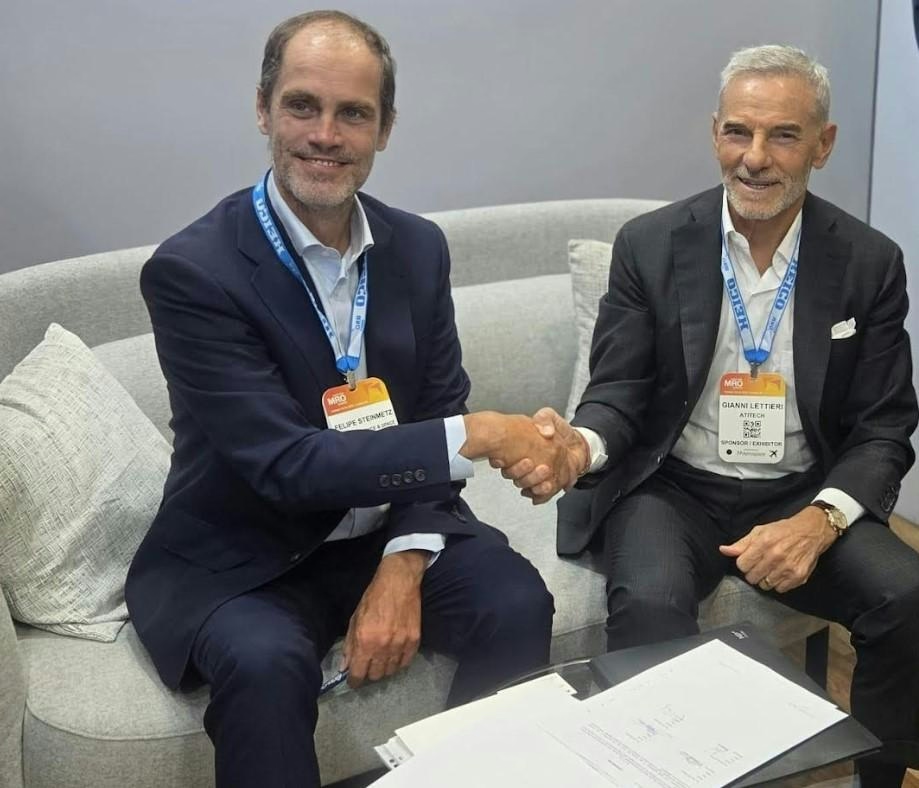
Airbus and Atitech Establish Strategic Partnership for Military Aircraft Maintenance
Airbus Defence and Space has formalized a General Terms Agreement (GTA) with the Italian aerospace company Atitech, creating a strategic framework for Maintenance, Repair, and Overhaul (MRO) services specifically tailored to Airbus military aircraft. The agreement was signed by Felipe Steinmetz, Head of Commodity and Project Supply Manager Services at Airbus Defence and Space, and Gianni Lettieri, president and CEO of Atitech, during the MRO Europe conference held in London on October 14-15.
Strengthening European Defence Supply Chains
This partnership is designed to reinforce Airbus Defence and Space’s service supply chain within the European defence sector, a move that gains significance amid ongoing geopolitical uncertainties. By collaborating with Atitech, Airbus aims to secure the long-term operational readiness of its military aircraft fleets for customers across Europe. Atitech, which already provides MRO services for Airbus commercial aircraft from its facilities in Naples and Rome, will now extend its expertise to military platforms, thereby broadening its scope within the aerospace maintenance domain.
Challenges and Industry Context
Despite the promising outlook, the partnership faces notable challenges. Compliance with rigorous international certification standards for military aircraft maintenance will be essential to ensure operational safety and reliability. Furthermore, both Airbus and Atitech must invest in cultivating a highly skilled workforce capable of meeting the specialized demands inherent in military MRO operations.
The agreement emerges against a backdrop of intensified competition in the aerospace industry. Airbus’s A320 has recently overtaken Boeing’s 737 as the most-delivered aircraft model, escalating the rivalry between the two manufacturers. Airbus’s initiative to consolidate its MRO capabilities in Europe may trigger strategic responses from Boeing, which is expected to capitalize on its established maintenance infrastructure and partnerships to maintain and potentially regain market share.
As the collaboration progresses, its success will hinge on effectively navigating regulatory complexities, advancing workforce development, and adapting to the evolving dynamics of the global defence and aerospace markets.

Etihad Airways Suspends Airbus A380 Flights on Key Route

Aditya Birla Group Seeks Approval for Aircraft Leasing in GIFT City

Qatar Airways Highlights Innovation and Connectivity at Arabian Travel Market 2026

Hong Kong's Five-Year Plan Includes Andrew Fan's Aircraft Parts Processing Hub Proposal

ACIA Aero Leasing Delivers ATR72-600 to Air Nostrum

RTX Appoints Jill Albertelli as Head of Pratt & Whitney

TAT Technologies Joins Beyond Aero Hydrogen Aircraft Program

AURAK Study Highlights Barriers to Air Taxi Adoption in Emerging Economies

Xiamen Air Selects Altitude for 787 Maintenance at Heathrow

Etihad and Swissport Extend Global Partnership
