
将人工智能洞察转化为可执行行动

热门趋势
Categories
Airbus Develops New Widebody Model, the A350-2000
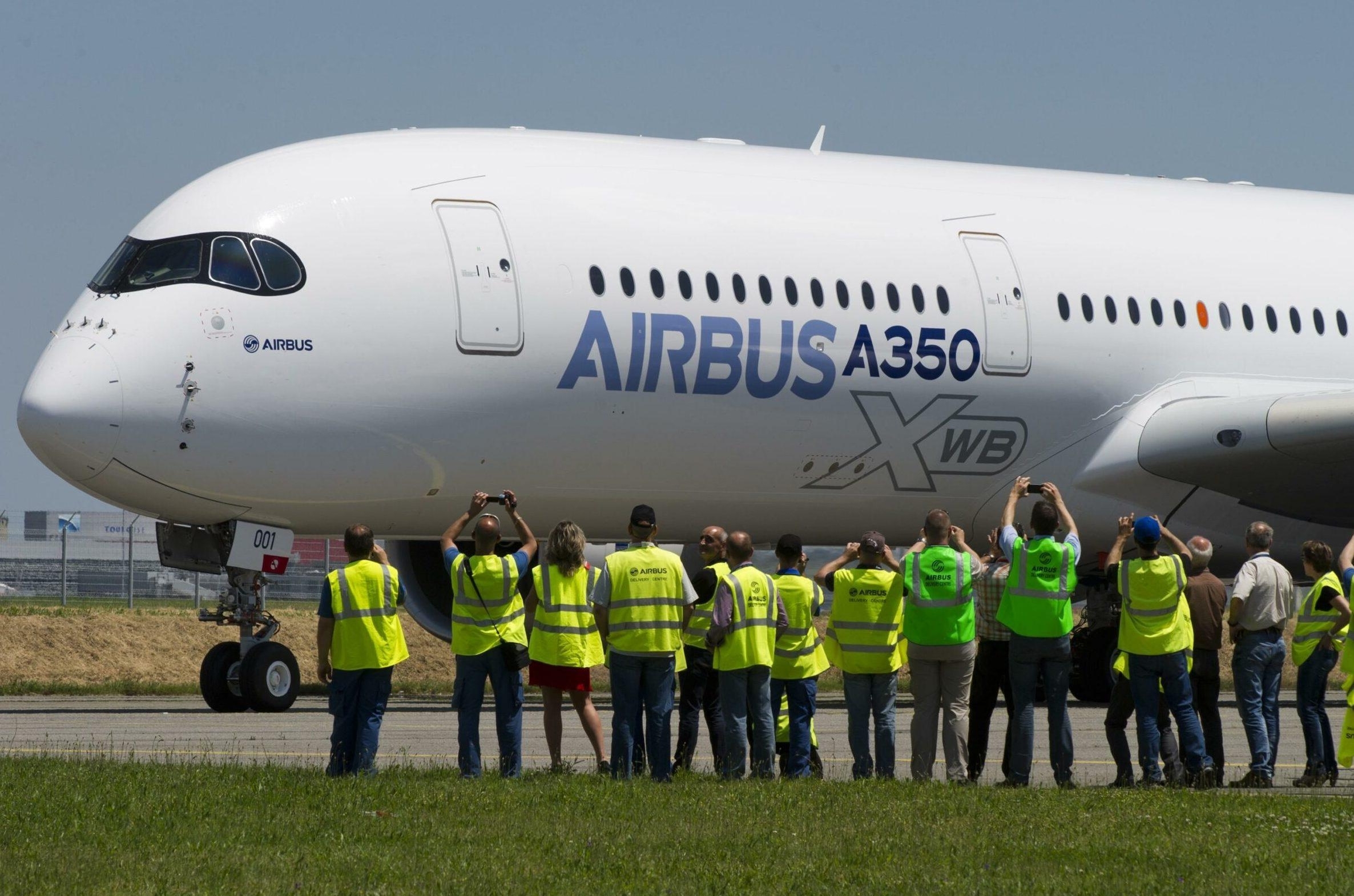
Airbus Develops New Widebody Model, the A350-2000
A Strategic Expansion in the Widebody Market
Airbus is advancing its position in the widebody aircraft sector with the development of the A350-2000, a stretched and enhanced iteration of the A350-1000. Announced ahead of the Paris Air Show 2025, this new model aims to directly challenge Boeing’s 777X by addressing the growing demand for efficient, high-capacity long-haul aircraft. Building on the proven A350-1000 platform, which accommodates up to 369 passengers, Airbus plans to extend the fuselage with additional plugs, potentially increasing seating capacity by approximately 40 seats to around 400–410 passengers. This expansion would place the A350-2000 in direct competition with the Boeing 777X’s projected capacity.
Technical Enhancements and Design Improvements
The A350-2000 will incorporate several key technical upgrades to support its increased size and passenger load. A new Type C emergency exit will be introduced to comply with safety and regulatory standards. Aerodynamic refinements to the wing design are expected to enhance lift and fuel efficiency, critical factors for long-haul operations. The aircraft will likely be powered by more advanced engines, possibly an upgraded or next-generation Rolls-Royce Trent XWB, to manage the higher maximum take-off weight and payload. Additionally, reinforced landing gear and structural improvements will be implemented to accommodate the larger airframe and increased operating weights.
Market Implications and Competitive Landscape
Airbus’s CEO emphasized the strategic significance of the A350-2000, highlighting its potential to offer greater range and capacity in an increasingly crowded aviation market. This development reflects Airbus’s ambition to capture a larger share of the ultra-long-haul and high-capacity segments, where efficiency and operational flexibility are paramount for airlines. Nevertheless, the A350-2000 will enter a highly competitive environment dominated by Boeing’s 777X, which benefits from an established market presence. Industry analysts suggest that airline responses may vary, with some prioritizing the long-term efficiency advantages of the A350-2000, while others may focus on immediate cost considerations or existing partnerships with Boeing.
In response, Boeing may accelerate 777X deliveries or introduce enhancements to maintain its competitive edge. Meanwhile, recent airline developments, including IndiGo’s expansion plans with Airbus and new partnerships involving Delta, Air France-KLM, and Virgin Atlantic, indicate growing confidence in the A350 family. These alliances could bolster Airbus’s position against Boeing as carriers seek versatile, fuel-efficient aircraft to support their global networks.
While the A350-2000 represents an evolutionary step rather than a revolutionary redesign, it leverages the A350’s established technology and design strengths. Its introduction marks a significant move by Airbus to address shifting industry demands and intensify competition within the widebody market. The aviation community will be closely watching the Paris Air Show 2025 for further details on this ambitious new aircraft.

Etihad Airways Suspends Airbus A380 Flights on Key Route

Aditya Birla Group Seeks Approval for Aircraft Leasing in GIFT City

Qatar Airways Highlights Innovation and Connectivity at Arabian Travel Market 2026

Hong Kong's Five-Year Plan Includes Andrew Fan's Aircraft Parts Processing Hub Proposal

ACIA Aero Leasing Delivers ATR72-600 to Air Nostrum

RTX Appoints Jill Albertelli as Head of Pratt & Whitney

TAT Technologies Joins Beyond Aero Hydrogen Aircraft Program

AURAK Study Highlights Barriers to Air Taxi Adoption in Emerging Economies

Xiamen Air Selects Altitude for 787 Maintenance at Heathrow

Etihad and Swissport Extend Global Partnership
