
将人工智能洞察转化为可执行行动

热门趋势
Categories
Airbus Reports Slowest Start to Deliveries in a Decade
Airbus Reports Slowest Start to Deliveries in a Decade
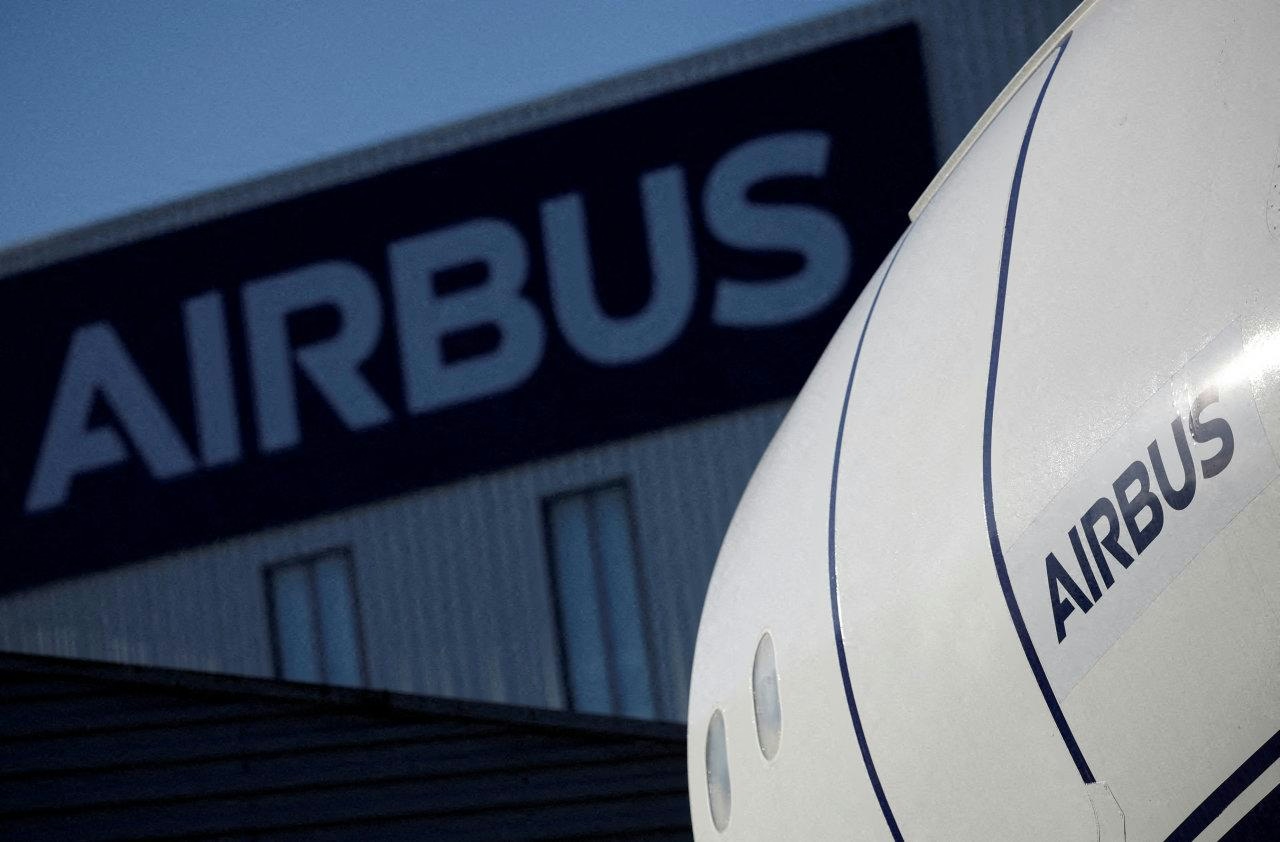
Airbus has experienced its slowest start to aircraft deliveries in ten years, highlighting persistent supply chain difficulties and raising concerns about its capacity to meet growing market demand. Data released on February 6, 2026, revealed that the European aerospace manufacturer delivered only 19 commercial aircraft in January, a significant decline from 25 deliveries in January 2025 and 30 in January 2024. This figure represents the lowest January delivery volume since at least 2019, when Airbus handed over 39 jets.
Supply Chain Challenges and Delivery Impact
The sluggish beginning to 2026 follows Airbus narrowly missing its revised delivery target for 2025. Initially, the company aimed to deliver approximately 820 aircraft but lowered its forecast to 790 in December 2025 after identifying a quality issue with A320-family fuselage panels supplied by a third party. By the end of the year, Airbus had delivered 793 commercial aircraft to 91 customers.
January’s deliveries were distributed among 15 customers, including prominent carriers such as Lufthansa and United Airlines. However, ongoing supply chain disruptions—most notably shortages of aircraft engines—have resulted in numerous completed jets awaiting final components. Airbus CEO Guillaume Faury, speaking at the World Governments Summit in Dubai, described engines as the “trickiest parts to secure” throughout 2024 and 2025. He also suggested that the surge in aircraft demand could open opportunities for new entrants in the aerospace sector.
Market Reactions and Competitive Landscape
The delays in deliveries have attracted heightened scrutiny from investors and airline customers who rely on punctual aircraft handovers. Market sentiment has been affected by concerns over Airbus’s ability to resolve its supply chain bottlenecks, with potential repercussions for the company’s stock performance. Meanwhile, competitors such as Boeing may seek to leverage Airbus’s challenges by emphasizing their own production stability and delivery records. Industry analysts, including those at Leeham, note that while Airbus maintains a leadership position in single-aisle aircraft sales, Boeing is actively pursuing efforts to reclaim market share in the narrowbody segment.
Despite the slow delivery pace, Airbus secured 49 new aircraft orders in January 2026. These included six A321neos for an undisclosed customer and two additional orders from another unnamed buyer. The company is scheduled to release its full-year 2025 financial results on February 19, 2026.
As Airbus contends with ongoing supply chain obstacles and intensifying competition, the coming months will be pivotal in determining whether the manufacturer can accelerate deliveries and restore confidence among investors and airline customers alike.

Etihad Airways Suspends Airbus A380 Flights on Key Route

Aditya Birla Group Seeks Approval for Aircraft Leasing in GIFT City

Qatar Airways Highlights Innovation and Connectivity at Arabian Travel Market 2026

Hong Kong's Five-Year Plan Includes Andrew Fan's Aircraft Parts Processing Hub Proposal

ACIA Aero Leasing Delivers ATR72-600 to Air Nostrum

RTX Appoints Jill Albertelli as Head of Pratt & Whitney

TAT Technologies Joins Beyond Aero Hydrogen Aircraft Program

AURAK Study Highlights Barriers to Air Taxi Adoption in Emerging Economies

Xiamen Air Selects Altitude for 787 Maintenance at Heathrow

Etihad and Swissport Extend Global Partnership
