
将人工智能洞察转化为可执行行动

热门趋势
Categories
Airbus Secures 398 Net Orders for 2026 Amid Market Uncertainty
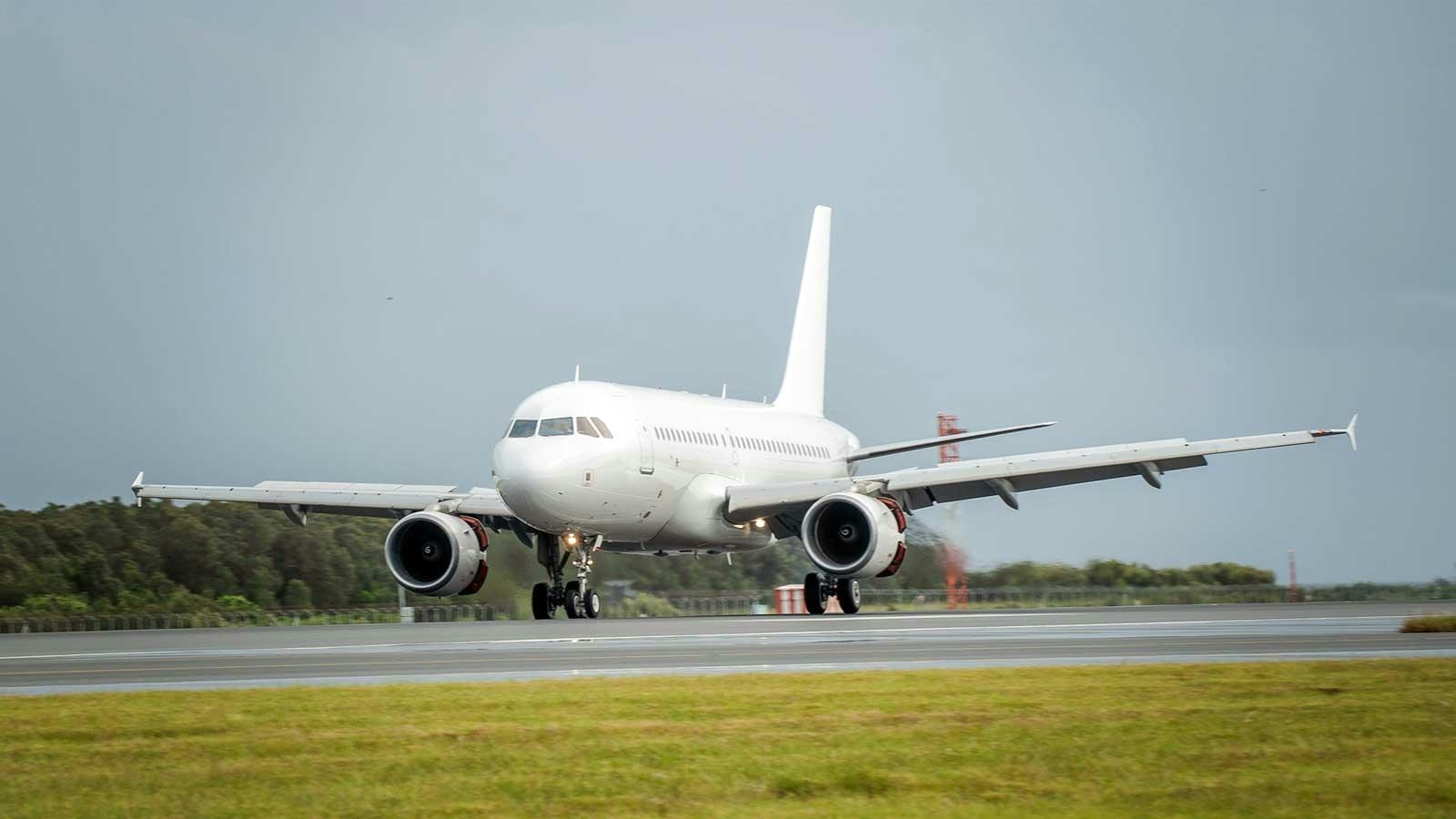
Airbus Secures 398 Net Orders for 2026 Amid Market Uncertainty
Delivery Performance and Production Challenges
Airbus has reported a solid order intake for 2026, securing 398 net aircraft orders despite persistent market uncertainties and a decline in first-quarter deliveries compared to the previous year. In March, the European aerospace manufacturer delivered 60 aircraft, marking an increase from 35 in February 2026 but a decrease from 71 in March 2025. This brought total deliveries for the first quarter to 114 aircraft, representing a 16% drop from 136 deliveries during the same period last year. The decline has been largely attributed to ongoing supply chain disruptions, particularly delays in Pratt & Whitney engine deliveries, which have constrained production rates for the A320neo family.
Order Intake and Market Demand
Despite these operational challenges, Airbus recorded a robust inflow of new orders in March, with 331 new aircraft orders offset by 10 cancellations. Significant contracts included 100 A320neo-family jets for leasing company AerCap and 101 for China Eastern Airlines, highlighting sustained demand for single-aisle aircraft. Consequently, net orders for 2026 have nearly doubled compared to 2025, rising by 95% from 204 to 398. This strong order book underscores continued customer confidence in Airbus’s product offerings amid a complex geopolitical environment, particularly in regions such as the Middle East.
Industry Context and Competitive Landscape
Market reactions to Airbus’s latest figures have been mixed. Some analysts view the strong order activity as evidence of resilient demand, while others express concern that the delivery shortfall could hinder Airbus’s ability to meet its full-year targets. The company has previously cautioned that engine supply constraints will continue to impact production rates. Meanwhile, Boeing, Airbus’s primary competitor, has reported high delivery volumes recently, potentially intensifying competition in the coming quarters. Broader industry indicators also suggest a recovery in global aviation demand, exemplified by an 83% surge in UK commercial aircraft orders in February 2026.
While Airbus’s March delivery numbers reflect ongoing operational difficulties, the company’s substantial order backlog indicates robust market demand. Analysts anticipate that the latest data will not have an immediate significant impact on the market but will be closely monitoring Airbus’s ability to navigate production challenges and competitive pressures in the near term.

Etihad Airways Suspends Airbus A380 Flights on Key Route

Aditya Birla Group Seeks Approval for Aircraft Leasing in GIFT City

Qatar Airways Highlights Innovation and Connectivity at Arabian Travel Market 2026

Hong Kong's Five-Year Plan Includes Andrew Fan's Aircraft Parts Processing Hub Proposal

ACIA Aero Leasing Delivers ATR72-600 to Air Nostrum

RTX Appoints Jill Albertelli as Head of Pratt & Whitney

TAT Technologies Joins Beyond Aero Hydrogen Aircraft Program

AURAK Study Highlights Barriers to Air Taxi Adoption in Emerging Economies

Xiamen Air Selects Altitude for 787 Maintenance at Heathrow

Etihad and Swissport Extend Global Partnership
