
将人工智能洞察转化为可执行行动

热门趋势
Categories
Airbus sees strong potential for A220 in Southeast Asia
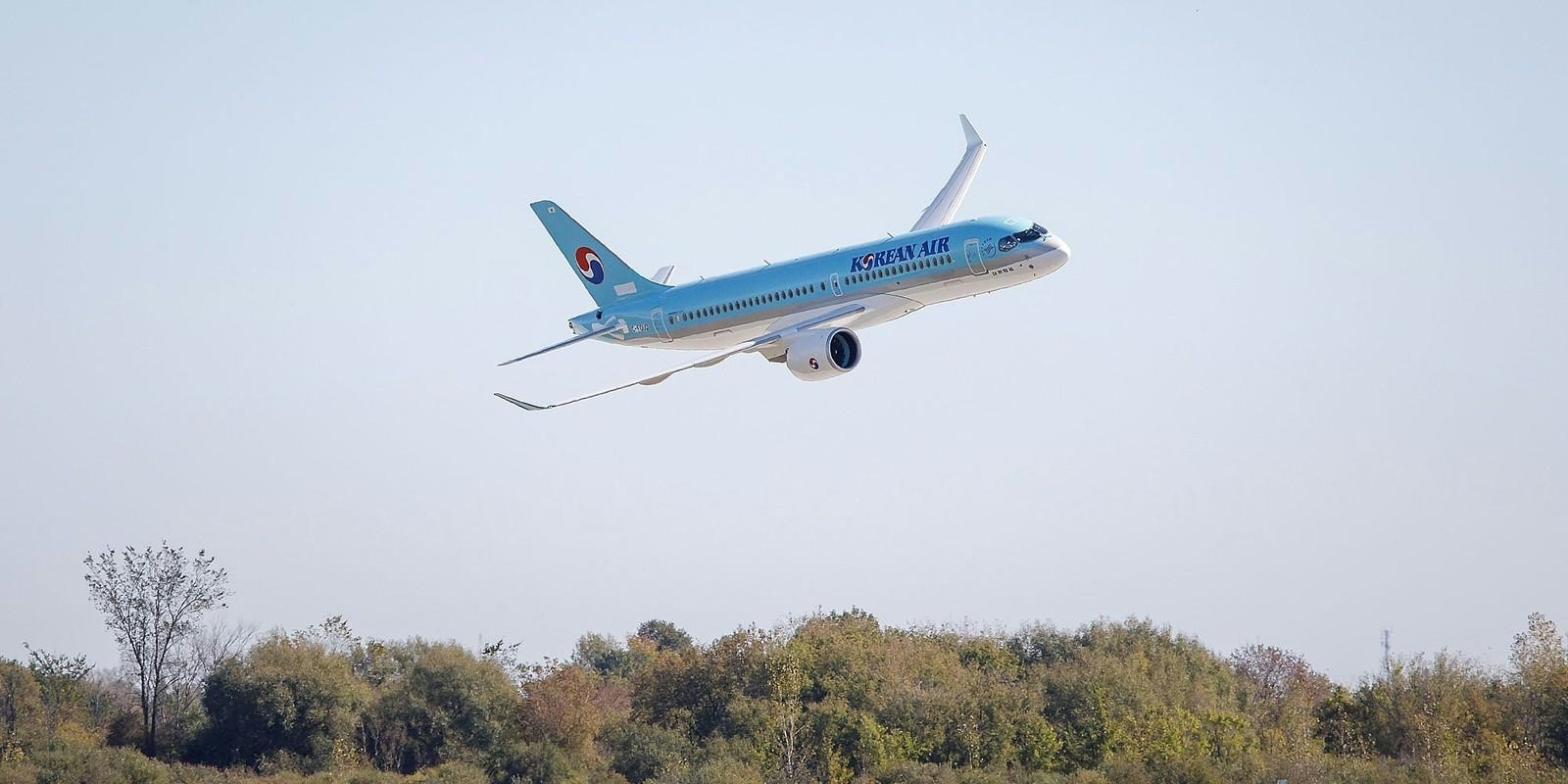
Airbus Sees Strong Potential for A220 in Southeast Asia
Expanding Connectivity Across the Region
Airbus has expressed strong confidence in the prospects of its A220 aircraft within Southeast Asia, a region where airlines are increasingly focused on expanding long, thin routes and improving connectivity between secondary cities. Anand Stanley, President of Airbus Asia Pacific, highlighted the unique suitability of the A220 for markets characterized by challenging geography, extensive distances, and route structures that favor smaller narrow-body aircraft. He pointed to Indonesia’s archipelagic layout, Malaysia’s diverse terrain, and the vast distances across Asia as factors that make point-to-point, long, thin routes particularly valuable. According to Stanley, the A220 is ideally positioned to meet these specific market demands.
The A220 programme has achieved significant milestones, surpassing 1,100 aircraft orders worldwide, with notable momentum in the Asia Pacific region. Airbus recorded 815 gross orders in the first five months of 2026, including 379 in May alone. More than half of these orders, and the majority of those in May, originated from the greater Asia Pacific region, including China. Airbus forecasts demand for nearly 20,000 new aircraft in Asia Pacific over the coming years, with approximately 16,000 expected to be single-aisle models. Stanley emphasized that much of this growth will be driven by long, thin routes, reflecting the shared connectivity needs of ASEAN countries fueled by economic expansion and rising air travel demand.
Competitive Landscape and Market Dynamics
Despite the promising outlook, Airbus faces stiff competition in Southeast Asia from established manufacturers such as Boeing, with its 737 series, and ATR, both of which maintain strong regional footholds. Airlines in the region are carefully assessing the A220’s efficiency and capacity to address evolving network requirements, particularly as they seek to replace aging fleets and adapt to shifting market conditions. Competitors are likely to respond by enhancing their own regional aircraft offerings, especially as Airbus contemplates the development of a larger A220 variant to meet customer demands.
A significant endorsement for the A220 came on May 6, when AirAsia announced an order for 150 A220-300 aircraft at Airbus’ Mirabel facility in Canada. This represents the largest single firm order for the A220 to date and marks AirAsia as a new customer. The airline also secured options for an additional 150 aircraft, potentially expanding its commitment to 300 jets from the A220 family. Deliveries are scheduled to begin in 2028, with AirAsia set to become the launch customer for the A220’s new 160-seat cabin configuration.
AirAsia Group CEO Bo Lingam confirmed that Philippines AirAsia would be among the first to receive the new A220s as part of the group’s broader fleet renewal programme. Stanley underscored that AirAsia’s order illustrates the A220’s broad appeal, extending beyond full-service carriers to low-cost airlines as well. He described the A220 as a clean-sheet, modern design capable of delivering best-in-class performance for both market segments.
As Southeast Asian airlines continue to modernize their fleets and expand their networks, the A220 emerges as a compelling option. However, Airbus will need to carefully navigate competitive pressures and evolving market demands to sustain its growth trajectory in the region.

Etihad and Swissport Extend Global Partnership
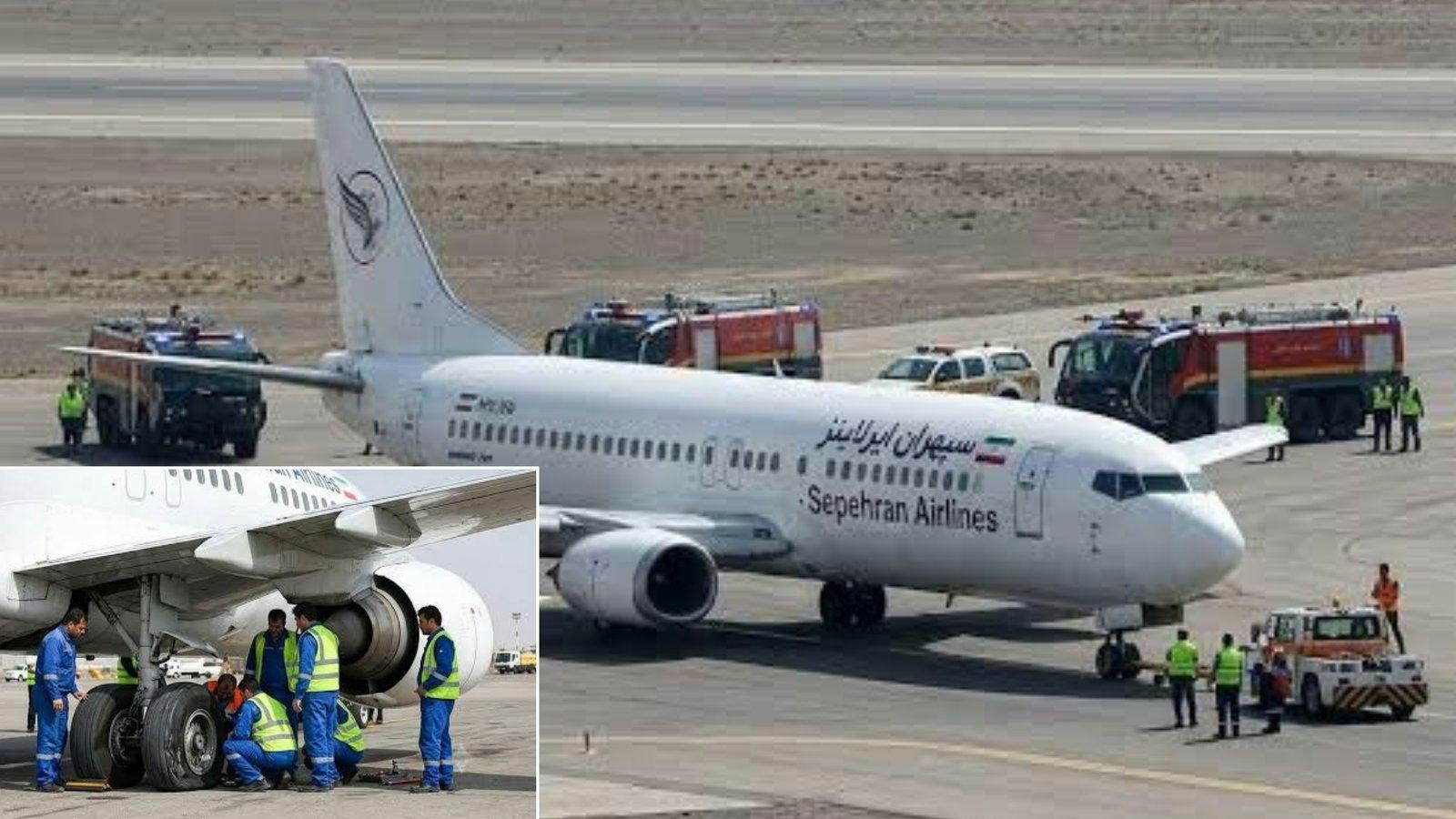
Sepehran Airlines B737 Returns to Mashhad After Tyre and Engine Issues

Etihad Deploys Widebody Fleet to Meet Strong Demand

Korean Air Finalizes $36.2 Billion Deal with Boeing
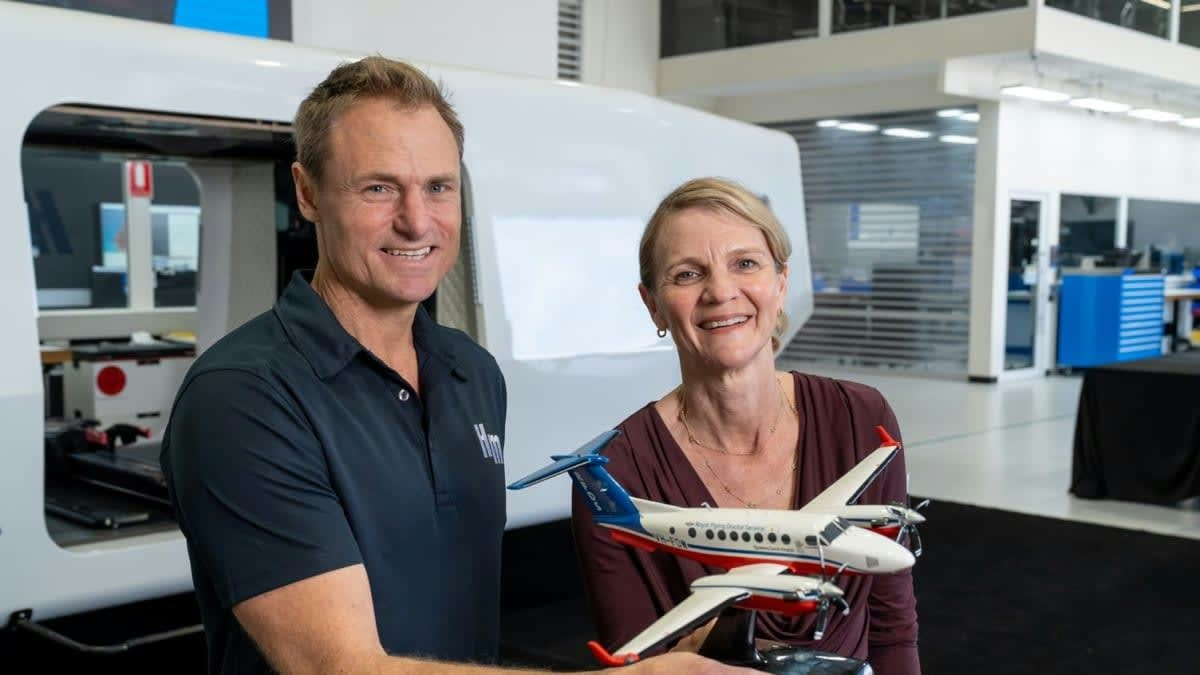
Australia’s RFDS Queensland Section Orders Six King Air 260Cs

Korean Air Finalizes Order for 103 Boeing Jets and Engines
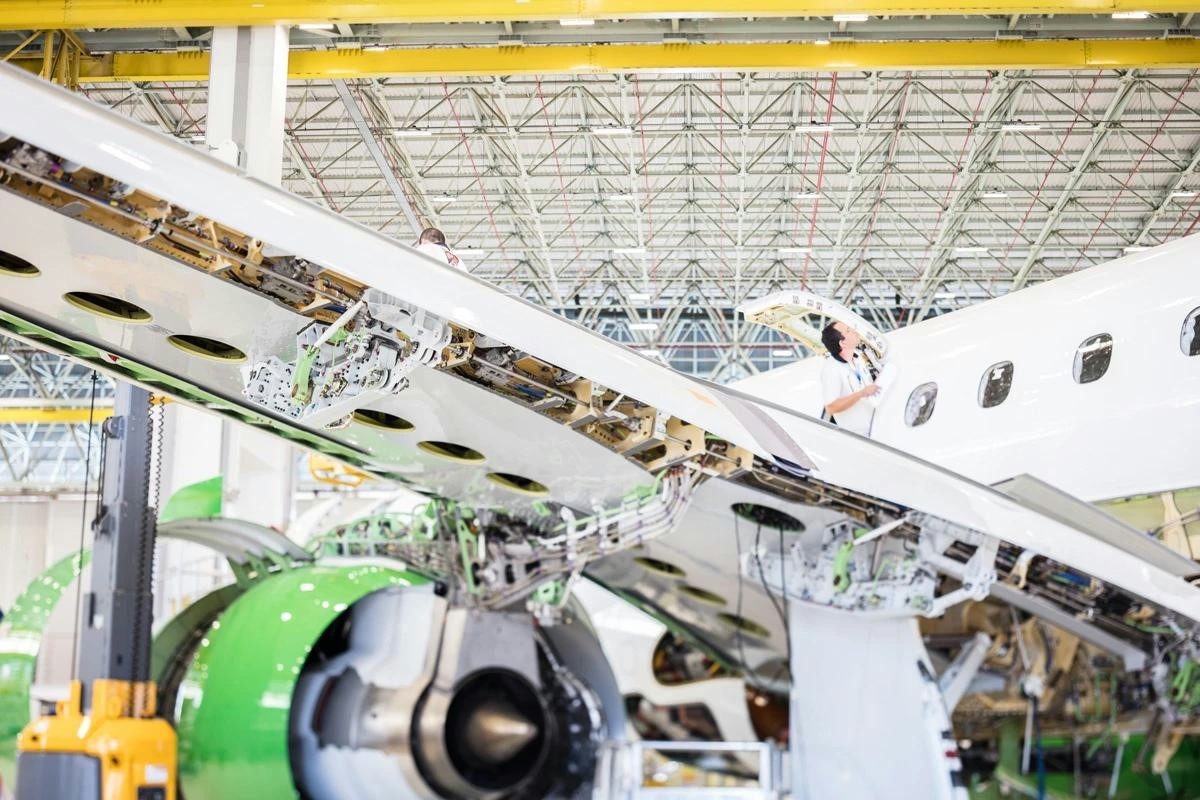
Embraer E195-E2 Features Distinctive Engine Placement Among Regional Jets
What Passengers Can Expect on Boeing’s New 777X Jet

How Ethiopian Airlines Became Africa’s Leading Carrier Amid Gulf Competition
Joby Aviation Extends Autonomous Flight Capabilities with Cross-Country Tour
