
图像

AeroGenie — 您的智能副驾驶。

问任何问题。分析一切。立即行动。

热门趋势

Categories

Airbus Updates A320 Software; Air Canada Reports No Impact on Operations
November 29, 2025By ePlane AI
Airbus Updates A320 Software; Air Canada Reports No Impact on Operations
0
0
Airbus A320
Flight Control Software
EASA Directive

Airbus Issues Urgent Software Update for A320 Family Amid Safety Concerns

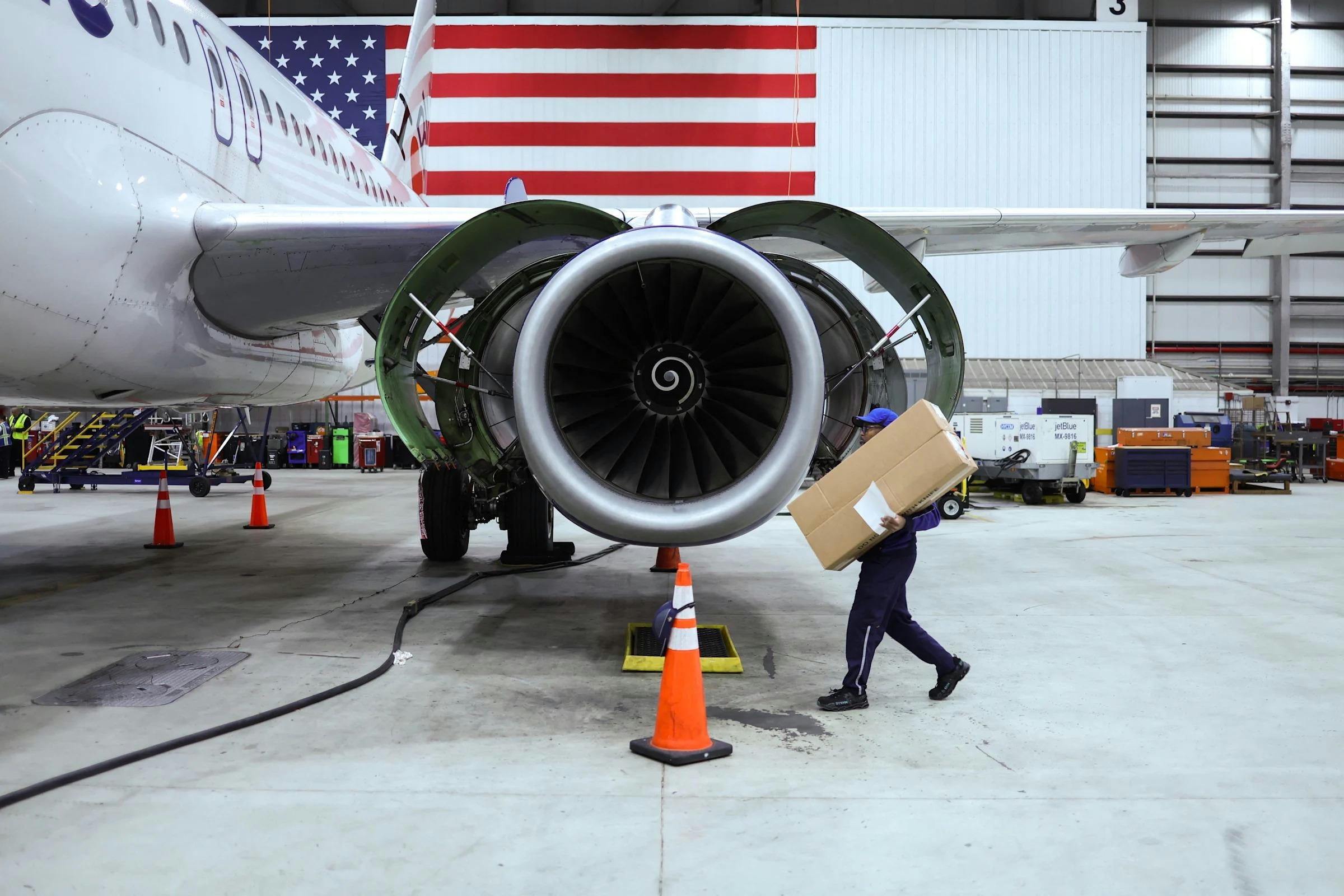
Airbus has released an urgent software update for its A320 family of aircraft following a recent incident involving a JetBlue flight, prompting regulatory action and industry-wide compliance efforts. The update addresses a potential glitch in the flight control software linked to solar radiation, which could adversely affect aircraft performance.

The directive follows an October 30 incident in which a JetBlue flight from Cancun to Newark experienced a sudden loss of altitude, resulting in injuries to several passengers and an emergency landing in Tampa. The U.S. Federal Aviation Administration (FAA) has launched an investigation into the event, while the European Union Aviation Safety Agency (EASA) has mandated that airlines implement the software update before operating affected aircraft.

Impact on Airlines and Operations

The timing of the software update, issued just before the busy U.S. Thanksgiving travel period, has raised concerns about potential delays and disruptions. American Airlines, which operates a large fleet of 340 A320-family aircraft, anticipates some delays as it works to comply with the new requirements. In contrast, Delta Air Lines expects minimal operational impact, and United Airlines has confirmed that its fleet is not affected by the issue.

Air Canada, operating 21 A320s along with five additional aircraft through its Rouge subsidiary, has completed a comprehensive review of its Airbus A319, A320, and A321 fleets. The airline reports no current impact on its operations but advises passengers to verify the status of connecting flights with other carriers, as disruptions may occur elsewhere in the network.

The implementation of this software update underscores the aviation industry's commitment to maintaining passenger safety and operational continuity amid emerging technical challenges.

More news
An-2 Successor Flies for First Time with Russian Engine

An-2 Successor Flies for First Time with Russian Engine

An-2 Successor Completes First Flight with Russian Engine Russia’s LMS-901 Baikal light utility aircraft has successfully completed its maiden flight powered by a domestically produced engine, marking a pivotal development in the country’s efforts to reduce reliance on Western aerospace technology amid ongoing international sanctions. The third flying prototype, developed by the Ural Civil Aviation Plant (UZGA), took off from the company’s airfield on February 23, conducting a 10-minute flight at approximately 1,000 feet altitude and reaching speeds near 118 mph before landing safely. This particular prototype, designated serial number 0005, is equipped with the Russian-made VK-800SP turboprop engine paired with the AV-901 propeller. Prior to this flight, the aircraft underwent an extensive ground testing program that evaluated all major systems and assemblies. The successful sortie follows Russia’s strategic push to localize critical aerospace components after Western sanctions, imposed in response to the 2022 invasion of Ukraine, disrupted deliveries of the originally intended General Electric H80 turboprop engine. In response, Russian authorities selected the VK-800 series, an engine adapted from a helicopter turboshaft, to power the new aircraft. UZGA engineers have incorporated several design modifications based on insights gained from earlier prototype testing. These include adjustments to the wing incidence angle to mitigate premature liftoff in gusty conditions, enhancements to the main landing gear, and a redesigned forward fuselage aimed at improving ergonomics and crashworthiness. Additional updates were made to onboard systems, including engine accessories, the fuel system, and flight controls. The aircraft is now scheduled to undergo further ground evaluations, such as wiring network inspections and vibration testing, before advancing to preliminary and certification flight trials. Design and Market Positioning The LMS-901 is intended as a modern replacement for the venerable Antonov An-2 biplane, which has long served remote regions across Russia. This single-engine, high-wing aircraft is designed to accommodate up to nine passengers or carry approximately 3,300 pounds of payload, with a maximum range of around 930 miles and a cruise speed reaching 155 mph. UZGA aims to position the LMS-901 for regional and special-mission operations, particularly in areas with limited airport infrastructure. The introduction of the LMS-901 occurs amid significant transformation within the global aviation industry. Companies such as Saab and Divergent Technologies are pioneering innovative software-defined fuselage designs, while Embraer focuses on promoting its E2 regional jets over the development of new airliners. Meanwhile, industry giants Airbus and Boeing continue to navigate challenges related to production rates and future aircraft strategies. The LMS-901’s entry into the market has the potential to disrupt the regional and cargo aircraft sectors, especially if it can deliver superior performance or cost advantages. However, it may also face challenges in gaining market acceptance and competing against established manufacturers responding to evolving customer demands. As the LMS-901 progresses toward certification, its development will be closely monitored both within Russia and internationally, representing not only a technical milestone but also a possible shift in the competitive landscape for regional utility aircraft.
From Sewing Machines to Sky Ships: The Lycoming-Zeppelin Connection

From Sewing Machines to Sky Ships: The Lycoming-Zeppelin Connection

From Sewing Machines to Sky Ships: The Lycoming-Zeppelin Connection As the nation recovers from a harsh winter, it is an opportune moment to reflect on a distinctive chapter in aviation history—one that bridges the “Golden Age” of flight with contemporary technological advancements. The story of how the iconic Goodyear Airship came to be powered by Lycoming IO-360 engines is not merely an engineering narrative but also a tale of unexpected partnerships and evolving industry dynamics. The Evolution of the Goodyear Blimp and the Zeppelin NT The Goodyear blimp is a familiar sight to many Americans, often seen hovering over major sporting events or at prominent aviation gatherings such as EAA AirVenture Oshkosh and SUN ‘n FUN. In Williamsport, Pennsylvania, the blimp holds a special local significance, making annual appearances during the Little League Baseball World Series near the home of Lycoming Engines. The transition from the classic “GZ-20” blimp to the advanced Zeppelin NT (New Technology) airship began with a fortuitous encounter in 1993 at AERO Friedrichshafen, Europe’s leading general aviation exhibition. Lycoming’s Munich-based team, including engineer Pierre Cornaz, sought out Zeppelin’s engineering group, who were then deeply engaged in designing a revolutionary semi-rigid airship. At the time, Zeppelin had yet to select an engine for their new craft. Unlike earlier blimps powered by two Continental IO-360 engines, the Zeppelin NT required three engines to operate its innovative thrust-vectoring system. This system allows the propellers to swivel 90 degrees, enabling vertical takeoff and precise hovering capabilities even in challenging crosswinds. After extensive technical discussions, the 200-horsepower Lycoming IO-360 was chosen as the optimal engine, providing the ideal combination of power, weight, and fuel-injected reliability necessary for extended flights. Today, the Zeppelin NT’s three engines—two mounted on forward pylons and one positioned transversely at the tail—are central to its distinctive performance. From Sewing Machines to Aerospace Innovation The partnership between Lycoming and Zeppelin represents more than a technical milestone; it embodies a broader transformation from Lycoming’s origins in sewing machine manufacturing to its current role at the forefront of aerospace technology. This evolution, however, is accompanied by significant challenges. Integrating traditional manufacturing expertise with cutting-edge aerospace innovation raises questions about market acceptance and scalability. Industry analysts have noted skepticism regarding the feasibility of such integration, while established aerospace competitors are likely to intensify research and development efforts to maintain their market positions. Additionally, regulatory compliance and the substantial investments required for new technologies and infrastructure add layers of complexity to this transition. A subsequent visit to Zeppelin’s flight test facility highlighted the global interconnectedness of the aviation industry. During this visit, an introduction to chief test pilot Scott Danneker—whose family roots trace back to Williamsport, just steps from the Lycoming plant—underscored the close-knit nature of the aviation community, where innovation and personal histories frequently intersect. The Lycoming-Zeppelin collaboration stands as a testament to technological ingenuity and the enduring spirit of cooperation, bridging continents, industries, and generations in the ongoing pursuit of flight.
Is the Boeing 777X Longer Than the Airbus A340-600?

Is the Boeing 777X Longer Than the Airbus A340-600?

Is the Boeing 777X Longer Than the Airbus A340-600? For many years, the Airbus A340-600 held the distinction of being the world’s longest passenger aircraft. Its notably slender and elongated fuselage earned it the nickname “the long pencil,” symbolizing an era when aircraft length and multiple engines were the primary means to achieve extended range and high passenger capacity. However, as the aviation industry has increasingly favored more efficient twin-engine designs, Boeing introduced a new contender: the 777X. The key question among aviation experts and industry observers has been whether Boeing’s latest flagship, the 777-9—the largest model in the 777X family—has surpassed the A340-600 in length. The answer is affirmative. The Boeing 777-9 is now the longest passenger aircraft in the world, narrowly but definitively exceeding the length of the A340-600. Marginal Differences, Major Implications The Boeing 777-9 measures 76.72 meters (251 feet 9 inches) from nose to tail, while the Airbus A340-600 is 75.36 meters (247 feet 3 inches) long. This difference of approximately 1.36 meters (4.5 feet) places the 777-9 ahead of the Airbus quadjet. Although the A340-600 held the title for nearly a decade, it was first overtaken by the Boeing 747-8 in 2011. Now, the 777-9 has extended the record further, marking the first time a twin-engine jet has claimed the title of the longest passenger aircraft. This milestone is enabled by the powerful General Electric GE9X engines, which provide the necessary thrust to lift a fuselage even longer than that of the 747-8. The additional length allows the 777-9 to accommodate between 400 and 426 passengers in a typical multi-class configuration, matching the capacity of older four-engine aircraft while delivering superior fuel efficiency. Design Philosophies and Industry Shifts The Airbus A340-600 epitomized the “long and thin” design philosophy, engineered to cover long distances with high passenger loads without the infrastructure demands associated with larger aircraft like the 747. In contrast, the 777-9 represents a new era in aircraft design. By stretching the fuselage of the 777-300ER by nearly three meters, Boeing has produced not only the longest twin-engine jet but also the longest passenger aircraft ever to enter production. This evolution reflects broader industry trends. When the A340-600 was developed in the late 1990s, airlines and regulators remained cautious about twin-engine jets operating over remote oceanic routes. Today, advances in engine reliability and efficiency have made such operations routine, enabling aircraft like the 777X to dominate the long-haul market. Operational Realities and Future Prospects Despite facing production delays and stringent safety mandates that have challenged both Boeing and Airbus, Boeing’s renewed emphasis on safety and an industrial reset have positioned the 777X as a formidable competitor in the widebody market. Deliveries of the 777X are expected to commence in 2027, offering airlines a combination of record-breaking size, enhanced efficiency, and cutting-edge technology. For passengers, the 777-9’s extended cabin promises a spacious and comfortable interior. For pilots, the aircraft’s unprecedented length requires careful handling during ground operations. As the 777X prepares to enter service, it not only sets new records but also heralds a new chapter in the evolution of widebody aircraft.
IndiGo Secures Japanese Financing for Aircraft, a First in Indian Aviation

IndiGo Secures Japanese Financing for Aircraft, a First in Indian Aviation

IndiGo Secures Japanese Financing for Aircraft, a First in Indian Aviation India’s largest airline, IndiGo, has achieved a significant milestone by becoming the first Indian carrier to secure Japanese equity financing for two Airbus A320 family aircraft. This landmark transaction, executed through a Japanese Operating Lease with Call Option (JOLCO), marks a pivotal development in the Indian aviation sector, reflecting growing international investor confidence in the creditworthiness of Indian airlines and the strength of India’s legal and regulatory framework. A New Financing Paradigm for Indian Aviation Japanese equity financing is generally more cost-effective than traditional debt instruments. Japanese investors, known for their conservative risk appetite, have historically limited their investments to top-tier, state-owned, or highly rated international airlines such as British Airways, Singapore Airlines, and Cathay Pacific. IndiGo’s successful access to JOLCO financing, previously unavailable to Indian carriers, signals a notable shift in global perceptions of Indian aviation credit risk. The transaction was facilitated through Gujarat International Finance Tec-City (GIFT City), a special economic zone designed to promote financial services. Aircraft leasing entities registered under the International Financial Services Centre (IFSC) in GIFT City benefit from significant tax incentives. To enable this deal, IndiGo established a dedicated leasing subsidiary, InterGlobe Aviation Financial Services IFSC Private Limited. Under the JOLCO structure, Japanese investors—including corporations and high-net-worth individuals—co-invest alongside bank debt to finance the aircraft, which are then leased to IndiGo. The airline retains the option to purchase the aircraft at the end of the lease term. Japanese tax laws allow these investors to claim depreciation allowances, reducing their dependence on lease income and enabling lower lease rates for the airline. A participant in the transaction noted that investors are willing to accept lower economic returns on equity because a substantial portion of their benefits derives from tax shields rather than lease income alone. Regulatory Reforms and Market Confidence Indian airlines have historically faced skepticism from global lessors due to a series of bankruptcies and weak insolvency laws that complicated aircraft repossession. The recent collapse of Go First, which resulted in prolonged legal disputes, highlighted these challenges. However, India’s adoption in February of legislation aligning with the Cape Town Convention—an international treaty that mandates aircraft repossession within 60 days of bankruptcy—has significantly mitigated jurisdictional risks. GIFT City has also addressed a critical impediment: the absence of a double taxation treaty between India and Japan, which had previously rendered direct JOLCO structures unfeasible. Ajay Kumar, Managing Partner at KLA Legal, which advises global lessors, remarked that JOLCO transactions through GIFT City offer an excellent opportunity for Japanese investors to participate in India’s expanding civil aviation sector. He emphasized that this development reflects both a reduction in credit risk and growing confidence in GIFT City’s financial structures. Operational Challenges Amid Financial Innovation Despite this financing breakthrough, IndiGo continues to confront operational challenges. Airspace closures over Pakistan and Iran have necessitated longer and more expensive flight detours, potentially affecting the airline’s operational efficiency and financial performance. These disruptions may attract heightened scrutiny from investors and market analysts. Meanwhile, competitors are likely to respond by leveraging their own financial resources or pursuing alternative financing arrangements to sustain their market positions. IndiGo’s successful acquisition of Japanese financing not only opens new avenues for Indian airlines but also highlights the evolving landscape of aircraft financing in India. Regulatory reforms and innovative financial structures are increasingly attracting global capital to the sector, signaling a transformative phase for Indian civil aviation.
Korean Air and Skyports Sign Memorandum of Understanding on Air Traffic

Korean Air and Skyports Sign Memorandum of Understanding on Air Traffic

Korean Air and Skyports Forge Partnership to Advance Urban Air Mobility Korean Air, South Korea’s national flag carrier, has formalized a Memorandum of Understanding (MoU) with Skyports Infrastructure, a prominent specialist in vertiport design, to collaborate on the future management of urban air mobility (UAM) services. The agreement, signed during the 2026 Drone Show Korea (DSK) exhibition, seeks to jointly develop and analyze air traffic management solutions tailored for next-generation aviation technologies. Collaboration on Air Traffic Management Systems The partnership will focus on leveraging the strengths of both organizations by integrating Skyports’ Vertiport Automation System (VAS) with Korean Air’s Air Control & Routing Orchestrated Skyway System (ACROSS). This collaboration aims to facilitate the seamless operation of vertiports—specialized hubs designed for electric vertical take-off and landing (eVTOL) aircraft—within urban landscapes. By doing so, the two companies hope to revolutionize the movement of passengers and cargo in densely populated areas, potentially reshaping urban transportation networks. Challenges and Industry Context Despite the promising outlook, the initiative faces notable challenges, particularly in regulatory compliance. Korean Air is currently embroiled in a dispute with South Korean competition authorities concerning fines related to its proposed merger with Asiana Airlines. This ongoing regulatory uncertainty may affect the pace and scope of the UAM project, introducing risks that have elicited cautious responses from some investors. Market reactions to the partnership have been mixed. While some stakeholders remain wary due to the regulatory environment surrounding Korean Air, others recognize the innovative potential of the vertiport concept and its capacity to transform urban mobility. The collaboration may also influence competitive dynamics within the aviation sector, prompting rival airlines to consider similar strategic alliances to maintain relevance amid rapid technological change. The broader aviation industry is contending with significant disruptions, as evidenced by recent operational challenges across Asia’s air transport network. Such instability could further complicate the rollout and success of emerging ventures like the vertiport initiative. Nonetheless, Korean Air and Skyports have reaffirmed their commitment to advancing urban air mobility. Their partnership exemplifies a wider industry trend toward embracing innovation and adapting to evolving transportation demands and technological progress.
Kazakhstan Advances as Regional Travel Hub with SCAT Airlines’ Boeing MRO Facility and Fleet Expansion

Kazakhstan Advances as Regional Travel Hub with SCAT Airlines’ Boeing MRO Facility and Fleet Expansion

Kazakhstan Advances as Regional Travel Hub with SCAT Airlines’ Boeing MRO Facility and Fleet Expansion Kazakhstan is taking significant steps to establish itself as a central travel hub in Central Asia, driven by SCAT Airlines’ plans to develop a Boeing Maintenance, Repair, and Overhaul (MRO) facility at Shymkent International Airport alongside an expansion of its fleet. This strategic move aims to enhance the airline’s operational capabilities while supporting Kazakhstan’s broader vision of becoming a pivotal player in the region’s aviation sector. Strategic Development of Boeing MRO Facility SCAT Airlines, one of Kazakhstan’s leading carriers with a predominantly Boeing fleet, has long served key domestic and international routes. The airline is now exploring the creation of a cutting-edge MRO facility in partnership with Boeing, which would enable aircraft maintenance to be conducted domestically rather than relying on foreign service centers. This development is expected to bring substantial benefits not only to SCAT Airlines but also to other regional carriers, positioning Kazakhstan as a vital aviation maintenance hub in Central Asia. The proposal for the MRO center was a focal point during a recent high-level meeting between Kazakh President Kassym-Jomart Tokayev and Boeing executives in the United States. The collaboration promises to introduce world-class technical expertise to Kazakhstan’s aviation infrastructure, ensuring the SCAT fleet remains in optimal condition. Moreover, the facility is anticipated to attract regional and international airlines seeking cost-effective and efficient maintenance services, thereby enhancing Kazakhstan’s strategic standing in the global aviation market. Challenges and Market Dynamics Despite these promising developments, Kazakhstan’s ambition to become a regional travel hub faces several challenges. The aviation industry in Central Asia is marked by intense competition, with neighboring countries investing heavily in their own infrastructure to capture a larger share of regional air traffic. Additionally, ongoing supply chain disruptions and volatile fuel prices continue to complicate efforts to expand fleets and improve operational efficiency. In response, airlines across the region are prioritizing fleet modernization and forming strategic partnerships to navigate these complexities. Market responses to SCAT Airlines’ initiatives have been significant, with increased interest from regional travelers and airlines seeking dependable maintenance solutions. Competitors are likely to respond by upgrading their facilities or adjusting routes and services to protect their market positions. Recent industry data highlights the critical role of modernization and collaboration as airlines adapt to shifting market conditions. As SCAT Airlines advances its MRO facility and fleet expansion plans, Kazakhstan stands to enhance regional connectivity, stimulate tourism growth, and bolster its economy. The ultimate success of these initiatives will depend on the country’s ability to overcome industry challenges while leveraging emerging opportunities within the rapidly evolving aviation landscape.
How Russian Aircraft Continue to Use Western Parts

How Russian Aircraft Continue to Use Western Parts

How Russian Aircraft Continue to Use Western Parts Exclusive documentation obtained by UNITED24 Media reveals that, despite stringent EU and US sanctions, Russia continues to procure substantial quantities of Western aviation components. Customs records and internal communications indicate that Russian aviation remains heavily dependent on these restricted parts, which are funneled into the country through an intricate global network of intermediaries. Sanctions Evasion Through Global Networks Since the imposition of sanctions by leading aerospace companies in the United States and European Union, Russia has encountered significant obstacles in maintaining its aircraft fleet. Many Russian planes, including those operated by state-owned carriers, rely on Western-manufactured parts essential for safe operation. To circumvent these restrictions, Russian entities have established a complex network of third-party companies across various countries. These intermediaries legally purchase aviation components in jurisdictions not subject to sanctions and subsequently re-export them to Russia, often obscuring the true end-user to evade detection and breach export controls. Recent customs data highlights the scale and sophistication of this operation. For instance, on June 18, 2024, the China-based Ruida Flying Aviation Technology Company acquired a push-button switch from Honeywell, a major US aerospace manufacturer. Although the part was initially imported into China through legal channels, it was later resold to Aeroflot, Russia’s largest airline, which is majority-owned by the Russian government. This transaction, among many others, effectively bypassed legislation prohibiting such sales to Russia. Between April 2024 and March 2025, thousands of shipments containing avionics and aircraft systems were traced to Russia. Honeywell emerged as the most frequent supplier, with a broad range of products—including safety systems, electronics, and mechanical components—ultimately reaching Russian buyers. Other Western companies were also implicated in these transactions, often through convoluted supply chains involving logistics firms and shell companies. Industry and Market Implications The continued influx of Western parts into Russia underscores several challenges and transformations within the global aerospace sector. While sanctions and export restrictions have curtailed Russia’s access to critical technology, they have also intensified scrutiny from international regulators and prompted potential boycotts by buyers reluctant to support Russian military or civil aviation capabilities. In response, competitors are seeking to exploit emerging opportunities. The Embraer-Adani alliance, for example, is increasing production of regional aircraft in India, targeting markets that may prefer to avoid entanglements with Russian or Western supply chains. Concurrently, Russia is accelerating efforts to achieve technological self-sufficiency by turning to Chinese suppliers and investing heavily in domestic drone and aerospace manufacturing. These developments are reshaping the competitive landscape. As Russia’s dependence on Western technology endures, the risk of supply disruptions and maintenance difficulties grows. Simultaneously, the global market is witnessing a shift toward alternative aircraft platforms and heightened vigilance against sanctions evasion.
Archer Integrates Starlink into Midnight Electric Air Taxi

Archer Integrates Starlink into Midnight Electric Air Taxi

Archer Integrates Starlink into Midnight Electric Air Taxi Archer Aviation has announced its intention to incorporate SpaceX’s Starlink internet service into its flagship Midnight electric vertical takeoff and landing (eVTOL) air taxi. This marks the first deployment of Starlink on an eVTOL aircraft, aiming to provide high-speed internet connectivity for up to four passengers during short urban flights connecting airports, downtown districts, and event venues in major cities such as New York, Miami, and Los Angeles. Enhancing Connectivity for Urban Air Mobility Starlink’s satellite constellation, comprising nearly 10,000 low-Earth orbit satellites, is engineered to deliver broadband-level speeds even in densely populated urban areas or locations with limited cellular coverage. Archer highlights that this capability makes Starlink particularly well-suited for air taxi operations at altitudes around 1,500 feet above ground level. The integration is expected to significantly improve the passenger experience by enabling activities such as video streaming, voice calls, and online gaming throughout all phases of flight. Additionally, it will facilitate critical communications between Midnight’s pilots and ground engineers, forming a key component of Archer’s broader air taxi connectivity framework. Adam Goldstein, Archer’s founder and CEO, emphasized the importance of connectivity for the Midnight air taxi, stating, “Connectivity is a must-have feature for Midnight. Starlink is uniquely built to deliver it.” He described the collaboration as an industry first that will provide seamless, high-speed internet access and essential amenities for both passengers and pilots. The Starlink system employs a flat, electronically steered antenna capable of automatically tracking multiple satellites to maintain uninterrupted service as the aircraft moves. Installation on each airframe will require a supplemental type certificate (STC), a regulatory approval process that Archer must complete to deploy Starlink across its fleet. Starlink’s Growing Role in Commercial Aviation and Industry Implications Since JSX became the first commercial carrier to equip its aircraft with Starlink in 2023, the satellite internet system has rapidly expanded its footprint in the aviation sector. Major airlines including United, Southwest, Lufthansa, Alaska Airlines, British Airways, Emirates, and numerous national carriers across Europe and Asia have announced plans to install Starlink on their fleets. The system is compatible with a broad range of aircraft models, with additional certifications underway for planes manufactured by Boeing, Airbus, Dassault, Pilatus, and others. Archer’s move to integrate Starlink comes amid intensifying competition and regulatory scrutiny within the eVTOL industry. Competitors such as Joby Aviation and Vertical Aerospace are also advancing connectivity and technological capabilities, potentially accelerating a wider industry shift toward in-flight internet services for urban air mobility. The competitive environment is further complicated by ongoing legal disputes, with Archer currently engaged in litigation against Vertical Aerospace over alleged patent infringement and seeking dismissal of a trade-secret lawsuit filed by Joby Aviation. Despite these challenges, Archer views Starlink as a strategic differentiator with applications extending beyond passenger convenience. The company plans to collaborate closely with SpaceX to develop enhanced connectivity solutions aimed at improving operational efficiency and safety for its Midnight air taxis. As Archer progresses with Starlink integration, the initiative is poised to influence regulatory discussions and shape market expectations regarding connectivity standards in the emerging urban air mobility sector.
Airbus Expresses Concern Over GTF Engine Delays and Slow SAF Development

Airbus Expresses Concern Over GTF Engine Delays and Slow SAF Development

Airbus Highlights Engine Delivery Delays and Slow Progress in Sustainable Aviation Fuel Production Challenges Linked to Pratt & Whitney’s GTF Engine Issues Airbus has publicly expressed growing concern over ongoing delays in the delivery of Pratt & Whitney’s geared turbofan (GTF) engines, which has directly influenced a downward revision of its A320 production targets. In its recent full-year earnings presentation, the European aerospace giant announced a revised forecast of producing between 70 and 75 A320-family aircraft per month by the end of 2027, a reduction from the previously anticipated steady rate of 75. Airbus expects to stabilize production at 75 units per month thereafter. Chief Executive Guillaume Faury attributed the production slowdown primarily to Pratt & Whitney’s failure to meet engine delivery commitments. He stated, “Pratt & Whitney’s failure to commit to the number of engines ordered by Airbus is negatively impacting this year’s guidance and the ramp-up trajectory for this year.” Faury emphasized Airbus’s determination to enforce its contractual rights in response to these challenges. The root of the problem lies in a recall campaign affecting Pratt & Whitney’s PW1000G GTF engines, which power the A320neo family alongside CFM International’s LEAP-1A engines. A defect involving powdered metal components necessitated the grounding of hundreds of aircraft for maintenance, causing significant delays in new engine deliveries. Although Pratt & Whitney reported a 6% increase in GTF engine deliveries in 2025, Airbus and its customers remain concerned about the company’s recovery pace from the recall. Faury expressed particular frustration with Pratt & Whitney’s prioritization of servicing in-service aircraft over supplying new engines to Airbus. He argued that the manufacturer should expand its capacity to address both demands simultaneously, stating, “We continue to work with them to make them change the way they manage this.” Despite these setbacks, Airbus maintains a positive outlook for 2026, projecting deliveries of 870 commercial aircraft—an increase of nearly 10% compared to the 793 units delivered in 2025. The company reported a 6% rise in revenue to €73.4 billion ($86.6 billion) and a 33% increase in adjusted EBIT to €7.1 billion for the year. Airbus also secured 1,000 gross aircraft orders in 2025, ending the year with a record backlog of 8,754 aircraft. Other engine manufacturers, including MTU Aero Engines and CFM International, are advancing their engine technologies in response to market demands. Airlines such as Volaris anticipate a reduction in GTF-related groundings as the industry approaches a turning point in resolving these technical issues. Airbus’s production targets for other aircraft models remain largely stable. The A220 is now expected to reach a production rate of 13 per month by 2028, down from an earlier target of 14 per month in 2026. The A330 and A350 production rates are set to hold steady at five and 12 units per month by 2029 and 2028, respectively. Concerns Over Slow Development of Sustainable Aviation Fuel Beyond the challenges related to engine supply, Guillaume Faury also voiced concern over the sluggish progress in the sustainable aviation fuel (SAF) market. He underscored Airbus’s commitment to SAF as a critical component of the industry’s decarbonization strategy but acknowledged that its development remains largely outside the company’s direct control. “The progress is slow—too slow—but it’s not something we should give up on,” Faury remarked, highlighting the importance of continued efforts to advance SAF adoption.
AIAA Identifies Key Issues to Strengthen U.S. Aerospace Leadership in 2026

AIAA Identifies Key Issues to Strengthen U.S. Aerospace Leadership in 2026

AIAA Identifies Key Issues to Strengthen U.S. Aerospace Leadership in 2026 As the United States approaches 2026, its aerospace sector faces a pivotal moment shaped by rising demands for safer, more resilient air transportation, increasing congestion in airspace, the commercialization of space, and rapidly evolving defense requirements. The American Institute of Aeronautics and Astronautics (AIAA) has published its 2026 Key Issues report, outlining critical priorities designed to assist policymakers and industry leaders in maintaining U.S. aerospace leadership amid intensifying global competition and internal challenges. The report highlights several structural concerns confronting the nation’s aerospace industry. The aging fleet of aircraft and persistently low readiness rates pose significant risks, particularly as the U.S. Air Force’s capabilities may decline in the event of a future conflict with China. Market dynamics further complicate the landscape: Airbus continues to dominate single-aisle aircraft sales, while Boeing struggles to reclaim its position in the narrowbody segment. Additionally, companies such as Honeywell are expanding aggressively into the Asia-Pacific defense market, underscoring the need for innovation and strategic partnerships to sustain competitive advantage. Aviation: Modernizing for Safety, Resilience, and Growth AIAA’s aviation priorities emphasize the urgent need to modernize the National Airspace System (NAS) to enhance safety and support sustainable growth. Although the NAS remains one of the most advanced globally, much of its infrastructure is outdated and increasingly susceptible to cyber threats and operational disruptions. The Institute calls for sustained funding from the Federal Aviation Administration (FAA) for the Next Generation Air Transportation System (NextGen), focusing on investments in time-based, precision flight operations and the advancement of digital air traffic control systems. These upgrades are essential not only to bolster safety and cybersecurity but also to accommodate emerging technologies such as advanced air mobility (AAM) and commercial space operations. AIAA stresses the importance of regulatory and operational clarity for AAM and autonomous flight, advocating for scalable certification and integration pathways that support early operations and future autonomy. The report also draws attention to manufacturing challenges, including qualification bottlenecks, fragile supply chains, and shortages in skilled labor, all of which hinder technology adoption and production readiness. National Security: Bridging the Gap Between Objectives and Capacity In the defense arena, AIAA highlights a growing disparity between U.S. defense objectives and the realities of industrial capacity, sustainment, and acquisition speed. Recent conflicts and war-gaming exercises have revealed that industrial fragility, rather than engineering feasibility, may be the primary constraint on military readiness. The Institute emphasizes the need to accelerate qualification processes, enhance workforce capacity, and build resilience within supply chains. A particularly contentious issue for 2026 is the debate surrounding the defense right-to-repair. While access to sustainment capabilities is vital for maintaining readiness, broad mandates risk undermining intellectual property protections that incentivize private investment in defense innovation. AIAA advocates for balanced sustainment policies that provide tailored access to technical data necessary for maintenance without compromising the incentives that drive innovation. Sustaining U.S. Aerospace Leadership The 2026 Key Issues report reflects AIAA’s role as a neutral, technical convener bridging government, industry, and academia. Its consistent focus on strengthening safety, modernizing systems, protecting innovation, and supporting the workforce and industrial base aims to ensure that the United States remains at the forefront of global aerospace. This commitment is particularly critical as international competitors invest heavily in advanced technologies and pursue strategic market expansion.
line
Airbus Updates A320 Software; Air Canada Reports No Impact on Operations









