
将人工智能洞察转化为可执行行动

热门趋势
Categories
Airlines Struggle to Integrate AI in Search Technology
Airlines Struggle to Integrate AI in Search Technology
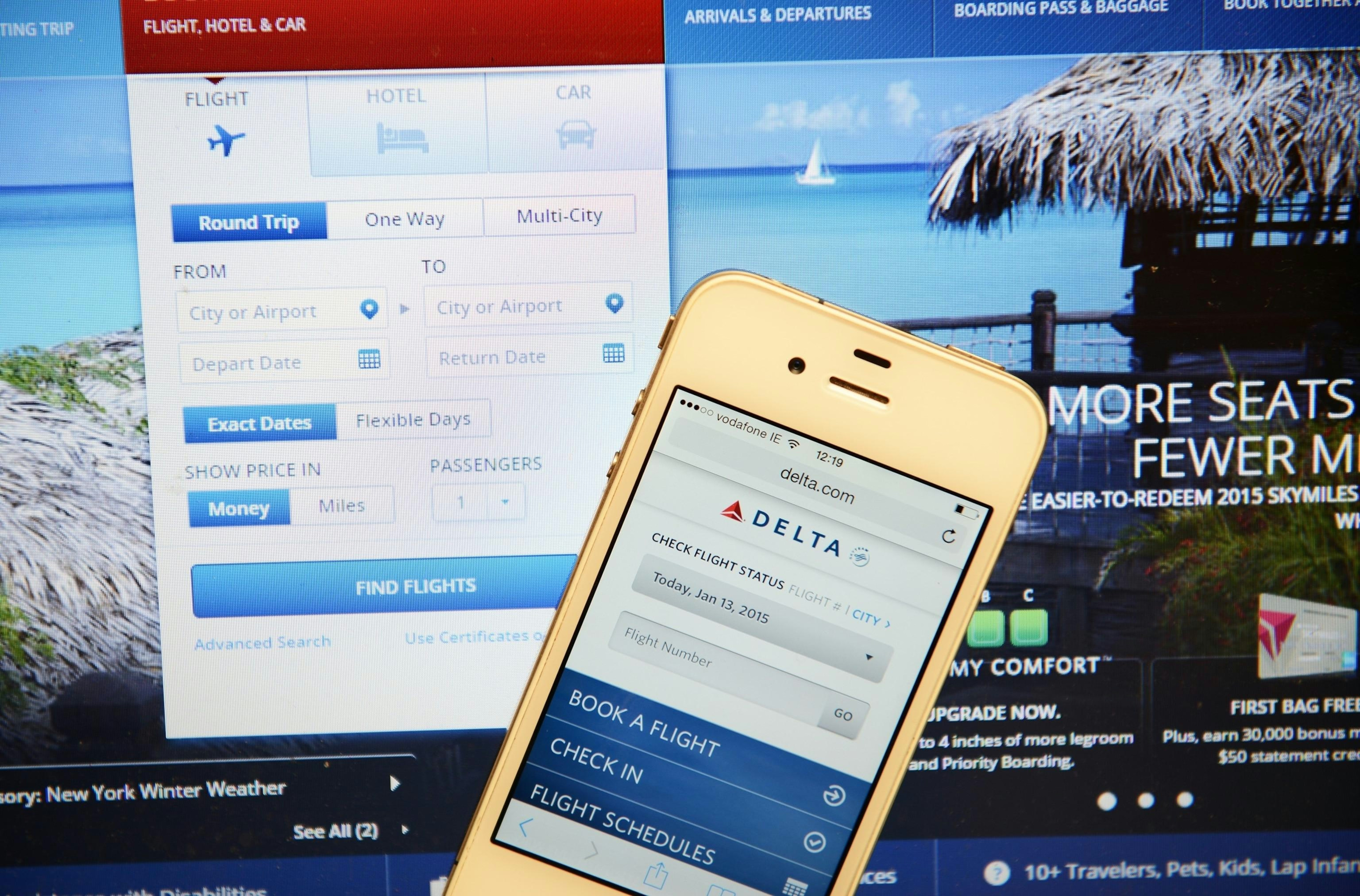
Despite substantial investments in online booking platforms, major airlines are falling behind smaller tour operators in leveraging artificial intelligence (AI) for travel search, according to a recent study. The research reveals that travelers seeking advice from AI assistants are more likely to receive relevant and comprehensive recommendations from smaller operators than from the airlines themselves.
Study Highlights Disparities in AI Search Readiness
The audit, conducted by Obvlo—a company specializing in destination content and AI search tools for the travel sector—assessed 100 leading travel brands across five categories: airlines, hotel groups, online travel agencies, tourism organizations, and tour operators. The evaluation measured AI search readiness based on website infrastructure, AI features, and the quality and depth of information provided. Out of the 100 brands, only 23 met Obvlo’s threshold for AI search readiness, while 46 scored below 30 out of 100, placing them in the “at risk” category.
Airlines performed the poorest, with an average score of just 27, whereas tour operators led the pack with an average score of 52. This outcome is particularly striking given the airlines’ substantial technology budgets and extensive customer data. The study attributes this gap to fundamental differences in website design and content focus. Airline websites primarily aim to facilitate bookings by presenting fare options, schedules, and direct purchase pathways. In contrast, tour operators focus on educating potential travelers about destinations, itineraries, and the unique value of their experiences before encouraging bookings.
From SEO to Generative Engine Optimization
The findings underscore a broader shift in digital search paradigms—from traditional Search Engine Optimization (SEO) to what Obvlo terms Generative Engine Optimization (GEO), or AI search. Unlike SEO, which delivers a list of links for users to explore, AI assistants such as ChatGPT and Gemini generate synthesized answers drawn from a limited set of authoritative sources. This transition represents a move from “ten blue links to one cited answer,” fundamentally altering how travel information is curated and presented.
In this evolving landscape, airlines continue to provide essential transportation services, but smaller operators are better positioned to supply the rich, detailed content that AI systems rely on to recommend destinations, routes, and experiences. Obvlo’s scoring system allocated up to 25 points each for website infrastructure and AI-readiness features, and 50 points for the quality and depth of information. The assessment considered factors such as accessible web pages, structured data, visible update timestamps, factual accuracy, and clear descriptions of places and attractions.
While a few airlines scored as high as 64, 78, and 81—indicating potential within the sector—the majority lagged significantly, with a median score of just 13 among the remaining 16 airlines evaluated. By comparison, hotel groups averaged 31, tourism organizations 38, and online travel agencies 43. Notably, seven tour operators surpassed the 60-point readiness mark, highlighting their relative agility in adapting to AI-driven search demands.
Challenges and Future Prospects for Airlines
Integrating AI into search technology presents considerable challenges for airlines. Developing the necessary data infrastructure requires significant investment and specialized expertise. Additionally, concerns surrounding passenger privacy and data security contribute to industry caution. As competitors increase their AI investments, airlines face the prospect of a technological arms race within the travel sector.
Despite these hurdles, the global AI market in aviation is projected to expand rapidly, signaling strong future demand for advanced AI solutions. For the time being, however, airlines’ extensive resources have yet to translate into dominance in AI-powered search, leaving smaller, more nimble operators to lead innovation in the evolving travel technology landscape.

Etihad and Swissport Extend Global Partnership

Sepehran Airlines B737 Returns to Mashhad After Tyre and Engine Issues

Etihad Deploys Widebody Fleet to Meet Strong Demand

Korean Air Finalizes $36.2 Billion Deal with Boeing

Australia’s RFDS Queensland Section Orders Six King Air 260Cs

Korean Air Finalizes Order for 103 Boeing Jets and Engines

Embraer E195-E2 Features Distinctive Engine Placement Among Regional Jets

What Passengers Can Expect on Boeing’s New 777X Jet

How Ethiopian Airlines Became Africa’s Leading Carrier Amid Gulf Competition

Joby Aviation Extends Autonomous Flight Capabilities with Cross-Country Tour
