
将人工智能洞察转化为可执行行动

热门趋势
Categories
Amadeus and Microsoft Highlight AI Opportunities for Airlines in Pivotal Year
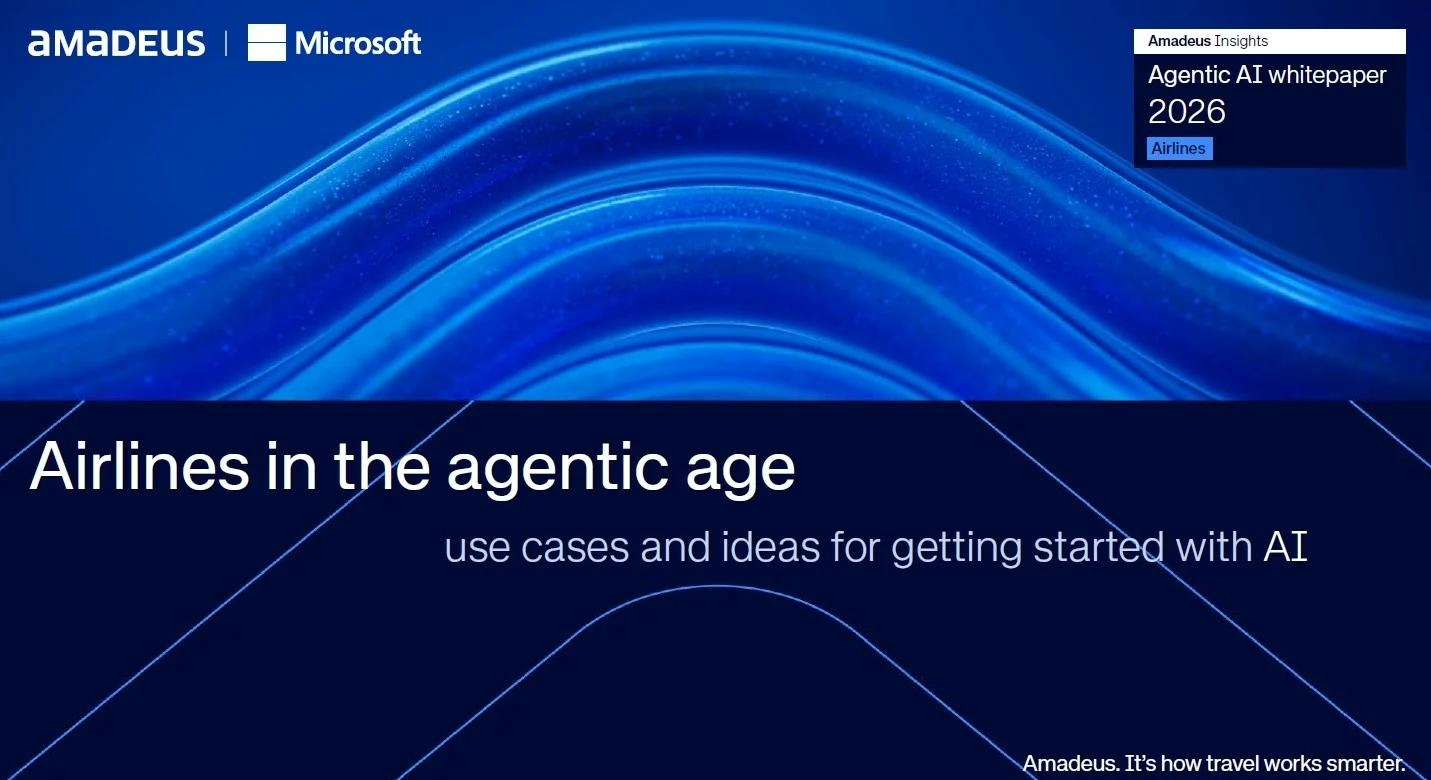
Amadeus and Microsoft Highlight AI Opportunities for Airlines in Pivotal Year
Transforming Airline Operations Through Agentic AI
A new whitepaper jointly released by Amadeus and Microsoft underscores the transformative potential of agentic artificial intelligence (AI) across the airline industry in 2024. Titled Airlines in the Agentic Age: Use Cases and Ideas for Getting Started with AI, the report outlines practical recommendations for airlines aiming to implement advanced AI technologies to enhance operational efficiency and customer engagement.
Amadeus, which has invested significantly in AI over the past decade, is now expanding its capabilities in generative and agentic AI. This strategic evolution is anticipated to drive unprecedented levels of automation and personalization throughout the travel sector. The whitepaper draws on expertise from Amadeus, Microsoft, and leading carriers including Azul, Icelandair, and Southwest Airlines, providing a comprehensive view of AI’s immediate applications in the industry.
Key Areas of AI Impact
The report identifies five critical domains where AI can deliver substantial benefits. Automated voice rebooking is one such area, with AI agents capable of recognizing bookings, processing verbal change requests, proposing alternatives, explaining fare differences, and handling payments—all in the traveler’s preferred language. Amadeus has successfully piloted this technology, which is now ready for full-scale deployment.
Agentic commerce represents another significant opportunity, enabling AI to plan, book, and manage customized travel experiences across multiple airline touchpoints such as websites, mobile applications, and call centers. The integration of AI assistants like Microsoft Copilot and ChatGPT is highlighted as a key enabler in this space.
In digital marketing, AI agents can analyze underperforming routes, recommend campaign strategies, generate advertisements, allocate budgets, and provide performance reports, facilitating more agile and data-driven marketing efforts. Turnaround management also stands to benefit, with AI teams monitoring maintenance, crew scheduling, refueling, and other processes to recommend coordinated plans. Airlines such as Icelandair and Southwest are already exploring AI-driven decision support to optimize operational workflows.
Finally, AI is poised to revolutionize personalized offers and customer experience by replacing static rules and overcoming fragmented data. This allows airlines to deliver tailored offers and digital interactions that align closely with individual traveler preferences and broader airline strategies.
Cyril Tetaz, Executive Vice President of Airline Solutions at Amadeus, emphasized the broad impact of agentic AI, stating, “We expect agentic AI to improve almost every airline workflow, from network planning to customer service. For Amadeus, AI presents opportunities to reinforce our applications and introduce new capabilities, accelerating progress toward a smoother, more connected journey.”
Industry Implications and Competitive Landscape
Amadeus’s growing portfolio of AI-driven solutions—including biometric identity verification, hospitality services, and payment systems—signals a strategic shift that is challenging competitors to accelerate their own AI initiatives. The introduction of production-ready AI agents by Amadeus and Sierra at the upcoming 2026 Skift Data + AI Summit marks a significant milestone for the travel industry, intensifying competitive pressures on companies still in experimental phases.
The launch of the Amadeus Travel Advertising Platform, developed in partnership with Accenture and built on an agentic AI framework, further illustrates how AI is reshaping travel advertising. By leveraging predictive demand intelligence, the platform aims to enable travel companies to make faster and more informed advertising decisions. However, the increasing integration of AI in customer service and marketing also raises important questions about airlines’ control over customer relationships and the evolving dynamics within the industry.
Strategic Considerations for Airlines
The whitepaper calls on airlines to proactively develop AI use cases to avoid falling behind competitors who capitalize on early adoption. It stresses that the success of AI initiatives is heavily dependent on the quality, availability, and organization of underlying data, making robust data management a critical foundation for effective AI deployment.
The full whitepaper is available for free download on the Amadeus website.

Etihad Airways Suspends Airbus A380 Flights on Key Route

Aditya Birla Group Seeks Approval for Aircraft Leasing in GIFT City

Qatar Airways Highlights Innovation and Connectivity at Arabian Travel Market 2026

Hong Kong's Five-Year Plan Includes Andrew Fan's Aircraft Parts Processing Hub Proposal

ACIA Aero Leasing Delivers ATR72-600 to Air Nostrum

RTX Appoints Jill Albertelli as Head of Pratt & Whitney

TAT Technologies Joins Beyond Aero Hydrogen Aircraft Program

AURAK Study Highlights Barriers to Air Taxi Adoption in Emerging Economies

Xiamen Air Selects Altitude for 787 Maintenance at Heathrow

Etihad and Swissport Extend Global Partnership
