
将人工智能洞察转化为可执行行动

热门趋势
Categories
Six Boeing 747 Cabin Designs Still Used by Airlines Today
Six Boeing 747 Cabin Designs Still Used by Airlines Today
The Boeing 747 remains one of the most iconic passenger airliners in aviation history. For decades, it was the default choice for long-haul travel, serving as the flagship aircraft for nearly every major airline. Its unmatched range and capacity established the 747 as a cultural symbol of air travel. However, as the industry increasingly shifts toward more efficient twin-engine widebodies, only a handful of airlines continue to operate passenger 747s today.
Despite its gradual retirement, the 747’s cabin innovations have left a lasting impact on modern aircraft design. Airlines now favor smaller, more cost-effective planes such as the Boeing 777-300ER, which can match or even exceed the 747’s range. This transition is evident as carriers like American Airlines explore replacements for aging fleets, including the 777-200, focusing on advanced configurations that prioritize both efficiency and passenger comfort.
Enduring Cabin Innovations
One of the most significant contributions of the 747 was the introduction of dedicated inflight rest areas. Prior to the 747, relief pilots on long-haul flights often rested in blocked passenger seats. The 747 revolutionized this practice by incorporating crew rest areas, particularly in the upper deck behind the cockpit. Originally designed as a premium lounge, this space evolved into a standard feature for pilot rest on extended flights. Today, similar rest facilities are common in modern widebodies, often located as pods in cargo holds or overhead compartments—a design concept first standardized by Boeing on the 777.
Another innovation that originated with the 747 is the enclosed overhead bin. Earlier aircraft typically featured open shelves or netted racks for small items, but the 747 introduced lockable storage lockers, enhancing passenger convenience and safety. This feature has since become ubiquitous across all commercial aircraft.
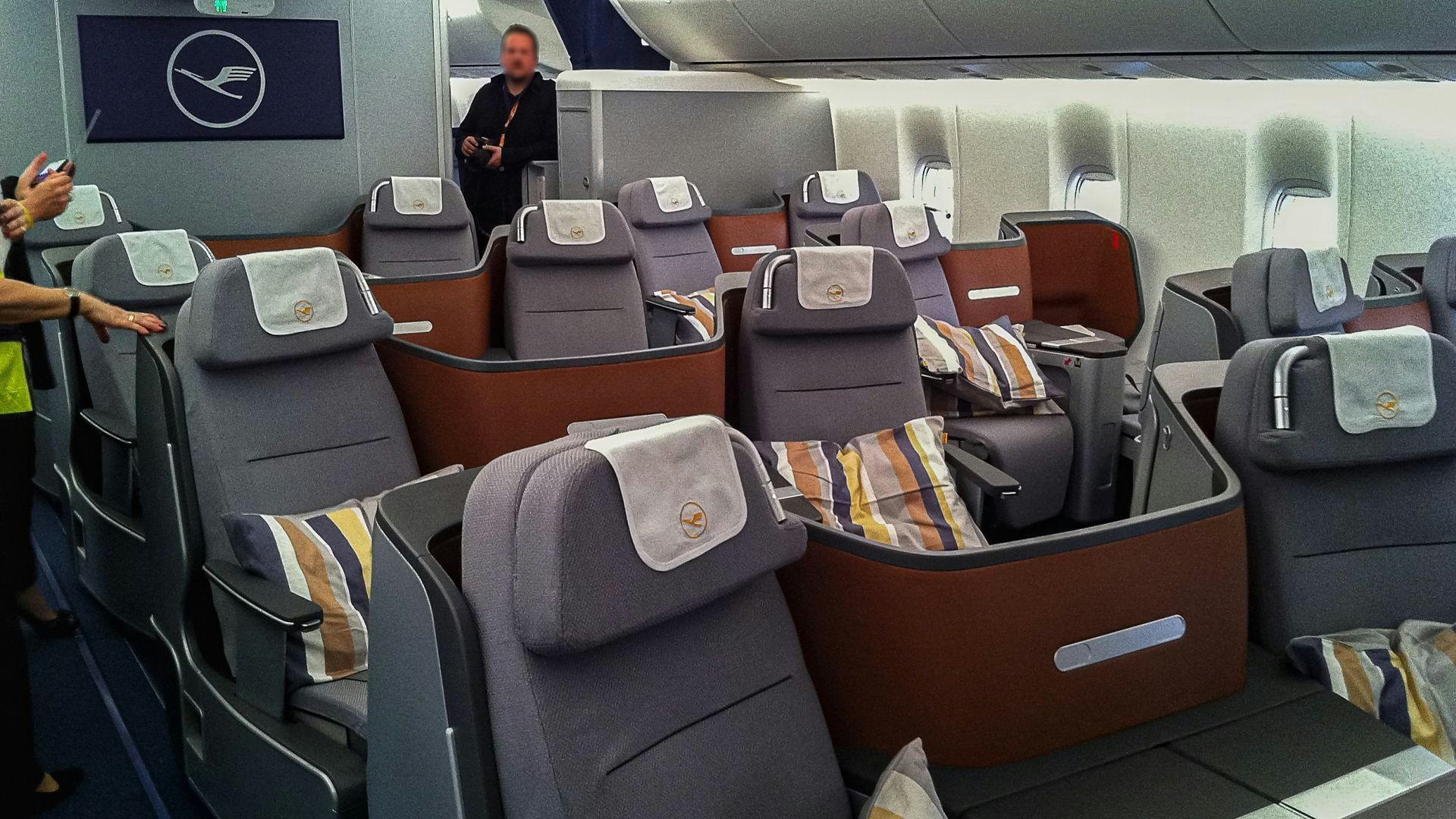
The 747 also pioneered premium cabin configurations, including upper-deck lounges and private suites. However, introducing new premium products remains challenging due to stringent regulatory requirements. Flagship carriers such as American Airlines, Lufthansa, Riyadh Air, and Singapore Airlines have all faced lengthy approval processes for their latest premium offerings, highlighting the ongoing balance between innovation and compliance in cabin design.
In terms of inflight entertainment, the 747 was among the first to offer seatback screens and centralized entertainment systems. The expectation for high-tech connectivity and on-demand content among today’s passengers can be traced back to these early innovations, driving airlines to continually upgrade their entertainment offerings.
Privacy features in premium cabins, such as enclosed suites and sliding doors, also have their roots in the 747’s design. As modern travelers increasingly seek enhanced privacy, airlines continue to refine cabin layouts to meet these evolving demands.
Finally, the 747’s spacious main deck allowed airlines to experiment with a variety of seating arrangements, ranging from high-density economy to luxurious first-class suites. This flexibility remains a key consideration for airlines as they evaluate new aircraft and cabin products.
The 747’s Legacy Amidst Emerging Competition
As airlines adapt to changing market demands, new competitors are emerging. China’s COMAC C919 recently completed its first international commercial flight, signaling a potential challenge to established manufacturers. However, the C919 still relies heavily on foreign components and has yet to secure certification from major U.S. and European regulators, underscoring the difficulties faced by new entrants in the global aviation market.
While the Boeing 747’s role as a passenger workhorse is diminishing, its legacy in cabin design continues to influence the future of air travel. The innovations it introduced have shaped passenger expectations and airline strategies worldwide, ensuring that the spirit of the 747 endures well beyond its operational lifespan.

Etihad Airways Suspends Airbus A380 Flights on Key Route

Aditya Birla Group Seeks Approval for Aircraft Leasing in GIFT City

Qatar Airways Highlights Innovation and Connectivity at Arabian Travel Market 2026

Hong Kong's Five-Year Plan Includes Andrew Fan's Aircraft Parts Processing Hub Proposal

ACIA Aero Leasing Delivers ATR72-600 to Air Nostrum

RTX Appoints Jill Albertelli as Head of Pratt & Whitney

TAT Technologies Joins Beyond Aero Hydrogen Aircraft Program

AURAK Study Highlights Barriers to Air Taxi Adoption in Emerging Economies

Xiamen Air Selects Altitude for 787 Maintenance at Heathrow

Etihad and Swissport Extend Global Partnership
