
将人工智能洞察转化为可执行行动

热门趋势
Categories
American Airlines’ Oldest Widebody Flies Only From Six Hubs
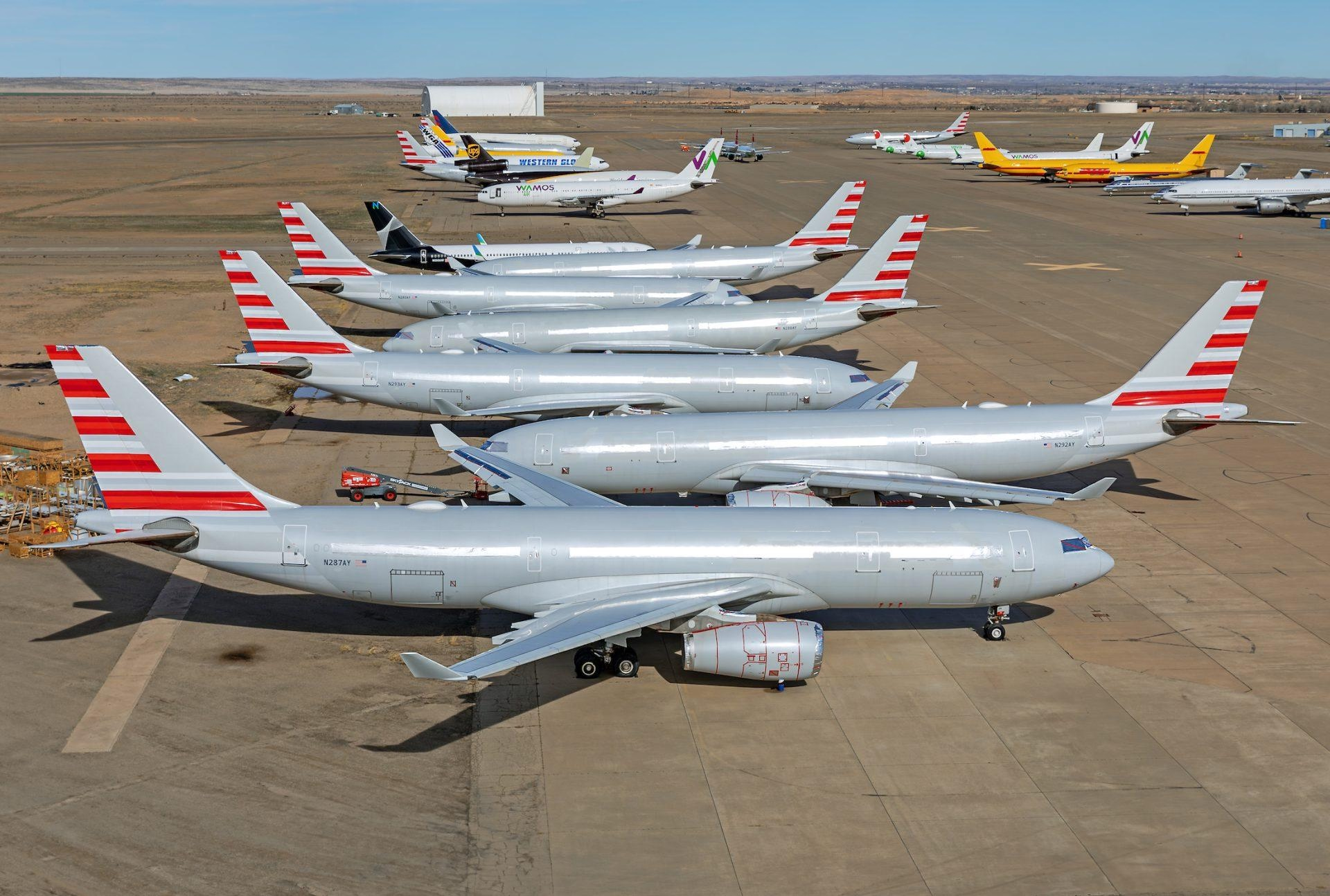
American Airlines’ Oldest Widebody Operates From Only Six Hubs
American Airlines, headquartered in Fort Worth, Texas, remains the world’s largest airline by passenger numbers and daily flights. With a mainline fleet exceeding 990 aircraft and service to more than 350 destinations worldwide, the oneworld alliance member under CEO Robert Isom continues to expand its global network and capacity.
The Boeing 777-200ER: A Long-Haul Workhorse
Central to American’s long-haul operations is its oldest widebody aircraft, the Boeing 777-200ER. Introduced by Boeing as a flagship for intercontinental travel, this model remains a critical component of American’s fleet despite its advancing age. The airline currently owns 47 of these jets, with 44 in active service, two undergoing maintenance, and one in long-term storage. Delivered between January 1999 and May 2006, these aircraft range from 19 to 26 years old, averaging approximately 24.5 years.
The majority of the fleet—about two-thirds—was delivered between 1999 and 2001, with the remainder arriving through 2006. Although American has not announced specific retirement plans for the 777-200ERs, it is widely anticipated that they will eventually be replaced by newer, more fuel-efficient aircraft such as the Boeing 787-9 or Airbus A350. The rising maintenance costs associated with these aging planes underscore the urgency of fleet renewal.
Operational Constraints and Market Implications
Currently, American Airlines deploys its 777-200ERs exclusively from six major hubs. This limited operational footprint presents both strategic and logistical challenges. By confining these aircraft to a small number of hubs, American restricts route availability, which may affect operational efficiency and limit passenger options. Travelers seeking a broader range of destinations could find their choices constrained, potentially leading to dissatisfaction and shifts in booking behavior.
This strategy has drawn scrutiny amid evolving market dynamics. Competitors such as Southwest Airlines are reportedly exploring first-class and long-haul services to diversify their offerings, while Delta and United Airlines leverage larger, more modern fleets and extensive route networks to attract customers seeking greater flexibility. American may also face a modest decline in bookings from airports like Newark, as passengers gravitate toward carriers with more expansive destination options.
Despite these challenges, the Boeing 777-200ER remains a vital asset in American’s long-haul network, providing significant cargo and passenger capacity with impressive range. As these aircraft near the end of their operational lifespan, American faces the complex task of balancing maintenance demands with the imperative to modernize its fleet and sustain competitiveness in a rapidly changing aviation landscape.

Etihad Airways Suspends Airbus A380 Flights on Key Route

Aditya Birla Group Seeks Approval for Aircraft Leasing in GIFT City

Qatar Airways Highlights Innovation and Connectivity at Arabian Travel Market 2026

Hong Kong's Five-Year Plan Includes Andrew Fan's Aircraft Parts Processing Hub Proposal

ACIA Aero Leasing Delivers ATR72-600 to Air Nostrum

RTX Appoints Jill Albertelli as Head of Pratt & Whitney

TAT Technologies Joins Beyond Aero Hydrogen Aircraft Program

AURAK Study Highlights Barriers to Air Taxi Adoption in Emerging Economies

Xiamen Air Selects Altitude for 787 Maintenance at Heathrow

Etihad and Swissport Extend Global Partnership
