
将人工智能洞察转化为可执行行动

热门趋势
Categories
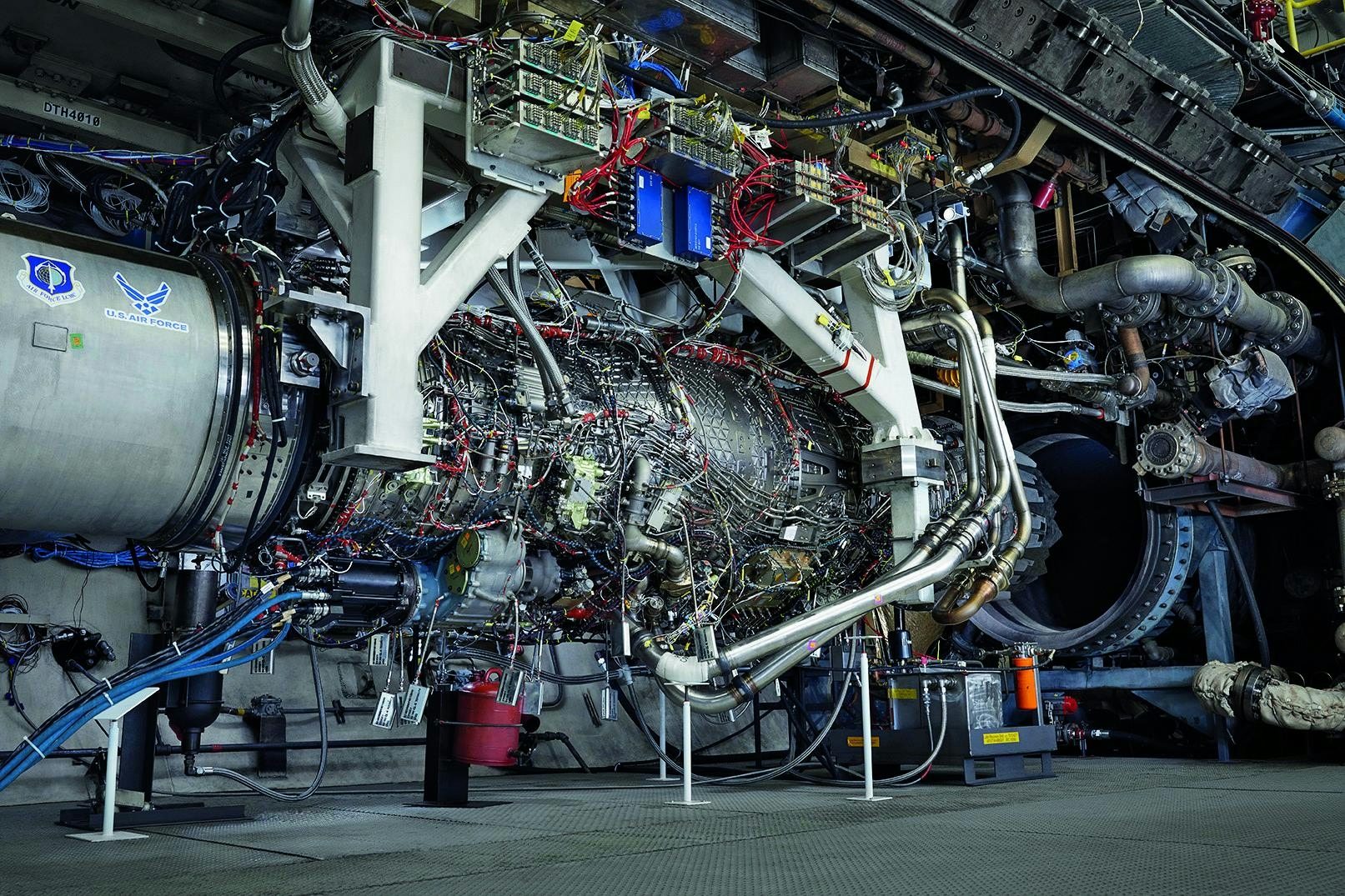
Analysis of the Military Aircraft Engines Market by Application, Type, Technology, and Region
Analysis of the Military Aircraft Engines Market by Application, Type, Technology, and Region
The global military aircraft engines market is projected to experience substantial growth, with its valuation anticipated to increase from $8.23 billion in 2026 to approximately $13.36 billion by 2035. This growth corresponds to a compound annual growth rate (CAGR) of 6.24%, driven by rising demand across industrial, commercial, and technology sectors, alongside continuous innovation and heightened investments in key end-use areas.
Industry Overview
As a pivotal segment within the aerospace and defense industry, the military aircraft engines market focuses on the development, production, and maintenance of propulsion systems for a variety of military aircraft, including combat, surveillance, transport, and training platforms. These engines are required to deliver exceptional performance, reliability, and adaptability to meet the demands of diverse operational environments.
The advancement of military aviation technology, propelled by geopolitical tensions and progress in aerospace engineering, has intensified the need for sophisticated engine systems. Global armed forces are undertaking extensive modernization programs, driving demand for next-generation engines that offer enhanced thrust, improved fuel efficiency, and greater durability. Leading industry players are investing heavily in research and development to address emerging threats and operational challenges, concentrating on innovations such as stealth integration, improved aerodynamics, and environmentally sustainable engine designs.
Market Drivers and Regional Dynamics
Government defense budgets continue to serve as a primary driver of market expansion, with significant funding allocated toward the acquisition of advanced engine systems. The growing emphasis on unmanned aerial vehicles (UAVs) and fifth-generation fighter jets further accelerates the demand for state-of-the-art propulsion technologies.
Regional factors significantly influence market trends. North America, spearheaded by the United States, maintains dominance due to extensive military modernization initiatives and strategic partnerships. Europe sustains its position through a robust aerospace sector characterized by continuous innovation, while Asia-Pacific countries are rapidly enhancing their defense capabilities, creating a dynamic and expanding market for military aircraft engines. Fleet modernization efforts and new aircraft procurement programs in these regions are expected to underpin sustained growth over the coming decade.
Challenges and Industry Responses
Despite a favorable outlook, the market faces several challenges. The technological complexity involved in developing engines that comply with stringent military performance and environmental standards necessitates substantial investment and innovation. Regulatory and geopolitical risks, including strict emissions and safety regulations, export controls, and potential supply chain disruptions arising from geopolitical tensions, pose additional uncertainties. Furthermore, economic and political volatility—such as fluctuations in U.S. government funding, shifting defense budget priorities, and global economic instability—may impact demand patterns.
In response to these challenges, industry competitors are implementing cost-control strategies, revising product development approaches, and adjusting international operations to mitigate risks and preserve their market positions.
Outlook
The military aircraft engines market remains an essential component of the broader aerospace and defense sector, supported by ongoing technological advancements, shifting geopolitical dynamics, and continuous military modernization efforts. The future trajectory of the industry will depend on manufacturers’ capacity to navigate regulatory complexities, adapt to evolving defense priorities, and maintain investment in next-generation propulsion technologies. Despite inherent challenges, sustained innovation and robust defense spending are expected to drive steady growth in the years ahead.

Etihad Airways Suspends Airbus A380 Flights on Key Route

Aditya Birla Group Seeks Approval for Aircraft Leasing in GIFT City

Qatar Airways Highlights Innovation and Connectivity at Arabian Travel Market 2026

Hong Kong's Five-Year Plan Includes Andrew Fan's Aircraft Parts Processing Hub Proposal

ACIA Aero Leasing Delivers ATR72-600 to Air Nostrum

RTX Appoints Jill Albertelli as Head of Pratt & Whitney

TAT Technologies Joins Beyond Aero Hydrogen Aircraft Program

AURAK Study Highlights Barriers to Air Taxi Adoption in Emerging Economies

Xiamen Air Selects Altitude for 787 Maintenance at Heathrow

Etihad and Swissport Extend Global Partnership
