
将人工智能洞察转化为可执行行动

热门趋势
Categories
Asia-Pacific Air Cargo Volumes Rise Again in June Driven by AI Shipments
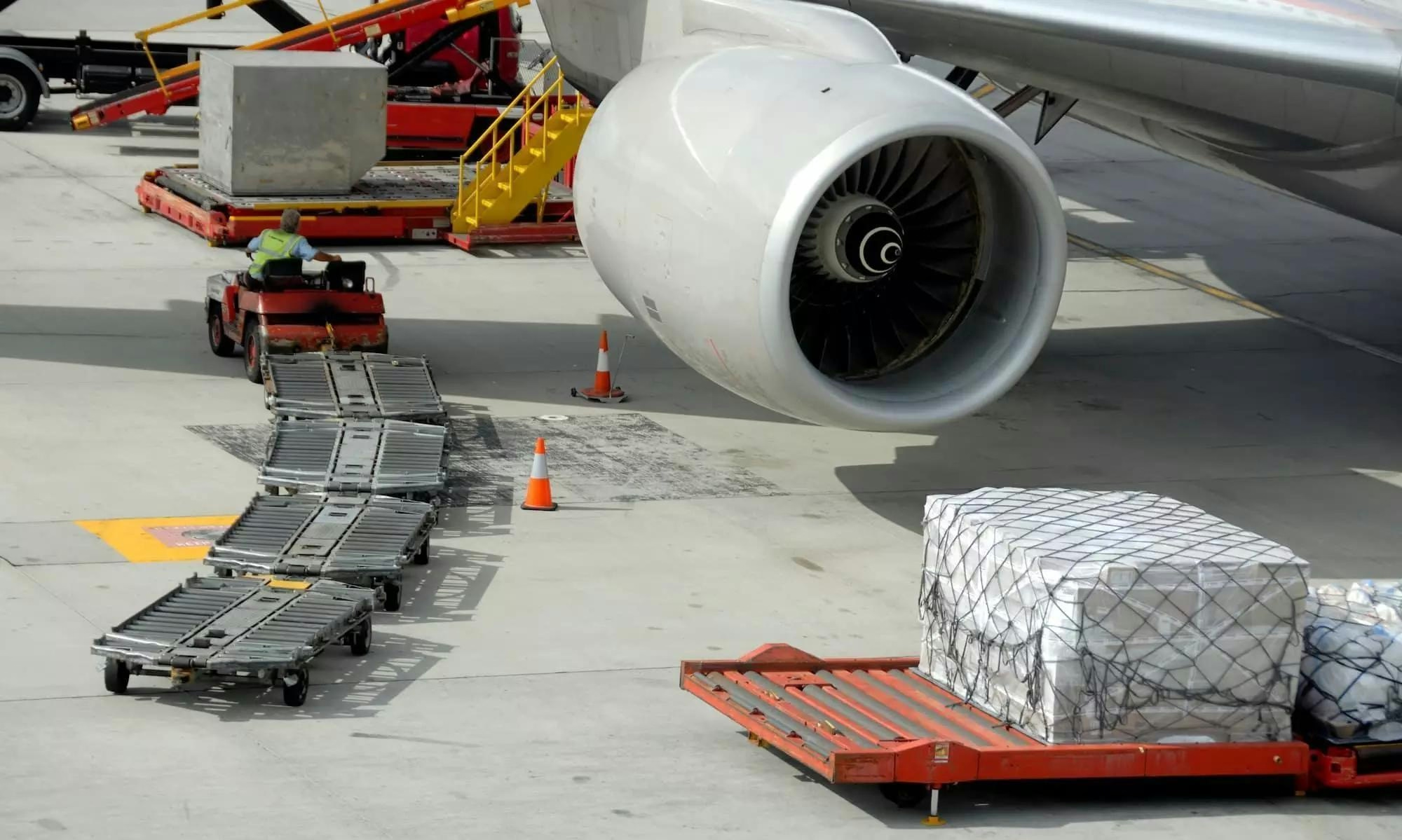
Asia-Pacific Air Cargo Volumes Rise in June, Led by AI-Related Shipments
Air cargo volumes for Asia-Pacific airlines continued their steady growth in June, driven primarily by increased demand for AI-related semiconductor and hardware shipments. The Association of Asia Pacific Airlines (AAPA) reported a 3.2% year-on-year rise in freight tonne kilometres (FTK), while capacity saw a marginal increase of 0.2%. This combination resulted in a 1.8 percentage point improvement in the average international freight load factor, which reached 62.6%.
Shifting Cargo Mix and Emerging Trade Routes
The growth in air cargo is largely attributed to a significant shift in the cargo composition. AI and semiconductor shipments have overtaken traditional e-commerce goods as the dominant outbound cargo from Southeast Asia. According to recent analysis by logistics firm Dimerco, this shift is reshaping trade routes across the region. Countries such as Vietnam, Malaysia, Thailand, and Singapore have emerged as critical manufacturing and assembly hubs for AI servers, reinforcing their strategic importance in global supply chains.
This surge in demand has also influenced market dynamics, with air cargo rates from Northeast and Southeast Asia to North America rising sharply. In the final week of June, rates increased by 41% and 42% respectively. Infrastructure capacity is under pressure, exemplified by Taipei’s air cargo hub reaching full capacity in July and reports of constrained freight space on routes to the United States and within Asia.
Industry Response and Ongoing Challenges
In response to these developments, carriers are expanding their services to meet the heightened demand for high-value, time-sensitive goods. Emirates SkyCargo, for instance, has increased flight frequencies to Hong Kong and introduced new routes from Zhengzhou to Dubai.
Wong Hong, director general of AAPA, highlighted the sustained strength of international air cargo markets, noting a 7.0% growth in demand during the first half of the year. This growth is underpinned by continued demand for AI-related semiconductor shipments amid evolving trade dynamics.
However, the industry continues to face significant challenges. The ongoing conflict in the Middle East has contributed to fuel price volatility, exerting additional pressure on operating costs. Wong cautioned that moderate business confidence, coupled with geopolitical and trade policy uncertainties, could moderate growth prospects in the coming months.
Despite these challenges, the Asia-Pacific region remains a dominant force in global air cargo, accounting for 40.7% of worldwide revenue in 2025. The region is projected to sustain a compound annual growth rate (CAGR) of 5.72% through 2031. As the market adjusts to the rapid expansion of AI and semiconductor shipments, both opportunities and operational pressures are expected to shape the future landscape of air cargo in the Asia-Pacific.

Etihad Airways Suspends Airbus A380 Flights on Key Route

Aditya Birla Group Seeks Approval for Aircraft Leasing in GIFT City

Qatar Airways Highlights Innovation and Connectivity at Arabian Travel Market 2026

Hong Kong's Five-Year Plan Includes Andrew Fan's Aircraft Parts Processing Hub Proposal

ACIA Aero Leasing Delivers ATR72-600 to Air Nostrum

RTX Appoints Jill Albertelli as Head of Pratt & Whitney

TAT Technologies Joins Beyond Aero Hydrogen Aircraft Program

AURAK Study Highlights Barriers to Air Taxi Adoption in Emerging Economies

Xiamen Air Selects Altitude for 787 Maintenance at Heathrow

Etihad and Swissport Extend Global Partnership
