
将人工智能洞察转化为可执行行动

热门趋势
Categories
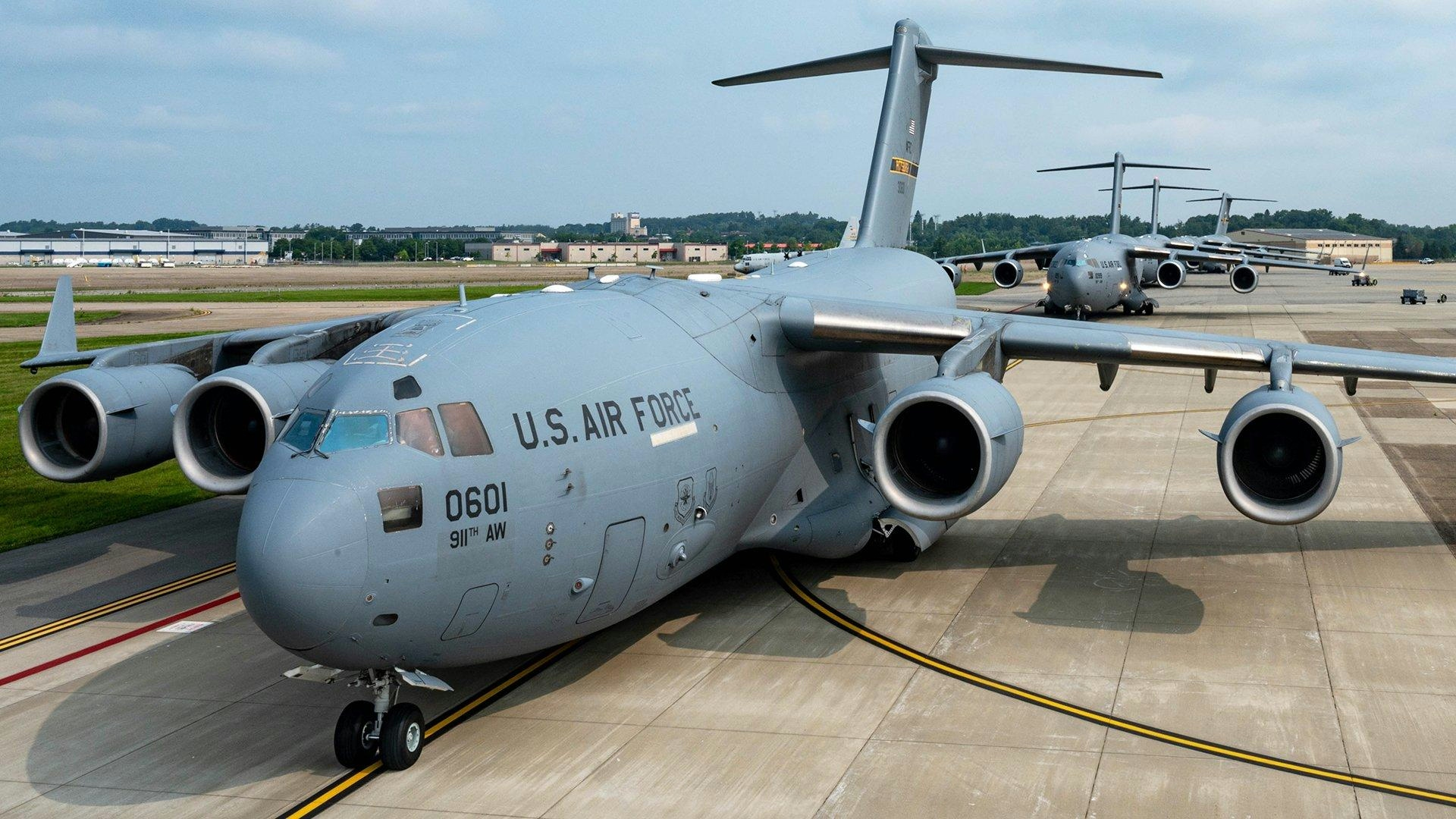
Boeing Explores AI Applications for C-17 Maintenance
Boeing Explores AI Applications for C-17 Maintenance
Boeing Global Services has formalized a partnership with AI data optimisation specialist Pelico through a memorandum of understanding aimed at modernizing maintenance planning and execution for the C-17A Globemaster III. This collaboration seeks to shorten depot maintenance cycles, improve fleet availability, and deliver more predictable aircraft turnaround times by leveraging artificial intelligence technologies.
Advancing Maintenance Through AI Integration
At the heart of this initiative is Pelico’s Manufacturing Orchestration Platform, a digital workspace designed to integrate supply chain management, engineering, planning, and depot operations into a unified system. By replacing traditional spreadsheet-based workflows, the platform provides real-time visibility into material shortages, maintenance priorities, and production constraints. Boeing and Pelico intend to assess whether AI-driven scheduling, supply chain coordination, and workflow automation can enable maintenance teams to respond more swiftly to parts shortages and operational bottlenecks.
The partnership is also exploring advanced functionalities such as predictive shortage management, dynamic prioritisation of maintenance tasks, and agentic AI workflows that automate routine approvals and supplier communications. Boeing has previously implemented Pelico’s platform within its commercial spare parts operations, where it demonstrated tangible operational improvements and has since been expanded.
Travis Williams, Boeing’s vice-president of Mobility and Surveillance Aircraft Services, emphasised that the project focuses on delivering measurable operational gains and developing a scalable, repeatable capability as outcomes are validated.
Challenges and Industry Context
Despite the promising potential, integrating AI into C-17 maintenance presents significant challenges. Successful implementation requires extensive data collection and seamless integration with existing maintenance systems. Additionally, there may be resistance from maintenance personnel accustomed to traditional processes, alongside the need for substantial investment in AI technology and workforce training.
Industry analysts observe that AI adoption could generate considerable efficiency improvements and cost savings in maintenance operations. This initiative aligns with a broader trend in the aerospace sector, where competitors such as Leonardo and Lockheed Martin are reportedly pursuing similar AI-driven strategies to enhance maintenance, repair, and overhaul (MRO) capabilities for their tactical transport aircraft. This reflects a growing shift across the industry toward harnessing AI to maintain competitive advantage.
The agreement between Boeing and Pelico establishes a framework for a phased evaluation of the technology, with the possibility of extending its application to other Boeing heavy maintenance programmes should the trial prove successful.

Etihad and Swissport Extend Global Partnership

Sepehran Airlines B737 Returns to Mashhad After Tyre and Engine Issues

Etihad Deploys Widebody Fleet to Meet Strong Demand

Korean Air Finalizes $36.2 Billion Deal with Boeing

Australia’s RFDS Queensland Section Orders Six King Air 260Cs

Korean Air Finalizes Order for 103 Boeing Jets and Engines

Embraer E195-E2 Features Distinctive Engine Placement Among Regional Jets

What Passengers Can Expect on Boeing’s New 777X Jet

How Ethiopian Airlines Became Africa’s Leading Carrier Amid Gulf Competition

Joby Aviation Extends Autonomous Flight Capabilities with Cross-Country Tour
