
将人工智能洞察转化为可执行行动

热门趋势
Categories
Boeing Projects Global Aircraft Demand of Nearly 2.4 Million Over 20 Years
Boeing Projects Global Aircraft Demand of Nearly 2.4 Million Over 20 Years
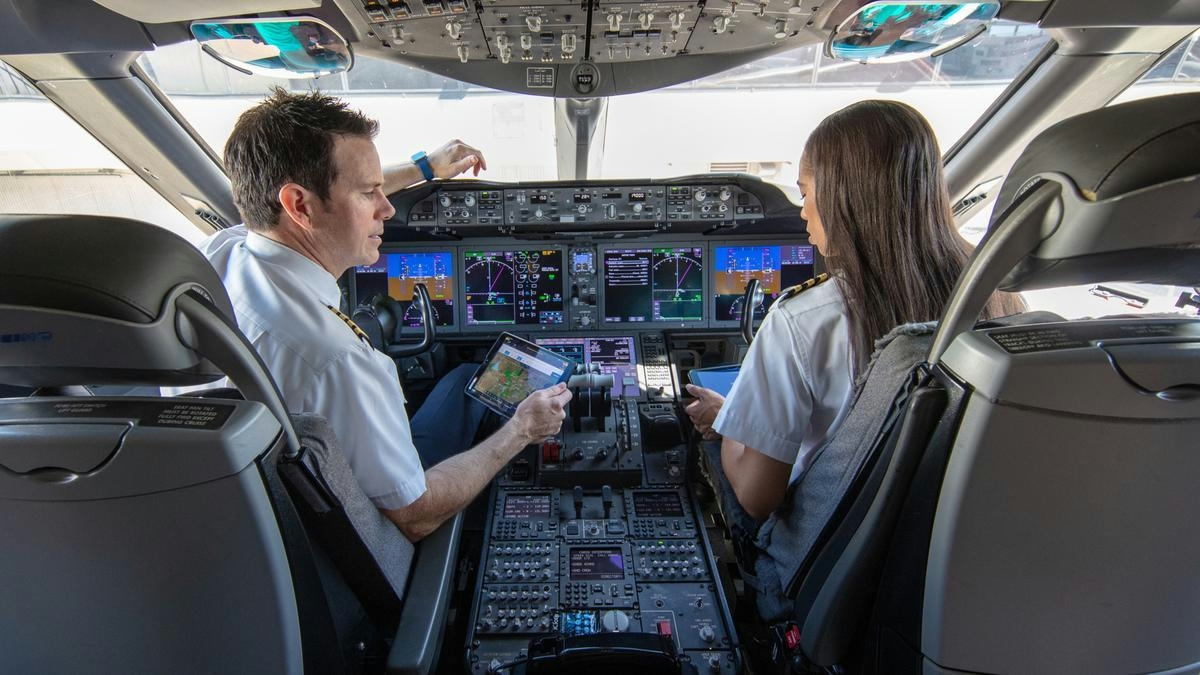
Boeing has released its 2025 Pilot and Technician Outlook (PTO), forecasting a sustained expansion in global aviation that will require nearly 2.4 million new aviation professionals over the next two decades. The company anticipates a demand for approximately 660,000 pilots, 710,000 maintenance technicians, and 1 million cabin crew members by 2044. This growth is driven by an expanding commercial fleet and increasing air travel worldwide.
Workforce Development and Training Innovations
Chris Broom, vice president of Commercial Training Solutions at Boeing Global Services, highlighted the importance of workforce development in maintaining safe and efficient operations amid rising air traffic. Boeing is investing heavily in advanced training technologies, including mixed reality and competency-based assessments, to enhance the quality and effectiveness of aviation training. These initiatives aim to equip carriers globally with the skilled personnel necessary to support the evolving demands of the industry.
Industry Challenges and Market Dynamics
Despite this optimistic outlook, Boeing faces significant challenges. The company remains under scrutiny from the National Transportation Safety Board (NTSB) following the Alaska Airlines mid-air blowout incident involving the 737 MAX 9, which has affected its reputation and operational capabilities. Additionally, the Federal Aviation Administration (FAA) has imposed a production cap on the 737 MAX at 38 aircraft per month, constraining Boeing’s ability to increase deliveries in response to growing market demand.
The broader aviation sector continues to contend with persistent supply chain disruptions, complicating efforts to meet the projected demand for new aircraft and skilled personnel. Competition is intensifying, particularly in China, where domestic manufacturer Comac is gaining momentum and capitalizing on the country’s rapidly expanding aviation market.
Resilience Amidst Pressures
Despite these headwinds, Boeing demonstrated resilience with a strong performance in June, securing new orders for 54 737s and 62 787s. This sustained demand highlights the long-term growth potential of the commercial aviation sector, even as manufacturers and airlines navigate regulatory, operational, and competitive pressures.
Boeing’s 20-year outlook underscores the critical role of workforce development and advanced training solutions in addressing the complexities of a rapidly evolving global aviation industry. The company’s projections reflect both the opportunities and challenges inherent in adapting to shifting market dynamics and heightened expectations for safety and efficiency.

Etihad Airways Suspends Airbus A380 Flights on Key Route

Aditya Birla Group Seeks Approval for Aircraft Leasing in GIFT City

Qatar Airways Highlights Innovation and Connectivity at Arabian Travel Market 2026

Hong Kong's Five-Year Plan Includes Andrew Fan's Aircraft Parts Processing Hub Proposal

ACIA Aero Leasing Delivers ATR72-600 to Air Nostrum

RTX Appoints Jill Albertelli as Head of Pratt & Whitney

TAT Technologies Joins Beyond Aero Hydrogen Aircraft Program

AURAK Study Highlights Barriers to Air Taxi Adoption in Emerging Economies

Xiamen Air Selects Altitude for 787 Maintenance at Heathrow

Etihad and Swissport Extend Global Partnership
