
将人工智能洞察转化为可执行行动

热门趋势
Categories
Boeing to Relocate 787 Engineering Operations
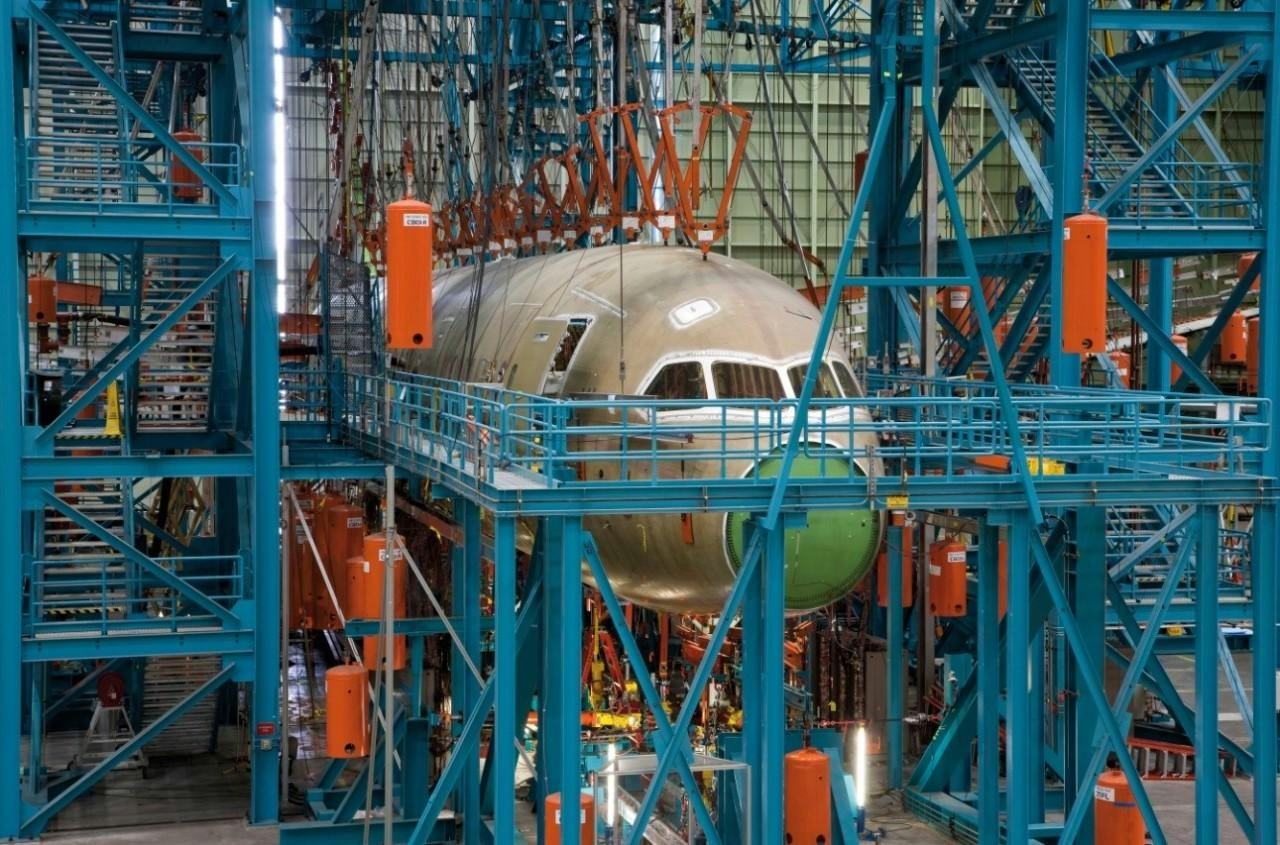
Boeing to Relocate 787 Engineering Operations to South Carolina
Boeing has announced plans to transfer engineering work for its 787 Dreamliner from Washington state to South Carolina, a move that will affect approximately 300 employees currently based in Washington. The company informed its staff of this decision during a meeting last week, according to Reuters. The engineers in Washington are represented by the Society of Professional Engineering Employees in Aerospace (SPEEA), whereas South Carolina’s workforce is characterized by significantly lower union participation.
Expansion Amid Rising Demand
This relocation coincides with Boeing’s efforts to increase production of the 787 Dreamliner in response to growing global demand. The company is investing around $1 billion to establish a second final assembly line for the 787 in Charleston, South Carolina. Once operational, this new facility is expected to double the production capacity at the site. This expansion forms part of Boeing’s broader strategy to boost output not only for the 787 but also for the 737 Max, aiming to strengthen its position in the commercial aviation market.
Potential Challenges and Market Implications
The decision to move engineering operations has raised concerns among industry observers. Analysts warn that the transition could introduce delays in production schedules, elevate costs related to relocating operations, and disrupt the supply chain. These risks are particularly acute given the intricate nature of aircraft manufacturing, which demands precise coordination across multiple locations.
Investor sentiment has reflected some unease regarding the potential impact of the move on Boeing’s delivery timelines and profitability. Any delays or operational setbacks could create opportunities for competitors such as Airbus to gain ground in the wide-body aircraft segment by capitalizing on Boeing’s challenges.
Despite these concerns, Boeing’s commitment to expanding its manufacturing capacity is viewed as a critical element in sustaining its competitive advantage. The integration of engineering teams across different sites will be closely monitored in the coming months as the company navigates this significant operational shift.

Etihad Airways Suspends Airbus A380 Flights on Key Route

Aditya Birla Group Seeks Approval for Aircraft Leasing in GIFT City

Qatar Airways Highlights Innovation and Connectivity at Arabian Travel Market 2026

Hong Kong's Five-Year Plan Includes Andrew Fan's Aircraft Parts Processing Hub Proposal

ACIA Aero Leasing Delivers ATR72-600 to Air Nostrum

RTX Appoints Jill Albertelli as Head of Pratt & Whitney

TAT Technologies Joins Beyond Aero Hydrogen Aircraft Program

AURAK Study Highlights Barriers to Air Taxi Adoption in Emerging Economies

Xiamen Air Selects Altitude for 787 Maintenance at Heathrow

Etihad and Swissport Extend Global Partnership
