
将人工智能洞察转化为可执行行动

热门趋势
Categories
Both Engines Failed Before Fatal Citation Latitude Crash on Laredo Highway
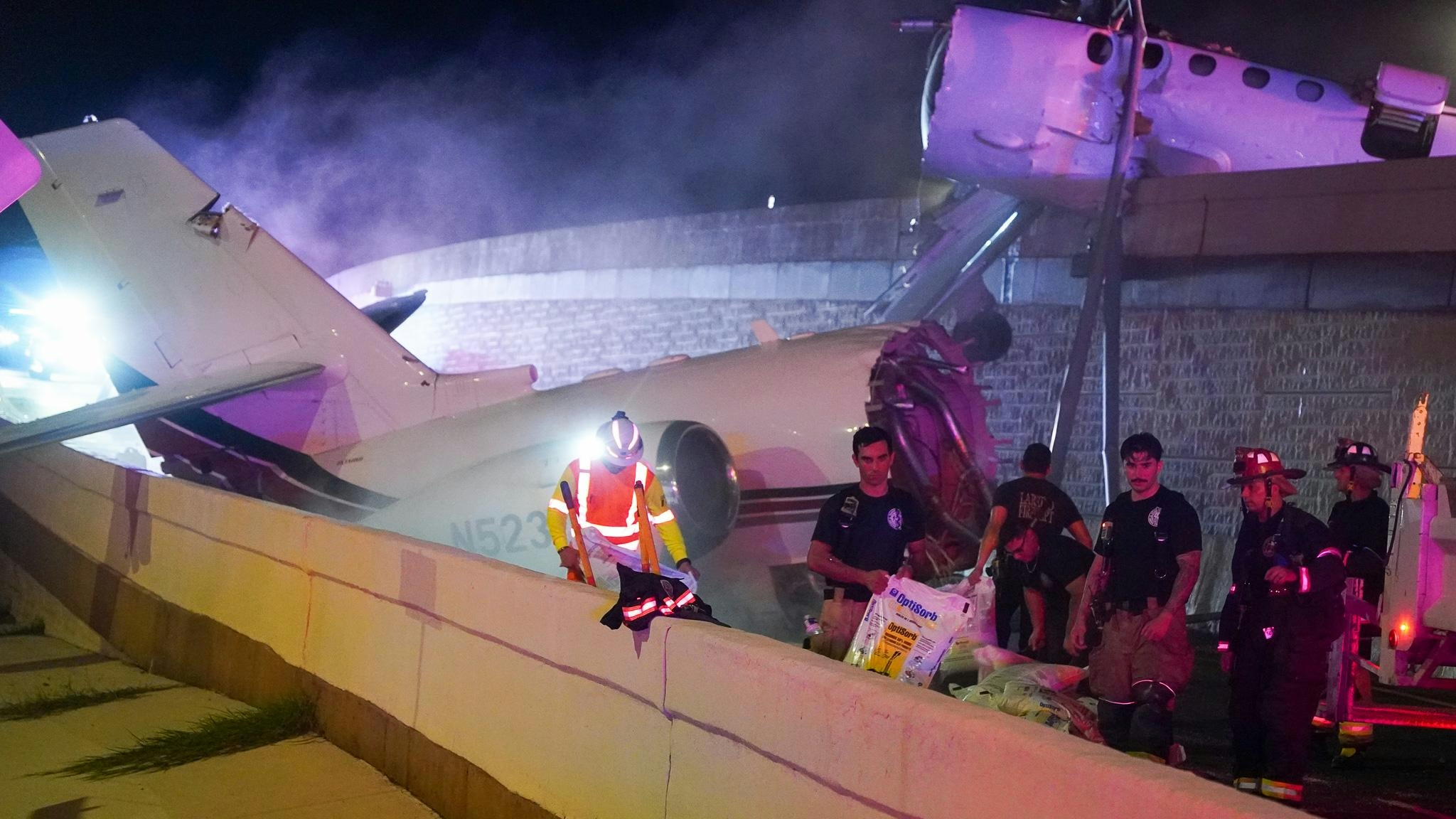
Both Engines Failed Before Fatal Citation Latitude Crash on Laredo Highway
US investigators have disclosed that both engines of a Cessna 680A Citation Latitude flamed out during an emergency approach to Laredo, Texas, resulting in a fatal crash on a highway. Of the six individuals on board, five—including both pilots—survived, while one passenger lost their life.
Sequence of Events Leading to the Crash
The NetJets-operated aircraft was flying from Los Cabos, Mexico, to Austin, Texas, on June 16 when the crew reported a generator failure, multiple system malfunctions, and low fuel levels to Houston air traffic control. In response, the pilots requested an emergency diversion to Laredo. Air traffic controllers vectored the jet for an approach to runway 36L, instructing a 270-degree turn to lose altitude. However, during the final approach, the right engine flamed out, followed seconds later by the left engine, according to preliminary findings from the National Transportation Safety Board (NTSB).
While the captain managed the aircraft, the first officer inquired with Laredo tower about possible emergency landing sites. The tower advised that only a nearby highway—the Bob Bullock Loop, approximately 1.5 kilometers east of the runway—was available. The crew aligned the aircraft with the northbound lane in an attempt to land. Video footage shows flames around the jet during the final approach. Upon touchdown, the aircraft struck several light poles, collided with a vehicle, and came to rest straddling the edge of an overpass. The fuselage rolled onto its right side, but after the main cabin door was opened, five occupants were able to escape.
Investigation and Mechanical Findings
Investigators have concentrated on significant damage discovered in the fuel system and the engine starter generator. Early in the flight, the crew reported an unusual intermittent vibration and consulted NetJets but were cleared to continue. As the aircraft approached the Mexico-US border, a series of alerts began: initially a low right-hand fuel pressure warning, followed by electrical issues, and ultimately a low-fuel warning. The crew declared an emergency with Monterrey control before being handed off to Houston.
Examination of the wreckage revealed that the right engine’s fuel pressure switch had separated from the fuel tube assembly due to a fractured weld joint, and several clamps on the fuel tube assembly were broken. Additionally, the right engine’s starter generator was missing multiple screws from its outer housing. This generator had undergone an overhaul in April 2023 and had approximately 57 hours of service time remaining.
Industry Implications
The crash has raised broader concerns within the business aviation sector. Investigators continue to determine the precise mechanical failures that led to the dual engine flameout and are assessing the implications of the component damage uncovered. The incident has prompted scrutiny of NetJets’ operations and may result in increased regulatory oversight or safety audits across the industry. Competitors might respond by enhancing safety protocols or issuing public reassurances to maintain customer confidence. The event also highlights the critical importance of robust emergency procedures and crew training in managing in-flight crises.

Etihad and Swissport Extend Global Partnership
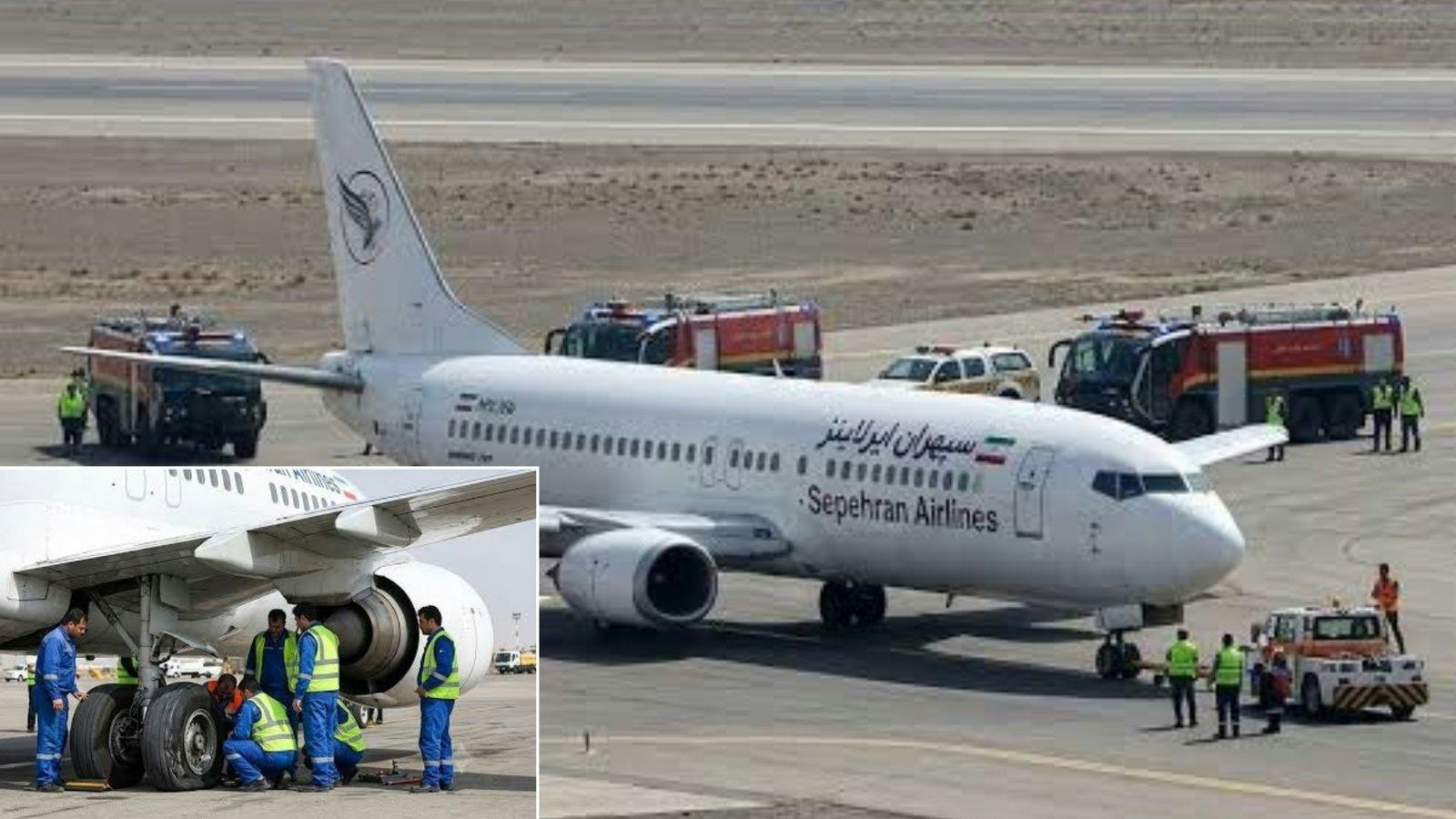
Sepehran Airlines B737 Returns to Mashhad After Tyre and Engine Issues

Etihad Deploys Widebody Fleet to Meet Strong Demand

Korean Air Finalizes $36.2 Billion Deal with Boeing

Australia’s RFDS Queensland Section Orders Six King Air 260Cs

Korean Air Finalizes Order for 103 Boeing Jets and Engines

Embraer E195-E2 Features Distinctive Engine Placement Among Regional Jets

What Passengers Can Expect on Boeing’s New 777X Jet

How Ethiopian Airlines Became Africa’s Leading Carrier Amid Gulf Competition

Joby Aviation Extends Autonomous Flight Capabilities with Cross-Country Tour
