
将人工智能洞察转化为可执行行动

热门趋势
Categories
Challenges in Certifying AI for Commercial Aviation
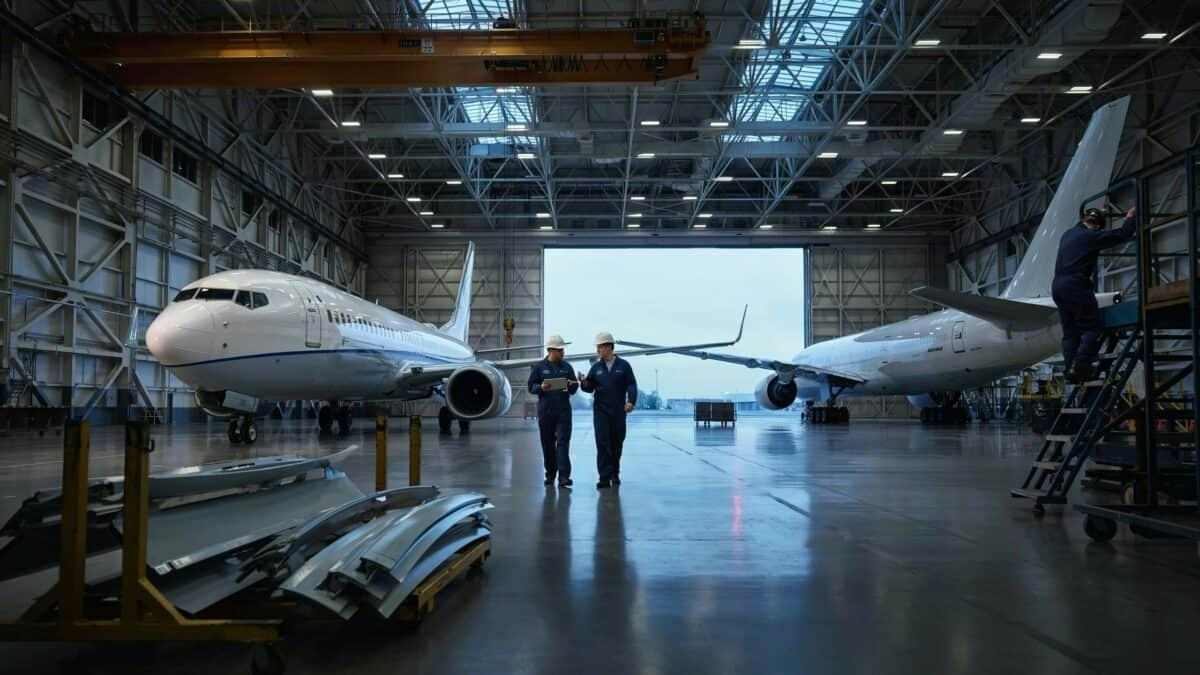
Challenges in Certifying AI for Commercial Aviation
The Complexity of Integrating AI into Safety-Critical Systems
Artificial intelligence (AI) is increasingly supporting various commercial aviation operations, yet its expansion into safety-critical roles introduces significant engineering and regulatory challenges. Before AI can be entrusted with flight-critical systems, manufacturers must demonstrate that these technologies comply with the stringent certification standards that have long governed aviation safety.
In commercial aviation, software is regarded as an essential component of aircraft safety. Regulatory authorities mandate comprehensive documentation of system requirements, rigorous validation of software performance across all operating conditions, and traceability of every function to a documented requirement. This certification process also involves assessing software responses to abnormal conditions such as equipment failures, invalid inputs, or degraded sensor data to ensure continued safe operation.
The emergence of machine learning complicates this established framework. Unlike traditional software, which relies on explicit logic programmed by engineers and allows straightforward traceability of outputs to specific code, machine-learning models are developed through training on extensive datasets. These models learn statistical relationships that enable pattern recognition and prediction, requiring regulators to evaluate not only the software itself but also the quality of training data, validation methodologies, and the environmental conditions that may affect model performance.
Certification Challenges: Beyond Accuracy and Explainability
High accuracy alone does not suffice for certification. Engineers must thoroughly understand AI model behavior when confronted with scenarios beyond their training data, including rare weather phenomena or unusual equipment malfunctions. Certification demands defining the operational boundaries of a model, identifying conditions under which confidence diminishes, and proving that such limitations do not pose unacceptable safety risks. The degree of scrutiny varies depending on the AI’s intended function; for instance, software supporting operational planning is subject to different standards than systems directly controlling aircraft.
Explainability presents another critical hurdle. Traditional software allows engineers to trace outputs through documented logic, facilitating both engineering and regulatory review. In contrast, machine-learning models often generate recommendations based on complex, learned relationships that are less transparent, complicating efforts to interpret and validate their decisions.
Prominent industry leaders and AI experts, including Demis Hassabis, Sam Altman, and Dario Amodei, have emphasized the necessity of independent testing and stringent regulatory oversight for advanced AI models prior to deployment in safety-critical environments. Their consensus highlights the urgent need for rigorous external evaluation and the establishment of clear safety standards as AI capabilities continue to evolve rapidly.
Security and Market Implications
The evolving AI landscape also introduces new security challenges. The adoption of post-quantum cryptography (PQC) is transforming Public Key Infrastructure (PKI), which is fundamental to secure communication and authentication within aviation’s increasingly digital ecosystem. As AI systems become more deeply integrated, ensuring their security and resilience against emerging threats is of paramount importance.
Market dynamics are responding accordingly. Regulatory agencies are intensifying their scrutiny of AI technologies, while demand grows for certified, trustworthy AI solutions. Industry competitors are accelerating the development of compliant systems and collaborating on the creation of unified safety standards to collectively address these challenges.
As AI’s role in commercial aviation continues to expand, achieving certification will require not only technical innovation but also a coordinated effort among manufacturers, regulators, and industry stakeholders to uphold safety, transparency, and public confidence.

Etihad Airways Suspends Airbus A380 Flights on Key Route

Aditya Birla Group Seeks Approval for Aircraft Leasing in GIFT City

Qatar Airways Highlights Innovation and Connectivity at Arabian Travel Market 2026

Hong Kong's Five-Year Plan Includes Andrew Fan's Aircraft Parts Processing Hub Proposal

ACIA Aero Leasing Delivers ATR72-600 to Air Nostrum

RTX Appoints Jill Albertelli as Head of Pratt & Whitney

TAT Technologies Joins Beyond Aero Hydrogen Aircraft Program

AURAK Study Highlights Barriers to Air Taxi Adoption in Emerging Economies

Xiamen Air Selects Altitude for 787 Maintenance at Heathrow

Etihad and Swissport Extend Global Partnership
