
将人工智能洞察转化为可执行行动

热门趋势
Categories
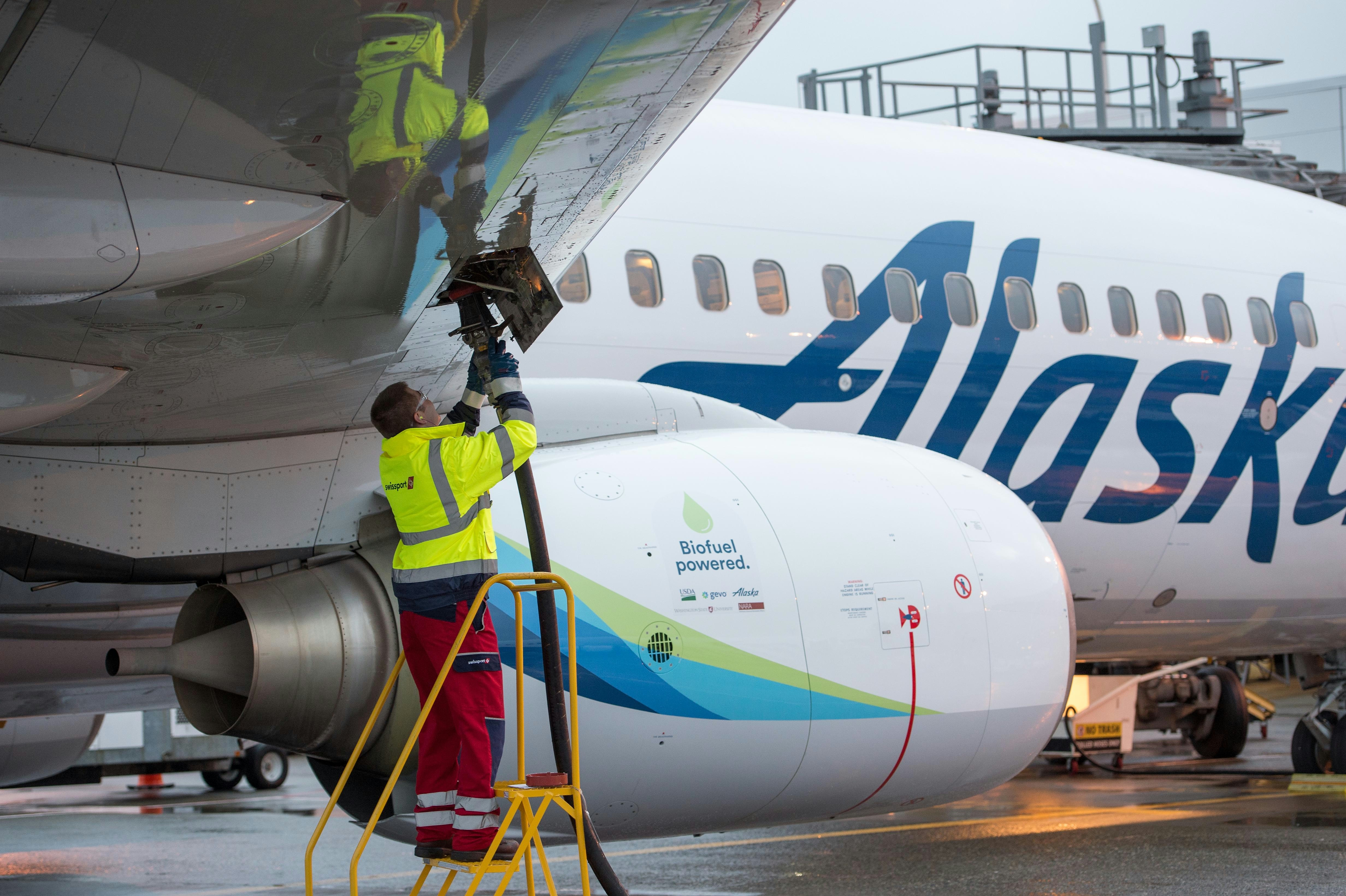
Commercial Flight Powered by Sustainable Aviation Fuel
Commercial Flight Powered by Sustainable Aviation Fuel
Sustainable aviation fuel (SAF) currently represents less than 1% of the approximately 100 billion gallons of jet fuel consumed annually by the global aviation industry. In a recent landmark achievement, American Airlines and Infinium successfully powered a commercial passenger flight using electro sustainable aviation fuel (eSAF). The flight, covering 391 miles from Corpus Christi to Dallas, signifies a notable advancement in the sector’s ongoing efforts to reduce carbon emissions.
Innovation in Fuel Production and Application
Unlike conventional jet fuel or bio-based alternatives, eSAF is synthesized from waste carbon dioxide and renewable electricity. At Infinium’s Texas facility, the eSAF was blended with traditional jet fuel to comply with existing engine specifications, enabling aircraft operation without any modifications. Infinium asserts that this fuel can reduce greenhouse gas emissions by more than 90% over its lifecycle compared to standard jet fuel.
Robert Schuetzle, CEO of Infinium, highlighted the company’s progress: “Since 2023, we have been producing scalable, drop-in eDiesel and eNaphtha at our Pathfinder facility from waste carbon and renewable energy for use in commercial trucks and plastics processing. Adding eSAF to our product slate — and seeing it power a commercial passenger flight — marks another meaningful step forward in bringing practical, low-carbon fuel solutions to industry.”
American Airlines CEO Robert Isom underscored the broader implications of the flight, stating, “Through our partnership with Infinium, we’re demonstrating how next generation technologies like eSAF can move from early investment to real-world application. Scaling SAF production at lower prices is essential to reducing emissions, strengthening our long-term competitiveness, and continuing to deliver the connectivity and economic benefits that our customers rely on.”
Challenges and Market Dynamics
Despite these technological advances, the widespread adoption of SAF faces significant obstacles. Limited production capacity and high costs remain major barriers, while regulatory uncertainty complicates long-term strategic planning. Recent policy developments, such as the European Commission’s expansion of its emissions trading system, have made airlines cautious about committing to long-term SAF purchase agreements. In contrast, some industry players, including International Airlines Group (IAG), are proactively securing long-term SAF supply contracts and investing in funds aimed at accelerating SAF development.
The rising demand for SAF is also influencing global markets. European airlines have tripled their SAF usage to comply with EU blending mandates, contributing to increased U.S. soybean oil prices and prompting producers to rely more heavily on domestic feedstocks. These shifts are reshaping the competitive landscape for both SAF producers and airlines.
Looking forward, Infinium is developing a new facility, Project Roadrunner, slated to open in 2027, which is expected to produce over 5 million gallons of eSAF annually. As the aviation industry pursues ambitious net-zero targets by 2050, scaling SAF production and addressing economic and regulatory challenges will be crucial to achieving substantial emissions reductions.

Etihad Airways Suspends Airbus A380 Flights on Key Route

Aditya Birla Group Seeks Approval for Aircraft Leasing in GIFT City

Qatar Airways Highlights Innovation and Connectivity at Arabian Travel Market 2026

Hong Kong's Five-Year Plan Includes Andrew Fan's Aircraft Parts Processing Hub Proposal

ACIA Aero Leasing Delivers ATR72-600 to Air Nostrum

RTX Appoints Jill Albertelli as Head of Pratt & Whitney

TAT Technologies Joins Beyond Aero Hydrogen Aircraft Program

AURAK Study Highlights Barriers to Air Taxi Adoption in Emerging Economies

Xiamen Air Selects Altitude for 787 Maintenance at Heathrow

Etihad and Swissport Extend Global Partnership
