
将人工智能洞察转化为可执行行动

热门趋势
Categories
Corrosion Threatens Engines of Key MSDF Patrol Aircraft
Corrosion Threatens Engines of Key MSDF Patrol Aircraft
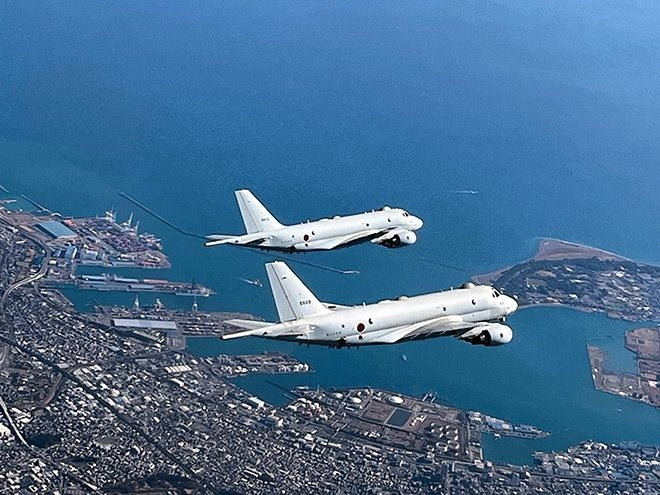
Engine corrosion is increasingly compromising the operational reliability of patrol aircraft critical to the Maritime Self-Defense Force’s (MSDF) surveillance of Chinese submarines and suspicious vessels in Japanese waters, according to a recent report by Japan’s Board of Audit. These aircraft, which conduct prolonged low-altitude flights over the ocean, are particularly vulnerable to corrosion-related engine malfunctions. This emerging issue now presents significant challenges to Japan’s maritime security operations.
Operational Impact and Industry Implications
The Board of Audit did not disclose the exact number of affected aircraft, citing Defense Ministry security protocols. Nevertheless, the corrosion problem has raised serious concerns about diminished mission readiness and rising maintenance expenditures. Industry analysts suggest that this situation may accelerate demand for advanced corrosion-resistant materials and technologies, as both operators and manufacturers seek to mitigate future risks. Competitors in the aerospace sector might respond by enhancing engine durability and expanding after-sales support services. Additionally, the anticipated market for leasing new-generation engines could be affected, as operators reassess risk management strategies in light of these vulnerabilities.
The P1 Patrol Aircraft: Development and Challenges
The P1 patrol aircraft, Japan’s first domestically produced maritime patrol model, was initially celebrated for its advanced submarine detection and tracking capabilities. There were ambitions to export the aircraft internationally, but these plans faltered amid technical difficulties. As of September 2024, 35 P1 aircraft—primarily manufactured by Kawasaki Heavy Industries Ltd.—were deployed across MSDF bases nationwide. The P1, which entered service in 2013, replaced the U.S.-made P3C model supplied by Lockheed Martin Corp.
According to the audit, the total development, procurement, and repair costs for the P1 through fiscal 2023 amounted to 1.776 trillion yen (approximately $12.3 billion). The Defense Ministry’s Acquisition, Technology and Logistics Agency plans to eventually field 61 P1 aircraft, with projected expenditures reaching 4.090 trillion yen.
Despite early recognition of the corrosion issue, IHI Corp., responsible for engine development, initially dismissed the malfunctions as coincidental, delaying corrective measures. The MSDF considers the P1’s operation essential due to its sophisticated detection systems, especially as increased Chinese vessel activity has necessitated more frequent and intensive patrols. A senior MSDF officer acknowledged that the relentless operational tempo was not anticipated during the aircraft’s development, exposing further vulnerabilities.
Developmental and Structural Obstacles
The P1’s development encountered significant hurdles. Japanese engineers were compelled to design much of the aircraft’s technology independently, as U.S. systems used in the P3C were inaccessible. Budget constraints at the time further limited the scope of development. Moreover, a “stovepipe” organizational structure, which separated ministry bureaucrats from Self-Defense Force officers, impeded effective information sharing, according to a high-ranking Defense Ministry official.
The Board of Audit also identified issues with onboard electronic equipment and weapons systems, which have grounded some aircraft. Technical problems contributed to the failure of the P1 to participate in the 2017 Paris Air Show, effectively ending hopes for exporting the model.
As corrosion continues to threaten the MSDF’s patrol fleet, the Defense Ministry and industry stakeholders face mounting pressure to address these vulnerabilities and ensure the resilience of Japan’s maritime surveillance capabilities.

Etihad Airways Suspends Airbus A380 Flights on Key Route

Aditya Birla Group Seeks Approval for Aircraft Leasing in GIFT City

Qatar Airways Highlights Innovation and Connectivity at Arabian Travel Market 2026

Hong Kong's Five-Year Plan Includes Andrew Fan's Aircraft Parts Processing Hub Proposal

ACIA Aero Leasing Delivers ATR72-600 to Air Nostrum

RTX Appoints Jill Albertelli as Head of Pratt & Whitney

TAT Technologies Joins Beyond Aero Hydrogen Aircraft Program

AURAK Study Highlights Barriers to Air Taxi Adoption in Emerging Economies

Xiamen Air Selects Altitude for 787 Maintenance at Heathrow

Etihad and Swissport Extend Global Partnership
