
将人工智能洞察转化为可执行行动

热门趋势
Categories
Delta Air Lines Maintains Caution in Committing Fully to Airbus for Long-Haul Fleet
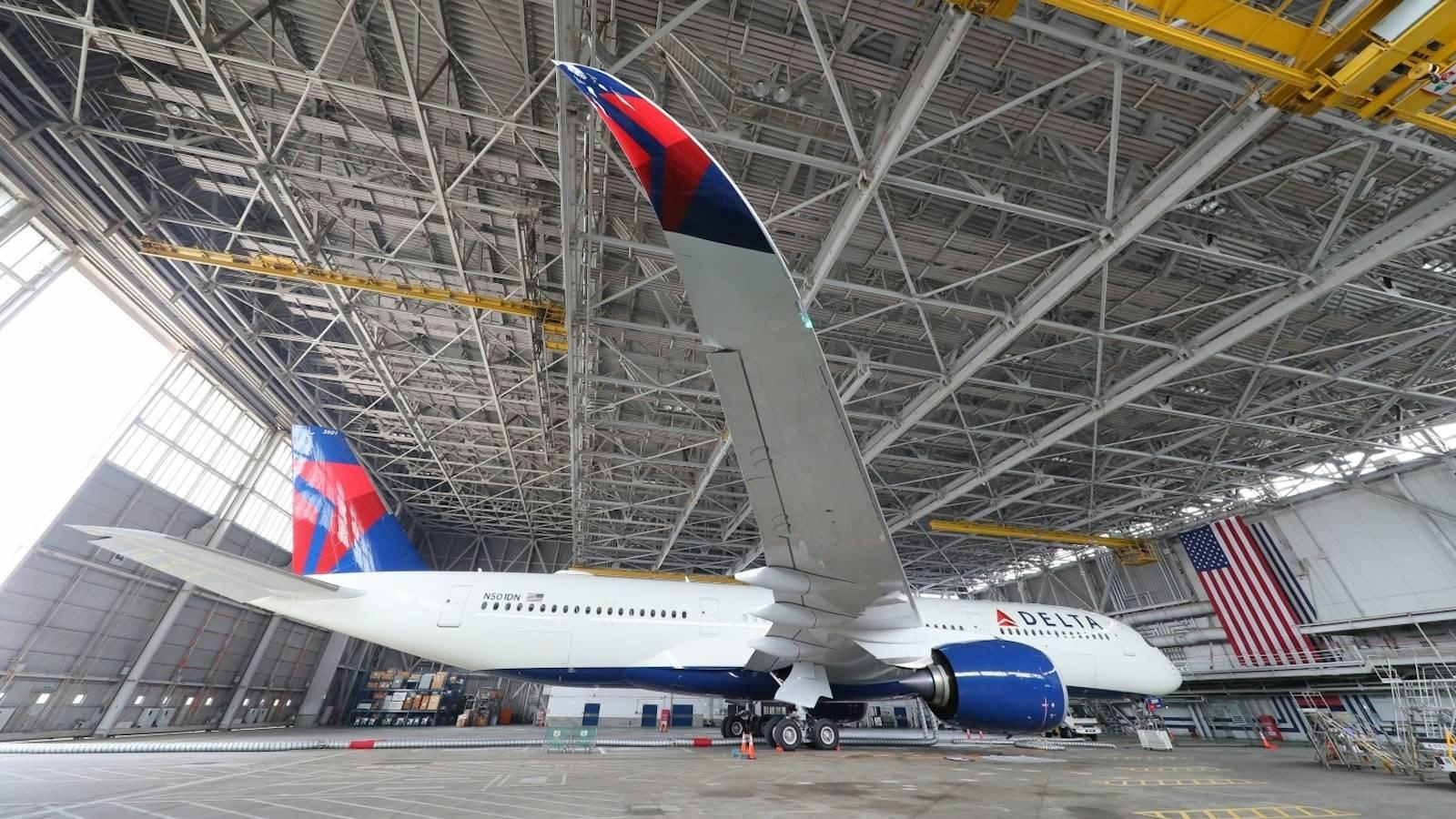
Delta Air Lines Maintains Caution in Committing Fully to Airbus for Long-Haul Fleet
Delta Air Lines continues to adopt a measured and strategic approach in shaping its long-haul fleet, deliberately avoiding an exclusive commitment to Airbus despite prevailing industry trends. The airline’s historical fleet decisions underscore this cautious stance. After inheriting an order for 18 Boeing 787-8s from Northwest Airlines in 2005, Delta ultimately deemed the aircraft unsuitable for its network requirements. In response, the carrier shifted course in 2014 by placing orders for 25 Airbus A330-900s and 25 A350-900s to support its international growth, while postponing the replacement of its Boeing 767s.
Fleet Modernization and Capacity Strategy
As Delta’s Boeing 767-300ER fleet approaches retirement, the airline is introducing the A330-900 as its successor, despite the aircraft’s larger seating capacity. This decision aligns with a broader strategy to increase capacity across its network. The A330-900, A350-900, and Boeing 787-9 share similar dimensions, but the recently ordered larger Boeing 787-10 will enable Delta to expand capacity on transatlantic routes. This, in turn, will allow the airline to redeploy A350-900s to Pacific routes where their extended range offers a competitive advantage.
Delta’s fleet strategy is further characterized by a dual sourcing approach. While Airbus aircraft such as the A321neo, A330-900, and A350 have featured prominently in recent acquisitions, the airline maintains robust ties with Boeing. In 2022, Delta placed a substantial order for 100 Boeing 737 MAX 10s, with an additional 30 options, and its latest 787 order reinforces this ongoing commitment. This dual sourcing strategy not only secures favorable pricing and delivery schedules but also mitigates risks associated with potential disruptions in any single aircraft program.
Industry Context and Strategic Partnerships
The competitive environment in widebody aircraft procurement remains intense, exemplified by Ethiopian Airlines’ ongoing negotiations with Airbus to expand its fleet. This dynamic underscores the importance for Delta to preserve flexibility and leverage relationships with both Airbus and Boeing. Moreover, Delta’s aircraft orders are closely integrated with its TechOps division, a significant source of revenue. The airline’s recent overhaul agreement for the GEnx engine, linked to its 787 order, is anticipated to generate substantial maintenance income as Delta gains certification for this engine type.
Delta’s cautious fleet planning is also shaped by broader industry uncertainties. Investigations into Joby Aviation’s trade practices could affect Delta’s air taxi partnership, introducing additional complexity to its long-term strategy. Meanwhile, Berkshire Hathaway’s recent $2.65 billion investment in Delta reflects strong confidence in the airline’s financial stability and strategic direction amid these challenges.
With 30 Boeing 787 options and 20 Airbus widebody options available, Delta is positioning itself to replace its A330-200/300 and 767-400ER fleets well into the 2030s. By maintaining flexibility and fostering strong relationships with both major manufacturers, Delta aims to sustain resilience and competitiveness in an evolving global aviation landscape.

Etihad Airways Suspends Airbus A380 Flights on Key Route

Aditya Birla Group Seeks Approval for Aircraft Leasing in GIFT City

Qatar Airways Highlights Innovation and Connectivity at Arabian Travel Market 2026

Hong Kong's Five-Year Plan Includes Andrew Fan's Aircraft Parts Processing Hub Proposal

ACIA Aero Leasing Delivers ATR72-600 to Air Nostrum

RTX Appoints Jill Albertelli as Head of Pratt & Whitney

TAT Technologies Joins Beyond Aero Hydrogen Aircraft Program

AURAK Study Highlights Barriers to Air Taxi Adoption in Emerging Economies

Xiamen Air Selects Altitude for 787 Maintenance at Heathrow

Etihad and Swissport Extend Global Partnership
