
将人工智能洞察转化为可执行行动

热门趋势
Categories
Electric Aircraft Take Spotlight at Farnborough Air Show Amid Boeing and Airbus Deals
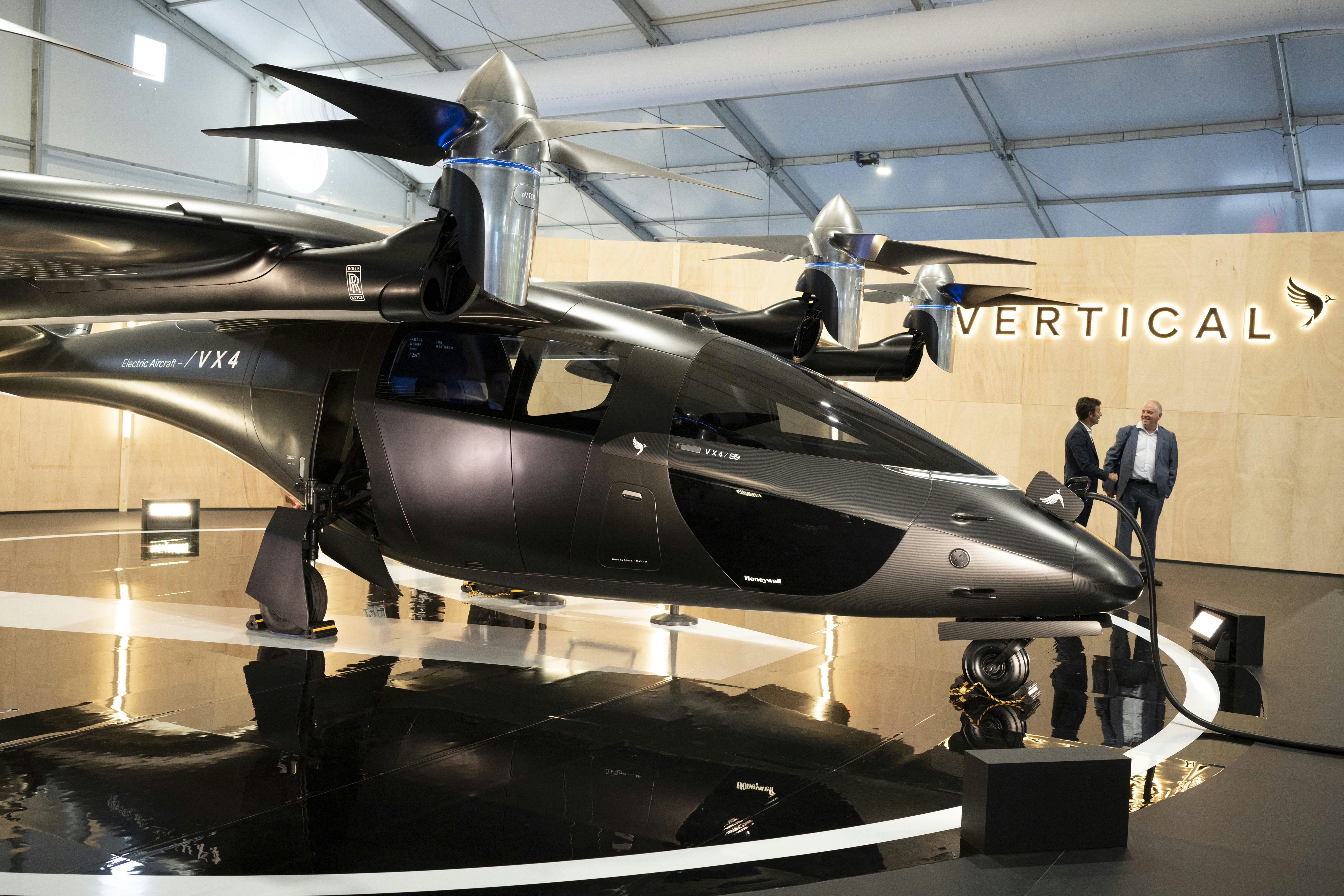
Electric Aircraft Take Spotlight at Farnborough Air Show Amid Boeing and Airbus Deals
The Farnborough International Airshow, held biennially, once again served as a global platform for aviation industry leaders to unveil significant commercial agreements and technological advancements. While Boeing and Airbus dominated the headlines with substantial aircraft orders, the event also highlighted a growing focus on electric and hybrid aircraft, signaling a shift toward the future of sustainable aviation.
Boeing and Airbus Secure Major Orders
Boeing commenced the show by announcing a 100-aircraft order for its 737 Max from SMBC Aviation Capital, an Ireland-based subsidiary of Japan’s Sumitomo Corporation. The American manufacturer further revealed commitments from Riyadh Air for 28 Boeing 787 Dreamliners and from Philippine Airlines for up to 20 additional jets. Airbus responded with a notable order for 100 A320neo family aircraft and secured an extension from Riyadh Air, which added six more A350-1000s to a prior order of 25.
Despite Airbus leading in deliveries last month and Boeing in new orders, both companies continue to grapple with extensive backlogs that will take years to fulfill. Airbus projects that global passenger traffic will more than double to 10 billion annually over the next two decades, driving demand for over 42,000 new aircraft. The robust order books announced at Farnborough underscore the industry’s optimistic long-term outlook.
Advancements in Electric and Hybrid Aviation
Beyond the traditional aerospace giants, the airshow placed significant emphasis on electric and hybrid propulsion technologies. GE Aerospace, NASA, and eVTOL manufacturer Beta Technologies jointly announced a milestone achievement: the first high-altitude flight powered by hybrid-electric propulsion. By retrofitting a Saab 340B commuter aircraft with a hybrid-electric system, pilots successfully reached altitudes exceeding 30,000 feet and sustained flight for over two hours.
Beta Technologies’ electric Alia CX300 attracted considerable attention from both attendees and industry analysts, reflecting growing enthusiasm for electric aviation. Nonetheless, the sector faces notable challenges, including high upfront costs, limited range relative to conventional aircraft, and the need for substantial investment in charging and maintenance infrastructure. Despite these obstacles, the positive reception at Farnborough indicates strong momentum for continued innovation.
In response, established manufacturers such as Boeing and Airbus are exploring their own hybrid and electric aircraft initiatives to remain competitive. Additionally, electric air taxi company Archer introduced Thunder, a hybrid-electric eVTOL developed in collaboration with defense startup Anduril. Designed for both commercial cargo transport and military applications, Thunder is positioned as an “autonomous attack rotorcraft,” illustrating the expanding scope of electric aviation technologies.
Defense Sector Innovations
The defense segment of the airshow also featured prominently, with Lockheed Martin unveiling a lower-cost version of its Patriot interceptor missile. The new model aims to reduce the original system’s $4 million price tag by more than half when production begins in 2028. European missile manufacturer MBDA introduced a competing low-cost interceptor system designed to counter the increasing threat posed by high-volume drone swarms and inexpensive munitions, tactics that are becoming more prevalent in modern conflicts.
As the Farnborough Airshow progresses, the intersection of established aerospace leaders and emerging electric aviation innovators marks a critical juncture for the industry. While traditional manufacturers secure long-term commercial orders, the rapid advancements in electric and hybrid technologies suggest that sustainability and innovation will play an increasingly central role in shaping the future of flight.

Etihad and Swissport Extend Global Partnership

Sepehran Airlines B737 Returns to Mashhad After Tyre and Engine Issues

Etihad Deploys Widebody Fleet to Meet Strong Demand

Korean Air Finalizes $36.2 Billion Deal with Boeing

Australia’s RFDS Queensland Section Orders Six King Air 260Cs

Korean Air Finalizes Order for 103 Boeing Jets and Engines

Embraer E195-E2 Features Distinctive Engine Placement Among Regional Jets

What Passengers Can Expect on Boeing’s New 777X Jet

How Ethiopian Airlines Became Africa’s Leading Carrier Amid Gulf Competition

Joby Aviation Extends Autonomous Flight Capabilities with Cross-Country Tour
