
将人工智能洞察转化为可执行行动

热门趋势
Categories
Electric Passenger Plane Makes First Landing at JFK Airport
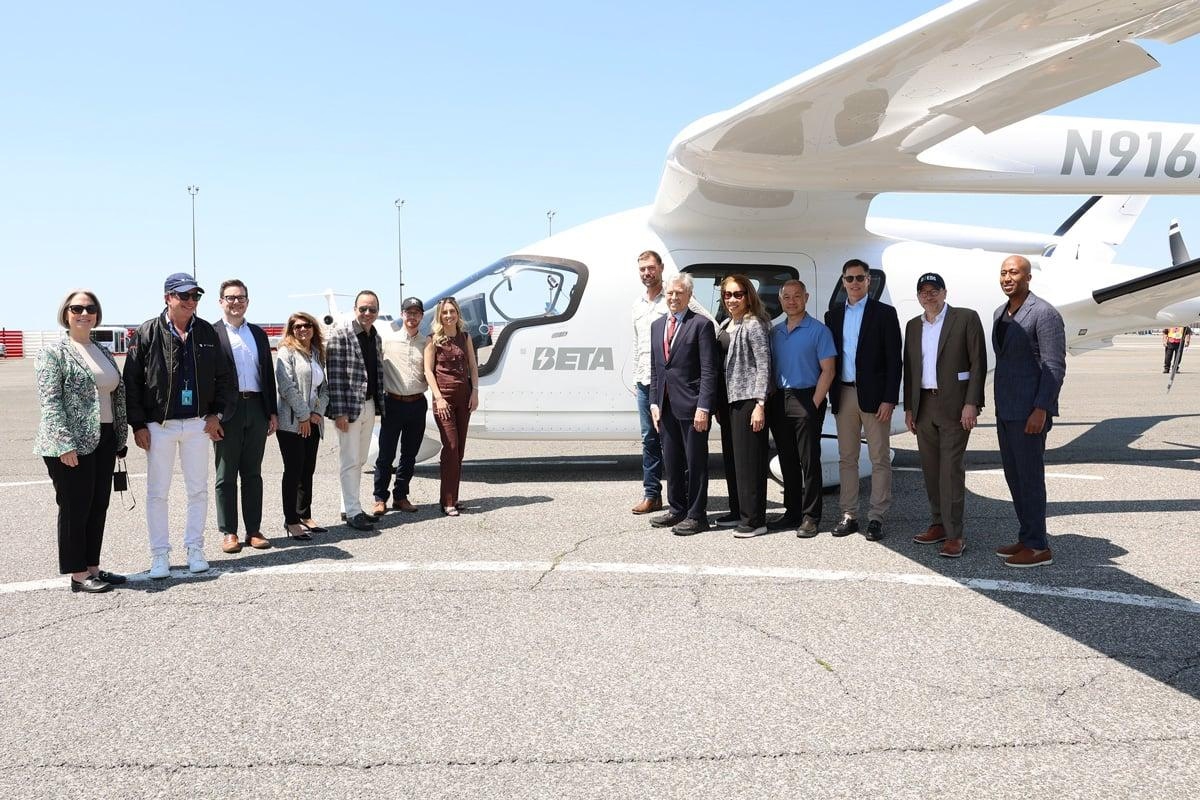
Electric Passenger Plane Lands at JFK Airport, Marking a Milestone in Aviation
A fully electric passenger aircraft has successfully landed at New York City’s John F. Kennedy International Airport, representing a significant advancement in the field of electric aviation. The ALIA aircraft, developed by Beta Technologies, completed an 80-mile journey from East Hampton earlier this month, carrying four passengers. While electric passenger planes have previously conducted test flights in the United States, this marks the first instance of such a flight operating under standard air traffic control procedures. This development follows recent regulatory progress in October, when U.S. authorities began certifying air taxis and other electric aircraft.
Implications for the Future of Electric Aviation
The successful landing at JFK is widely regarded as a strong indication that short-distance electric flights are transitioning from theoretical concepts to practical applications. Industry experts and market analysts have responded positively, emphasizing the potential environmental benefits of electric aircraft, including significant reductions in noise pollution and carbon emissions compared to conventional planes.
Despite this progress, the widespread adoption of electric passenger aircraft faces considerable challenges. Regulatory approval processes remain intricate, as aviation authorities continue to rigorously evaluate the safety and reliability of emerging electric technologies. Furthermore, airports and associated infrastructure will require substantial modifications to support electric aviation, including the installation of charging stations and the development of specialized maintenance facilities.
Global Developments and Industry Response
The enthusiasm surrounding electric aviation is driving competitors to accelerate their own research and development efforts, aiming to keep pace with rapid technological advancements and evolving regulatory frameworks. This momentum is not confined to the United States; internationally, similar progress is underway. For instance, in China, an uncrewed air taxi company is already conducting regular trial flights along a sightseeing route.
While the first electric passenger plane landing at JFK has generated considerable excitement, experts caution that broader adoption will depend on overcoming logistical, regulatory, and financial obstacles. The industry’s forthcoming priorities are expected to focus on scaling operations, securing additional regulatory clearances, and investing in the infrastructure necessary to support a new era of cleaner and quieter air travel.

Etihad Airways Suspends Airbus A380 Flights on Key Route

Aditya Birla Group Seeks Approval for Aircraft Leasing in GIFT City

Qatar Airways Highlights Innovation and Connectivity at Arabian Travel Market 2026

Hong Kong's Five-Year Plan Includes Andrew Fan's Aircraft Parts Processing Hub Proposal

ACIA Aero Leasing Delivers ATR72-600 to Air Nostrum

RTX Appoints Jill Albertelli as Head of Pratt & Whitney

TAT Technologies Joins Beyond Aero Hydrogen Aircraft Program

AURAK Study Highlights Barriers to Air Taxi Adoption in Emerging Economies

Xiamen Air Selects Altitude for 787 Maintenance at Heathrow

Etihad and Swissport Extend Global Partnership
