
AeroGenie — 您的智能副驾驶。

热门趋势
Categories
Elroy Air’s Autonomous Chaparral Delivers Lunch on A-to-B Flight
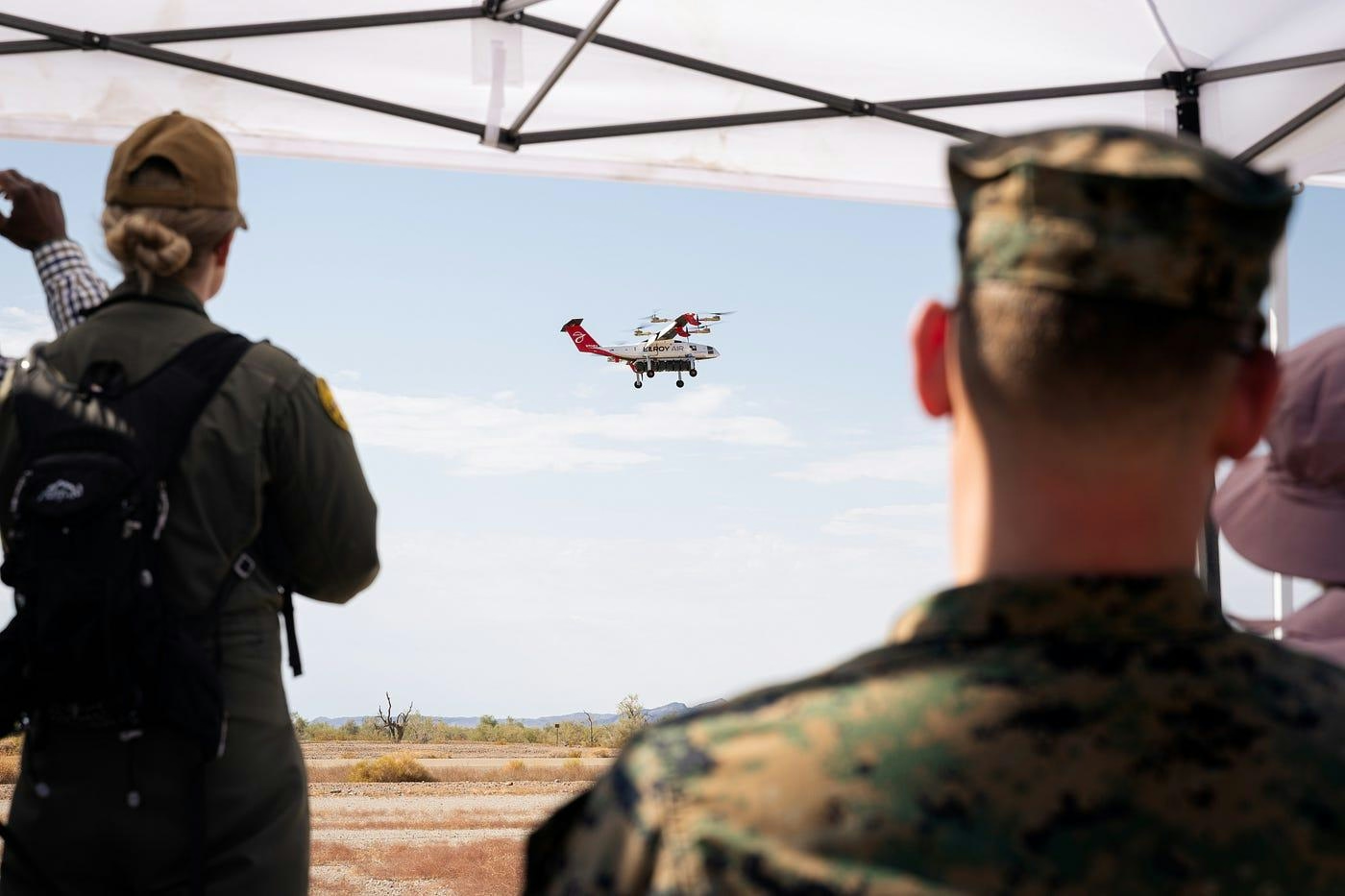
Elroy Air’s Autonomous Chaparral Completes First Point-to-Point Cargo Flight
Elroy Air has achieved a significant milestone with its Chaparral, an autonomous vertical takeoff and landing (VTOL) cargo aircraft, completing its first point-to-point flight. The full-scale C-1 prototype successfully took off and landed vertically at the company’s Byron, California facility on December 10. During this demonstration, the aircraft transported a 213-pound payload—including lunch for the team—over a 2.6-mile route at speeds reaching up to 60 miles per hour.
Design and Capabilities
The Chaparral is engineered to carry payloads of up to 300 pounds across distances of up to 300 miles, targeting both commercial and military logistics markets. Its hybrid-electric powertrain powers eight vertical and four forward propellers, while a turbogenerator recharges the batteries during flight. The aircraft operates fully autonomously, managing all phases of flight and ground operations without human intervention. It is equipped to autonomously pick up and deposit cargo using Elroy’s modular Hatch Load pods, which are designed to accommodate a variety of missions. These range from express delivery and heavy cargo transport to humanitarian aid, medical supply distribution, and military intelligence, surveillance, and reconnaissance (ISR) tasks.
Market Interest and Industry Context
Elroy Air’s CEO Andrew Clare has disclosed a backlog of approximately 1,500 preorders, with notable customers including FedEx, Bristow Group, and Lease Corporation International (LCI). The Chaparral has also garnered interest from the U.S. military, which is actively evaluating its potential for defense applications. Dave Merrill, Elroy’s founder and executive chairman, emphasized the company’s collaboration with the U.S. Air Force, Marine Corps, and logistics leaders such as FedEx to develop the Chaparral as a versatile platform capable of supporting a wide range of missions.
This achievement arrives amid growing pilot shortages in the aviation industry, which have intensified interest in autonomous aircraft solutions. Nonetheless, regulatory approval and safety concerns remain significant challenges for Elroy Air and other companies in the advanced air mobility sector. Investor sentiment is divided; while some are optimistic about the transformative potential of autonomous cargo delivery, others remain cautious regarding the long-term viability and profitability of such technologies.
Competitive Landscape and Future Plans
The autonomous air mobility sector is becoming increasingly competitive, with companies like Joby Aviation, Archer Aviation, and Wisk Aero advancing their own electric and autonomous aircraft programs. Broader developments in autonomous transport, such as Rivian’s recent progress with AI chips for self-driving trucks, underscore the industry-wide race to deploy next-generation autonomous vehicles.
Elroy Air is collaborating with Kratos, a manufacturer known for jet-powered composite uncrewed aircraft, to produce its first production-intent Chaparral by 2026. The company aims to scale production to hundreds of units annually. Since its initial flight in 2023, the C-1 prototype has participated in demonstrations with the U.S. Marine Corps at Arizona’s Yuma Proving Ground. Elroy Air currently holds active contracts with the U.S. Army, Air Force, and partners in Japan as it continues to expand the operational capabilities of its autonomous cargo platform.
Texarkana College Holds First Graduation for Aviation Maintenance Technician Program
United’s 737 MAX 10s Have Flown Over 300 Hours Without Passengers

Airlines Adapt to Trade Disruptions and Supply Chain Challenges

AI’s Growing Energy Use Challenges Airlines’ Net-Zero Targets

China Southern Airlines Highlights AI Innovations at Guangzhou Conference
KAEMS Expands MRO Services with Tadpole Partnership
Russian Airlines Report Nine Engine Failures in One Week

AI's Role in the Holiday Season
Three Decades of Global Tourism Influenced by the Boeing 777