
将人工智能洞察转化为可执行行动

热门趋势
Categories
Europe Unveils New Aviation Strategy to Promote Cleaner, Faster Flights
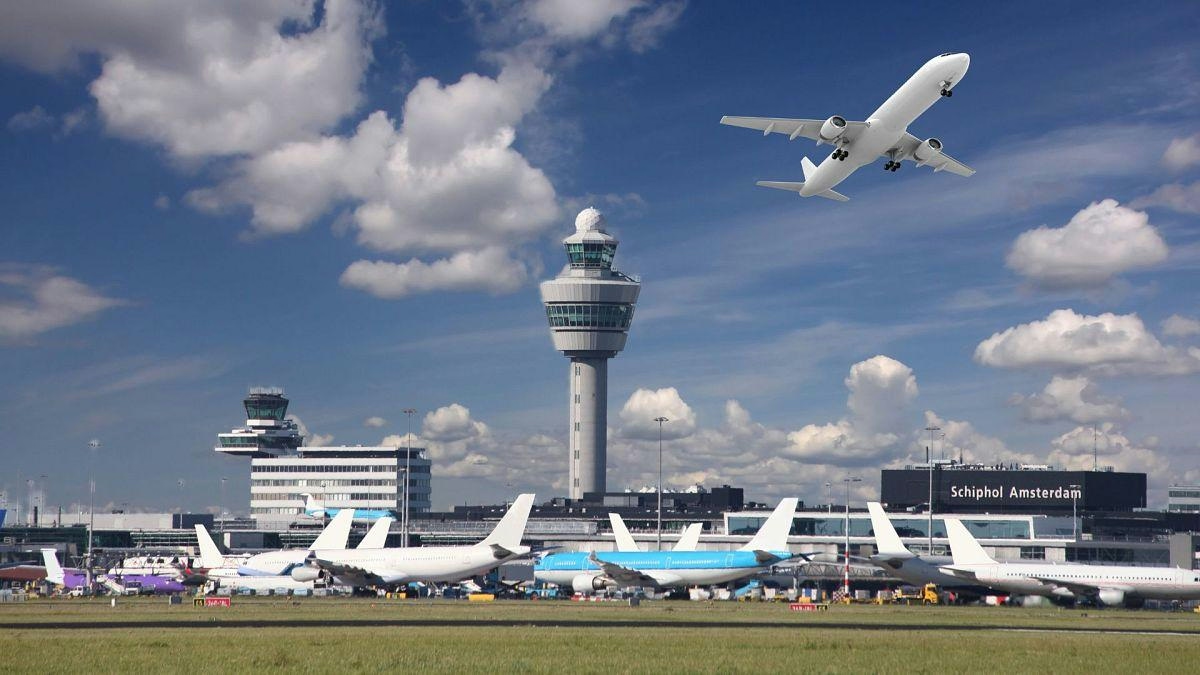
Europe Unveils New Aviation Strategy to Promote Cleaner, Faster Flights
The European Commission has introduced an ambitious European Aviation Strategy aimed at transforming air travel across the continent. This comprehensive initiative seeks to modernize the aviation sector by fostering sustainable technologies and enhancing the overall passenger experience. While the strategy emphasizes industry innovation, travelers can anticipate safer, faster, and more environmentally friendly flights connecting Europe’s major cities.
Streamlining Travel and Advancing Sustainability
A key objective of the strategy is to simplify air travel regulations, thereby facilitating smoother airport procedures and improving air traffic coordination. Current EU programs are focused on modernizing aircraft and automating operations, which are expected to reduce delays and waiting times. Passengers traveling between hubs such as Paris, Rome, and Amsterdam may soon benefit from a more seamless airport experience. However, the effort to simplify regulations faces challenges due to the complexity of European legal frameworks and competition for funding with established initiatives like Horizon Europe, which could influence the pace of implementation.
At the forefront of the strategy is Europe’s commitment to sustainable aviation. The plan prioritizes the development and adoption of green technologies, including hydrogen-powered aircraft, sustainable aviation fuels, and next-generation energy-efficient planes. These advancements promise to reduce the carbon footprint of flights, offering environmentally conscious travelers more sustainable options for exploring the continent. Sustainable aviation fuels, derived from renewable resources or waste materials, are central to this vision. Although still in the developmental stage, increased government support aims to expand their availability, enabling tourists to minimize their environmental impact while traveling.
Innovation, Safety, and Competitive Challenges
The strategy also directs significant investment toward aviation research and the enhancement of air traffic management systems. Funding is intended to drive aircraft innovation, improve flight safety, and streamline processes such as boarding and baggage handling. Future airports may incorporate AI-driven systems to optimize scheduling, maintenance, and passenger convenience, contributing to a smoother and less stressful travel experience. Nonetheless, competition for funding with existing research partnerships may affect the scale and speed of these technological advancements. Market observers are likely to monitor how these investments influence airlines’ operational costs and efficiency.
Technological progress is expected to enhance both safety and logistics within the sector. Innovations such as drones, automated surveillance, and AI-powered air traffic management systems are anticipated to benefit civil aviation and defense operations alike. Passengers can look forward to safer flights, faster baggage delivery, and more organized airport environments.
As Europe advances its aviation agenda, it faces a competitive landscape where airlines and aerospace companies outside the region, including Aeromexico and Collins Aerospace, are leveraging existing technologies and partnerships to maintain their market positions. The ultimate success of Europe’s strategy will depend on the ability of its industries to innovate effectively and secure the necessary funding amid this competition.
For travelers, the European Aviation Strategy heralds a new era of air travel characterized by more efficient airports, advanced aircraft, and sustainable flight options. Airlines may introduce programs that reward eco-conscious travel, providing additional incentives for passengers to choose greener flights. Through its investments in technology, sustainability, and safety, Europe aims to deliver a modernized, efficient, and environmentally responsible travel experience, ensuring journeys across the continent become smoother, faster, and greener for all.

Etihad Airways Suspends Airbus A380 Flights on Key Route

Aditya Birla Group Seeks Approval for Aircraft Leasing in GIFT City

Qatar Airways Highlights Innovation and Connectivity at Arabian Travel Market 2026

Hong Kong's Five-Year Plan Includes Andrew Fan's Aircraft Parts Processing Hub Proposal

ACIA Aero Leasing Delivers ATR72-600 to Air Nostrum

RTX Appoints Jill Albertelli as Head of Pratt & Whitney

TAT Technologies Joins Beyond Aero Hydrogen Aircraft Program

AURAK Study Highlights Barriers to Air Taxi Adoption in Emerging Economies

Xiamen Air Selects Altitude for 787 Maintenance at Heathrow

Etihad and Swissport Extend Global Partnership
