
将人工智能洞察转化为可执行行动

热门趋势
Categories
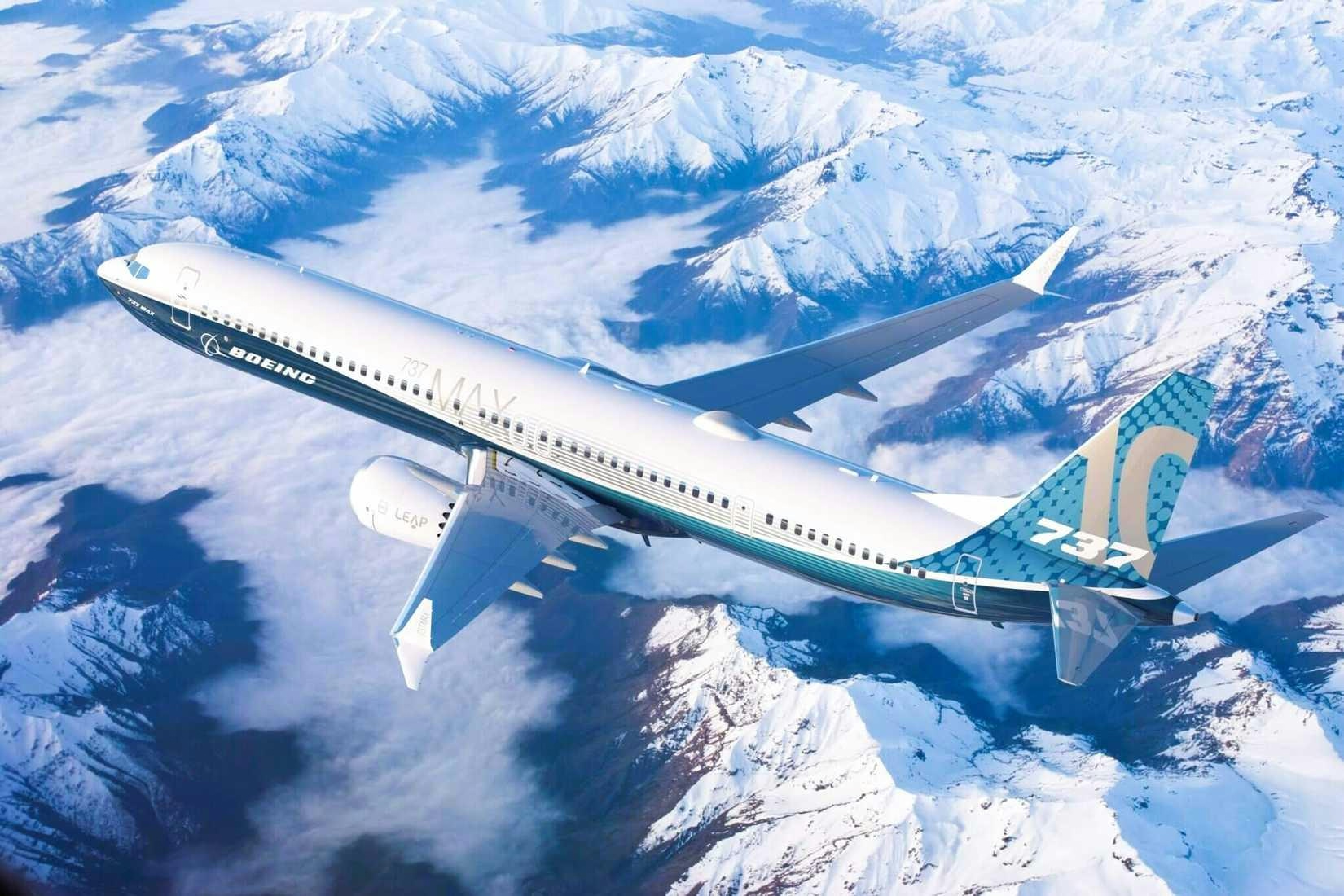
FAA Certifies Boeing 737-7, Clearing Way for Delivery
FAA Certifies Boeing 737-7, Clearing Way for Delivery
Regulatory Approval and Certification Process
The U.S. Federal Aviation Administration (FAA) has officially certified the Boeing 737-7, the smallest variant in the 737 MAX family, marking a significant milestone after a lengthy flight-test and analysis campaign that began in 2018. Boeing announced that the FAA granted an amended type certificate for the 737-7 and incorporated the model into Boeing’s Production Certificate No. 700. This authorization confirms that the aircraft can be manufactured under Boeing’s approved production system.
The amended type certificate signifies formal approval of the 737-7’s design as an additional model under Boeing’s existing 737 type certificate. This certification ensures the aircraft meets stringent airworthiness, noise, fuel-venting, and exhaust-emissions standards. Furthermore, the inclusion of the 737-7 in Boeing’s production certificate validates the company’s manufacturing processes as capable of producing aircraft that conform to the approved design. However, this regulatory clearance does not immediately translate into operational service. Each individual aircraft must still receive an airworthiness certificate, and Boeing must complete the aircraft in its approved configuration. Additionally, Southwest Airlines, the launch customer, must finalize acceptance procedures, pilot training, maintenance preparations, and operational readiness before the aircraft enters service.
Extended Certification Timeline and Market Context
The certification campaign for the 737-7 was extensive, involving over 1,000 hours of flight and ground testing, comprehensive system-safety analyses, and human-factors evaluations. During testing, Boeing addressed an updated engine anti-ice system following the identification of a potential overheating issue. By July, Boeing reported that 95 percent of certification deliverables had been completed, following 441 flights and 686 flight-test hours.
The protracted development timeline reflects multiple challenges, including the global grounding of the 737 MAX fleet, disruptions caused by the COVID-19 pandemic, and intensified regulatory scrutiny. These factors contributed to delays and underscore the heightened oversight environment that Boeing and the wider aerospace industry continue to navigate.
Competitive Implications and Airline Strategy
The FAA’s certification of the 737-7 arrives amid fierce competition in the single-aisle aircraft market, particularly from Airbus. The European manufacturer is expected to respond with enhanced marketing efforts or new product offerings to counter Boeing’s latest model. While some airlines are anticipated to embrace the 737-7 for its extended range and operational efficiency, others may maintain preference for Airbus’s competing aircraft, resulting in varied market responses.
For Southwest Airlines, the 737-7 represents a critical element of its fleet renewal strategy. The aircraft offers seating for 135 to 160 passengers in a two-class configuration and a range of up to 3,800 nautical miles. It serves as a MAX-family replacement for older 737-700s on routes that do not require the larger 737-8 or 737-9 variants. As of April 2026, Southwest held 256 firm orders for the 737-7, although delivery schedules remain subject to adjustment. During the certification delay, the airline substituted some 737-7 orders with 737-8s to maintain fleet modernization.
With FAA approval now secured, Southwest gains access to the smaller MAX variant to support its future fleet plans. The operational impact will depend on Boeing’s delivery cadence, Southwest’s induction timeline, and the evolving competitive dynamics within the single-aisle aircraft sector.

Etihad Airways Suspends Airbus A380 Flights on Key Route

Aditya Birla Group Seeks Approval for Aircraft Leasing in GIFT City

Qatar Airways Highlights Innovation and Connectivity at Arabian Travel Market 2026

Hong Kong's Five-Year Plan Includes Andrew Fan's Aircraft Parts Processing Hub Proposal

ACIA Aero Leasing Delivers ATR72-600 to Air Nostrum

RTX Appoints Jill Albertelli as Head of Pratt & Whitney

TAT Technologies Joins Beyond Aero Hydrogen Aircraft Program

AURAK Study Highlights Barriers to Air Taxi Adoption in Emerging Economies

Xiamen Air Selects Altitude for 787 Maintenance at Heathrow

Etihad and Swissport Extend Global Partnership
