
将人工智能洞察转化为可执行行动

热门趋势
Categories
FAA Seeks AI System to Support Air Traffic Controllers
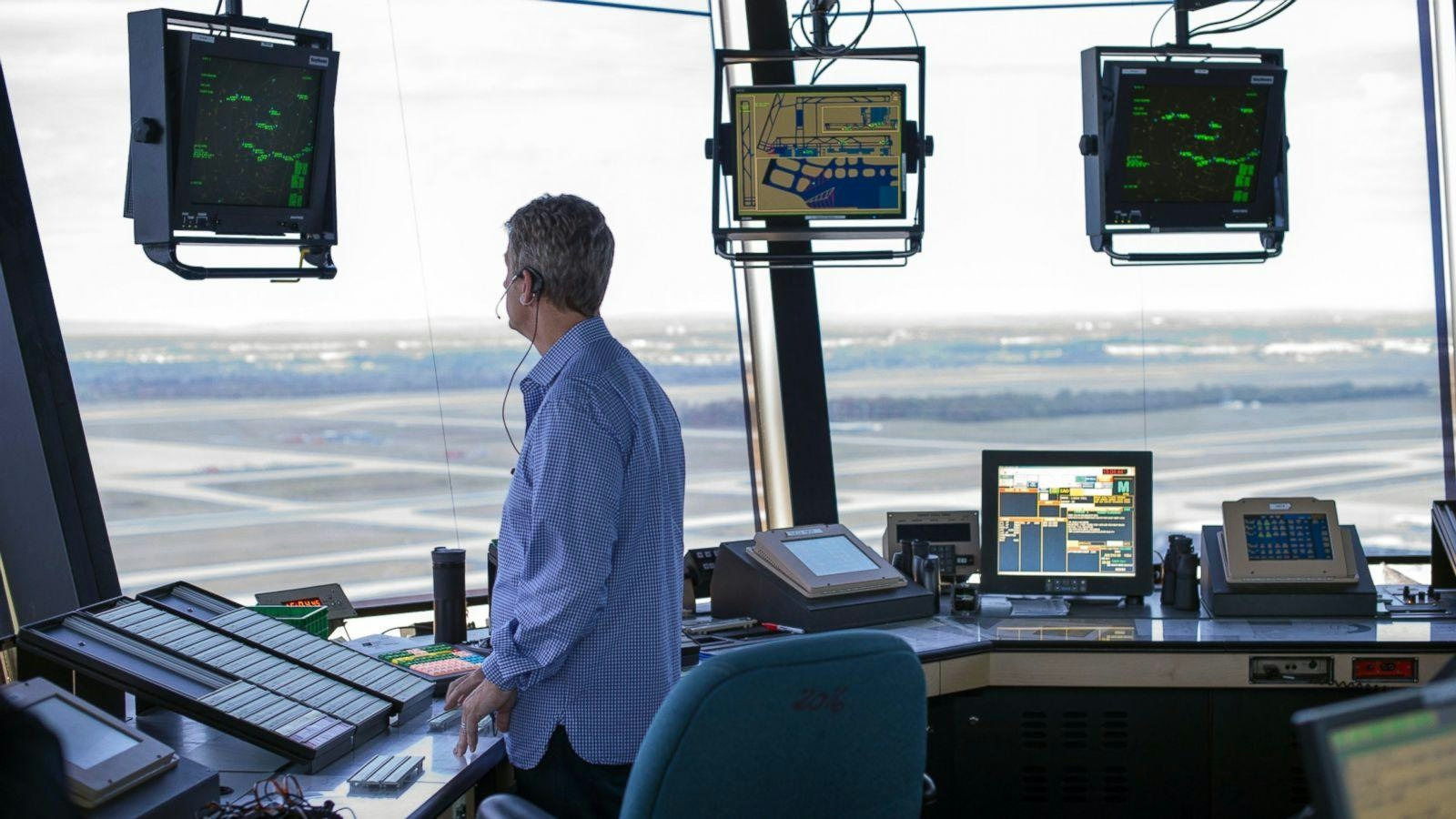
FAA Advances AI Integration to Support Air Traffic Controllers
The Federal Aviation Administration (FAA) is accelerating efforts to implement artificial intelligence (AI) technology aimed at assisting air traffic controllers in managing the increasingly complex U.S. airspace. This initiative, highlighted by Transportation Secretary Sean Duffy during a recent media briefing, seeks to modernize air traffic management systems while addressing persistent staffing shortages and safety challenges.
The SMART System: Enhancing Predictive Capabilities
At the core of the FAA’s strategy is the development of the Strategic Management of Airspace Routing Trajectories (SMART) system. This AI-driven tool is designed to significantly extend the timeframe for predicting and resolving potential flight path conflicts—from the current 15-minute window to as much as two hours in advance. Secretary Duffy explained that controllers will receive early notifications suggesting minor adjustments to flight paths, enabling them to deconflict routes well before conflicts arise. This advance warning is expected to improve operational efficiency and safety across the national airspace.
Three companies—Palantir, Thales, and Air Space Intelligence—are currently competing for the contract to develop the SMART system. Each contender offers a unique approach to government AI procurement, reflecting the growing emphasis on leveraging advanced technologies to overcome longstanding challenges in air traffic control.
Addressing Staffing Shortages and Safety Concerns
The FAA’s push for AI integration comes amid a significant staffing crisis. The agency faces approximately 3,000 vacancies among its air traffic controllers, falling short of the target workforce of around 14,000. This shortfall has been compounded by a hiring freeze imposed in 2011 and the extensive training required for new controllers. The resulting strain on existing personnel has raised concerns about the resilience and safety of the air traffic control system.
Safety remains a paramount concern driving the FAA’s modernization efforts. Recent incidents, including a failure of a safety alert system at LaGuardia Airport that did not warn controllers prior to a fatal collision, have intensified scrutiny of air traffic operations. A series of near-misses and crashes at airports nationwide have further highlighted the urgent need for improved predictive tools and enhanced planning to manage congestion at busy hubs.
Broader Modernization and Future Outlook
The SMART system forms part of a comprehensive $32.5 billion FAA modernization program, which also encompasses the replacement of hundreds of radar systems and the expansion of the air traffic controller workforce. The agency anticipates that integrating AI will not only bolster safety and operational efficiency but also help mitigate the impact of political debates and funding uncertainties that have historically impeded progress.
Development of the SMART system is expected to proceed rapidly, with initial operational capabilities potentially launching later this year. The Department of Transportation and FAA are scheduled to provide an update on the program’s progress on April 21.

Etihad Airways Suspends Airbus A380 Flights on Key Route

Aditya Birla Group Seeks Approval for Aircraft Leasing in GIFT City

Qatar Airways Highlights Innovation and Connectivity at Arabian Travel Market 2026

Hong Kong's Five-Year Plan Includes Andrew Fan's Aircraft Parts Processing Hub Proposal

ACIA Aero Leasing Delivers ATR72-600 to Air Nostrum

RTX Appoints Jill Albertelli as Head of Pratt & Whitney

TAT Technologies Joins Beyond Aero Hydrogen Aircraft Program

AURAK Study Highlights Barriers to Air Taxi Adoption in Emerging Economies

Xiamen Air Selects Altitude for 787 Maintenance at Heathrow

Etihad and Swissport Extend Global Partnership
