
将人工智能洞察转化为可执行行动

热门趋势
Categories
Five Aircraft Featuring Innovative Cabin Designs
Five Aircraft Featuring Innovative Cabin Designs
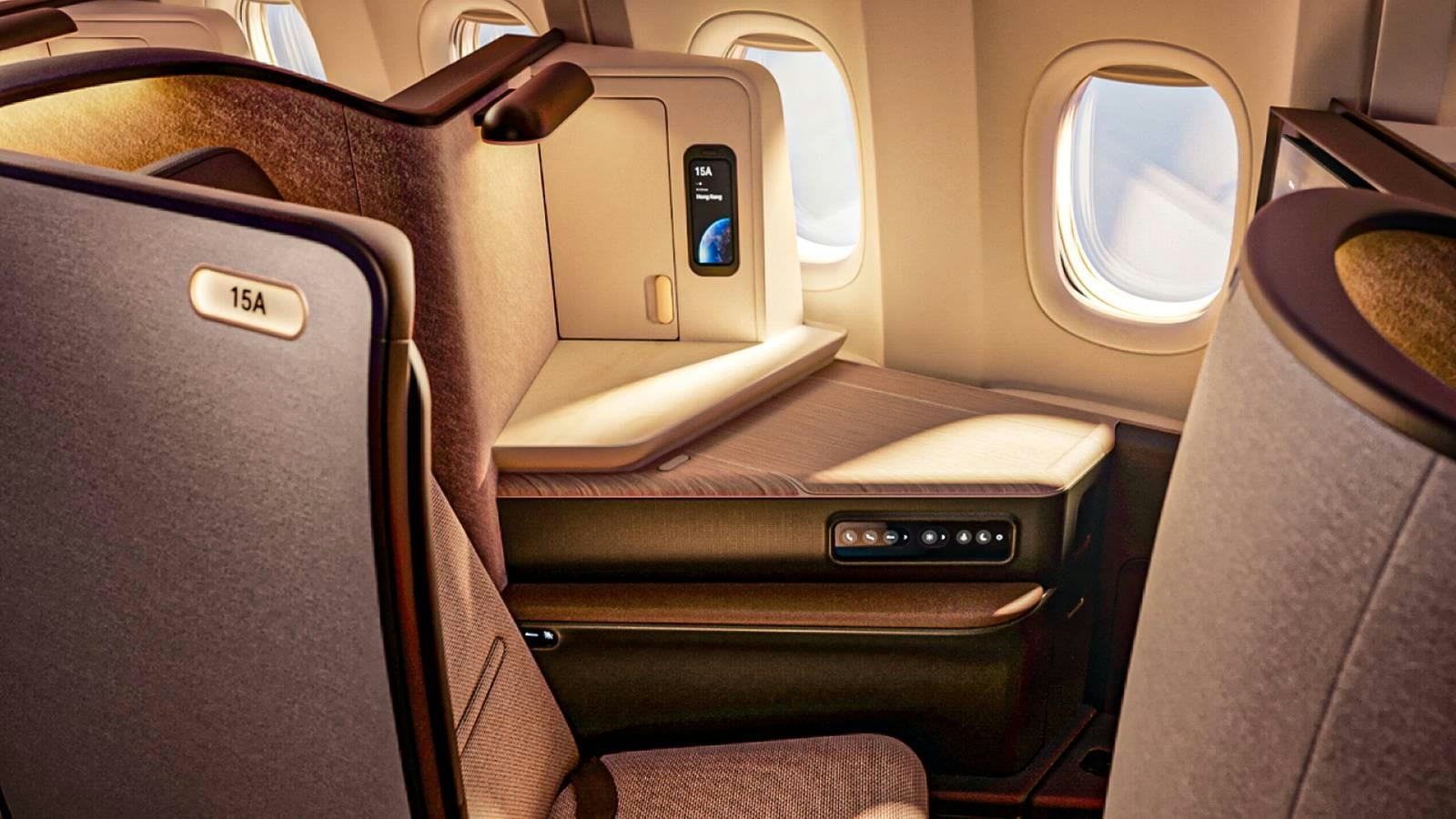
Airline cabins are experiencing their most significant transformation in decades, with 2026 set to introduce substantial improvements in privacy, space, and onboard technology across flagship aircraft such as the Airbus A350-1000 and Boeing 777-300ER. Moving beyond traditional lie-flat seats, premium travel now embraces fully enclosed suites, adaptable layouts, and integrated digital systems. Innovations including 4K displays, Bluetooth audio, and advanced lighting tailored to different phases of flight are becoming standard features. Central to these developments is personalization, enabling passengers to control lighting, temperature, and entertainment in real time, thereby enhancing comfort and convenience.
These advancements are already evident on long-haul routes connecting Europe, Asia, the Middle East, and Australia, with airlines such as Qatar Airways and Emirates leading the way. The following analysis highlights five of the most pioneering cabin designs currently in operation or soon to enter service, each redefining aspects of space, privacy, social interaction, or passenger wellbeing, and setting new benchmarks for long-haul travel.
Qantas Airbus A350-1000 Project Sunrise “Wellbeing Zone”
Qantas’s Project Sunrise A350-1000 introduces the Wellbeing Zone, a groundbreaking innovation tailored for ultra-long-haul flights lasting up to 20 hours. Acknowledging that even the most comfortable seats cannot fully address the challenges of such extended journeys, Qantas has created a dedicated space between premium economy and economy cabins where passengers can stand, stretch, and engage in guided exercises designed to reduce fatigue and improve circulation. This area features sculpted wall panels with stretch handles, hydration stations, and curated refreshments, all encouraging movement and active participation during the flight.
The Wellbeing Zone is underpinned by scientific research, particularly in lighting design. Carefully calibrated variations in color and intensity help regulate passengers’ circadian rhythms and mitigate jet lag, facilitating adjustment to the destination’s time zone before arrival. This holistic approach transforms the cabin environment into one focused not only on comfort but also on overall passenger health and wellbeing.
Emirates Airbus A380 Retrofitted Upper Deck Lounge
The Emirates A380’s upper deck lounge remains one of commercial aviation’s most iconic spaces, serving as a social hub high above the clouds. Recent retrofits have enhanced this area with upgraded seating, refined mood lighting, and improved digital connectivity, seamlessly blending luxury with functionality. The lounge fosters social interaction and relaxation, establishing a new standard for inflight communal spaces and elevating the passenger experience beyond the individual seat.
Industry-Wide Shifts and Challenges
These cabin innovations reflect a broader competitive shift within the aviation industry, where the onboard experience has become a critical factor influencing airline choice. Airlines are increasingly investing in advanced digital systems, sustainable materials, and flexible cabin layouts to attract discerning travelers while improving operational efficiency. However, the path to widespread implementation is complex. Regulatory approval processes, integration with existing aircraft systems, and the imperative to maintain passenger comfort and safety present significant challenges. Market response has been largely positive, with heightened interest from carriers seeking to differentiate themselves. In turn, competitors are developing similar technologies or enhancing their own cabin offerings to remain competitive.
The Future of Cabin Design
Recent progress in digital connectivity and the adoption of sustainable materials are shaping the future of air travel, making cabins smarter, more comfortable, and environmentally responsible. As airlines continue to innovate, the passenger experience is poised to become increasingly personalized and holistic. This evolution signals a new era in which cabin design assumes a central role in airline strategy and customer satisfaction.

Etihad Airways Suspends Airbus A380 Flights on Key Route

Aditya Birla Group Seeks Approval for Aircraft Leasing in GIFT City

Qatar Airways Highlights Innovation and Connectivity at Arabian Travel Market 2026

Hong Kong's Five-Year Plan Includes Andrew Fan's Aircraft Parts Processing Hub Proposal

ACIA Aero Leasing Delivers ATR72-600 to Air Nostrum

RTX Appoints Jill Albertelli as Head of Pratt & Whitney

TAT Technologies Joins Beyond Aero Hydrogen Aircraft Program

AURAK Study Highlights Barriers to Air Taxi Adoption in Emerging Economies

Xiamen Air Selects Altitude for 787 Maintenance at Heathrow

Etihad and Swissport Extend Global Partnership
