
将人工智能洞察转化为可执行行动

热门趋势
Categories
Four Aircraft Leasing Firms Control Majority of Global Widebody Fleet
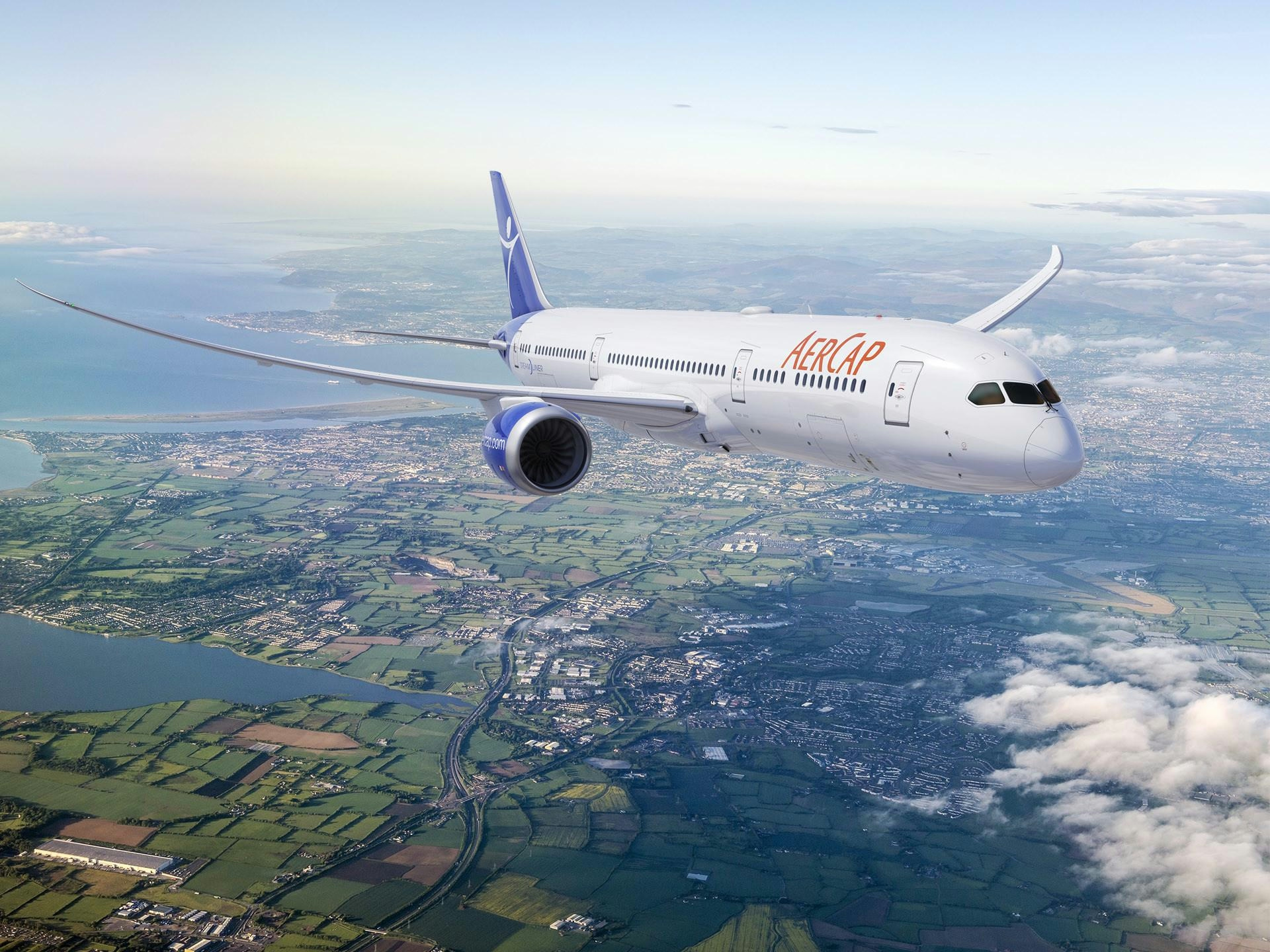
Four Aircraft Leasing Firms Dominate Global Widebody Fleet
Nearly half of all commercial aircraft in operation worldwide are leased rather than owned outright by the airlines that fly them. When passengers board aircraft such as Delta Air Lines’ Airbus A330-900neo or Ryanair’s Boeing 737 MAX 8, there is approximately a 50% chance that the plane is owned by a leasing company. These lessors purchase aircraft directly from manufacturers like Airbus or Boeing and lease them to airlines under long-term contracts. Airlines pay monthly lease fees, operate the aircraft with their own crews on their own routes, and return the planes to the lessors at the end of the lease term. Ownership remains with the lessor, who typically reassigns the aircraft to another operator once the lease expires.
Leasing Structures and Market Dynamics
The predominant leasing arrangement is the dry lease, also known as an operating lease. Under this model, the lessor provides the aircraft alone, while the airline is responsible for flight and cabin crews, maintenance, insurance, and ground handling. Dry leases for widebody aircraft generally span 8 to 12 years, enabling airlines to avoid the substantial capital expenditure of purchasing aircraft valued between $100 million and $300 million. This approach also keeps the asset off the airline’s balance sheet. Lessors, in turn, generate returns by leasing the same aircraft to multiple operators over its typical 25 to 30-year service life.
In contrast, wet leases—or ACMI leases (aircraft, crew, maintenance, and insurance)—involve the lessor supplying not only the aircraft but also the crew, maintenance, and insurance. The airline covers fuel, airport fees, and ground handling. Wet leases are typically short-term arrangements used to manage seasonal demand surges, aircraft groundings, or delivery delays.
The Leading Lessors in the Widebody Market
Four major aircraft leasing firms—SMBC Aviation Capital, Avolon, AerCap, and BOC Aviation—now control the majority of the global widebody fleet. These companies primarily operate in the dry lease market, owning extensive fleets and placing aircraft with airlines on long-term contracts across all major regions.
AerCap holds the world’s largest fleet, with a portfolio heavily weighted toward new-generation narrowbody aircraft such as the Airbus A320neo family, A330neo, A350, Boeing 737 MAX, and 787. Avolon similarly focuses on new-generation narrowbodies but maintains a significant widebody presence, including Airbus A330s and Boeing 787s. SMBC Aviation Capital notably expanded its scale through the acquisition of Sumisho Air Lease Corporation in 2026, solidifying its position as a key player in the global leasing market. BOC Aviation, headquartered in Singapore and the only non-Irish firm among the top four, operates as a subsidiary of Bank of China. As of the first quarter of 2026, BOC Aviation owned 461 aircraft and managed an additional 13, serving 88 airlines across 46 countries. Its fleet is among the youngest in the industry, with an average age of 5.1 years and an average remaining lease term of 7.7 years.
Challenges and Opportunities in a Shifting Landscape
These leading lessors face ongoing challenges, including geopolitical pressures that impact airline profit margins and persistent supply chain disruptions affecting aircraft availability and maintenance. Nonetheless, they also benefit from emerging opportunities in areas such as aeroderivative turbines and strategic partnerships. Several firms have reported strong revenue growth or pursued diversification strategies in response to evolving market conditions. The aviation financing landscape continues to be shaped by fluctuating jet fuel prices, airline profitability, and the strategic initiatives of these dominant leasing companies. Industry competitors closely monitor their developments as the sector adapts to changing global dynamics.

Etihad Airways Suspends Airbus A380 Flights on Key Route

Aditya Birla Group Seeks Approval for Aircraft Leasing in GIFT City

Qatar Airways Highlights Innovation and Connectivity at Arabian Travel Market 2026

Hong Kong's Five-Year Plan Includes Andrew Fan's Aircraft Parts Processing Hub Proposal

ACIA Aero Leasing Delivers ATR72-600 to Air Nostrum

RTX Appoints Jill Albertelli as Head of Pratt & Whitney

TAT Technologies Joins Beyond Aero Hydrogen Aircraft Program

AURAK Study Highlights Barriers to Air Taxi Adoption in Emerging Economies

Xiamen Air Selects Altitude for 787 Maintenance at Heathrow

Etihad and Swissport Extend Global Partnership
