
image

AeroGenie — 您的智能副驾驶。

询问一切。分析一切。立即行动。

热门趋势

Categories

GE Aerospace Unveils AI-Designed Multi-Modal Jet Engine for Santa’s Sleigh
December 11, 2025By ePlane AI
GE Aerospace Unveils AI-Designed Multi-Modal Jet Engine for Santa’s Sleigh
0
0
GE Aerospace
AI-Designed Jet Engine
GE9X Engine

GE Aerospace Unveils AI-Designed Multi-Modal Jet Engine for Santa’s Sleigh

As the holiday season nears, GE Aerospace has introduced a novel addition to its portfolio: an AI-designed, multi-modal jet engine specifically engineered for Santa Claus’s sleigh. This initiative combines state-of-the-art propulsion technology with festive innovation, aiming to enhance the speed and efficiency of Santa’s Christmas Eve journey.

Advanced Propulsion Technologies for a Legendary Journey

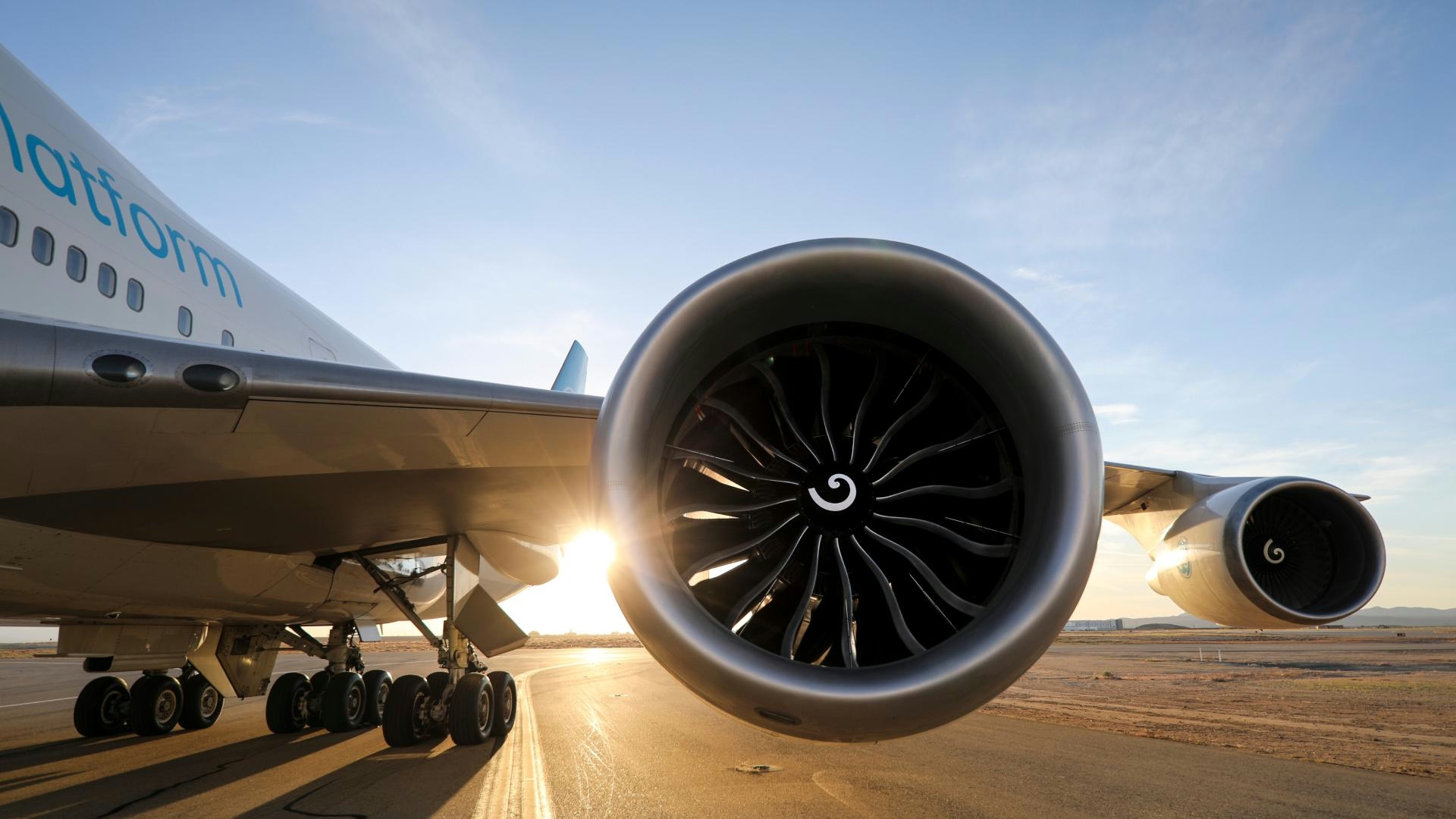
A specialized team at GE Aerospace, informally known as “Santa’s helpers,” utilized exascale supercomputing and generative artificial intelligence to develop a sleigh powered by three distinct propulsion modes. The first mode incorporates a pair of GE9X widebody engines, recognized as the world’s most powerful commercial jet engines, each capable of producing 134,300 pounds of thrust. These engines are designed to support long-haul, global travel, ensuring endurance and reliability.

The second mode draws on advancements from the CFM RISE program, featuring a hybrid electric open fan propulsion system. This configuration emphasizes ultra-efficient and sustainable flight, reflecting GE Aerospace’s commitment to environmentally conscious innovation. The third mode introduces a dual-mode ramjet propulsion system capable of hypersonic speeds exceeding Mach 5, or over 4,000 miles per hour. This capability could enable Santa to traverse vast distances rapidly, such as flying from New York to London in approximately 40 minutes.

Thomas the Elf, North Pole Fleet Support Leader at GE Aerospace, explained the rationale behind the project: “We thought it would be nice to provide Santa’s sleigh with some extra supplemental power to help cover his deliveries around the world faster and more efficiently than ever before. With our hypersonic dual mode ramjet, Santa can fly faster, but we’re also focused on efficiency and long-haul capability with our hybrid electric and GE9X engine modes.”

Material Science Innovations and Market Reactions

In addition to propulsion advancements, GE Aerospace has applied its expertise in material science to develop a unique “magic dust” for Santa’s sleigh. Inspired by over a decade of research into dust resilience for jet engines, this innovation is designed to facilitate Santa’s seamless entry and exit from homes, ensuring timely gift delivery. By replicating the properties of dust encountered by engines worldwide, researchers have enhanced engine durability while adding a symbolic touch of holiday magic.

The announcement has elicited mixed responses from the market. Some investors regard the project as a demonstration of GE Aerospace’s innovative capabilities, while others question the commercial seriousness of such a whimsical application. On December 10, 2025, GE Aerospace’s stock closed at $283.60, down 0.6%, reflecting a cautious market reaction. Industry competitors have responded with a blend of skepticism and curiosity, with reports indicating that some are exploring similarly imaginative engine concepts to remain competitive.

Despite the playful nature of the project, GE Aerospace underscores that the technologies showcased in Santa’s sleigh—particularly hybrid electric propulsion and advanced materials research—are integral to its broader strategy for next-generation aviation. As Thomas the Elf emphasized, “We’re pulling out all the stops to ensure Santa has the safest and most seamless journey possible,” highlighting the company’s dedication to innovation alongside the holiday spirit.

More news
United Airlines Flight Returns to Dulles After Engine Failure on Takeoff

United Airlines Flight Returns to Dulles After Engine Failure on Takeoff

United Airlines Flight Returns to Dulles Following Engine Failure on Takeoff United Airlines Flight 803 was compelled to return to Washington Dulles International Airport on Thursday after experiencing an engine failure shortly after departure. The Boeing 777, en route to Tokyo, was carrying 275 passengers and 15 crew members at the time of the incident. Incident and Response The Federal Aviation Administration (FAA) confirmed the engine failure and has initiated a formal investigation into the circumstances surrounding the event. Following the malfunction, emergency crews responded promptly to reports of smoke and fire near the runway. The fire was swiftly extinguished, and the aircraft was able to land safely back at Dulles without any injuries reported among those on board. Airline Statement and Next Steps United Airlines announced that it is arranging for an alternative aircraft to continue the journey to Tokyo later the same day. The airline emphasized that the safety of its passengers and crew remains its highest priority and expressed gratitude to the emergency responders for their rapid and effective action. The FAA will maintain its investigation to determine the cause of the engine failure.
United Airlines flight makes emergency landing at Dulles after engine failure

United Airlines flight makes emergency landing at Dulles after engine failure

United Airlines Flight Makes Emergency Landing at Dulles Following Engine Failure A United Airlines flight destined for Tokyo was compelled to execute an emergency landing at Washington Dulles International Airport (IAD) on Saturday afternoon after experiencing engine failure shortly after takeoff, according to statements from the airline and federal authorities. Incident Details and Response United Airlines Flight 803, operated by a Boeing 777-200ER and carrying 275 passengers alongside 15 crew members, departed from Dulles but soon reported a loss of power in one of its engines. The Federal Aviation Administration (FAA) confirmed that the aircraft safely returned to the airport, landing without further complications at approximately 1:20 p.m. local time on December 13. United Airlines emphasized that no injuries were reported and expressed gratitude toward its flight crew and the teams at Washington Dulles for their efforts in ensuring the safety of all onboard. During the aircraft’s departure, airport officials observed that the plane ignited brush near the runway around 12:20 p.m., resulting in several small fires. Fire crews from the airport, with support from Loudoun County Fire and Rescue, responded promptly and successfully contained the flames without further incident. Passenger Support and Ongoing Investigation In the aftermath of the emergency landing, United Airlines temporarily closed a United Club lounge at Dulles to enable staff to assist affected passengers with rebooking and travel arrangements. The airline is coordinating the deployment of an alternative aircraft to operate the flight to Tokyo later the same day. The FAA has announced it will conduct a thorough investigation into the incident. United Airlines reaffirmed its commitment to passenger safety and extended thanks to both its crew and airport personnel for their swift and effective response. Further updates will be provided as additional information becomes available.
The Impact of the New Air Force One’s Delayed 2028 Arrival on Aviation and Travel

The Impact of the New Air Force One’s Delayed 2028 Arrival on Aviation and Travel

The Impact of the New Air Force One’s Delayed 2028 Arrival on Aviation and Travel Air Force One has long symbolized American power, technological innovation, and aviation excellence. For aviation enthusiasts and global travelers alike, the aircraft represents the pinnacle of airborne luxury and cutting-edge engineering. The forthcoming generation of Air Force One, designated the VC-25B and based on Boeing’s 747-8 platform, is expected to raise these standards further with advanced communications, extended range, and enhanced safety features. Delivery Delayed Until 2028 The arrival of the new Air Force One has been postponed once again, with officials confirming that the first of the two aircraft will not be delivered until mid-2028, marking a four-year delay from the original schedule. This setback highlights the inherent complexities involved in custom aircraft programs and has led the U.S. Air Force to explore interim solutions, including the potential use of a Boeing 747 previously owned by Qatar. The delay has attracted criticism, notably from former President Donald Trump, who publicly expressed dissatisfaction with Boeing’s management of the project. The postponement coincides with Lufthansa’s recent sale of two Boeing 747-8s, a development that may be connected to the ongoing challenges faced by the Air Force One program. Understanding the Significance of the Delay While the delay primarily affects the presidential fleet, it offers insight into the intricate nature of bespoke aviation. Unlike commercial airliners, which generally adhere to predictable production timelines, specialized government aircraft such as Air Force One require extensive modifications and rigorous testing. These projects demand patience and meticulous planning, reflecting the complexities inherent in long-haul travel and high-stakes aviation endeavors. Several factors have contributed to the revised timeline. The transformation of the Boeing 747-8 into a secure presidential aircraft involves significant structural and technological modifications. The installation and testing of secure, global communication systems is a delicate and time-intensive process. Additionally, integrating sensitive defense systems necessitates high-level clearances and thorough vetting of personnel, further complicating the schedule. Features of the Next Air Force One The VC-25B is designed to serve as a flying command center, equipped with capabilities that include extended range for intercontinental flights without frequent stops, secure global communication systems to ensure uninterrupted connectivity worldwide, and advanced defensive measures that make it one of the safest aircraft ever constructed. Its spacious interiors will accommodate office, medical, and operational spaces, enabling continuous presidential functionality during flight. For aviation enthusiasts, these innovations often presage trends that eventually permeate commercial aviation, such as improved fuel efficiency and advanced onboard technology. Broader Implications for Aviation and Travel Although the delay of Air Force One does not directly affect commercial air travel, it underscores the ongoing global process of aviation innovation. The challenges and breakthroughs encountered in such high-profile projects frequently influence the future of commercial aviation, shaping passenger comfort, safety standards, and technological advancements. For travelers and aviation aficionados, the development of Air Force One remains a compelling example of the complexity and ambition that propel the industry forward.
United Airlines Restarts Controversial AI Scheduling for Flight Attendants

United Airlines Restarts Controversial AI Scheduling for Flight Attendants

United Airlines Restarts Controversial AI Scheduling for Flight Attendants United Airlines has reignited tensions with its flight attendants by announcing the reintroduction of an artificial intelligence-driven scheduling system, months after suspending the initiative amid union opposition. The Chicago-based carrier informed its flight attendants via email that it has initiated a “joint process with AFA to modernize bidding in a way that gives flight attendants more say in their schedules and more flexibility around what they value most.” This development coincides with renewed contract negotiations between United and the Association of Flight Attendants (AFA-CWA), following the union’s rejection of a tentative agreement in July. The Preferential Bidding System and Union Concerns The proposed scheduling tool, known as the Preferential Bidding System (PBS), is already employed by several major airlines worldwide. PBS enables crew members to submit detailed monthly preferences regarding destinations, layovers, days off, and aircraft types. While designed to better accommodate individual lifestyles, the system ultimately prioritizes the airline’s operational requirements, which can supersede personal preferences. Traditionally, United’s flight attendants have relied on a seniority-based line bidding system, selecting from pre-constructed trips in order of seniority. This approach has been praised for its transparency and predictability, particularly benefiting less-senior employees who can realistically assess available trips. The union has consistently opposed the PBS, arguing that it diminishes transparency and risks disadvantaging junior staff. Industry Trends and Competitive Pressures United’s renewed push for AI-driven scheduling reflects broader trends within the airline industry, where companies are increasingly adopting AI and automation not only in crew scheduling but also in pricing strategies. This technological shift has attracted regulatory scrutiny and raised concerns about surveillance and personalized pricing models. Notably, major carriers such as Lufthansa Group and Tripadvisor have attributed significant workforce reductions to AI and automation, intensifying debates over job security and labor relations. The competitive environment among U.S. airlines is also heating up. American Airlines, the market leader, has responded assertively to United’s initiatives. CEO Robert Isom recently underscored American’s strong market position and successful loyalty program in response to remarks from United CEO Scott Kirby. These exchanges underscore the high stakes as airlines leverage technology to secure operational efficiencies and financial gains. Broader Implications of AI Adoption Beyond aviation, the AI sector faces its own challenges. Alphabet CEO Sundar Pichai has cautioned against “irrationality” in the current surge of trillion-dollar AI investments, warning that overinvestment could have far-reaching consequences across multiple industries, including aviation. As United moves forward with its plans to modernize scheduling, it must carefully balance the pursuit of operational efficiency with the concerns of its workforce. The outcome of ongoing negotiations with the flight attendants’ union will likely influence how airlines integrate automation technologies while maintaining constructive labor relations in an increasingly AI-driven industry.
Joby Aviation’s Air Taxis Poised to Change Urban Travel and Tourism

Joby Aviation’s Air Taxis Poised to Change Urban Travel and Tourism

Joby Aviation’s Air Taxis Set to Transform Urban Travel and Tourism in the Middle East A new chapter in regional tourism is unfolding as Joby Aviation, a leader in electric vertical takeoff and landing (eVTOL) technology, prepares to expand its air taxi services across the Middle East. These innovative air taxis are poised to offer fast, environmentally friendly, and visually captivating travel options between major cities and renowned tourist destinations, potentially redefining how visitors experience the United Arab Emirates, Saudi Arabia, and neighboring countries. Advancing Sustainable and Efficient Urban Air Mobility Joby Aviation’s eVTOL aircraft combine the agility of helicopters with the efficiency of fixed-wing planes, operating with minimal noise and zero emissions during flight. This positions them as a sustainable alternative to conventional transportation methods. Regional governments are collaborating closely with aviation regulators to ensure that these services adhere to rigorous safety and operational standards. For tourists, the introduction of air taxis promises smoother and faster transfers between key attractions, eliminating the delays caused by urban congestion. Passengers will have the opportunity to enjoy panoramic aerial views, transforming routine travel into an immersive sightseeing experience. By soaring above city traffic, travelers can save valuable time while gaining unique perspectives of urban landscapes and natural surroundings. Revolutionizing Urban Mobility and Enhancing Tourism Experiences In metropolitan hubs such as Dubai and Riyadh, where traffic congestion often hampers mobility, air taxis could dramatically reduce travel times from hours to mere minutes. The development of vertiports—specialized takeoff and landing facilities—is underway, with locations strategically chosen near major tourist sites, luxury hotels, and transportation centers. This infrastructure will facilitate seamless connections, for example, enabling journeys from the Dubai Mall to upscale resorts while offering sweeping views of the city skyline and coastline. Beyond efficiency, these flights are designed to provide memorable experiences. Tourists will be able to admire iconic landmarks such as the Burj Khalifa or the expansive desert vistas surrounding Riyadh from vantage points inaccessible by traditional sightseeing methods. This blend of practicality and spectacle is expected to enhance the appeal of urban air mobility as a new mode of travel. Navigating Challenges and Market Dynamics Despite significant progress, Joby Aviation faces considerable challenges in realizing its vision. Regulatory approval processes, safety assurances, and technological development remain critical hurdles to widespread adoption. Investor sentiment is mixed, reflecting both optimism about the potential of urban air mobility and caution regarding its commercial viability. The competitive landscape is intensifying, exemplified by legal disputes such as Joby’s lawsuit against rival Archer Aviation, alongside Archer’s strategic efforts to forge partnerships and expand its market presence. To strengthen its position, Joby is pursuing a vertically integrated approach, encompassing acquisitions and pilot training initiatives aimed at building a comprehensive ecosystem for eVTOL operations. Preparing for the Future of Urban Air Travel Governments throughout the Middle East are actively laying the groundwork for integrating air taxis into existing urban transport networks. Investments in infrastructure, the establishment of safety regulations, and close cooperation with companies like Joby Aviation form part of broader strategies to boost tourism, alleviate congestion, and reduce carbon emissions. Initial air taxi services are expected to launch on select routes, with gradual expansion contingent on infrastructure development and certification milestones. For travelers, this innovation promises a secure, regulated, and exciting new way to explore the region, combining the convenience of air travel with unparalleled aerial views of iconic sights. As the sector evolves, tourists are advised to follow updates from official tourism and aviation authorities to stay informed about service availability and safety guidelines.
BA Chief Warns AI Agents May Diminish Brand Visibility

BA Chief Warns AI Agents May Diminish Brand Visibility

BA Chief Warns AI Agents May Diminish Brand Visibility The Emerging Role of AI in Airline Competition British Airways’ Chief Executive Sean Doyle has issued a stark warning about the transformative impact of artificial intelligence agents on the airline industry’s competitive landscape. Speaking at Globant’s Converge 2025 event in London, Doyle highlighted a future where automated AI systems, rather than human consumers, increasingly determine which airlines secure bookings. This shift threatens to marginalize traditional brand visibility if airlines fail to adapt to the new digital environment. Doyle emphasized that the era when a strong website and high search engine rankings guaranteed customer attention is rapidly fading. Instead, AI agents and bots are poised to become intermediaries between consumers and travel brands, selecting options based on algorithms that prioritize price, convenience, and other quantifiable factors. This development presents an existential challenge for airlines, hotels, and travel companies, as their offerings may be chosen less by direct human engagement and more by machine-driven optimization. Strategic Responses and Digital Transformation Acknowledging that British Airways is “probably behind the curve” in digital transformation, Doyle described the airline’s ongoing efforts as a “leapfrog opportunity” to modernize its operations. Central to this strategy is the creation of a new digital foundation designed to accelerate product launches and enhance responsiveness to evolving customer expectations. A key element of this transformation is hyper-personalization, leveraging the extensive data generated by individual customers throughout their journey—from booking to boarding. Historically siloed, this data is now being integrated to improve service delivery, particularly during disruptions. Doyle also framed AI-driven automation not as a threat to employment but as a means to redeploy staff toward more valuable, customer-facing roles. He envisions agentic AI revolutionizing labor-intensive legacy processes that have accumulated over decades, thereby enhancing operational efficiency without sacrificing human interaction. Broader Industry Implications Industry experts suggest that the rise of AI agents will fundamentally alter consumer purchasing behavior, with bots potentially negotiating purchases collectively and influencing retail pricing strategies. To remain competitive, companies may need to conduct regular AI visibility audits, optimize content for AI-driven searches, and ensure their products are discoverable by automated systems. Failure to integrate AI effectively could render brands increasingly invisible in a marketplace where human attention is no longer the primary currency. Doyle’s message to the airline industry is unequivocal: rapid adaptation to the AI-driven landscape is essential to avoid fading from the digital marketplace altogether.
How GE Is Meeting Global Jet Engine Demand

How GE Is Meeting Global Jet Engine Demand

How GE Is Meeting Global Jet Engine Demand Jet engines serve as the critical foundation of global commercial aviation, enabling the aircraft that connect people, economies, and industries across the world. With airlines accelerating the expansion of narrowbody fleets and new aircraft deliveries reaching unprecedented levels, engine manufacturers are under increasing pressure to meet this surge in demand. At the forefront of this response is GE Aerospace, working in close partnership with CFM International, its joint venture with Safran Aircraft Engines. A Legacy of Innovation and Partnership GE Aerospace has played a defining role in the evolution of jet engines for over a century. From pioneering America’s first turbojet in the 1940s to developing iconic engines such as the CF6 and GE90, the company continues to lead with the GE9X, which powers the Boeing 777X. A landmark development occurred in 1974 when GE joined forces with France’s Snecma (now Safran Aircraft Engines) to establish CFM International. This collaboration leveraged GE’s expertise in high-pressure core technology alongside Snecma’s strengths in low-pressure systems and manufacturing efficiency. The result was the creation of the CFM56 engine, which remains the world’s best-selling jet engine, followed by its advanced successor, the LEAP family. The enduring partnership between GE and Safran allows both companies to share risks, coordinate global production, and provide comprehensive support to extensive fleets worldwide. This synergy ensures reliable and cost-effective propulsion solutions for airlines, reinforcing their competitive edge in a demanding market. Manufacturing Expansion: Scaling Up for Soaring Demand The combination of fleet renewal, rising passenger traffic, and substantial aircraft backlogs has presented one of the most significant production challenges in GE’s recent history. To address this, GE Aerospace is implementing a comprehensive strategy to expand manufacturing capacity and enhance supply chain resilience. In the United States and Europe, GE is undertaking major factory expansions. A prominent example is the $53 million upgrade of its West Jefferson, North Carolina facility, which adds 35,000 square feet dedicated to producing LEAP engine components. This expansion will be supported by the recruitment of 40 new operators, inspectors, and engineers. Furthermore, GE plans to invest $1 billion in U.S. manufacturing in 2025, nearly doubling its previous year’s expenditure, to stabilize the supply chain and increase output of both LEAP and GE9X engine components. In Europe, GE is investing close to €80 million to strengthen its component-manufacturing network. This initiative includes plans to hire approximately 500 manufacturing and engineering personnel to alleviate production bottlenecks and meet growing demand. Navigating Challenges and Market Dynamics Despite these ambitious expansions, GE continues to face challenges in maintaining supply chain stability, particularly as it scales up its On Wing Support facility in Dubai and intensifies support for the GE9X engine. The company’s ability to execute these plans effectively remains under close scrutiny by airlines and industry analysts. Market response to GE’s efforts has been largely positive. GE Aerospace shares are trading near record highs following significant contract wins at the Dubai Airshow, a major engine order from Turkish Airlines, and an upward revision of financial guidance. Competitors are closely monitoring GE’s strategic initiatives, which include the development of a small turbofan engine for the Collaborative Combat Aircraft program and the potential deployment of a 747-400 flying testbed in Dubai to support GE9X operations. Additionally, GE Vernova’s strong stock performance after a recent investor day reflects investor confidence in the company’s high-margin backlog and robust execution of its services business. As GE Aerospace continues to expand its manufacturing footprint and invest in research and development geared toward future technologies, it is positioning itself to meet the current surge in jet engine demand and to power the next decade of global aviation.
IATA Projects Airline Profits of $41 Billion in 2026

IATA Projects Airline Profits of $41 Billion in 2026

IATA Projects Record $41 Billion Airline Profit in 2026 Amid Ongoing Industry Challenges The International Air Transport Association (IATA) has forecasted that global airlines will achieve a record net profit of $41 billion in 2026, an increase from $39.5 billion in 2025, while maintaining a net margin of 3.9%. This optimistic outlook is supported by strong air cargo performance and a weaker US dollar, which is expected to reduce costs for many carriers worldwide. Revenue Growth and Regional Profitability IATA anticipates total airline revenue to rise by 4.5% in 2026, reaching $1.053 trillion, outpacing the projected 4.2% increase in operating expenses. Passenger numbers are expected to climb to 5.2 billion, with an average load factor of 83.8%, while air cargo volumes are forecasted to reach 71.6 million tonnes. Passenger ticket revenue is projected at $751 billion, buoyed by a 4.9% increase in revenue passenger kilometers. Ancillary revenue is expected to total $145 billion, and cargo revenue $158 billion. European airlines are predicted to lead in profitability, contributing $14 billion to the global total, surpassing North American carriers, who are expected to earn $11.3 billion. Despite these record profits, IATA Director General Willie Walsh emphasized that industry margins remain thin compared to other sectors. He noted that airlines support nearly 4% of the global economy and 87 million jobs but continue to face a significant profitability imbalance. “Apple will earn more selling an iPhone cover than the $7.90 airlines will make transporting the average passenger,” Walsh remarked, highlighting the ongoing challenges within the aviation value chain. Industry Headwinds and Operational Constraints Walsh described the profit forecast as “welcome news considering the headwinds that the industry faces,” including rising costs driven by aerospace supply-chain bottlenecks, geopolitical tensions, sluggish global trade, and increasing regulatory burdens. He credited airlines’ “shock-absorbing resilience” for sustaining stable profitability but warned that persistent supply-chain constraints and slower aircraft deliveries could hinder the industry’s capacity to meet growing demand. Aircraft backlogs are expected to increase as new orders outpace production, pushing the global fleet’s average age beyond 15 years and limiting efficiency gains to just 1%. Fuel costs are projected to decline slightly to $252 billion in 2026, with Brent crude averaging $62 per barrel and jet fuel at $88 per barrel, accounting for 25.7% of total operating expenses. Non-fuel operating costs are expected to rise to $729 billion, with labor remaining the largest expense at 28%. Productivity challenges persist due to training bottlenecks and operational difficulties, while maintenance costs increase amid parts shortages and an aging fleet. Lease rates and airport charges also remain elevated. IATA further noted that a weaker US dollar may enhance profitability for carriers with costs denominated in other currencies, as 55 to 60% of airline expenses are in US dollars. Regulatory costs continue to pose concerns, with proposed reforms to EU261 passenger compensation rules and rising infrastructure charges at major hubs. Operational challenges such as airspace restrictions, GNSS interference, and rerouting requirements also weigh heavily on airline efficiency. Cargo Demand and Future Outlook Despite these challenges, the industry is poised for record profits, driven largely by robust cargo demand, particularly from e-commerce and semiconductor shipments linked to artificial intelligence investments, as well as shifting trade flows influenced by the US tariff regime. However, IATA underscored that ongoing supply-chain disruptions and persistently thin margins necessitate continued resilience and adaptation across the aviation sector.
Five Air Taxis Poised to Shape Urban Mobility by 2026

Five Air Taxis Poised to Shape Urban Mobility by 2026

Five Air Taxis Poised to Shape Urban Mobility by 2026 The autonomous air taxi sector is nearing a pivotal moment, with 2026 set to witness the commercial launch of electric vertical takeoff and landing (eVTOL) services in major cities worldwide. This transition from concept to operational reality is driven by leading manufacturers racing to obtain regulatory certifications, establish strategic partnerships, and develop the necessary infrastructure. Supported by advancements in airspace management and innovative landing solutions, these efforts indicate that air taxis will soon become an integral component of urban transportation networks. Leading eVTOL Aircraft and Their Progress Joby Aviation stands at the forefront with its S4 eVTOL aircraft, designed to carry one pilot and four passengers. The S4 cruises at speeds up to 200 miles per hour and offers a range of approximately 100 miles. Its six dual-wound electric motors deliver nearly twice the power of a Tesla Model S Plaid. Joby has showcased the S4 at the Dubai Airshow and secured exclusive agreements with Dubai’s Roads and Transport Authority (RTA) to commence commercial operations in 2026. The company has completed a significant point-to-point test flight in the UAE and is currently conducting power-on tests of its first aircraft conforming to Federal Aviation Administration (FAA) standards. Despite these advances, Joby continues to navigate regulatory, safety, and infrastructure challenges ahead of full-scale deployment. Archer Aviation is advancing its Midnight aircraft, which features 12 rotors and accommodates one pilot alongside four passengers. The aircraft is progressing through FAA certification and international regulatory processes. Demonstrating strong performance, Midnight completed a 55-mile flight in 31 minutes and achieved a climb to 7,000 feet. Archer plans to initiate passenger flights in Abu Dhabi in 2026, with commercial operations potentially commencing within the same year. The company aims to operate globally in parallel as it meets ongoing certification milestones. Vertical Aerospace is developing the VX4, available in both all-electric and hybrid-electric variants, with a seating capacity of five to six passengers and a range exceeding 100 miles. The VX4 completed its initial phase of piloted flight testing in 2024, conducting 20 flights to collect extensive performance data. With a payload capacity of 2,425 pounds and a potential range reaching up to 1,000 miles, the VX4 is designed for versatility across multiple sectors, including defense, healthcare, and logistics. Lilium focuses on regional air mobility with its six-passenger Lilium Jet, which employs ducted-fan technology to enable quieter and more efficient flights compared to traditional open-rotor designs. Manned flight testing is scheduled for early 2025, with first customer deliveries anticipated in 2026. Lilium is currently conducting parallel propulsion testing, gathering thousands of data points per second to optimize performance. The company plans to announce its initial launch market for 2026 by the end of the year. Innovations in Infrastructure and Airspace Management In addition to aircraft development, the industry is addressing critical challenges related to airspace integration and landing infrastructure. NASA has introduced its Strategic Deconfliction Simulation platform, designed to safely integrate electric air taxis and drones into congested urban airspace, targeting operational readiness by 2026. Concurrently, companies like AutoFlight are developing solar-powered mobile water platforms that serve as flexible, fast-charging vertiports, providing solutions to the scarcity of suitable landing sites in densely populated urban areas. As these technological advancements and regulatory frameworks converge, the prospect of autonomous air taxis seamlessly navigating urban environments is rapidly approaching, signaling a transformative shift in global urban mobility.
Advances Highlighted at Drone Warfighter Competition

Advances Highlighted at Drone Warfighter Competition

Advances Highlighted at Drone Warfighter Competition Innovation and Multinational Collaboration at Grafenwoehr GRAFENWOEHR, Germany – The recent U.S. Army Europe and Africa Best Drone Warfighter Competition, hosted by the 7th Army Training Command at Grafenwoehr Training Area from December 8 to 10, 2025, showcased significant advancements in unmanned aerial system (UAS) capabilities. Bringing together teams from the United States, allied, and partner nations, the event tested proficiency in drone operations, enhanced interoperability, and highlighted new tactics, techniques, and procedures (TTPs) developed through ongoing experimentation across Europe. Ten multinational teams faced a series of rigorous challenges, including aerial reconnaissance and strike missions, aerial land navigation, first-person-view (FPV) drone maneuvering through complex obstacle courses, team coordination exercises, and a comprehensive written UAS knowledge examination. Participants were required to operate under realistic combat conditions, contending with dense terrain, unpredictable weather, and stringent time constraints that reflected the complexities of modern warfare. Spanish Legion Brigade Triumphs Amid Challenging Conditions The overall winner of the competition was the six-member team from Spain’s Legion Brigade, whose performance demonstrated exceptional readiness and innovation. Team leader 1st Lt. Carlos Castro Raffia described the victory as a reflection of their consistent daily training rather than event-specific preparation. He emphasized the challenges posed by synchronizing short-range reconnaissance platforms with FPV drones, particularly under adverse weather conditions such as heavy fog and humidity, which affected drone connectivity. Despite these obstacles, the team adapted effectively, underscoring the importance of coordination between the team leader, intelligence, surveillance, and reconnaissance (ISR) drones, and FPV systems. Broader Implications for Military Innovation and Drone Warfare The competition’s focus on realistic operational environments and multinational cooperation mirrors broader trends in military innovation. As drone warfare evolves rapidly, established defense contractors including Lockheed Martin, Boeing, and General Atomics are increasingly competing with agile startups, fueling substantial investment in research and development. This dynamic is exemplified by the U.S. Air Force’s recent allocation of $789.4 million toward autonomous “loyal wingmen” drones, reflecting a significant commitment to advancing unmanned capabilities. International partnerships are also reshaping the drone warfare landscape. Collaborative efforts such as the joint drone production agreement between Ukraine and Norway aim to strengthen defense capabilities, while France’s plan to deploy drone swarms within the next two years signals a strategic shift toward networked, autonomous systems on the battlefield. For U.S. Army Europe and Africa, insights gained from integrating advanced drone technologies during competitions like this directly inform future warfighting concepts and operational tactics. The event demonstrated that innovation is cultivated not only in research laboratories but also in challenging training environments, where collaboration with NATO partners brings diverse expertise and fresh perspectives. As militaries worldwide accelerate efforts to harness the potential of unmanned systems, the Best Drone Warfighter Competition underscores the critical role of adaptability, interoperability, and continuous innovation in shaping the future of defense.
Ask AeroGenie









