
将人工智能洞察转化为可执行行动

热门趋势
Categories
Germany Aerospace and Defense Market Outlook, 2025–2033
Germany Aerospace and Defense Market Outlook, 2025–2033
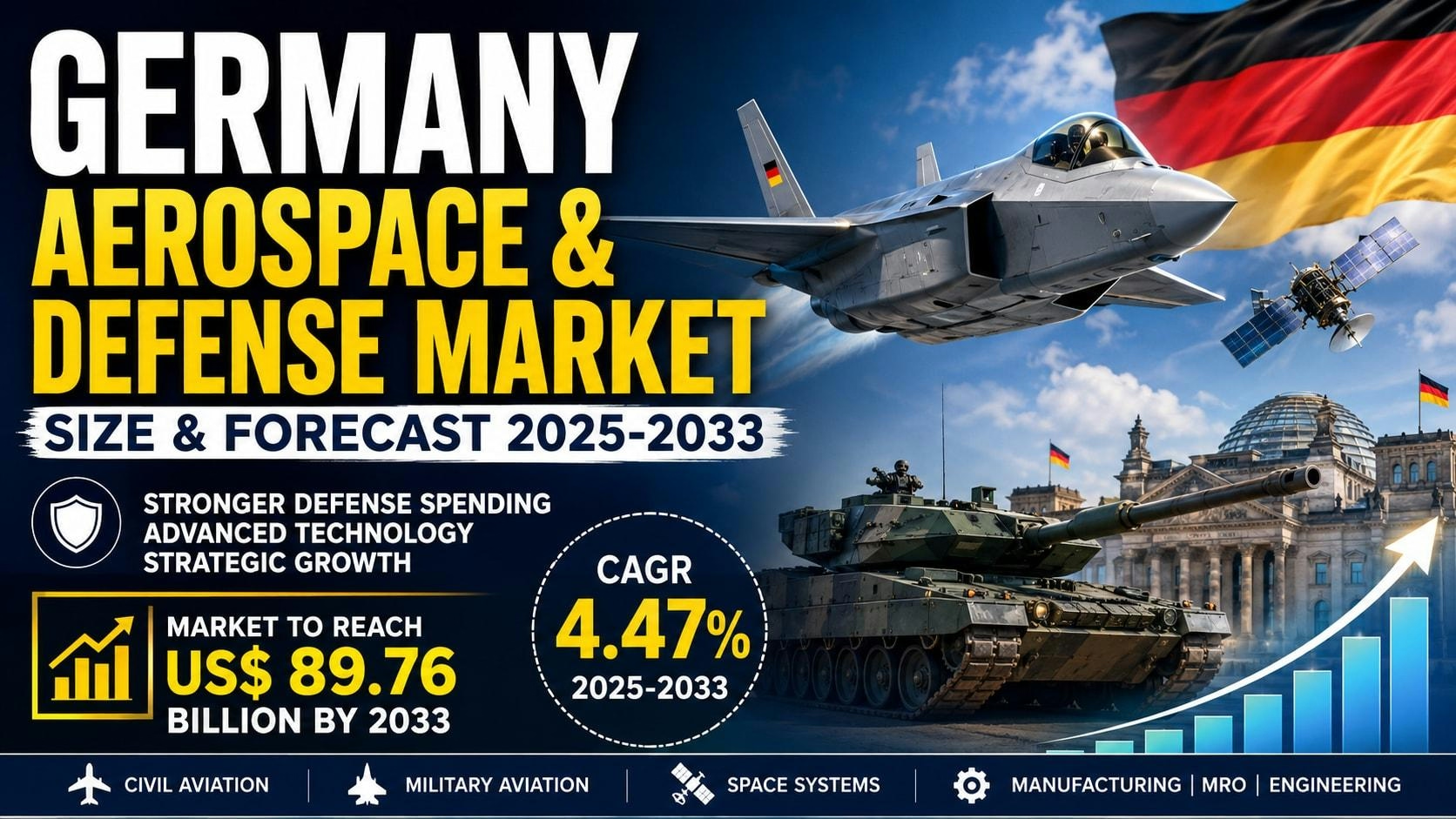
Germany’s aerospace and defense industry is set to undergo substantial transformation over the coming decade, driven by escalating security concerns, rapid technological advancements, and increased investment in military modernization. According to Renub Research, the German Aerospace and Defense Market is forecasted to expand from US$60.55 billion in 2024 to US$89.76 billion by 2033, representing a compound annual growth rate (CAGR) of 4.47% between 2025 and 2033.
As Europe confronts evolving geopolitical challenges and security threats, Germany is intensifying efforts to strengthen its defense capabilities while enhancing its leadership in aerospace. The nation’s dedication to fulfilling NATO commitments, modernizing military infrastructure, and developing next-generation aerospace technologies is propelling growth across manufacturing, engineering, maintenance, military and civil aviation, and space systems.
Strategic Role and Economic Impact
Germany’s aerospace and defense sector plays a critical role in both national security and economic development. The industry encompasses the design, production, and maintenance of aircraft, spacecraft, satellites, and military systems, serving as a significant contributor to exports, innovation, and employment. Hosting some of the world’s leading aerospace and defense firms, Germany possesses one of Europe’s most advanced industrial ecosystems. This is underpinned by world-class engineering expertise, a highly skilled workforce, robust research institutions, and strong governmental support for innovation.
Rising Defense Spending and Market Drivers
A principal driver of market growth is Germany’s increased defense expenditure. In response to heightened geopolitical tensions and global security challenges, the government has accelerated efforts to modernize its armed forces, aiming to meet NATO’s target of allocating 2% of GDP to defense. This commitment has unlocked substantial funding for procurement programs and military upgrades, facilitating acquisitions of advanced fighter jets, missile defense systems, armored vehicles, cybersecurity solutions, and next-generation surveillance technologies.
Nonetheless, the market faces potential challenges. Much of the recent procurement spending has been front-loaded, drawing heavily from a special fund that is anticipated to be depleted in the near future. This raises concerns regarding future budget constraints and the sustainability of current acquisition levels. Market reactions have been mixed, with European defense stocks experiencing cooling amid procurement delays and increased scrutiny of individual company performance.
Technological Innovation and Industry Shifts
Germany’s aerospace and defense sector benefits from a highly advanced technological foundation. Leading companies are investing heavily in research and development focused on next-generation aircraft systems, propulsion technologies, autonomous platforms, and advanced defense electronics. The integration of artificial intelligence, robotics, additive manufacturing, digital twins, and advanced materials is accelerating digital transformation across military and aerospace applications.
The government’s strong commitment to AI research is fostering the development of intelligent avionics, autonomous drones, predictive maintenance solutions, and sophisticated battlefield management platforms. Sustainability considerations are also influencing the sector, with an emphasis on greener propulsion systems and fuel-efficient aircraft technologies.
Simultaneously, the industry is navigating a period of consolidation. Firms such as Rheinmetall are concentrating on multi-year state procurement programs and leveraging increased NATO defense spending to drive long-term growth. The sector is also transitioning from traditional artillery systems to advanced technologies like drones, reflecting broader shifts in defense strategy and capability requirements.
Outlook
Despite uncertainties surrounding budgets and market fluctuations, Germany’s aerospace and defense industry remains a cornerstone of Europe’s security and technological leadership. Ongoing investment in modernization, innovation, and strategic partnerships is expected to sustain growth and reinforce Germany’s position at the forefront of the global aerospace and defense landscape through 2033.

Etihad Airways Suspends Airbus A380 Flights on Key Route

Aditya Birla Group Seeks Approval for Aircraft Leasing in GIFT City

Qatar Airways Highlights Innovation and Connectivity at Arabian Travel Market 2026

Hong Kong's Five-Year Plan Includes Andrew Fan's Aircraft Parts Processing Hub Proposal

ACIA Aero Leasing Delivers ATR72-600 to Air Nostrum

RTX Appoints Jill Albertelli as Head of Pratt & Whitney

TAT Technologies Joins Beyond Aero Hydrogen Aircraft Program

AURAK Study Highlights Barriers to Air Taxi Adoption in Emerging Economies

Xiamen Air Selects Altitude for 787 Maintenance at Heathrow

Etihad and Swissport Extend Global Partnership
