
将人工智能洞察转化为可执行行动

热门趋势
Categories
Honeywell Aerospace and Shield AI Partner on Autonomous Aircraft Development
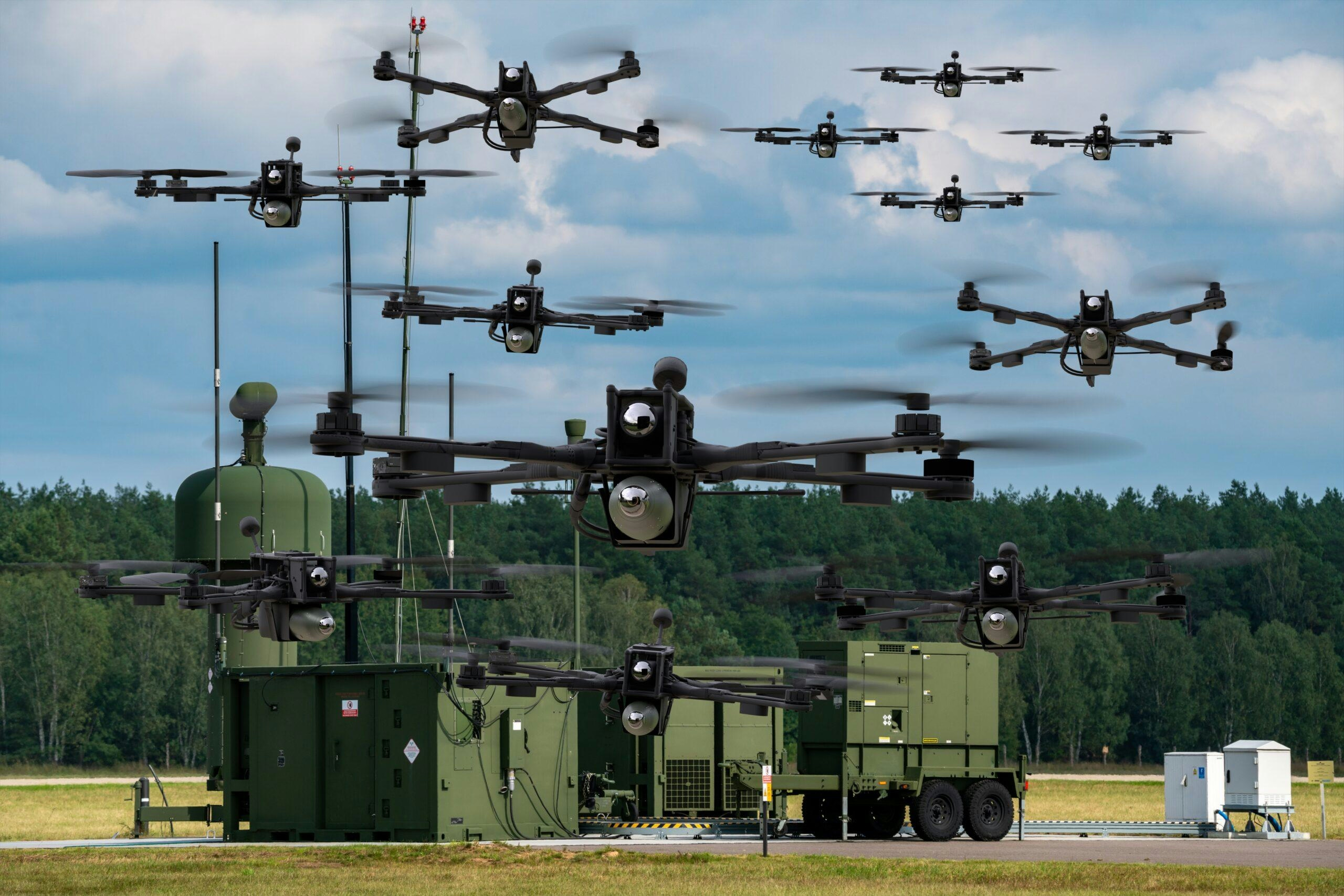
Honeywell Aerospace and Shield AI Partner on Autonomous Aircraft Development
Advancing Trusted Autonomy in Aviation
Honeywell Aerospace and Shield AI have formalized a partnership through a memorandum of understanding aimed at accelerating the development and deployment of advanced autonomous aircraft systems. This collaboration seeks to integrate Shield AI’s Hivemind Software Development Kit with Honeywell’s certified avionics, navigation, and sensing technologies, including its Anthem™ platform, to create a robust autonomy software stack. The joint effort targets both defense and commercial sectors, with the goal of delivering AI-piloted flight systems that are reliable, scalable, and trusted by operators and regulators alike.
The partnership is structured to facilitate a smoother transition from demonstration phases to operational deployment for defense users, addressing a critical industry challenge: the need to rebuild trust with each new autonomous system. By combining Shield AI’s mission autonomy capabilities with Honeywell’s safety-critical, design-assured hardware, the companies aim to establish a unified platform that meets stringent certification requirements. This approach is intended to extend beyond defense applications, exploring opportunities to implement trusted autonomy in commercial aviation and other transportation domains.
Addressing Certification and Trust Challenges
A key obstacle in the advancement of autonomous aviation remains the certification and assurance of AI-driven flight systems. Regulatory bodies, defense agencies, and commercial operators demand rigorous validation to ensure safety and reliability before adopting such technologies. Matt Milas, president of Defense & Space at Honeywell Aerospace, emphasized the importance of embedding trust within the system architecture from the outset rather than as an afterthought. He highlighted Honeywell’s role in providing a certified, design-assured foundation that enables warfighters, regulators, and fleet operators to place confidence in a single, unified platform. This foundational layer is critical to transforming intelligent autonomy, such as that offered by Hivemind, into a deployable and scalable solution worldwide.
Gary Steele, CEO of Shield AI, underscored the complementary nature of the partnership, noting that Honeywell’s certified avionics and sensing systems combined with Hivemind’s mission autonomy capabilities create a trusted basis for AI-piloted flight. He described the collaboration as reflective of the evolving aerospace and defense ecosystem, which increasingly integrates advanced autonomy with certified hardware to address complex transportation and national security challenges.
Navigating a Competitive and Complex Landscape
The alliance between Honeywell Aerospace and Shield AI emerges amid intensifying competition in the autonomous aircraft sector, with companies such as BAE Systems and Archer accelerating their own initiatives. Honeywell’s recent progress in alternative navigation techniques and anti-jamming technologies further enhances the partnership’s position by addressing critical concerns related to safety and operational resilience.
Despite the promising outlook, the collaboration faces significant hurdles, including navigating intricate regulatory frameworks, ensuring seamless integration of diverse technologies, and distinguishing itself within a crowded market. Industry analysts suggest that this partnership could catalyze innovation and elevate safety standards in autonomous aviation, potentially establishing new benchmarks for trusted autonomy.
As part of their agreement, Honeywell and Shield AI will jointly pursue global defense unmanned aerial system programs and explore opportunities to expand the reach of Honeywell’s certified systems within Hivemind’s platform. This includes supporting allied nations seeking to develop domestic autonomy capabilities, thereby extending the partnership’s impact across both U.S. and international markets.

Etihad and Swissport Extend Global Partnership

Sepehran Airlines B737 Returns to Mashhad After Tyre and Engine Issues

Etihad Deploys Widebody Fleet to Meet Strong Demand

Korean Air Finalizes $36.2 Billion Deal with Boeing

Australia’s RFDS Queensland Section Orders Six King Air 260Cs

Korean Air Finalizes Order for 103 Boeing Jets and Engines

Embraer E195-E2 Features Distinctive Engine Placement Among Regional Jets

What Passengers Can Expect on Boeing’s New 777X Jet

How Ethiopian Airlines Became Africa’s Leading Carrier Amid Gulf Competition

Joby Aviation Extends Autonomous Flight Capabilities with Cross-Country Tour
