
图像

将人工智能洞察转化为可执行行动

立即加入 AeroGenie 候补名单!

热门趋势

Categories

How Skyways Quietly Built a Global Heavy-Lift Drone Business
June 26, 2026By ePlane AI
How Skyways Quietly Built a Global Heavy-Lift Drone Business
0
0
Skyways Aviation
Heavy-Lift Drones
Drone Delivery

How Skyways Quietly Built a Global Heavy-Lift Drone Business

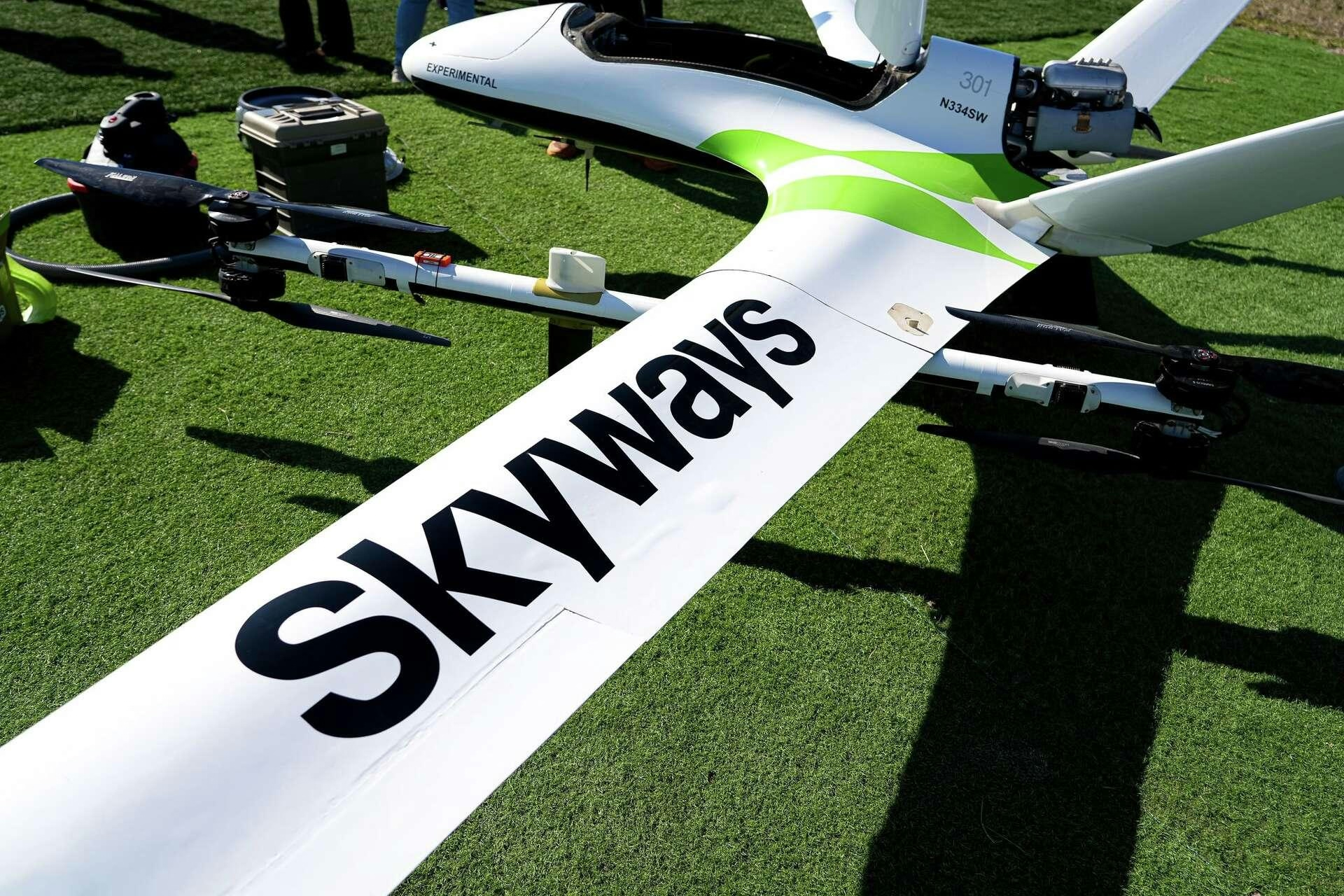
Texas-based Skyways Aviation has spent nearly a decade developing one of the world’s largest fleets of heavy-lift unmanned aircraft, delivering robust drone services across three continents. Unlike many drone companies that emphasize flashy innovations, Skyways has maintained a low profile, concentrating on addressing practical logistics challenges for clients in the maritime and energy sectors.

A Customer-Centric Approach to Drone Logistics

At the recent InnovateEnergy Week conference in The Woodlands, Texas, Bill Wimberley, Skyways’ chief commercial officer, acknowledged that the company remains relatively unknown outside industry circles. Skyways’ flagship aircraft, the V3, is a long-range, autonomous vertical takeoff and landing (VTOL) drone capable of carrying payloads up to 100 pounds over distances exceeding 1,000 miles. The V3 features seven cubic feet of cargo space and employs a hybrid propulsion system—electric motors for vertical lift and a jet-fuel engine for horizontal flight—allowing it to support a variety of sensors, including electro-optical/infrared (EO/IR) and LiDAR.

Despite these technical capabilities, Wimberley stressed that Skyways prioritizes customer needs over technological showmanship. “A lot of people are putting emphasis on the actual aircraft and not so much on the customer’s needs. We completely reversed that when we built Skyways. Our approach is no one cares about the aircraft,” he said, underscoring the company’s focus on practical solutions rather than hardware alone.

Expanding Markets and Navigating Challenges

Skyways’ operations have primarily targeted international markets, specializing in long-distance, heavy-duty autonomous deliveries for the maritime industry. The company is now expanding its services to include cargo delivery and inspection for clients with assets in the Gulf of Mexico, collaborating with major U.S. and global oil companies. While specific details remain confidential, Wimberley indicated that further announcements are forthcoming.

Since its founding nine years ago by CEO Charles Atkin, Skyways has deliberately avoided traditional marketing strategies. Atkin’s vision centered on solving real-world problems by designing aircraft tailored to those needs, eschewing promotional efforts. Until last year, the company operated without any marketing personnel, relying instead on word-of-mouth and direct engagement within the industry.

As Skyways grows, it confronts significant challenges common to the drone logistics sector. Complex aviation regulations and the need to secure certifications for international operations continue to pose obstacles. Additionally, the company faces increasing competition from firms such as AIR, ERC System, and Elroy Air, all advancing autonomous technologies for military and commercial logistics applications.

Market acceptance remains a critical factor in the company’s trajectory. Interest from the U.S. government in funding drone enterprises has already elevated the profiles and stock valuations of competitors like Unusual Machines and Motorola Solutions. To sustain its competitive advantage, Skyways must ensure its drones meet the rising demand for efficient and reliable logistics solutions across defense and commercial markets.

As regulatory frameworks for beyond visual line of sight (BVLOS) drone operations evolve in the United States, Skyways is positioning itself for the next phase of growth. The company continues to operate quietly but with a clear focus on addressing the logistics challenges of the future.

More news
FAA Establishes Air Taxi Research Hub in Oklahoma City to Shape the Future of Urban Flight

FAA Establishes Air Taxi Research Hub in Oklahoma City to Shape the Future of Urban Flight

FAA Establishes Air Taxi Research Hub in Oklahoma City to Shape the Future of Urban Flight The Federal Aviation Administration (FAA) has announced the creation of a dedicated research hub in Oklahoma City aimed at advancing urban air mobility. This initiative represents a significant federal investment in the development and study of electric air taxis, particularly electric vertical takeoff and landing (eVTOL) aircraft. Situated at the FAA’s Mike Monroney Aeronautical Center, the new facility will concentrate on addressing the operational, training, and safety challenges associated with advanced air mobility (AAM). A Research Center for Next-Generation Aviation The Mike Monroney Aeronautical Center, already the FAA’s principal site for training and logistics, will now incorporate air taxi research into its existing aviation infrastructure. This development coincides with accelerating efforts by manufacturers to introduce eVTOLs into commercial service, with several companies targeting passenger operations within the next few years. At the hub, researchers will focus on the integration of powered-lift aircraft—a new FAA category created specifically for eVTOLs—into the National Airspace System. Their work will encompass pilot training requirements, simulator development, maintenance protocols, and the formulation of airspace procedures tailored to aircraft that combine vertical takeoff capabilities with fixed-wing cruising. These hybrid flight characteristics pose unique regulatory challenges, as eVTOLs do not conform neatly to existing helicopter or airplane classifications. In response, the FAA issued a special federal aviation regulation in October 2024 to address pilot qualifications and operational standards for powered-lift aircraft. Strategic Importance of Oklahoma City Oklahoma City’s selection as the site for the research hub highlights its enduring role as a central hub for U.S. aviation administration. The Mike Monroney Aeronautical Center spans 1,100 acres and employs thousands of FAA personnel, including instructors, engineers, and safety inspectors. The campus also houses the Civil Aerospace Medical Institute, which conducts research on pilot health and human factors. Establishing the air taxi research hub at this location provides immediate access to simulators, laboratories, and subject-matter experts, while maintaining proximity to the FAA Academy, where future air traffic controllers and safety inspectors receive their training. For the state of Oklahoma, the decision reinforces the economic significance of the aerospace sector, which is among the largest industries in the region. Anchored by Tinker Air Force Base, the FAA campus, and a network of private contractors, the aerospace industry supports tens of thousands of jobs across the state. Addressing Challenges and Industry Developments The research agenda at the new hub will tackle critical issues that must be resolved before air taxis can operate at scale. These include managing low-altitude eVTOL traffic over urban environments, establishing standards for batteries and propulsion systems, and designing and licensing vertiports. Pilot training remains a particularly urgent concern, as powered-lift aircraft demand a combination of skills traditionally associated with both helicopter and airplane operations. Despite progress, significant challenges persist. Battery storage limitations continue to constrain electric aircraft endurance, as exemplified by Honda’s F1 model, which currently achieves a maximum flight time of just 15 minutes. Regulatory approval processes are also stringent; for instance, Joby Aviation’s demonstration flights in New York City have attracted attention but still require extensive FAA testing and certification before commercial operations can commence. Industry players are pursuing varied strategies in response to these challenges. Archer Aviation aims to achieve a “Waymo moment” by 2026, signaling a breakthrough in commercial viability, while Beta Technologies is targeting near-term certification for its Alia 250 model. Market sentiment remains cautiously optimistic, bolstered by substantial investments from major corporations such as Toyota, which underscore strong confidence in the sector’s potential growth. As the FAA’s new research hub begins its work, the agency and its partners confront a complex landscape of technical, regulatory, and operational challenges, alongside the opportunity to transform urban transportation in the coming years.
Canada’s Skyservice Expands Bombardier MRO Services

Canada’s Skyservice Expands Bombardier MRO Services

Canada’s Skyservice Expands Bombardier MRO Services Enhanced Maintenance Capabilities in Western Canada Skyservice Business Aviation (SYB), based at Montréal Trudeau Airport, has announced a significant expansion of its maintenance, repair, and overhaul (MRO) services by becoming an authorised Bombardier Business Aircraft service facility at Vancouver International Airport. This strategic development is intended to improve access to certified technicians, mobile repair teams, and rapid-response maintenance support for business jet operators throughout Western Canada. Skyservice already maintains Bombardier-authorised service centres at Toronto Pearson and Montréal Trudeau airports, thereby reinforcing its comprehensive national service network. Competitive Dynamics and Operational Challenges This expansion occurs amid intensifying competition within the MRO sector, where established providers such as ACI Jet and California MRO offer extensive maintenance services for Bombardier and Citation aircraft. As Skyservice extends its geographical reach, business jet operators are expected to evaluate service quality and cost-effectiveness with greater scrutiny. This dynamic may compel competitors to enhance their service offerings or adjust pricing strategies to maintain their market positions. To accommodate the growing client base and reduce aircraft downtime, Skyservice must ensure that its Vancouver facility is equipped with sufficient skilled personnel and robust infrastructure. The company’s capacity to provide rapid and reliable maintenance will be crucial, as operators increasingly demand efficient solutions to minimize grounded aircraft time. With this latest upgrade, Skyservice aims to consolidate its standing in the Canadian business aviation market by delivering comprehensive Bombardier MRO services across key regions, while navigating a competitive and evolving industry landscape.
Airbus Surpasses Boeing in 2026 Jet Orders

Airbus Surpasses Boeing in 2026 Jet Orders

Airbus Surpasses Boeing in 2026 Jet Orders In the early months of 2026, Boeing appeared to be regaining momentum in the commercial aviation market. Through April, the American manufacturer had delivered more aircraft than its European rival, suggesting a potential resurgence. However, this trend shifted markedly in May when Airbus delivered 262 jets compared to Boeing’s 250, marking Airbus’s strongest monthly performance of the year and allowing it to overtake Boeing in total deliveries. A Decisive Shift in New Orders The more significant development lies in new aircraft orders. In May alone, Airbus secured 379 firm orders, vastly outpacing Boeing’s 13. By mid-year, Airbus’s net orders for 2026 stood at approximately 368, while Boeing’s were around 140, according to industry estimates. This substantial lead is largely driven by the popularity of Airbus’s A320neo family, particularly the A321neo and its long-range A321XLR variant. These models enable airlines to operate longer, less dense routes efficiently with single-aisle aircraft, meeting evolving market demands. The delivery figures through May 2026 highlight a competitive dynamic: Airbus has delivered 262 aircraft, while Boeing has delivered 250. In terms of net orders, Airbus’s tally ranges between 368 and 379, whereas Boeing’s figures vary from 13 to 140. The delivery race has seen fluctuations, with Boeing leading in the first quarter by delivering approximately 143 jets compared to Airbus’s 114, supported by increased production of the 737 MAX. However, Airbus rapidly closed the gap in the spring, culminating in a peak of around 81 deliveries in May alone. Despite monthly variations, the mid-year trajectory favors Airbus. Market Dynamics and Strategic Responses The order book underscores Airbus’s dominance, anchored by the A320neo family and especially the A321neo. Boeing’s 737 MAX remains its best-selling model and a cornerstone of its recovery efforts, complemented by ongoing wins in the widebody segment. Nevertheless, Boeing continues to grapple with the repercussions of recent production setbacks and reputational challenges, which are reflected in its comparatively modest order intake. This evolving competitive landscape is prompting strategic recalibrations across the industry. American Airlines is currently evaluating a widebody aircraft order from either Boeing or Airbus as it seeks to maintain competitiveness with Delta and United. Boeing, meanwhile, is considering increasing 737 production rates to approximately 70 jets per month to align with Airbus’s ambitious output goals. Airbus faces internal deliberations regarding the potential early launch of a larger A220 model, amid subdued interest from leasing companies and ongoing discussions about the aircraft’s range and performance capabilities. The rivalry between Airbus and Boeing continues to shape the global aviation market, influencing airline purchasing decisions, delivery schedules, and pricing structures. With both manufacturers managing multi-year backlogs, the competition increasingly centers on the ability to deliver aircraft efficiently. Factors such as supply chain stability, engine availability, and factory throughput have become as critical as sales efforts in determining which company will lead the skies in the coming years.
Azerbaijan Airlines Receives First A321neo and Additional A320neo

Azerbaijan Airlines Receives First A321neo and Additional A320neo

Azerbaijan Airlines Expands Fleet with First A321neo and Additional A320neo Azerbaijan Airlines has taken a significant step forward in its fleet modernization efforts with the delivery of its first Airbus A321neo, alongside an additional A320neo aircraft. The A321neo, leased from AerCap, is the first of three planned to join the airline’s fleet under a 2024 agreement that also includes three A320neos. The handover ceremony was held at the Airbus Delivery Centre in Hamburg, marking the official introduction of the A321neo into Azerbaijan Airlines’ operations. The latest A320neo delivery increases the airline’s total number of this model to four, further reinforcing its single-aisle fleet. Both aircraft are equipped with Airbus’s Airspace cabin, which features larger overhead bins, customizable lighting, advanced in-flight entertainment systems, high-speed internet connectivity, and individual monitors in Business Class. These enhancements are designed to elevate the passenger experience and align with the airline’s commitment to modern service standards. Peter Anderson, Chief Commercial Officer at AerCap, emphasized the significance of the partnership, stating that AerCap is proud to be the first lessor to introduce the A321neo to Azerbaijan Airlines. He highlighted that the addition of these fuel-efficient aircraft will enhance the airline’s operational capabilities, support network expansion, and improve the overall passenger experience. Jamil Manizade, Chief Commercial Officer of Azerbaijan Airlines, described the arrival of the A321neo as a pivotal moment in the airline’s long-term fleet renewal strategy. He noted that continued investment in next-generation aircraft will strengthen operational efficiency, improve fuel economy, and create new opportunities for sustainable growth across the airline’s network. Strategic Growth Amid Industry Challenges These deliveries form part of Azerbaijan Airlines’ ambitious plan to expand its fleet from 29 to 50 aircraft by 2032, with the goal of establishing Baku as a key regional aviation hub. The introduction of the A321neo and additional A320neo models is expected to provide increased capacity and extended range, supporting the airline’s expanding route network and enhancing its competitive position in the region. However, this expansion occurs against a backdrop of broader industry challenges. The global market continues to face delays in Airbus A320neo series deliveries, particularly affecting the A321neo variant, as reported by Bloomberg News. Additionally, a growing shortage of landing gears for newer aircraft types such as the A320neo and Boeing 737 MAX is contributing to supply chain constraints. These issues pose potential risks to delivery schedules and operational planning for airlines worldwide. Despite these obstacles, Azerbaijan Airlines’ commitment to acquiring modern, fuel-efficient aircraft positions it well within an increasingly competitive and sustainability-focused industry. As airlines worldwide contend with similar pressures, the adoption of next-generation aircraft remains a critical factor in fleet modernization and network expansion strategies.
A Parachutist Is Descending Ahead

A Parachutist Is Descending Ahead

A Parachutist Is Descending Ahead On June 15, 2023, a German-registered Cessna TU206G Stationair crashed during landing at Denmark’s Aversi private airfield. The aircraft, bearing the registration D-EPRR, had undergone extensive modifications over its operational life. Originally equipped with a piston engine, it was first converted to a turboprop configuration using a Rolls Royce 250 turboshaft by Soloy Aviation Solutions. Subsequently, Turbine Conversion Ltd upgraded the aircraft further, fitting it with a five-blade MT-Propeller and a Pratt & Whitney PT6 engine. These modifications introduced new operational complexities, particularly due to the PT6 engine’s slower power response compared to traditional piston engines—a critical consideration for pilots transitioning to turbine-powered aircraft. Flight Details and Training Scenario The flight involved two crew members: a highly experienced flight examiner with 22,500 flight hours, including 390 on this aircraft type, and a commercial pilot with 950 hours, primarily on piston aircraft, who was also an accomplished parachutist. The mission was a Visual Flight Rules (VFR) skill test for the Cessna Single Engine Turbine class rating. After a navigation leg from Holbæk (EKHB) to Aversi and subsequent refueling, the examiner briefed the pilot on the next phase of the test. This included a simulated engine failure and an aborted landing on the grass strip, followed by a planned flight to Kalundborg. During the circuit at 1,000 feet, the examiner simulated an engine failure by reducing power and feathering the propeller, challenging the pilot to execute a forced landing. As the aircraft approached short final, the examiner, impressed by the pilot’s handling, introduced an additional challenge: a low-altitude go-around scenario. At approximately 30 feet above the ground, the examiner called out in Danish, “Der er en faldskærmsspringer foran dig på banen, du skal gå rundt” (“There is a parachutist in front of you on the runway, you must go around”). Although the runway was clear, this simulated emergency was designed to test the pilot’s ability to respond promptly and effectively to an unexpected hazard—a common technique in advanced skill assessments. Broader Implications of Adaptability This incident highlights the critical importance of realistic training and adaptability in aviation, particularly when pilots must manage new technologies and unexpected situations. The challenges faced in this context resonate beyond aviation, reflecting similar dynamics in other high-stakes industries. For instance, biopharmaceutical companies such as Biogen encounter significant risks when acquiring firms like RayThera, including the integration of new business models and the uncertainty of meeting regulatory milestones. Likewise, independent hotels must evolve from reactive to proactive pricing strategies to remain competitive amid rapidly shifting market conditions and competitor actions. In both aviation and these sectors, the capacity to respond swiftly and effectively to unforeseen events—whether a simulated parachutist on a runway or sudden market shifts—can be decisive in determining success or failure. The Aversi incident thus underscores the value of rigorous, scenario-based training and the broader necessity for operational flexibility in complex environments.
Saudia Cargo Deploys AI Workers to Enhance Cargo Sales

Saudia Cargo Deploys AI Workers to Enhance Cargo Sales

Saudia Cargo Deploys AI Workers to Enhance Cargo Sales Saudia Cargo has become the first cargo airline to integrate artificial intelligence (AI) workers into its commercial operations, following a strategic partnership with the digital air freight platform cargo.one. This pioneering initiative aims to automate and expedite the processing of inbound requests for quotations (RFQs), a traditionally labor-intensive and time-consuming component of airline cargo sales. AI-Driven Automation in Cargo Sales The AI system, developed on cargo.one’s AI-native operating platform, evaluates customer RFQs by considering factors such as flight schedules, alternative airports, and service levels. It then produces customized quotations within seconds, operating continuously and supporting multiple languages. This automation enables Saudia Cargo’s sales teams to concentrate on more complex and strategic customer engagements, including specialist shipments and high-value accounts. Cargo.one reports that its AI workers can reduce quotation turnaround times by 68% while achieving an 89% accuracy rate on first-time generated quotes. The platform also classifies sales opportunities and prepares customer-specific proposals in near real time, enhancing both operational efficiency and the overall customer experience. Industry Perspectives and Challenges Turhan Özen, Chief Commercial Officer of Saudia Cargo, emphasized the significance of this advancement within the company’s broader digital transformation and sales strategy. He highlighted that the AI workers are tailored to Saudia Cargo’s specific standards and processes, combining industry expertise, robust data foundations, and cutting-edge technology to improve efficiency and customer service, thereby strengthening the airline’s competitive position. Moritz Claussen, founder and co-CEO of cargo.one, expressed pride in supporting Saudia Cargo’s deployment of AI workers, noting that the investment in a logistics-specific, AI-native operating system has delivered substantial efficiency gains and operational improvements. He described this collaboration as a milestone in the evolution of logistics technology. Nevertheless, the introduction of AI workers in air cargo sales presents challenges. Industry analysts caution that issues such as data reliability and the complexity of supply chain information could complicate Saudia Cargo’s AI integration. Furthermore, skepticism from competitors and customers may arise, particularly concerning the transparency and control of AI-generated data. In response, rival airlines are expected to accelerate their own AI investments while emphasizing data governance and transparency to address these concerns. Despite these challenges, Saudia Cargo’s adoption of AI workers marks a significant milestone in the digital transformation of air cargo sales, establishing a new standard for efficiency and customer responsiveness within the sector.
China Eastern Orders 25 Airbus A330neo Widebody Jets

China Eastern Orders 25 Airbus A330neo Widebody Jets

China Eastern Airlines Orders 25 Airbus A330neo Widebody Jets China Eastern Airlines has confirmed an order for 25 Airbus A330neo widebody aircraft, marking Airbus’s first significant long-haul deal with a Chinese carrier since the previous year. This transaction highlights China’s ongoing preference for European manufacturers as the nation’s airlines pursue fleet modernization and international expansion. Details of the Order and Strategic Implications Announced on Friday, the order carries a list price of approximately US$9.35 billion. However, China Eastern disclosed that it secured a substantial discount from Airbus, a standard practice in large-scale aviation purchases, which will reduce the final cost well below the catalogue figure. Headquartered in Shanghai, the airline anticipates that the fuel-efficient A330neo jets will lower operating expenses and contribute to its carbon-neutrality objectives. The new aircraft are intended to replace aging widebody models, thereby enhancing China Eastern’s competitiveness on international routes. Deliveries are planned between 2029 and 2033, subject to regulatory approval from Chinese authorities. This widebody acquisition is notable amid a recent trend in Chinese airline procurement, which has predominantly focused on narrowbody aircraft. The decision to invest in new long-haul jets comes at a time when the global aviation industry continues to grapple with supply chain disruptions and fluctuating fuel prices, factors that may affect delivery schedules and operational costs. Impact on the Global Aviation Market The deal is expected to intensify competition among aircraft manufacturers. With this significant order, Airbus is well-positioned to pursue further widebody contracts as airlines worldwide seek to renew their fleets. Rival manufacturers are likely to respond; for example, American Airlines is reportedly considering a comparable widebody order to remain competitive with Delta and United. Additionally, Scandinavian carrier SAS is reportedly close to finalizing a widebody agreement with Airbus. China Eastern’s commitment to the A330neo underscores confidence in Airbus’s product line and reflects a broader industry shift toward more efficient and environmentally sustainable aircraft. As airlines adapt to evolving market demands and sustainability targets, such orders are set to influence the next phase of global aviation development.
Emirates Maintains Lead in Premium Aviation with A380 Strategy as Rivals Struggle to Compete

Emirates Maintains Lead in Premium Aviation with A380 Strategy as Rivals Struggle to Compete

Emirates Maintains Lead in Premium Aviation with A380 Strategy as Rivals Struggle to Compete Emirates continues to set the standard in premium long-haul aviation by leveraging its distinctive Airbus A380 strategy to maintain a commanding lead amid growing challenges faced by competitors. As the global aviation industry contends with rising operating costs, sustainability demands, and geopolitical uncertainties, Emirates’ unwavering commitment to scale, comfort, and luxury remains unparalleled. The A380: Cornerstone of Emirates’ Dominance Central to Emirates’ success is its early and decisive investment in the Airbus A380. While many airlines hesitated, Emirates built the world’s largest A380 fleet, transforming Dubai into a pivotal global hub that efficiently connects East and West. The airline’s network is strategically designed around high-density, long-haul traffic, with the A380 enabling optimized connections and premium offerings such as private suites and onboard lounges. This approach has not only redefined passenger expectations but also established a premium ecosystem that competitors have found difficult to replicate. Challenges Facing Competitors Rivals including Lufthansa, Air France-KLM, and Etihad Airways are confronting significant obstacles in today’s aviation market. Lufthansa is pursuing consolidation through acquisitions, while Etihad aims to expand its widebody fleet to stimulate growth. However, these strategies are constrained by industry-wide challenges such as the need for costly airport infrastructure upgrades, high maintenance expenses, and the absence of a direct successor to the A380. In contrast, Emirates continues to modernize its A380 interiors and extend the aircraft’s lifecycle, underscoring its long-term commitment to the superjumbo. The cessation of A380 production by Airbus has further solidified Emirates’ advantage. As the largest operator of a now-scarce aircraft type, Emirates occupies a unique market position that is both operationally and strategically defensive. No manufacturer is currently developing a comparable high-capacity aircraft, and existing alternatives like the Boeing 777X and Airbus A350 prioritize fuel efficiency over capacity. Emirates itself is awaiting delayed deliveries of the Boeing 777X and faces ongoing issues with the Rolls-Royce engine for the Airbus A350-1000, which has postponed its orders. Despite these setbacks, the airline remains optimistic about future fleet expansion. Structural Barriers to Replicating Emirates’ Model Several factors prevent competitors from emulating Emirates’ A380-based strategy. The permanent closure of the A380 production line and the absence of a direct replacement in development create a significant barrier. Additionally, the substantial airport infrastructure requirements for superjumbo operations, coupled with high maintenance and retrofitting costs for premium cabin layouts, pose formidable challenges. These structural limitations mean that replicating Emirates’ model would require decades of coordinated investment—an undertaking few airlines are positioned to pursue. Industry forecasts suggest that Emirates will continue operating its A380 fleet well into the 2040s, further cementing its leadership in premium aviation. As competitors adapt to a landscape increasingly defined by efficiency and consolidation, Emirates’ unique approach ensures its dominance remains unchallenged for the foreseeable future.
Air Tanzania Expands Hangar Capacity at Kilimanjaro Airport

Air Tanzania Expands Hangar Capacity at Kilimanjaro Airport

Air Tanzania Expands Hangar Capacity at Kilimanjaro International Airport Air Tanzania has successfully completed a major expansion of its maintenance hangar at Kilimanjaro International Airport, significantly enhancing its operational infrastructure. The upgraded facility now has the capacity to accommodate up to five aircraft simultaneously, marking a substantial increase from its previous capabilities. This development involved extensive renovations and new construction, alongside the installation of advanced lighting systems, improved workspaces tailored for engineering staff, and the integration of modern Maintenance, Repair, and Overhaul (MRO) training equipment. Strategic Investment in Tanzania’s Aviation Sector The expansion forms part of a wider government-led initiative aimed at strengthening Tanzania’s aviation industry, with an investment totaling TZS 283.05 billion (approximately USD 109 million). This funding is intended to enable Air Tanzania to reduce maintenance costs and enhance operational efficiency, thereby supporting the airline’s long-term growth objectives. By upgrading its maintenance infrastructure, the national carrier is better positioned to manage its fleet and improve service delivery. Challenges Amidst Regional Competition Despite the benefits, the project faces several challenges. Securing adequate funding for such large-scale infrastructure developments remains a significant obstacle. Additionally, the airline must manage the increased operational costs associated with maintaining a larger facility. Compliance with stringent regulatory standards is another critical concern that Air Tanzania must address to ensure the new hangar meets all safety and operational requirements. This expansion occurs within a highly competitive regional aviation market, where multiple airlines and Fixed Base Operators (FBOs) are also investing in hangar capacity enhancements. Industry data reveals a growing trend of aviation businesses upgrading their facilities, intensifying competition across the sector. This dynamic may prompt rival carriers and service providers to pursue similar expansion projects or improve their service offerings to maintain market share. Nonetheless, Air Tanzania’s expanded hangar capacity at Kilimanjaro International Airport positions the airline to better support its fleet maintenance needs and potentially attract third-party maintenance contracts. This development not only advances the airline’s operational capabilities but also contributes to the broader growth and modernization of Tanzania’s aviation industry.
Toyota-Backed Air Taxi Reaches 100 km/h Ahead of Commercial Launch

Toyota-Backed Air Taxi Reaches 100 km/h Ahead of Commercial Launch

Toyota-Backed Air Taxi Reaches 100 km/h Ahead of Commercial Launch Milestone Flight Validates Innovative Design SkyDrive, a Toyota-backed urban air mobility (UAM) company, has successfully demonstrated stable flight at 100 km/h (62 mph) with its SD-05 multicopter. This achievement marks a critical advancement toward the vehicle’s commercial launch and regulatory certification. The SD-05’s wingless design, featuring 12 rotors, has proven capable of withstanding real-world aerodynamic forces, vibrations, and structural loads as anticipated by engineers. This validation is essential for progressing through Japan’s Civil Aviation Bureau (JCAB) certification process. Unlike American competitors such as Joby Aviation and Archer, which employ tilting rotors and fixed wings to accommodate more passengers over longer distances, the SD-05 embraces a minimalist approach. It is designed to carry a pilot and two passengers on short urban trips, with a current range of approximately 15 km (9.3 miles) per battery charge. SkyDrive aims to extend this range to between 30 and 40 km (18.6–24.9 miles) as battery technology advances. This streamlined architecture offers distinct advantages in dense urban environments, including flexible takeoff and landing capabilities and reduced maintenance costs compared to more mechanically complex alternatives. However, the absence of prior flight data for such a design means each test flight ventures into largely uncharted territory. SkyDrive reports that the recent high-speed test confirmed the flight characteristics and behavior aligned closely with predictions from the design and analysis phase, a crucial factor for regulatory approval. Development Progress and Industry Context The SD-05’s development has involved hundreds of test flights following the earlier SD-03 prototype. Independent evaluations of batteries, motors, and rotors have been conducted alongside aerodynamic testing in wind tunnels operated by Japan’s space agency, JAXA. This extensive data collection will underpin SkyDrive’s certification efforts in Japan and, eventually, with the U.S. Federal Aviation Administration (FAA). The UAM sector is becoming increasingly competitive. SkyDrive’s closest philosophical counterpart is China’s EHang EH216-S, a two-seat autonomous multicopter already certified by Chinese authorities but currently limited to low-altitude sightseeing operations. Germany’s Volocopter is also targeting short urban routes, though its commercial rollout has been slower than anticipated. Meanwhile, U.S.-based Joby Aviation, which is also backed by Toyota, recently reached the 100 km/h milestone with its own air taxi but continues to face regulatory challenges, internal disputes, and legal conflicts with competitors such as Archer Aviation and Beta Technologies. Archer, which aims to begin commercial service this year, has experienced a significant decline in its share price over the past year, reflecting broader investor uncertainty in the sector. Government initiatives, including the Trump administration’s eVTOL Integration Pilot Program, have played a pivotal role in supporting the development and integration of electric air taxis into national airspace. For SkyDrive, the recent high-speed flight represents more than a technical milestone; it is a vital step toward regulatory approval and a potential competitive advantage in the race to launch commercial urban air taxi services by 2028.
line









