图像

将人工智能洞察转化为可执行行动

立即加入 AeroGenie 候补名单!

热门趋势

Categories

How the Airbus A350 Was Designed to Prevent Failure
June 16, 2026By ePlane AI
How the Airbus A350 Was Designed to Prevent Failure
0
0
Airbus A350
Composite Materials
Flight Safety

How the Airbus A350 Was Designed to Prevent Failure

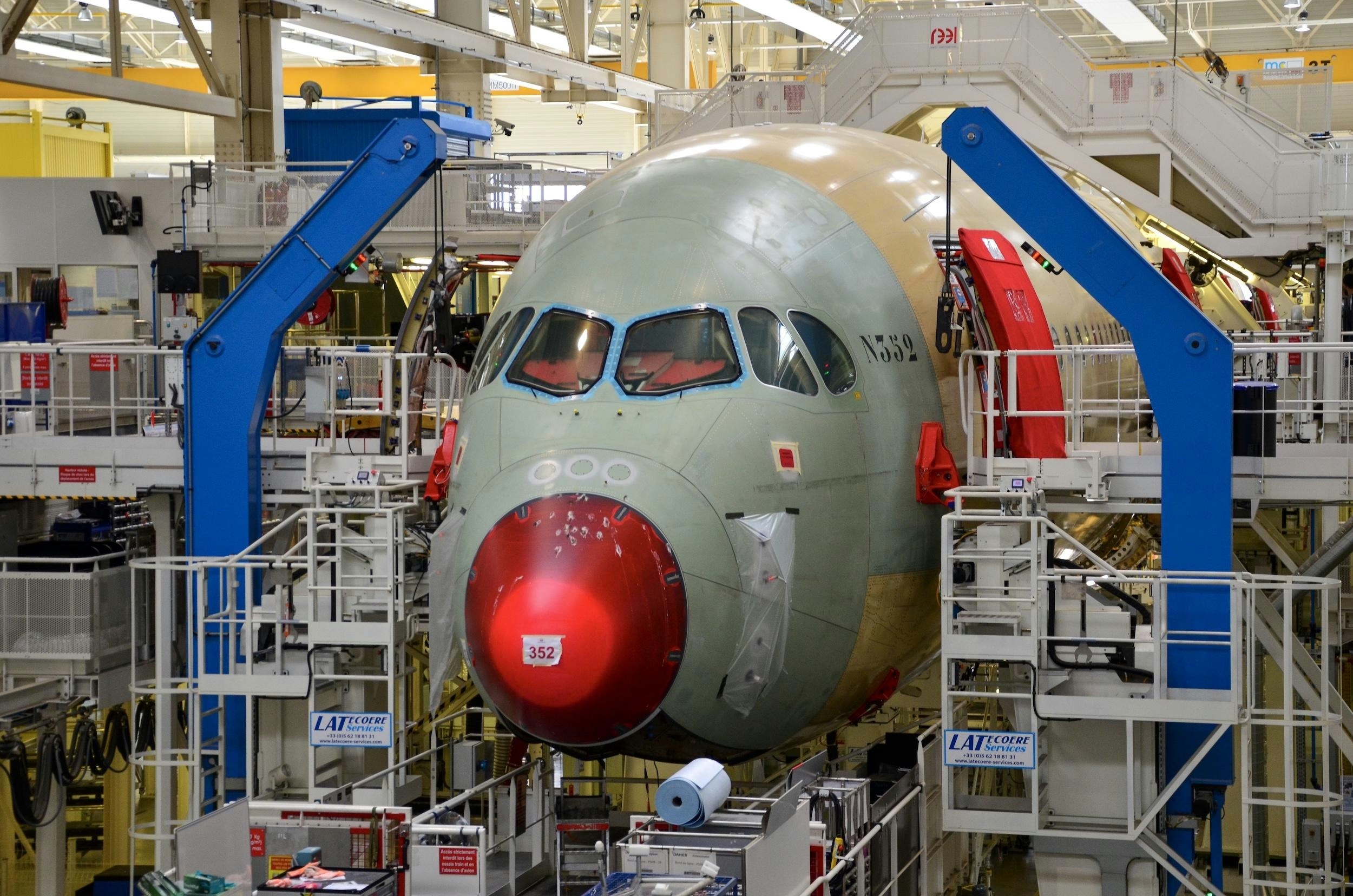
The Airbus A350 embodies decades of aerospace innovation, integrating technologies refined through both the superjumbo A380 and the military-grade A400M. This next-generation widebody aircraft incorporates a range of advancements, from the extensive use of composite materials to some of the most resilient and redundant avionics systems ever installed in a commercial airliner. Central to the A350’s design philosophy is the prioritization of safety and reliability, achieved through stringent production standards and equipping pilots with advanced operational tools.

Advanced Composite Materials and Structural Design

A hallmark of the A350 Xtra Wide Body is its unprecedented use of carbon fiber reinforced plastic (CFRP), which constitutes 53% of the aircraft’s weight—surpassing any other commercial jet currently in production. This durable yet lightweight material was developed through Airbus’s prior experience with the A400M tactical airlifter and the A380. The extensive stress data and safety margins established during the development of these earlier aircraft provided a solid foundation for the A350’s airframe and systems.

Airbus’s transition from traditional metal to composite structures was a gradual process. While the A380 introduced CFRP in key structural components, the A400M’s rigorous military testing environment pushed the boundaries of composite technology. The A400M test fleet endured extreme operational conditions, including rough tactical airfield landings, allowing engineers to analyze how CFRP, reinforced with epoxy resin, responded to intense structural stress. These findings informed the development of interlayer-toughened epoxy for the A350, significantly reducing the risk of delamination and micro-cracking.

In terms of fuselage construction, Airbus adopted a four-panel design for the A350, diverging from Boeing’s single-piece barrel approach used in the 787 Dreamliner. This design enables tailored panel thickness, with the top and bottom panels reinforced to withstand vertical loads while the side panels remain lighter. Manufacturing innovations such as Automated Tape Laying and Liquid Resin Transfer Molding have further enhanced production precision and efficiency.

Operational Challenges and Industry Impact

Despite its advanced engineering, the A350 has encountered operational challenges. A recent incident involving a China Eastern Airlines A350-900 saw total brake failure during taxiing, resulting in a collision with a passenger airbridge. The flight crew successfully brought the aircraft to a stop using reverse thrust, underscoring the critical role of redundant safety systems and the reality that even the most sophisticated designs can experience failures.

Delivery delays have also affected airlines dependent on the A350. Qantas, for instance, postponed its Project Sunrise ultra-long-haul flights between Australia, London, and New York due to delays in receiving its specially modified A350-1000 aircraft. Airbus has informed other customers of further delivery postponements later this decade, contributing to a recent decline in the company’s share value.

Balancing Innovation with Reliability

The Airbus A350 represents a significant milestone in the aerospace industry’s quest for safer and more efficient air travel. By leveraging lessons from both commercial and military programs, Airbus has developed a jetliner that sets new benchmarks for structural integrity and operational safety. Nonetheless, recent incidents and delivery setbacks highlight the ongoing challenges inherent in introducing cutting-edge technology to the market while maintaining reliability at scale.
More news
Porter and Smart AMS Launch Heavy Maintenance Facility in Ottawa

Porter and Smart AMS Launch Heavy Maintenance Facility in Ottawa

Porter and Smart AMS Establish Heavy Maintenance Facility in Ottawa Canada’s Porter Airlines, in partnership with Smart Aviation Maintenance Solutions (AMS), has inaugurated a dedicated heavy aircraft maintenance facility at Ottawa International Airport. This strategic development aims to support Porter’s expanding fleet and enhance maintenance operations at one of its key hubs. Enhancing Maintenance Capabilities and Operational Efficiency Smart AMS will oversee the heavy maintenance program at Porter’s Ottawa site, initially generating approximately 20 skilled jobs, including licensed aircraft maintenance engineers, apprentices, stores personnel, and technical records specialists. The collaboration is intended to optimize Porter’s maintenance workflow by reducing aircraft ferry times, increasing scheduling flexibility, and providing greater control over spare parts, tooling, and inventory management. The facility’s on-site access to technical support, equipment, and components is expected to improve aircraft availability during both scheduled and unscheduled maintenance activities. Brad Warren, Porter Airlines’ vice president of maintenance and engineering, underscored the operational advantages of the partnership, stating, “This collaboration allows us to deepen our maintenance capabilities in Ottawa while working alongside a trusted partner. Having heavy maintenance capacity on site improves efficiency, minimizes downtime, and supports the continued reliability of our operations for passengers and crews alike.” Strategic Growth and Industry Implications The new maintenance centre also enables Smart AMS to redistribute workloads across its existing bases, thereby freeing capacity to accommodate additional third-party clients. Mark Rinaldi, president of Smart AMS, emphasized Ottawa’s strategic significance, noting, “Working closely with Porter allows us to grow responsibly, maintain our cost structure, and expand our skilled workforce while delivering high-quality maintenance support to one of Canada’s leading airlines.” Despite the anticipated operational benefits, both companies face challenges as the facility scales up. Key priorities include ensuring compliance with regulatory standards, integrating new maintenance processes, and maintaining operational efficiency during expansion. Industry analysts have responded positively to the initiative, recognizing that it provides Porter with a competitive advantage in fleet reliability and maintenance capacity. It is expected that rival airlines may respond by enhancing their own maintenance capabilities or pursuing similar partnerships to remain competitive. The establishment of the Ottawa heavy maintenance facility represents a significant milestone for Porter Airlines and Smart AMS, positioning both organisations to meet increasing demand while reinforcing their commitment to operational excellence and workforce development.
Axinom Celebrates 25 Years in Digital Technology

Axinom Celebrates 25 Years in Digital Technology

Axinom Celebrates 25 Years of Innovation in Digital Technology Axinom marks a significant milestone this year, celebrating 25 years since its founding as a small software startup in Germany in 2001. Over the past quarter-century, the company has transformed into a global digital technology enterprise with subsidiaries in Germany, Estonia, Sri Lanka, and the United States, employing approximately 100 people worldwide. Throughout this period of rapid technological change, Axinom has remained steadfast in its core mission: addressing complex challenges in content and software management, protection, and delivery. Ralph Wagner, Co-Founder and CEO of Axinom, reflected on the company’s journey, emphasizing the foundational principles that have guided its growth. “When we founded Axinom, we did not set out to build a company for one specific industry. We wanted to create strong software, stay close to our customers, and keep learning as technology evolved,” he said. This philosophy has enabled Axinom to expand its expertise from enterprise content management to global streaming platforms and connected aircraft. Wagner described reaching the 25-year mark as a proud moment and a tribute to the people, customers, and partners who have shaped the company’s success. Trusted by Global Brands and Early Innovators Axinom’s commitment to innovation was evident early in its history. In 2003, the company launched its first product, AxCMS.net, which quickly attracted major clients including Siemens, American Express, Nestlé, Staedtler, and Deutsche Telekom. By 2009, Axinom had cultivated a partner ecosystem of over 100 companies. The company also established itself as an early Microsoft Partner and played a pivotal role in Europe’s .NET developer community. Notably, Axinom built and managed CodeZone, Microsoft’s .NET developer-community portal, which grew to over 600,000 registered developers by 2006. The company’s international expansion began with the opening of an office in Estonia in 2004, followed by a U.S. subsidiary in 2008 and a branch in Sri Lanka in 2018. As the broadcasting industry transitioned to online platforms in the late 2000s, Axinom adapted swiftly, securing early broadcast and OTT clients such as ARTE, Perform Group, maxdome, Sky, and ZDF. In 2009, Axinom introduced Axinom CMS, a next-generation content management system designed specifically for digital media. That same year, the company launched its digital rights management (DRM) solution, becoming one of the first adopters of Microsoft PlayReady. Axinom’s expertise in content protection expanded to include multi-DRM support for PlayReady, Widevine, and FairPlay. In 2011, the company delivered the aviation industry’s first Hollywood studio-approved DRM service for personal devices, underscoring its leadership in secure content delivery. Navigating a Rapidly Evolving Digital Landscape As Axinom celebrates its 25th anniversary, it faces the ongoing challenge of sustaining innovation amid a rapidly evolving digital environment. The emergence of new technologies such as artificial intelligence, combined with intense competition from both established firms and emerging startups, demands continuous adaptation. Industry analysts suggest that this milestone may attract increased investor interest while also inviting closer scrutiny of Axinom’s long-term growth prospects. Competitors are expected to respond by intensifying their research and development efforts and expanding their market presence to counter Axinom’s achievements. Despite these challenges, Axinom’s quarter-century journey underscores its resilience and dedication to technological advancement, positioning the company to navigate the next phase of digital transformation.
Atlas Air Reports Progress in Sustainability as SAF Usage Hits 3.3%

Atlas Air Reports Progress in Sustainability as SAF Usage Hits 3.3%

Atlas Air Advances Sustainability Efforts as SAF Usage Surges to 3.3% Atlas Air Worldwide has reported a substantial advancement in its sustainability initiatives, marked by a tenfold increase in sustainable aviation fuel (SAF) consumption in 2025. According to the company’s seventh annual “Caring for the World We Carry” report, SAF usage reached 3.3 million gallons during the year, with approximately two-thirds of this fuel voluntarily purchased by Atlas Air and its customers. This milestone underscores the cargo airline’s commitment to reducing its environmental impact amid ongoing industry challenges. Navigating Industry Challenges and Strategic Investments The aviation sector continues to grapple with the high upfront costs associated with transitioning to SAF and the need for significant investment in next-generation, fuel-efficient aircraft. In response, Atlas Air has placed a record order for 20 Airbus A350F freighters, with options for an additional 20. Deliveries are scheduled to begin in 2029, and the A350F is expected to reduce fuel consumption and emissions by up to 20% compared to current freighters. However, the company must manage supply chain complexities and fluctuating fuel prices, which could influence operational costs and delivery timelines. Atlas Air’s proactive sustainability strategy is likely to enhance its market position, particularly among environmentally conscious customers and stakeholders. The company’s leadership in this area may also prompt competitors to accelerate their own environmental initiatives in response to regulatory pressures and evolving customer expectations, although some may struggle to keep pace, potentially affecting their market standing. Commitment to Transparency, Operational Efficiency, and Employee Development The report highlights Atlas Air’s distinction as the first North American cargo carrier to join the International Air Transport Association’s (IATA) CO2 Connect initiative, which seeks to improve the accuracy and transparency of emissions reporting. The company has also made strides in operational efficiency through technology investments and closer collaboration with customers. Beyond environmental efforts, Atlas Air has expanded its employee development programs. These include the launch of the Atlas Academy, an Emerging Leaders initiative, an Air-to-Ground transition program designed to assist pilots moving into corporate roles, and a Safety Ambassador Program that recognizes proactive safety reporting. Atlas Air reaffirmed its target to reduce Scope 1 emissions by 20% by 2035, using 2021 as the baseline year. The company continues to advocate for broader SAF adoption across the aviation industry and supports reforms to Federal Aviation Administration (FAA) mental health reporting requirements. Michael Steen, chief executive of Atlas Air Worldwide, emphasized the company’s dual focus on growth and responsibility, stating, “As our business grows, so does our responsibility. That’s why we are investing in the future of aviation, advancing sustainable solutions for our customers and building a strong culture where our people can succeed.” Richard Broekman, chief commercial officer and head of sustainability, added, “For many of our customers, sustainability has become a business imperative. They’re looking for practical ways to reduce emissions, meet evolving stakeholder expectations, and make measurable progress toward their decarbonization goals. Our role is to help them do exactly that.” Atlas Air’s ongoing efforts position it at the forefront of sustainable air cargo, though the company acknowledges that balancing ambitious environmental objectives with cost realities, supply chain resilience, and industry competition will remain a complex challenge.
IAG Cargo Revenue Drops 9.4% in First Half Amid Middle East Disruptions

IAG Cargo Revenue Drops 9.4% in First Half Amid Middle East Disruptions

IAG Cargo Revenue Declines 9.4% in First Half Amid Middle East Market Disruptions IAG Cargo reported a 9.4% year-on-year decline in revenue for the first half of 2026, with earnings falling to €570 million from €629 million in the same period last year. The downturn was primarily driven by ongoing disruptions in the Middle East, which constrained capacity and weakened demand across the carrier’s network. Cargo tonne kilometres (CTKs) decreased by 12.3%, reflecting the broader challenges faced by the air freight sector. Despite the volume decline, IAG Cargo managed to partially mitigate the impact through a 9.8% increase in yield per CTK at constant currency, supported by disciplined pricing strategies and favourable market conditions. Market Challenges and Industry Context The air cargo industry encountered significant headwinds throughout 2026. Although Middle Eastern carriers began showing signs of recovery in June, international demand remained subdued, contributing to a wider slowdown in the region. Notably, African airlines were the only global carriers to register a decline in air cargo capacity during June 2026. These difficulties coincided with a near halving of the global airline industry’s profit forecast last month, highlighting the challenging environment and intensifying scrutiny of competitor strategies and market adjustments. Strategic Initiatives and Operational Developments In response to these pressures, IAG Cargo advanced several strategic initiatives, including preparations for the full launch of its Global Cargo Joint Business with Qatar Airways Cargo and MASkargo. The partnership has commenced operations across 59 markets and is expected to eventually provide access to over 400 destinations worldwide. David Shepherd, chief executive of IAG Cargo, emphasized the company’s commitment to customer responsiveness, commercial discipline, and long-term investment. He noted that these efforts helped offset the impact of lower volumes through pricing actions and a focus on demand across key trade lanes, while maintaining operational efficiency. Further expanding its capabilities, IAG Cargo assumed ground handling responsibilities for Qatar Airways Cargo in Madrid and Dublin, in addition to extending its existing role for MASkargo at London Heathrow. Demand remained strong in the Asia Pacific and Indian markets, with continued growth in specialist product lines. Volumes for the Critical service more than tripled year-on-year, Prioritise shipments increased by 4.1%, and Secure volumes rose by 8.1%. The airline also introduced a dedicated aircraft on ground (AOG) service for urgent aviation components and launched new cargo routes to Monterrey and St. Louis, enhancing access to manufacturing, aerospace, and automotive sectors in North America. As the air cargo industry continues to navigate economic uncertainty and operational disruptions, IAG Cargo’s focus on efficiency, strategic partnerships, and product innovation will remain under close observation by competitors and market analysts.
Arriel 2K Engine Approved for Leonardo Helicopter Operations in Europe

Arriel 2K Engine Approved for Leonardo Helicopter Operations in Europe

Arriel 2K Engine Secures EASA Certification for Leonardo AW09 Helicopter The Leonardo AW09 helicopter, positioned within the 2.5 metric ton category, has achieved a critical regulatory milestone with the European Union Aviation Safety Agency (EASA) granting type certification to its powerplant, the Safran Arriel 2K engine. This approval authorizes the AW09 for operations across European airspace and reinforces Safran Helicopter Engines’ standing in a highly competitive rotorcraft engine market. Development and Technical Features Formerly known as the Kopter AW09, the helicopter has been in development for several years, with its inaugural flight in 2023 marking the debut of the Arriel 2K variant. This engine belongs to the well-established Arriel 2 family, which operates within the 1,000 shaft horsepower class and is among the most widely deployed helicopter engines worldwide. To date, over 15,500 Arriel engines have powered more than 40 helicopter models, collectively amassing 66 million flight hours. The certification process commenced in 2022 with initial bench testing, progressing to comprehensive flight trials throughout 2023. Safran reports that the Arriel 2K has undergone 4,100 hours of rigorous testing, including 600 hours in flight. Engineered specifically for the AW09, the Arriel 2K incorporates a compact gas generator featuring a two-stage compressor—comprising one axial and one centrifugal stage—designed to optimize both efficiency and performance. Capabilities and Market Implications Equipped with the Arriel 2K, the AW09 can accommodate up to eight passengers alongside a pilot, offering what Leonardo describes as the largest cabin in its class. The helicopter also provides a generous cargo hold with a capacity of approximately 3,000 pounds (1,380 kilograms) and can be configured for sling load operations or medical stretcher transport. Emphasizing fuel efficiency, the AW09 achieves a maximum range of 497 miles (800 kilometers) and a top speed of 162 miles per hour (260 kilometers per hour). Pilots will manage the aircraft via a Garmin G3000H flight deck, all integrated within a composite airframe accessible through sliding or clamshell doors. The EASA certification has bolstered market confidence in both the Arriel 2K engine and the AW09 program. Nonetheless, the approval introduces ongoing challenges, as the helicopter and its engine must continuously comply with evolving acoustic and emissions standards amid tightening environmental regulations. Furthermore, competition remains intense, with major engine manufacturers such as General Electric, Rolls-Royce, and RTX expected to accelerate their own development and certification initiatives in response to Safran’s advancements. While the regulatory clearance marks a significant achievement, Leonardo has yet to announce a commercial availability date or final pricing for the AW09. Industry estimates place the price in the vicinity of $4 million. As the AW09 approaches market entry, attention will focus on how Leonardo and Safran address regulatory, technical, and competitive dynamics within the rapidly evolving rotorcraft sector.
Variable Cycle Engines Power Next-Generation Fighter Jets

Variable Cycle Engines Power Next-Generation Fighter Jets

Variable Cycle Engines Power Next-Generation Fighter Jets As air forces around the world prepare to deploy sixth-generation fighter jets, a range of cutting-edge technologies is emerging at the forefront of aerial combat innovation. Among these advancements, Variable Cycle Engines (VCEs) represent a pivotal breakthrough, promising to deliver unprecedented combinations of power and efficiency essential for future air superiority. The Promise of Variable Cycle Engines VCEs are engineered to resolve a longstanding challenge in military aviation: balancing the need for high thrust during combat with the fuel efficiency required for extended missions. This capability is particularly critical for stealth fighters, which must minimize reliance on large, vulnerable aerial refuelling operations that could compromise their tactical advantage. By dynamically adjusting their bypass ratio, VCEs enable aircraft to seamlessly transition between modes optimized for endurance and those designed for peak performance. Conventional jet engines have traditionally been optimized for either fuel economy, as seen in commercial airliners, or raw thrust, characteristic of current fighter jets. In contrast, VCEs function as adaptable powerplants that integrate both attributes within a single engine. General Electric’s XA100, a leading example under development, incorporates a third airflow stream that enhances fuel efficiency and thermal management by cooling the engine during low-thrust operations. When maximum power is required, this additional airflow is redirected into the engine core, significantly boosting thrust. The integration of advanced materials such as ceramic composites, alongside sophisticated cooling systems and digital engineering, further elevates the performance and reliability of these engines. Progress and Challenges in Development Ground testing of the XA100 has demonstrated notable improvements in both thrust and fuel efficiency compared to existing fifth-generation engines. Enhanced fuel economy extends operational range, allowing fighter jets to loiter longer or penetrate deeper into contested airspace. Moreover, improved thermal management reduces the aircraft’s infrared signature, thereby enhancing stealth capabilities against advanced sensor systems. Despite these promising developments, the path to operational VCEs faces significant hurdles. The U.S. Next Generation Adaptive Propulsion (NGAP) program, which forms the technological foundation for these engines, has encountered delays and currently trails behind other components of the Next Generation Air Dominance (NGAD) initiative. This lag has generated skepticism regarding the readiness of future platforms such as the F-47, particularly if adaptive cycle technology is not available on schedule. Concurrently, China is advancing its own efforts to develop similar engines for next-generation fighters, though it continues to confront substantial technical and developmental challenges. Global Investments and Future Implications European and Asian nations are also making substantial investments in VCE technology. Under the Future Combat Air System (FCAS) program, France’s Safran is developing adaptive propulsion systems featuring advanced fans, compressors, and thermal management solutions. The United Kingdom, Japan, and Italy are collaborating on a VCE for the Global Combat Air Programme (GCAP), with Rolls-Royce, Avio Aero, and IHI Corporation spearheading the initiative. Progress on the propulsion system for Britain’s Tempest fighter could potentially confer a technological advantage over competing platforms. Beyond military applications, the innovations emerging from VCE development hold promise for civil aviation, potentially enabling engines that reduce fuel consumption while facilitating faster and more efficient air travel. As the competition to field next-generation fighters intensifies, propulsion technology remains a critical factor in securing and sustaining air dominance in the decades to come.
CDB Completes Delivery of Marabu A320neo Aircraft

CDB Completes Delivery of Marabu A320neo Aircraft

CDB Aviation Finalizes Delivery of Marabu A320neo Aircraft CDB Aviation has completed the delivery of four Airbus A320neo aircraft to Estonian leisure airline Marabu Airlines, fulfilling a lease agreement announced in November 2025. These aircraft, equipped with Pratt & Whitney PW1127GA-JM engines, will bolster Marabu’s expanding fleet and network, operating primarily from its German bases in Hamburg, Leipzig, and Nuremberg. The new jets are intended to serve popular Mediterranean leisure destinations, aligning with the airline’s strategic focus on holiday travel markets. Expansion of Marabu’s Fleet and Network With this latest delivery, Marabu’s A320neo fleet now comprises 12 aircraft. The airline has highlighted the importance of these fuel-efficient models in its long-term growth strategy, emphasizing their role in enabling further network expansion and enhancing operational efficiency. The integration of these aircraft is expected to support Marabu’s ambitions to increase capacity and improve service reliability across its routes. Operational and Market Implications The delivery process required CDB Aviation to navigate rigorous regulatory requirements and address potential technical challenges to ensure a seamless handover. The successful completion of this agreement has attracted positive attention from investors, who view the milestone as an indicator of CDB Aviation’s operational reliability and potential for improved stock performance. Industry competitors are also closely observing CDB Aviation’s progress, potentially recalibrating their own strategies in response to the company’s demonstrated capability to execute complex lease agreements. CDB Aviation affirmed that the new aircraft are enhancing Marabu’s operational performance and reiterated its commitment to supporting the airline’s future growth objectives.
Airbus Delivers First NH90 Standard 2 Helicopter to France

Airbus Delivers First NH90 Standard 2 Helicopter to France

Airbus Delivers First NH90 Standard 2 Helicopter to France Airbus Helicopters has officially delivered the first NH90 Standard 2 helicopter to France’s Armament General Directorate (DGA), marking a significant milestone in the deployment of the special operations variant of the NH90 Tactical Transport Helicopter (TTH). This delivery initiates the rollout of France’s order for 18 NH90 Standard 2 helicopters, all slated for completion by mid-2029. The new fleet will be operated by the French Army Aviation’s special forces squadron stationed in Pau. Enhanced Capabilities for Special Operations The NH90 Standard 2 variant incorporates a range of enhancements specifically designed to meet the rigorous demands of special operations missions. Among its key features is the Safran Euroflir 410D electro-optical system, which provides advanced surveillance and targeting capabilities. The helicopter also includes a new digital map generator and provisions for a third crew member, enhancing operational flexibility. Enlarged rear sliding windows have been integrated to accommodate self-protection guns, further increasing the aircraft’s defensive capabilities. Additionally, the NH90 Standard 2 is configured for the future integration of the Direct Aperture System (DAS), currently under development. This system is intended to improve pilot visibility in adverse conditions such as snow, dust, and fog, during both day and night operations. Planned upgrades also include the fully digital Thales TopOwl helmet, which will enable pilots to simultaneously view DAS and electro-optical imagery directly on their visor, significantly enhancing situational awareness. Programme Development and Market Context The NH90 Standard 2 programme was awarded in 2020 by the NATO Helicopter Management Agency (NAHEMA) to NHIndustries (NHI) and its industrial partners Airbus Helicopters, Leonardo, and Fokker. In a notable expansion of the programme, Spain joined in December 2025 with an order for 31 helicopters configured to the same specifications, underscoring growing international interest in this advanced platform. As Airbus progresses with the delivery schedule, the company faces several challenges. Meeting the stringent operational requirements of special forces will be critical to the helicopter’s success, alongside maintaining production timelines to fulfill France’s order by the 2029 deadline. Airbus must also address any technical issues that arise during operational deployment to ensure the aircraft’s reliability and performance remain at the highest standards. The introduction of the NH90 Standard 2 is likely to stimulate further interest from other military services evaluating advanced helicopter options for their fleets. At the same time, competitors in the military helicopter market are expected to highlight their own technological innovations and operational capabilities in response to Airbus’s latest offering. With this initial delivery, Airbus reaffirms its commitment to supporting the evolving needs of special operations forces while navigating the operational and market challenges inherent in deploying next-generation military helicopters.
Cybersecurity Risks Ground Aviation While Threats in the Air Remain Overlooked

Cybersecurity Risks Ground Aviation While Threats in the Air Remain Overlooked

Cybersecurity Risks Ground Aviation While Threats in the Air Remain Overlooked Ground Systems: The Primary Source of Cyber Incidents Eliran Almog, CEO of Cyviation, recently highlighted a critical disparity in aviation cybersecurity during an interview with Help Net Security. Contrary to popular belief, the most significant financial and operational damages from cyberattacks in aviation do not stem from dramatic in-flight hacking scenarios but rather from vulnerabilities in ground-based systems. These systems include reservations, ground handling, maintenance IT, crew scheduling, and airport operations. Almog emphasizes that ransomware and other cyber threats predominantly target these ground infrastructures, which remain the most likely origin of future incidents. Despite widespread public concern about the possibility of hacking an aircraft mid-flight, no such event has yet resulted in material losses for carriers. This fixation on airborne threats often diverts attention and resources away from the more pressing and frequent risks posed by ground systems. The Overlooked Risks Within Aircraft Systems While Almog cautions against dismissing aircraft cybersecurity entirely, he stresses that the nature of airborne threats is more subtle than the sensationalized versions portrayed in popular media. Aircraft continuously receive data from various ground sources, including navigation databases, performance data, Electronic Flight Bag (EFB) content, and loadable software. This creates a largely unmonitored supply chain that poses significant security challenges. Almog points out that the aircraft itself represents a "blind spot" in cybersecurity, where visibility into the software running across fleets is limited. He argues that understanding and monitoring this software environment is more critical than focusing solely on penetration testing of avionics systems. Emerging Vulnerabilities and Evolving Threats The increasing interconnectivity of aviation systems has amplified vulnerabilities, as legacy protocols often lack robust authentication mechanisms. Almog’s team recently disclosed a critical vulnerability (CVE-2026-1579) in the PX4 Autopilot software, widely used in drones and unmanned aerial vehicles (UAVs). This flaw, rated 9.8 in severity and detailed in a CISA advisory (ICSA-26-090-02), arises from the MAVLink command channels accepting unsigned messages, thereby exposing systems to unauthorized control. Another concerning development is the rise of GNSS (Global Navigation Satellite System) interference, including spoofing and jamming attacks. Unlike conventional cyber threats, these attacks leave no logs or alerts detectable by standard security monitoring tools. Almog reports that such interference has become routine in regions like the Eastern Mediterranean, Black Sea, and Persian Gulf over the past two years. Pilots have experienced false position fixes and degraded inertial navigation systems, with these issues often only identified after flights through crew reports. This lack of telemetry represents a significant challenge for security analysts accustomed to packet-level visibility. Industry Response and Strategic Recommendations In response to these evolving threats, the aviation industry is increasing investments in advanced analytics and incident response capabilities to counter sophisticated cyberattacks. Competitors are adopting proactive risk mitigation strategies and integrating cutting-edge technologies to strengthen their defenses. Almog advocates for a balanced and strategic allocation of cybersecurity resources. While prioritizing ground systems—where the majority of losses occur—is essential, the aircraft itself must not be neglected due to its status as a critical blind spot. He underscores the importance of securing the entire data loading chain, extending beyond visible endpoints such as the EFB. For carriers, particularly those with limited security personnel, gaining comprehensive visibility into software assets and ensuring supply chain integrity are vital steps toward enhancing cybersecurity resilience. In conclusion, although the aviation industry’s attention often gravitates toward airborne cyber threats, the most significant risks and losses remain firmly rooted in ground operations. Addressing these challenges demands a holistic and adaptive cybersecurity strategy that reflects the evolving threat landscape.
Aviation Needs Responsible Management, Not Government Bailouts

Aviation Needs Responsible Management, Not Government Bailouts

Aviation Needs Responsible Management, Not Government Bailouts The persistent challenges confronting Nigerian airlines stem largely from operational missteps, regulatory complexities, and ongoing debates over government intervention. Theodore Chikelu, Chief Executive Officer of Jet Afrique, offers a detailed analysis of these issues, emphasizing the critical need for responsible management over reliance on state support. Causes of Airline Failures in Nigeria According to Chikelu, the premature collapse of many Nigerian airlines can be attributed to a confluence of factors, chief among them poor management, insufficient understanding of airline operations, weak revenue strategies, and lax financial discipline. While each airline may have its unique structure and philosophy, a common denominator remains: a pervasive lack of responsible leadership. A significant operational challenge lies in the inappropriate deployment of aircraft. Chikelu explains that every aircraft is designed for specific routes and purposes, and misaligning aircraft types with route demands leads to inflated maintenance costs, particularly due to cycle penalties. The volatility of fuel prices, which are closely linked to exchange rate fluctuations, further complicates cost management. Airlines must therefore carefully match aircraft to routes and rigorously assess passenger demand before launching services. He highlights the imprudence of operating international routes with minimal passenger loads, describing such decisions as commercially unsustainable. Cash flow management also presents a formidable obstacle. Airlines are responsible for collecting statutory charges on behalf of regulatory bodies such as the Nigeria Civil Aviation Authority (NCAA), the Federal Airports Authority of Nigeria (FAAN), and the Nigerian Airspace Management Agency (NAMA). Delays in remitting these funds can trigger regulatory sanctions and result in grounded aircraft. Chikelu underscores the financial implications of idle planes, stating, “An aircraft is meant to fly, not sit idle. Every day on the ground is a financial loss.” Ultimately, he asserts that airlines which endure are those that exhibit strong management discipline and operational efficiency rather than those dependent on external financial support. Navigating Taxes and Regulatory Charges Chikelu advocates for a balanced approach to taxes and regulatory fees. From the perspective of operators, every additional charge increases operational costs. However, he acknowledges that regulatory agencies require adequate funding to fulfill their mandates effectively. He recalls a time when economy fares between Lagos and Abuja were as low as N2,000, contrasting this with the current higher prices driven by escalating costs across the sector. The financial needs of regulatory bodies, often underestimated, are sustained by revenues generated within the industry. Rather than fostering confrontation, Chikelu calls for constructive dialogue between airlines and regulators to establish fair and sustainable charges. Such collaboration, he argues, is essential to support both industry growth and effective regulatory oversight. The Role of Government Interventions While government initiatives, including domestic aircraft leasing schemes introduced by the Ministry of Aviation and Aerospace Development, present opportunities for the sector, Chikelu stresses that their success hinges on the responsible response of operators. He cautions that support mechanisms are only as effective as the management practices of those who utilize them. This viewpoint resonates with broader global aviation trends. Legal and regulatory uncertainties, exemplified by financial redress cases such as Barclays’, underscore the risks associated with dependence on external bailouts. Fiscal constraints faced by governments, as seen in South Africa, have led to diminished support for airlines, compelling companies to adopt more sustainable management models. Furthermore, market responses to climate policies, including ambitious measures like the Inflation Reduction Act, demonstrate that responsible management can align with market expectations without imposing undue financial strain. Chikelu concludes that the future of Nigerian aviation—and indeed the global industry—rests less on government bailouts and more on disciplined, responsible management. He affirms, “Sustainable growth comes from within the industry, not from external rescue.”
line