
将人工智能洞察转化为可执行行动

热门趋势
Categories
Human Leadership in Focus

Human Leadership in Focus
As artificial intelligence (AI) continues to evolve, its growing capacity to plan, utilize tools, and adapt in real time to solve complex, unstructured problems presents both significant opportunities and challenges. This dynamic landscape will be a central theme in the upcoming keynote address by David Fairman, Chief Information Officer and Chief Security Officer for APAC at Netskope, during the World Data Symposium scheduled for April 8–9 in Singapore.
Navigating Change in Aviation
In highly regulated industries such as aviation, where safety is paramount and systems are often bespoke, the adoption of AI is expected to be cautious and resource-intensive. Fairman anticipates a phased approach, with AI integration beginning in low-risk systems before gradually extending to more critical, mission-essential operations over time. As AI technologies mature, they are poised to streamline processes, enabling organizations to innovate more efficiently and cost-effectively. A notable example includes AI bots capable of writing COBOL code, a skill vital for maintaining the airline industry’s reliance on IBM mainframes. This development highlights AI’s potential to operate alongside legacy systems while enhancing cybersecurity defenses.
Human Leadership Amid Complexity
The integration of AI into the workforce introduces new complexities for human leadership, particularly in managing environments where humans and intelligent machines coexist. Organizations may need to recalibrate hiring practices, redesign benefits, and rebalance their workforce to prioritize skills over traditional qualifications. Competitive pressures are likely to drive talent shifts and strategic realignments, with a growing focus on emerging technologies such as augmented reality.
Fairman emphasizes that the commonly referenced concept of having a “human in the loop” as a safety measure for AI may not always be feasible, especially as agentic AI systems begin making autonomous decisions at speeds and scales beyond human oversight. Instead, he advocates for a leadership model where humans remain “at the helm,” akin to a board of directors or pilots overseeing fly-by-wire aircraft—providing strategic direction and oversight without micromanaging every function.
This evolution does not imply the elimination of roles but rather a transformation in the skillsets required. Just as the transition from typewriters to computers enhanced writers’ productivity, the AI era will demand that leaders cultivate uniquely human capabilities such as cognition, creativity, and moral judgment to complement and guide AI systems effectively.
Designing for Safety and Resilience
While exclusive human oversight of every AI action may be unattainable, robust planning and system design can mitigate many associated risks. Fairman underscores the importance of redundancy and contingency planning—principles long established in engineering—as essential safeguards for agentic AI. Each AI deployment, particularly in safety-critical sectors like aviation, must be assessed individually with a strong emphasis on risk management.
As AI accelerates the pace of change, the role of human leadership becomes increasingly vital. Leaders must not only adapt to emerging technologies but also ensure that digital autonomy operates within clear policies and ethical frameworks. “If something goes wrong with AI, it could go wrong very quickly and at scale,” Fairman cautions. The future will demand leaders capable of harnessing both technological innovation and human judgment to navigate complexity and drive progress safely.

Bangladesh Launches Initiative to Become Regional Aviation Hub
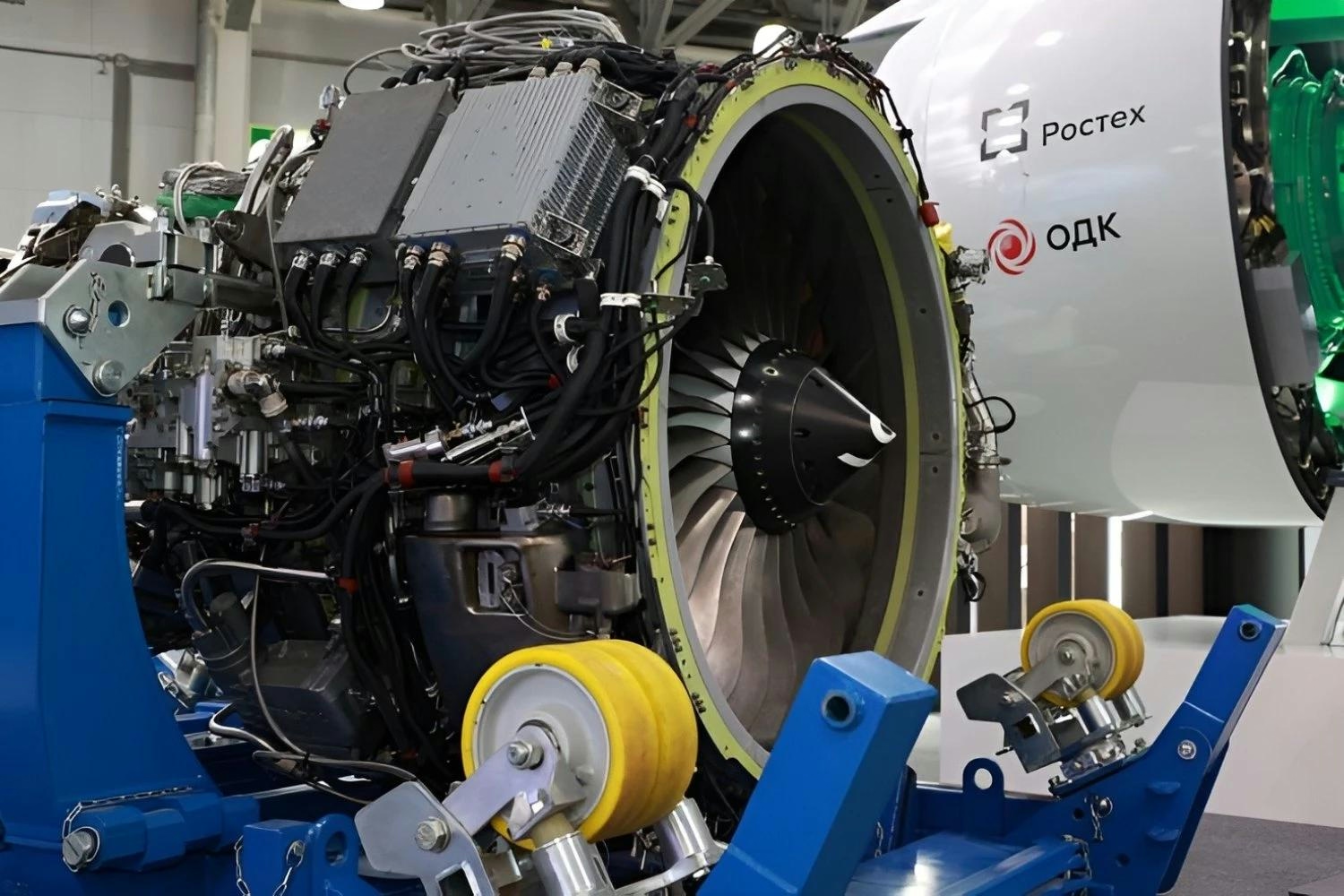
Russia Transports PD-8 Engine to India for International Certification

Kyrgyzstan to Adopt EMPIC GmbH Software for Flight Safety Oversight

Why Hawaiian Airlines Is Waiting Until 2028 To Add A Premium Economy Cabin To Its Airbus A330 Fleet

Engine Fault Causes Royal Navy Helicopter Crash Fatality

Joby Aviation Begins Texas Air Taxi Test Flights Amid Stock Decline

Iberia Receives Full Approval for Airbus A350 Heavy Maintenance

NetJets to Construct Terminal and Hangar at Dallas Love Field

Using AI in Aircraft Purchases

CIAM Unveils RPD-150T Engine to Replace Rotax 150 hp Model
