
将人工智能洞察转化为可执行行动

热门趋势
Categories
Hydrogen Combustion vs. Fuel Cells: Evaluating Options for Aviation
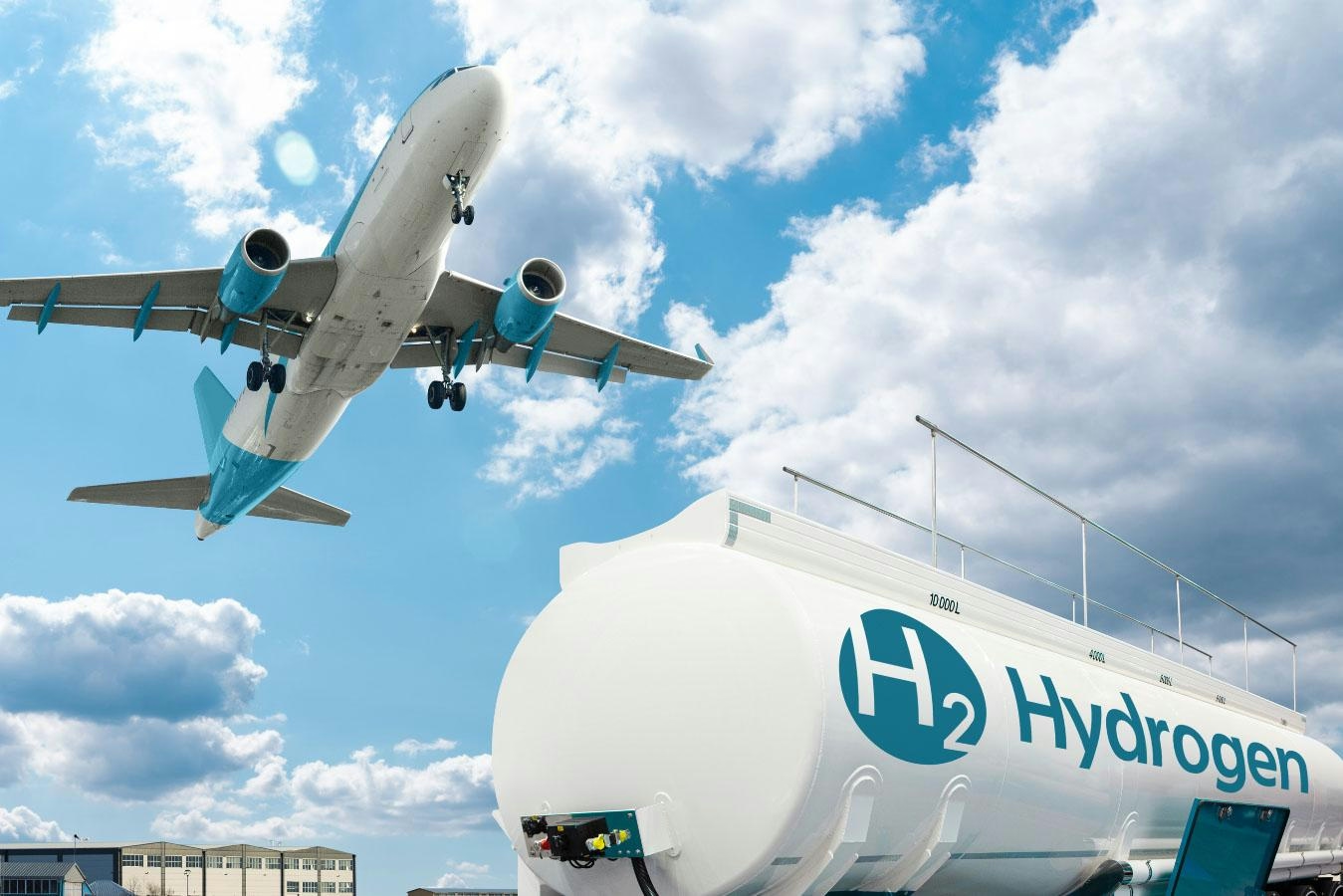
Hydrogen Combustion vs. Fuel Cells: Evaluating Options for Aviation
Hydrogen is increasingly recognized as a pivotal element in the quest to decarbonize aviation, owing to its high specific energy and the absence of direct carbon dioxide emissions. Its established safety record and successful application in space technology have inspired ambitions for hydrogen-powered aircraft to become operational within the next decade. Nonetheless, a critical debate persists regarding which technology—hydrogen combustion engines or hydrogen fuel cells—represents the most viable pathway toward achieving carbon-free flight.
Comparing Hydrogen Combustion and Fuel Cell Technologies
Hydrogen combustion engines function similarly to conventional gasoline engines, utilizing spark ignition to burn hydrogen fuel. This approach benefits from leveraging existing engine design principles but requires sophisticated storage solutions to safely and efficiently carry hydrogen onboard, typically at cryogenic temperatures near -253°C. While hydrogen combustion results in negligible carbon dioxide emissions—primarily limited to those arising from ambient air and lubrication oil—it does produce nitrogen oxides (NOx), necessitating the implementation of exhaust aftertreatment systems to mitigate environmental impact.
In contrast, hydrogen fuel cells generate electricity through an electrochemical reaction between hydrogen and oxygen, powering electric motors with water vapor as the sole emission. This technology eliminates both carbon and NOx emissions, presenting a cleaner alternative to combustion engines. However, fuel cells face significant technical challenges related to thermal management. Unlike gas turbines, which benefit from large volumes of airflow to dissipate excess heat, fuel cells lack such inherent cooling mechanisms and therefore require dedicated systems to manage operational heat effectively.
Michael Sielemann, Aerospace Industry Director at Modelon, highlights this distinction: “If you have a gas turbine, the gas turbine has much air going through it anyway. So if there is excess heat that the engine generates that you’re not converting into thrust, the air takes it away. That’s no issue. But you don’t have this huge airflow going through the fuel cell. So you need to make up your mind on how to handle heat.”
Industry Insights and Practical Considerations
Airbus has been a leader in investigating both hydrogen combustion and fuel cell technologies through its ZEROe initiative, launched in 2020. The company’s research underscores hydrogen’s advantageous energy-to-mass ratio as a critical factor in meeting aviation’s net-zero targets. However, the low ambient density of hydrogen, the necessity for cryogenic storage, and the extensive modifications required in aircraft design pose significant challenges for combustion-based propulsion systems.
Fuel cells are lauded for their efficiency, scalability, and relatively modest impact on airframe redesign. Airbus’s prototype testing has demonstrated that fuel cells offer considerable advantages over combustion engines, prompting the company in 2025 to designate fuel cells as the most promising technology for future hydrogen-powered aircraft.
Despite these technological advancements, the broader adoption of hydrogen in aviation is impeded by regulatory, permitting, and policy uncertainties. The hydrogen mobility sector has encountered difficulties related to operational uptime, fuel costs, and utilization rates, while battery-electric alternatives have progressed in terms of cost-effectiveness, reliability, and infrastructure development. High capital and operating expenses, concerns over lifecycle emissions, and the absence of a dependable hydrogen supply chain have led to the cancellation or scaling back of several projects. Moreover, hydrogen’s low volumetric energy density and the inherent safety risks associated with its storage and handling remain formidable obstacles.
The Road Ahead
Both hydrogen combustion and fuel cell technologies hold significant promise for the decarbonization of aviation, yet their widespread adoption will depend on overcoming a complex array of technical, economic, and regulatory challenges. As innovation continues within the industry, the ultimate choice between these propulsion methods will likely be influenced by progress in hydrogen storage solutions, infrastructure development, policy frameworks, and the evolving competitive landscape of alternative propulsion technologies.

Etihad Airways Suspends Airbus A380 Flights on Key Route

Aditya Birla Group Seeks Approval for Aircraft Leasing in GIFT City

Qatar Airways Highlights Innovation and Connectivity at Arabian Travel Market 2026

Hong Kong's Five-Year Plan Includes Andrew Fan's Aircraft Parts Processing Hub Proposal

ACIA Aero Leasing Delivers ATR72-600 to Air Nostrum

RTX Appoints Jill Albertelli as Head of Pratt & Whitney

TAT Technologies Joins Beyond Aero Hydrogen Aircraft Program

AURAK Study Highlights Barriers to Air Taxi Adoption in Emerging Economies

Xiamen Air Selects Altitude for 787 Maintenance at Heathrow

Etihad and Swissport Extend Global Partnership
