
image

AeroGenie — 您的智能副驾驶。

询问一切。分析一切。立即行动。

热门趋势

Categories

Joby Aviation Completes First Military Aircraft Test Flight with L3Harris
November 13, 2025By ePlane AI
Joby Aviation Completes First Military Aircraft Test Flight with L3Harris
0
0

Joby Aviation Completes First Military Aircraft Test Flight with L3Harris

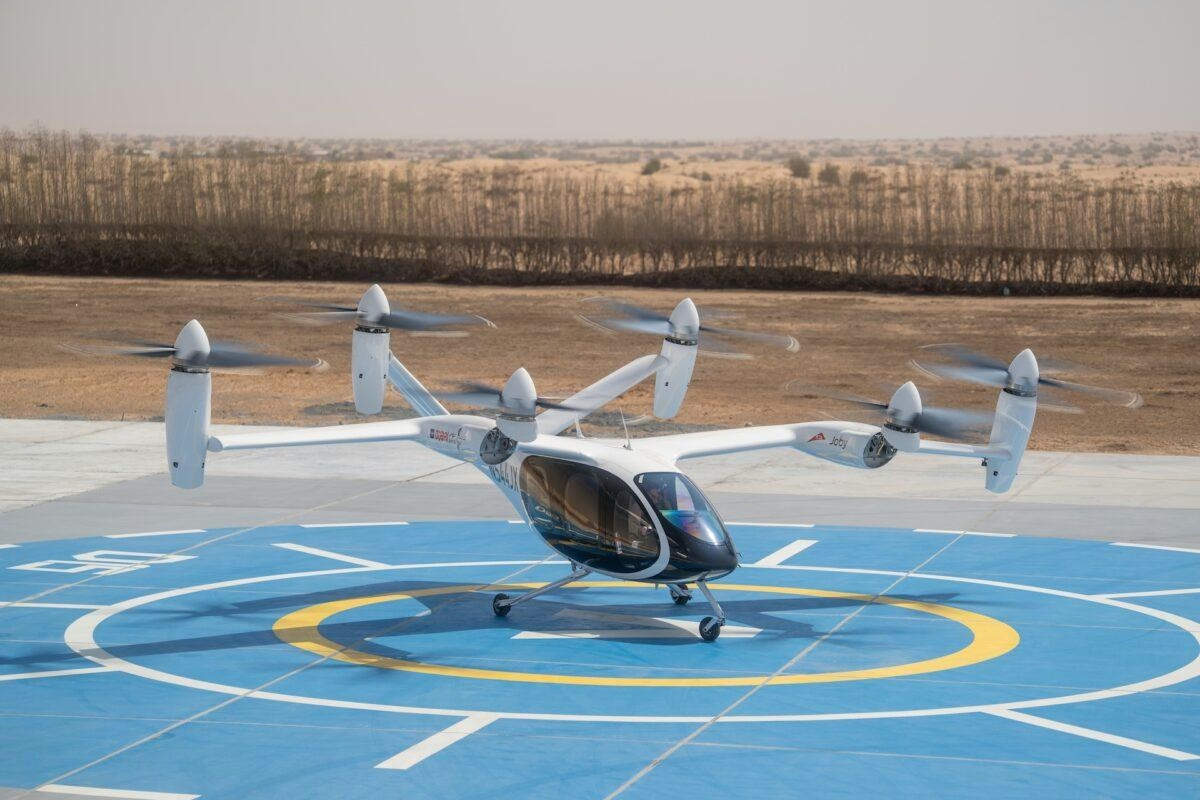
Joby Aviation has successfully completed the inaugural test flight of its hybrid defense aircraft, marking a significant milestone just three months after partnering with government contractor L3Harris. The test flight took place on November 7 at Joby’s facility in Marina, California, the company announced on Thursday. Chairman Paul Sciarra emphasized to CNBC that the flight demonstrates Joby’s capacity to rapidly transition from "concept to demonstration," addressing the evolving demands of military technology.

Collaboration and Strategic Context

The partnership between Joby and L3Harris, announced in August, focuses on developing a military aircraft capable of operating autonomously or with a pilot. This initiative aligns with the U.S. government’s intensified investment in autonomous systems, artificial intelligence, and advanced defense technologies under the Trump administration. These efforts aim to enhance military capabilities amid a shifting defense landscape, exemplified by ongoing conflicts such as the war between Russia and Ukraine, where commercial technologies are increasingly deployed in combat scenarios.

Chairman Sciarra highlighted the changing nature of defense, noting that the rapid integration of commercial innovations is reshaping military operations. The administration’s broader defense strategy includes ambitious projects like the proposed $175 billion "Golden Dome" missile defense system, underscoring the priority placed on technological advancement.

Joby’s Broader Ambitions and Market Position

While Joby is primarily recognized for its electric vertical takeoff and landing (eVTOL) aircraft, the company is concurrently pursuing Federal Aviation Administration certification to commence commercial operations. Its stock price has doubled over the past year, reflecting investor confidence. Joby is also expanding its international footprint, recently signing an agreement to introduce its air taxis in Saudi Arabia, with additional collaborations underway in the United Arab Emirates.

The eVTOL market has gained momentum following a presidential executive order in June establishing a pilot program for such aircraft. Competitors like Archer Aviation, designated as the official air taxi provider for the 2028 Los Angeles Olympics, have seen their stock prices surge, while Amazon-backed Beta Technologies made its debut on the New York Stock Exchange earlier this month.

Future Prospects for Hybrid Aircraft

Sciarra indicated that the hybrid aircraft developed with L3Harris is currently targeted at defense clients, but he envisions potential commercial applications as the technology matures. He suggested that a hybrid version could compete effectively with single-aisle regional transport aircraft, offering new opportunities in the commercial aviation sector. Joby plans to begin government agency testing of these vehicles in the coming year, signaling a continued commitment to advancing both military and civilian aviation technologies.

More news
From Wright Brothers to AI: Aviation’s Tech Evolution for Safer Skies

From Wright Brothers to AI: Aviation’s Tech Evolution for Safer Skies

From Wright Brothers to AI: Aviation’s Tech Evolution for Safer Skies Early Innovations and the Rise of Digital Flight Control In the earliest days of aviation, pioneers like the Wright brothers depended on mechanical ingenuity and pilot skill to keep their fragile aircraft aloft. The 1903 Flyer, constructed from wood and fabric, was controlled through wing warping and a simple elevator mechanism. This rudimentary approach contrasts sharply with today’s highly sophisticated cockpits, which function as digital command centers where computers oversee nearly every phase of flight, from takeoff to landing. This profound transformation has unfolded over more than a century of technological progress. The transition from mechanical controls to digital systems began during World War II with the introduction of analog computers that assisted in bomb aiming and navigation. By the 1950s, devices such as the Bendix Central Air Data Computer employed mechanical components to calculate critical flight parameters like airspeed and altitude. These early systems laid the foundation for the integration of digital technology into flight management, gradually shifting computers from passive calculators to active controllers within the cockpit. A significant breakthrough came in the 1970s with the advent of fly-by-wire technology. This innovation replaced traditional mechanical linkages with electronic signals, allowing pilot commands to be interpreted and executed by onboard computers in real time. Initially implemented in military aircraft such as the F-16 fighter jet, fly-by-wire systems entered commercial aviation with the Airbus A320 in 1988. This advancement not only reduced aircraft weight and improved fuel efficiency but also enhanced safety through envelope protection systems that prevent pilots from executing maneuvers that could jeopardize the aircraft. Navigation, Design, and the AI Revolution Digital technology has also revolutionized navigation. Inertial navigation systems developed in the 1960s evolved into GPS-integrated avionics by the 1990s, enabling precise and reliable positioning without dependence on ground-based aids. These improvements, documented by institutions such as Embry-Riddle Aeronautical University and the Centennial of Flight, have contributed significantly to the safety and efficiency of global air travel. Beyond flight control and navigation, computer-aided design (CAD) software has transformed aircraft development. Engineers can now simulate aerodynamics and test designs virtually before constructing physical prototypes, accelerating innovation cycles, reducing costs, and streamlining manufacturing processes. This trend has been further propelled by manufacturers seeking global flexibility and simplified supply chains to facilitate the rapid adoption of emerging technologies. Autopilot systems have undergone a parallel evolution. From their origins as simple gyroscopic devices in the early 20th century, modern autopilots now incorporate artificial intelligence capable of managing entire flights. Integrated with advanced flight management systems, these AI-driven autopilots reduce pilot workload and enhance safety by handling complex operational tasks with precision. Challenges and the Future of Aviation Technology Despite the remarkable advances, the integration of AI and digital systems into aviation presents significant challenges. Regulatory frameworks continue to evolve, particularly as the industry explores commercial supersonic travel and increasingly autonomous operations. Market responses to the promises of enhanced safety and efficiency are varied, with some competitors investing heavily in AI research and development to maintain technological leadership. However, there is growing caution against a reckless or “YOLO” approach to AI deployment, as unchecked innovation carries risks of unintended consequences or misuse. As aviation advances further into the digital age, the interplay between innovation, safety, and regulation will be critical in shaping the future of flight. This ongoing evolution ensures that the pioneering spirit of the Wright brothers endures, now propelled by the power of artificial intelligence and computational technology.
Archer Aviation Secures Exclusive eVTOL Agreement in California

Archer Aviation Secures Exclusive eVTOL Agreement in California

Archer Aviation Secures Exclusive eVTOL Agreement in California Archer Aviation has made a pivotal advancement in urban air mobility by securing an exclusive agreement to provide electric vertical take-off and landing (eVTOL) air taxi services in Huntington Beach, California. This agreement establishes Archer as the sole provider for the city’s ambitious initiative to integrate air taxis into its transportation network, marking a significant milestone in the adoption of advanced air mobility (AAM) technologies. Expanding Urban Air Mobility Across Key States Archer’s engagement with the U.S. government’s eVTOL Integration Pilot Program (eIPP) extends beyond California, encompassing major states such as Texas, Florida, Georgia, and New York. These regions have demonstrated strong commitments to developing the necessary infrastructure to support eVTOL operations, positioning them as strategic locations for the pilot program. Archer’s approach involves deploying local operational teams, constructing vertiport infrastructure, and collaborating closely with public safety and emergency response agencies to ensure seamless integration. The Huntington Beach partnership is particularly significant, not only underscoring Archer’s leadership in the sector but also serving as a potential model for how eVTOL technology can transform urban transportation. This initiative aligns with the National Advanced Air Mobility Strategy, which outlines 40 recommendations addressing certification, operations, and infrastructure to facilitate the safe integration of eVTOLs into U.S. airspace. The Federal Aviation Administration (FAA) is expected to review initial submissions and begin issuing decisions by mid-2026, bringing commercial eVTOL services closer to operational reality. Challenges and Market Dynamics Despite the promising outlook, Archer faces considerable challenges. Regulatory complexities remain a major hurdle, as evolving federal and local aviation regulations will require careful navigation. Competition within the sector is intensifying, with companies such as Joby Aviation accelerating their development timelines and pursuing new partnerships in response to Archer’s progress. Additionally, the extensive infrastructure demands—including vertiports and charging stations—pose significant logistical and financial challenges for widespread adoption. Market response to Archer’s developments has been largely positive, with growing investor interest reflecting confidence in eVTOL technology’s potential to alleviate urban congestion and provide environmentally sustainable transportation alternatives. The tourism industry, in particular, stands to benefit from eVTOL services, which offer rapid transfers to key attractions, expedited airport connections, and scenic aerial tours. Coastal cities like Huntington Beach are well-positioned to capitalize on these opportunities, enhancing connectivity and expanding tourism offerings. Strategic Initiatives and Future Outlook Archer’s recent strategic initiatives further reinforce its commitment to leading the eVTOL market. The establishment of an aerospace engineering hub in the United Kingdom and the acquisition of control over Hawthorne Airport have strengthened the company’s technological capabilities and operational footprint. These developments, combined with the exclusive agreement in California, position Archer at the forefront of the emerging urban air mobility sector. As the FAA advances toward regulatory decisions and infrastructure development accelerates, Archer Aviation’s progress in California may serve as a blueprint for the future deployment of air taxi services across the United States.
Why Boeing Developed the 747, the First Widebody Airliner

Why Boeing Developed the 747, the First Widebody Airliner

Why Boeing Developed the 747, the First Widebody Airliner In the mid-1960s, the aviation industry stood at a crossroads. While much of the sector was captivated by the promise of supersonic travel, a dedicated team at Boeing pursued a different path—one focused on increasing passenger capacity rather than speed. This strategic decision culminated in the creation of the Boeing 747, the world’s first widebody jetliner, an innovation that would profoundly transform commercial aviation. The Limits of the 707 and the Birth of a New Design To appreciate Boeing’s bold initiative, it is necessary to consider the context of its predecessor, the Boeing 707. The 707 had been instrumental in ushering in the jet age, significantly reducing flight times and making air travel accessible to a growing number of passengers. However, by the mid-1960s, the 707 had reached its operational limits. Passenger demand was increasing at an annual rate of 15 percent, and airlines required larger aircraft to accommodate this growth. The 707’s narrow fuselage, while efficient for early jet travel, could not be expanded without compromising range and performance. Attempts to develop a “Super 707” with extended length proved impractical due to increased weight and drag, which diminished fuel efficiency. Faced with these constraints, Boeing chose to pursue a clean-sheet design. The result was a twin-aisle, widebody aircraft capable of seating up to 366 passengers—nearly twice the capacity of the 707. This innovative design not only met the immediate needs of the market but also laid the foundation for Boeing’s sustained leadership in commercial aviation for decades to come. Pan Am’s Crucial Influence Pan American World Airways played a decisive role in shaping the 747’s development. As Boeing explored new aircraft concepts, Pan Am’s founder, Juan Trippe, anticipated a looming capacity crisis at major international hubs such as New York’s JFK and London Heathrow airports. Trippe urged Boeing to create an aircraft that could efficiently transport larger numbers of passengers and cargo, forging a partnership that would define the jet age. Pan Am’s early commitment provided Boeing with the confidence and financial backing necessary to advance the ambitious project. Transforming Air Travel and the Aviation Industry The introduction of the 747 marked a turning point in commercial aviation. Its unprecedented size and operational efficiency enabled airlines to offer lower fares, thereby making long-haul international travel accessible to a broader segment of the population. Beyond passenger service, the 747 quickly established itself as a dominant force in air cargo, becoming the preferred aircraft for transporting large volumes of goods across continents. The market’s enthusiastic reception of the 747 spurred competitors to innovate. Airbus responded with the development of the A300, the world’s first twin-engine widebody, to compete in this expanding segment. The 747’s impact extended beyond commercial operations, influencing regulatory frameworks and prompting Boeing to seek Federal Aviation Administration emissions waivers to facilitate sales of the 777F freighter. This further solidified Boeing’s role in global cargo transportation. A Legacy That Endures Over more than five decades of production, Boeing manufactured 1,547 units of the 747, each contributing to the democratization of air travel and the globalization of commerce. The widebody concept pioneered by the 747 continues to evolve, inspiring new aircraft such as the Boeing 777-9 and Airbus’s exploration of blended-wing body designs. The 747’s legacy endures not only as the “Queen of the Skies” but also as the aircraft that redefined the possibilities of commercial aviation.
FAA Mandates Software Update for Airbus A350 to Prevent Control Surface Failures

FAA Mandates Software Update for Airbus A350 to Prevent Control Surface Failures

FAA Mandates Software Update for Airbus A350 to Prevent Control Surface Failures The Federal Aviation Administration (FAA) has issued Airworthiness Directive (AD) 2025-25-12, mandating that all operators of Airbus A350 aircraft install updated flight-control software by January 13, 2026. This directive addresses a significant safety concern involving hydraulic fluid contamination in critical electronic modules, which has the potential to cause uncommanded movements of flight control surfaces and, in extreme cases, lead to loss of aircraft control. Background and Safety Concerns The directive follows an incident earlier in 2025 when an Airbus A350 experienced a loss of control over an outboard aileron. Investigations determined that hydraulic fluid leaks had contaminated electronic cards within the Flight Control Remote Modules (FCRMs), which are responsible for managing the aircraft’s ailerons, elevators, and rudders. Due to design similarities across these modules, contamination could trigger a “runaway” scenario affecting multiple control surfaces simultaneously, posing a risk of catastrophic failure. The root cause was traced to servocontrols exposed to contamination during manufacturing or prior to delivery, revealing vulnerabilities in the hydraulic system’s integrity. This new directive supersedes the interim AD 2025-13-12, issued in July 2025, which required inspections and hardware replacements of affected FCRMs. While the earlier directive focused on hardware interventions—such as replacing contaminated elevator FCRMs and prohibiting module swaps between control surfaces—the latest update introduces a software-based solution as a permanent fix. Operators are now required to install the Flight Control and Guidance System (FCGS) software standards PRIM P14.1.3 and SEC S14.1.2. These updates enhance system resilience against contamination-induced malfunctions and eliminate the need for ongoing hardware replacements. Scope and Industry Response The directive applies to all Airbus SAS Model A350-941 and A350-1041 aircraft, encompassing the entire A350-900 and A350-1000 fleets. In the United States, approximately 39 aircraft are affected, with the FAA estimating compliance costs at $2,234 per airplane for the software installation. Additional expenses related to addressing hydraulic leaks or further hardware replacements could reach up to $27,819 per affected unit. Globally, the A350 fleet exceeds 600 aircraft, operated by major carriers including Delta Air Lines, Qatar Airways, and Singapore Airlines. The FAA’s mandate has prompted a rapid operational response from airlines worldwide, particularly as the directive coincides with a busy holiday travel season. United Airlines reported that six of its A350 aircraft are affected, anticipating only minor disruptions to a few flights. American Airlines has already completed updates on approximately 60 of its 209 affected jets and expects to finish the remainder imminently. Airlines have worked diligently to install the software update to avoid grounding their fleets, with minimal flight delays or cancellations reported, thereby ensuring compliance while maintaining flight schedules. Regulatory Coordination and Implementation Compliance timelines align with the European Union Aviation Safety Agency (EASA) AD 2025-0197R1, with the FAA incorporating its provisions by reference, subject to minor exceptions. U.S. operators must utilize FAA-approved methods for software modifications and are exempt from certain reporting requirements to Airbus. The urgency of the issue prompted immediate adoption of the directive, although public comments will be accepted until February 12, 2026. Airbus has collaborated closely with regulators, issuing service bulletins and operator alerts to facilitate smooth implementation of the software update. As global air travel demand rebounds following the pandemic, these measures are critical to maintaining the A350’s strong safety record. To date, no accidents have resulted from the contamination issue, but the directive aims to ensure the continued safe operation of one of the world’s most advanced long-haul aircraft.
A Year of Innovation and Airline Partnerships

A Year of Innovation and Airline Partnerships

A Year of Innovation and Airline Partnerships at Pittsburgh International Airport The year 2025 proved to be a pivotal period for Pittsburgh International Airport (PIT), marked by the inauguration of its new terminal in November and a series of significant milestones that underscored the airport’s dedication to innovation, global connectivity, and enhancing the passenger experience. Amid an aviation industry grappling with intense competition among major carriers, regulatory challenges, and an increasing emphasis on sustainability, PIT’s progress reflects both regional advancement and broader trends shaping the sector. Leadership Driving Growth and Innovation Under the stewardship of Christina Cassotis, who was honored as Pittsburgher of the Year by *Pittsburgh Magazine*, PIT has undergone a remarkable transformation. Over her decade-long tenure as CEO, Cassotis has overseen the expansion of nonstop destinations from 36 to 63, with passenger traffic nearing 10 million in 2024. Her leadership has been instrumental in pioneering groundbreaking initiatives, including the establishment of the world’s first airport microgrid and the construction of a new landside terminal completed without reliance on taxpayer funding. Cassotis envisions the airport as a revitalized “front door” for Pittsburgh, aiming to redefine the city’s identity and its role within the global travel network. Evolving Airline Partnerships and Market Dynamics The competitive environment among airlines remains fierce, with carriers such as American Airlines striving to maintain market share leadership amid challenges from United Airlines and shifting industry dynamics. In this context, strategic partnerships have become increasingly crucial. The alliance between American Airlines and Japan Airlines exemplifies efforts to sustain competitive advantage through collaboration. At PIT, Allegiant Airlines marked a decade of service, expanding to 14 nonstop destinations and ranking second only to one other carrier at the airport. Since its market entry in 2015 as PIT’s first ultra-low-cost carrier, Allegiant has broadened its reach into leisure and underserved routes, thereby supporting local aviation employment and stimulating regional tourism. Enhancing Passenger Experience Through Innovation Responding to evolving traveler expectations and industry pressures, PIT introduced the “We Got You” initiative in 2025. This passenger-centric program equips Information Desk personnel and volunteer Ambassadors with handheld devices powered by AI-driven chatbots, real-time flight and transportation data, language translation capabilities, and internal communication tools. Developed through comprehensive passenger research, the initiative aims to deliver compassionate, real-time assistance, helping travelers manage common challenges such as lost belongings, missed connections, and sudden gate changes. Commitment to Operational Excellence and Sustainability PIT’s dedication to operational excellence was recognized at the International Aviation Snow Symposium in Buffalo, where both Pittsburgh International and Allegheny County airports received top honors in their respective categories of the Balchen/Post Awards. These accolades reflect decades of investment in advanced snow-fighting equipment and a steadfast commitment to maintaining runway safety during severe winter conditions—an essential factor for both commercial and medical flights. Looking ahead, the aviation industry faces potential volatility influenced by internal divisions within the Federal Reserve and other economic factors anticipated in 2026. The ongoing drive toward sustainable aviation fuels and innovative technologies presents both challenges and opportunities for carriers such as American Airlines and their partners. Through its focus on innovation, strategic partnerships, and passenger service, Pittsburgh International Airport is well-positioned to remain at the forefront of these evolving industry dynamics.
This Airline Operated The Rarest Boeing 767s In The World

This Airline Operated The Rarest Boeing 767s In The World

This Airline Operated the Rarest Boeing 767s in the World A mere 2.3% of all Boeing 767s ever produced were equipped with Rolls-Royce RB211 engines, marking one of the rarest configurations in commercial aviation history. The majority of these aircraft were delivered to British Airways, with a small number assigned to China Eastern Yunnan Airlines. Presently, none of these RB211-powered 767s remain in active service, highlighting the operational difficulties associated with maintaining such an uncommon variant. The RB211-Powered Boeing 767: A Unique Chapter The integration of the Rolls-Royce RB211 engine into the Boeing 767 program represents an intriguing episode in the aircraft’s development. Although the RB211 would later become one of the most successful widebody engines globally, its application on the 767 was met with limited enthusiasm. The dominant presence of the General Electric CF6 engine, which had already established a reputation for reliability and efficiency within the 767 family, posed a significant barrier. The RB211 struggled to compete against the CF6’s proven performance and extensive support network, limiting its appeal to airlines. During the early years of commercial aviation, offering multiple engine options was a common practice. The first-generation 767-200 was available with Pratt & Whitney JT9D, Pratt & Whitney PW4000, and General Electric CF6 engines. Subsequent variants, including the 767-200ER and 767-300, introduced the Rolls-Royce RB211 as an additional choice. However, the availability of an engine option did not guarantee widespread adoption. For example, the final 767-400ER was exclusively delivered with the CF6 engine. Over time, the GE CF6 emerged as the dominant powerplant, earning its place as one of the most successful widebody engines in history. It continues to be produced today, powering Boeing 767-300F freighters and the military KC-46A Pegasus, which utilizes the PW4000. Operational Challenges and Market Implications Boeing records indicate that only 31 767s were ever fitted with RB211 engines, with British Airways receiving 28 of these rare 767-300ERs and China Eastern Yunnan Airlines taking the remaining three. Operating such a limited and specialized fleet introduced significant challenges, particularly as the aircraft aged. Maintenance, repair, and overhaul (MRO) providers faced increasing difficulties in sourcing parts and expertise for the RB211-powered 767s, driving up operational costs and complicating regulatory compliance. In an industry where reliability and cost efficiency are critical, these factors contributed to the gradual phase-out of this variant. The scarcity of RB211-powered 767s also had broader repercussions within the aviation market. Airlines and investors, wary of potential maintenance and quality concerns—especially amid recent scrutiny of competitors such as Airbus—adopted more conservative fleet strategies. Meanwhile, Airbus capitalized on this environment, with its A320 family recently surpassing the Boeing 737 as the world’s most popular commercial airliner. For British Airways and other operators, sustaining the viability of such a unique fleet became increasingly impractical. Today, the RB211-powered Boeing 767 remains a rare and notable footnote in aviation history, reflecting the complexities and evolution of engine selection in commercial aircraft.
Q&A: Why Travel Needs a New Platform Built for an Open Ecosystem

Q&A: Why Travel Needs a New Platform Built for an Open Ecosystem

Q&A: Why Travel Needs a New Platform Built for an Open Ecosystem The travel industry stands at a pivotal moment, confronted with increasing pressure to modernize its foundational technology. Despite growing digital adoption, many travel systems continue to rely on outdated processes that impede innovation and slow progress across the sector. For instance, the adoption of New Distribution Capability (NDC) in the United States remains at a mere 20%, highlighting the sluggish transition of airlines and sellers toward contemporary standards. Meanwhile, Global Distribution Systems (GDS) still dominate inventory access and pricing. Entrenched practices, such as strict look-to-book ratios that limit the number of searches relative to bookings, further restrict experimentation and the emergence of new ideas. In contrast to travel, other industries like financial technology have embraced modular, cloud-based platforms designed for scalability and openness. Travel, however, remains constrained by legacy frameworks that hinder new entrants from gaining traction. The sector’s resistance to change, the complexity of integrating new technologies, and the necessity for extensive data standardization present significant obstacles to adopting an open platform. Established players, who benefit from the current systems, often respond with skepticism and may seek to maintain their competitive advantage by enhancing proprietary platforms or developing closed solutions. Addressing Barriers with a Platform-First Approach OnArrival, a company founded with a platform-first philosophy, seeks to overcome these barriers by creating an infrastructure layer that the travel industry has long lacked. Its mission is to open the travel ecosystem, enable innovative use cases, and accelerate the transition away from legacy systems. In a conversation with SkiftX, Ankit Sawant, co-founder and CEO of OnArrival, elaborated on how the company is helping businesses access a unified, modern technology stack that reduces traditional barriers to entry. When asked about the biggest technology challenges facing the travel industry today, Sawant identified the lack of accessible infrastructure for new entrants as paramount. Unlike sectors such as AI, fintech, and logistics—which provide open access to core systems through standardized APIs and developer-friendly platforms—travel remains fragmented and difficult to build upon. Legacy GDSs were originally designed for travel agents, leaving new companies without the necessary scaffolding to launch quickly or innovate. Although the underlying supply is largely consistent across the industry, integrating that supply is highly complex, making it difficult for newcomers to offer the breadth of products available through established online travel agencies. Sawant pointed to other industries that have addressed similar challenges by building shared infrastructure: Shopify for e-commerce, Stripe for payments, Plaid for bank account access, and AWS for cloud computing. Travel, he noted, has yet to experience such a platform shift, which has reinforced an oligopoly sustained more by technical barriers than by genuine technological leadership. The Impact of Legacy Systems on Competition and Innovation Legacy systems significantly affect how travel businesses operate and compete. Sawant explained that these systems make it exceedingly difficult for new travel companies to enter the market. Prospective entrants must identify the right contacts, negotiate terms, complete extensive paperwork, and endure integration processes that often take months—despite the fact that such procedures should require less than a month. This dynamic protects incumbents from competition, as opening their systems would expose them to margin pressures and compel them to function more like low-margin infrastructure providers rather than high-margin consumer brands. Consequently, many established players maintain closed technology environments, which further hampers innovation across the industry. As the travel sector contemplates a shift toward open platforms, it faces not only technical and cultural resistance but also the challenge of standardizing data and integrating new technologies. Market responses are expected to be mixed: some competitors may adopt open ecosystem strategies, while others may reinforce proprietary solutions to safeguard their market positions. Moving forward will demand collaboration, openness, and a willingness to reconsider long-standing industry practices.
Two Chinese Airlines Announce Plans to Order Airbus A320neos

Two Chinese Airlines Announce Plans to Order Airbus A320neos

Two Chinese Airlines Announce Plans to Order Airbus A320neos Major Fleet Expansion for Spring Airlines and Juneyao Airlines China’s Spring Airlines and Juneyao Airlines have revealed ambitious plans to expand their fleets through significant orders of Airbus A320-family aircraft, with the combined list-price value of these deals reaching up to $8.2 billion. Spring Airlines intends to acquire 30 Airbus A320neo jets, valued at a maximum list price of $4.13 billion, with deliveries scheduled between 2028 and 2032. Meanwhile, Juneyao Airlines plans to purchase 25 A320-family aircraft, estimated at approximately $4.1 billion at list prices, over the same timeframe. Both transactions remain subject to government approval. Context of Airbus’s Position in the Chinese Market These announcements come as Airbus seeks to secure additional large-scale orders from China, a key market for the European manufacturer. Earlier this month, Airbus received confirmation that deliveries of 120 previously ordered aircraft to Chinese carriers can proceed, while negotiations for further orders continue. This ongoing engagement underscores Airbus’s strategic focus on maintaining and expanding its presence in the rapidly growing Chinese aviation sector. Challenges Amid Quality Concerns The planned purchases coincide with recent quality issues affecting Airbus’s A320 fleet. The company has been addressing a software recall and a quality problem involving metal panels on the aircraft, raising concerns about potential impacts on future deliveries. These challenges have contributed to a notable decline in Airbus’s share price, reflecting mixed market sentiment regarding the manufacturer’s current difficulties. Implications for the Chinese Aviation Market Despite these headwinds, the decisions by Spring Airlines and Juneyao Airlines demonstrate sustained demand for modern, fuel-efficient aircraft within China’s aviation industry. While competitor responses remain uncertain, these deals highlight the strategic importance of fleet renewal for Chinese carriers as they position themselves for future growth and increased market competitiveness.
Russia and China Seek Cooperation in AI and Aviation Electronics

Russia and China Seek Cooperation in AI and Aviation Electronics

Russia and China Seek Cooperation in AI and Aviation Electronics Expanding High-Tech Collaboration A senior Chinese diplomat recently underscored the expanding opportunities for cooperation between China and Russia in several advanced technology sectors, including information technology, artificial intelligence (AI), microelectronics, semiconductors, and civil aircraft manufacturing. Speaking to Izvestia newspaper, the diplomat expressed a strong interest in deepening bilateral engagement, particularly through a Chinese initiative aimed at establishing a global cooperation organization focused on AI. The ambassador highlighted intentions to collaborate on AI development, industrial innovation, workforce training, and management, while also signaling readiness to partner on semiconductor materials, specialized microchip design, advanced manufacturing processes, and equipment development to enhance supply chain stability and security. Strategic Context and Challenges This renewed push for technological partnership emerges amid significant challenges for Russia in its quest for AI leadership. The ongoing conflict in Ukraine and the resulting Western sanctions have severely limited Russia’s access to cutting-edge technologies, increasing its dependence on Chinese expertise and resources. This growing reliance raises questions about Russia’s future market position and strategic autonomy within the global technology landscape. Meanwhile, China continues to advance its AI capabilities, driven by strategic priorities despite official calls for restraint in the military application of AI. Analysts caution, however, that China’s centralized military culture may slow the integration of AI technologies within its defense sector. The evolving partnership between Moscow and Beijing takes place against a backdrop of intensifying global competition, particularly between the United States and China, both of which are heavily investing in AI research and development. Implications for Global Technology and Supply Chains Observers are closely monitoring how this collaboration might influence global supply chains, technological standards, and competitive dynamics among leading players in the sector. While official statements from both countries emphasize mutual benefit and shared progress, significant practical challenges remain. Aligning strategic interests and overcoming structural differences will be critical to the success of this partnership as it seeks to reshape the balance of power and innovation in AI and aviation electronics.
Toyota-Backed VTOL Company Plans 25 Vertiports Across the U.S.

Toyota-Backed VTOL Company Plans 25 Vertiports Across the U.S.

Toyota-Backed VTOL Company Plans 25 Vertiports Across the U.S. Joby Aviation’s Expansion into Urban Air Mobility Infrastructure California-based Joby Aviation, a prominent figure in the emerging electric air taxi industry, has unveiled plans to develop 25 vertiports across the United States. This ambitious initiative, announced shortly before Christmas, is supported by Metropolis Technologies, North America’s largest parking network operator. Metropolis manages over 4,200 parking locations and provides aviation services at more than 350 sites, positioning it as a strategic partner in Joby’s infrastructure rollout. The initial vertiports will be established at existing Metropolis locations, beginning in the New York City metropolitan area. These sites will integrate Metropolis’ Bags VIP services, enhancing convenience for travelers by streamlining passenger experience. The vertiports are strategically located in areas where Metropolis already facilitates early electric air taxi operations, enabling Joby to leverage the company’s AI-driven operational technology to optimize service efficiency. Aircraft Fleet and Technological Development While Joby has not explicitly identified the aircraft models to be deployed for its air taxi services, it is expected to utilize the fleet acquired through its recent acquisition of Blade Air Mobility. This fleet includes helicopters and amphibious aircraft currently operating rapid shuttle services between Manhattan and major airports such as JFK and Newark, reducing travel times to as little as five minutes—a substantial improvement over conventional ground transportation. However, Joby’s own vertical takeoff and landing (VTOL) aircraft, under development since 2009, has yet to enter commercial service. The design and capabilities of Joby’s VTOL have attracted considerable attention and investment. Japanese automaker Toyota has invested nearly $1 billion in Joby over the past seven years, providing engineering expertise and support in powertrain and actuation systems. Additionally, the U.S. Air Force has demonstrated interest by evaluating a Joby VTOL at Edwards Air Force Base in California in late 2023, with NASA’s Armstrong Flight Research Center participating in the trials. Although the results of these evaluations have not been disclosed, the collaboration highlights the growing interest in VTOL technology from both commercial and military sectors. The U.S. Army’s exploration of short/vertical takeoff and landing (S/VTOL) aircraft as potential replacements for the Gray Eagle unmanned system further underscores the expanding market for advanced air mobility solutions. Strategic Partnerships and Market Outlook Joby’s VTOL aircraft is designed to carry four passengers and a pilot up to 100 miles (161 kilometers) on a single battery charge, targeting short-distance urban and regional travel. The partnership with Metropolis aims to reduce infrastructure costs by utilizing existing parking facilities, a strategic approach as Joby navigates regulatory challenges, substantial infrastructure investments, and intensifying competition from other advanced air mobility companies. Market responses to Joby’s announcement have focused on the company’s capacity to scale its vertiport network and meet production targets. In response, Joby plans to double its U.S. manufacturing capacity, signaling confidence in its growth prospects. Meanwhile, competitors are expected to pursue strategic alliances and increase manufacturing investments to remain competitive in the rapidly evolving air mobility sector. As Joby Aviation advances its vertiport development, the company positions itself at the forefront of a transportation transformation that could significantly alter urban and regional mobility across the United States in the coming years.
Ask AeroGenie









