
将人工智能洞察转化为可执行行动

热门趋势
Categories
Joby Receives First CAE Flight Simulator to Enhance Air Taxi Pilot Training in Marina
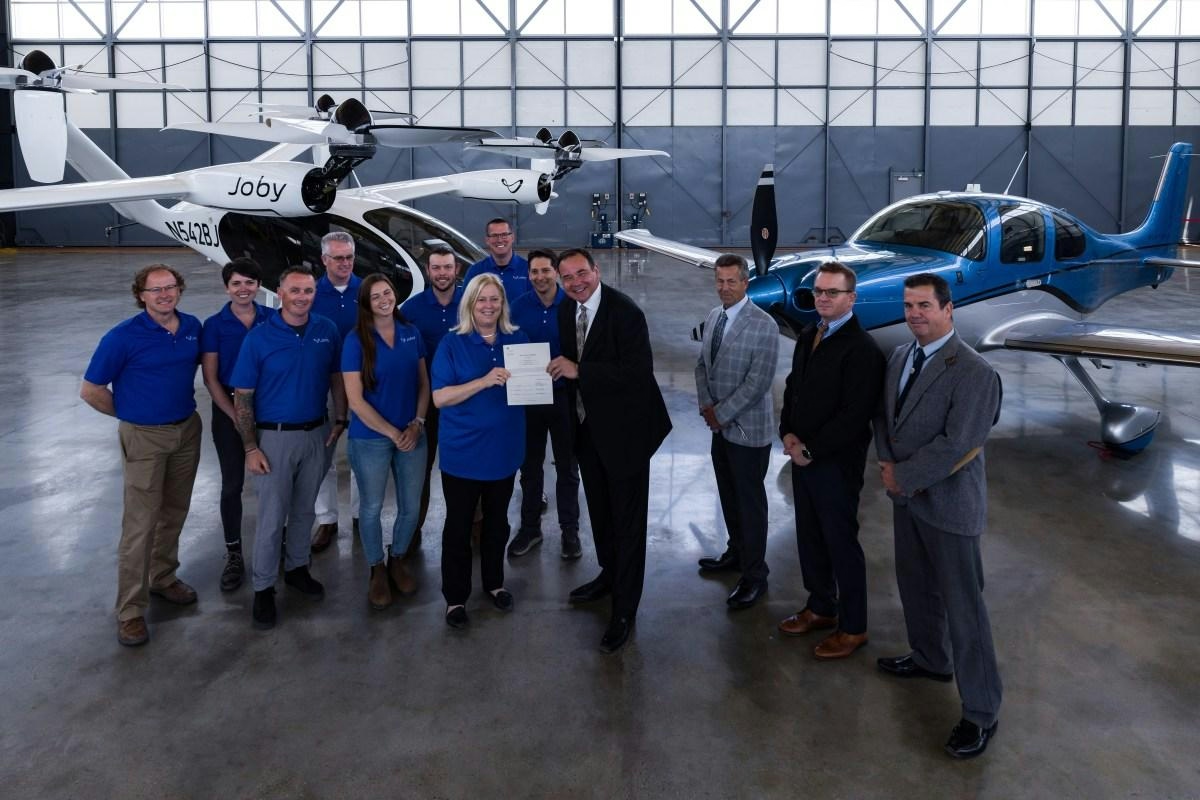
Joby Receives First CAE Flight Simulator to Enhance Air Taxi Pilot Training in Marina
Santa Cruz-based Joby Aviation has marked a pivotal advancement in its electric air taxi program with the delivery of its first CAE flight simulator at Marina Municipal Airport. This state-of-the-art simulator is intended to expedite pilot training as the company prepares to launch commercial operations both domestically and internationally.
Advancing Pilot Training and Aircraft Development
Joby’s electric aircraft, capable of carrying up to four passengers alongside a pilot and luggage, are powered by six electric motors and feature vertical take-off and landing (VTOL) capabilities. The company emphasizes that its aircraft operate at noise levels 100 times quieter than conventional helicopters, aiming to provide a more comfortable and less intrusive urban air mobility experience for passengers and surrounding communities.
During recent test flights at Marina, Joby engineers gathered essential performance data, closely monitoring the behavior of motors, propellers, and batteries across various speeds. According to a Joby engineer, the company develops computer models to predict aircraft performance under different configurations. By comparing these models with real-world data, Joby refines its simulations to enhance future aircraft performance.
The newly installed CAE simulator replicates the physical cockpit of Joby’s air taxi and runs the same software as the actual aircraft, offering pilots an immersive and realistic training environment. This setup enables pilots to rehearse a wide range of scenarios, including system failures, within a safe and controlled setting. The engineer highlighted the aircraft’s robust safety design, noting that if a primary system fails, secondary and even tertiary backup systems are in place to ensure continued operation.
Regulatory Challenges and Market Outlook
Joby anticipates commencing passenger flights in Dubai as early as next year. However, commercial operations in the United States remain contingent upon securing Federal Aviation Administration (FAA) certification, a process that presents significant regulatory challenges. The broader electric vertical take-off and landing (eVTOL) industry continues to grapple with stringent safety standards and cost-related hurdles.
Despite these obstacles, market analysts maintain a positive outlook on the sector’s growth potential. Joby’s recent initiatives, including plans to double manufacturing capacity and a strategic partnership with Toyota, have solidified its position as a leader in the emerging eVTOL market. Competitors are responding with increased investments and new alliances, intensifying the race to commercialize air taxi services.
As Joby advances its technology and expands pilot training capabilities, the company remains at the forefront of an industry poised to transform urban transportation. The realization of widespread air taxi adoption will depend on overcoming regulatory barriers and ensuring that these services are both accessible and affordable to the public.

Etihad Airways Suspends Airbus A380 Flights on Key Route

Aditya Birla Group Seeks Approval for Aircraft Leasing in GIFT City

Qatar Airways Highlights Innovation and Connectivity at Arabian Travel Market 2026

Hong Kong's Five-Year Plan Includes Andrew Fan's Aircraft Parts Processing Hub Proposal

ACIA Aero Leasing Delivers ATR72-600 to Air Nostrum

RTX Appoints Jill Albertelli as Head of Pratt & Whitney

TAT Technologies Joins Beyond Aero Hydrogen Aircraft Program

AURAK Study Highlights Barriers to Air Taxi Adoption in Emerging Economies

Xiamen Air Selects Altitude for 787 Maintenance at Heathrow

Etihad and Swissport Extend Global Partnership
