
图像

将人工智能洞察转化为可执行行动

立即加入 AeroGenie 候补名单!

热门趋势

Categories

Koury Aviation Retires Its Last Bombardier Aircraft
June 11, 2025By ePlane AI
Koury Aviation Retires Its Last Bombardier Aircraft
0
0
Koury Aviation
Bombardier Challenger 300
Fleet Retirement

Koury Aviation Retires Its Last Bombardier Aircraft

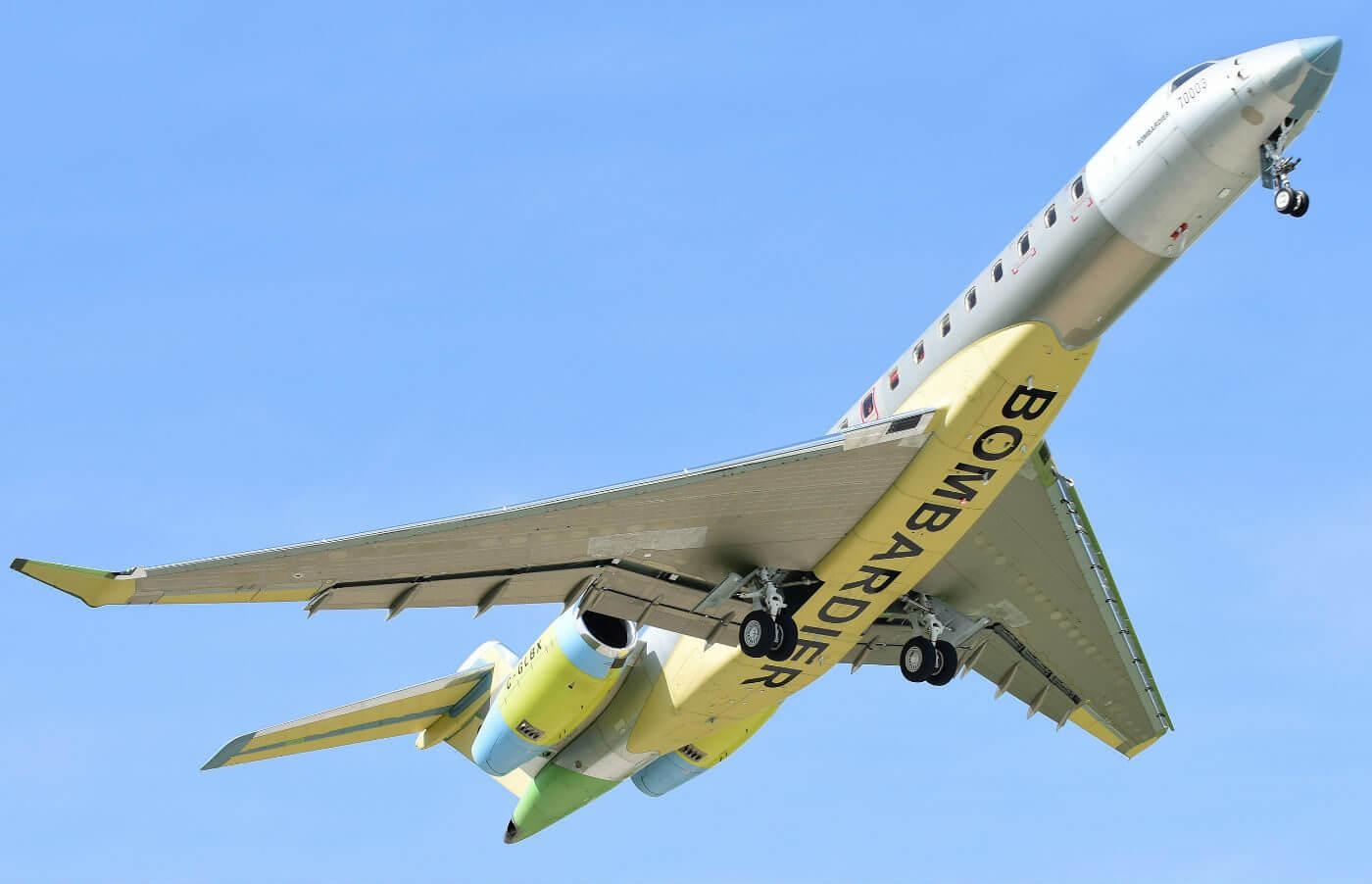
Koury Aviation has officially retired its sole Bombardier aircraft, a Challenger 300, marking the conclusion of Bombardier operations within the Greensboro-based company’s fleet. The 14.6-year-old jet, registered as N606RP (msn 20309) and configured to accommodate up to nine passengers, remained in active service until April 11, according to ch-aviation research.

Fleet Transition and Operational Impact

With the departure of the Challenger 300, Koury Aviation’s Part 135 certificate now encompasses a Citation Jet 1, a Citation Encore+, two Citation XLS models, a BAe-125-1000B, and a Hawker 800XPi. The company continues to offer private jet charter services, aircraft management, maintenance, and fixed-base operations (FBO) at Greensboro Piedmont Triad International Airport.

The retirement of the Bombardier Challenger 300 may pose challenges for Koury Aviation, potentially affecting revenue streams derived from the business aviation sector. Industry analysts suggest that such a move could introduce uncertainty within the market, especially if other operators follow a similar path. This trend may influence Bombardier’s sales and market share, while competitors could seize the opportunity to attract clients by promoting alternative aircraft and services. The development also raises questions regarding the future strategic direction of Bombardier’s business aviation product line.

The Challenger 300’s New Role with Leviate Jet Management

The retired Challenger 300 is slated to join Leviate Jet Management’s Part 135 fleet at Dallas Love Field, becoming the company’s third Challenger 300. Rob Rosenberg, managing partner at Leviate, confirmed to ch-aviation that the aircraft will be available for charter within the next two weeks, based at Wilmington International Airport. Leviate’s current charter fleet includes a Citation XLS, a Citation XLS+, a HondaJet, two HondaJet (APMG) models, a HondaJet Elite, two HondaJet Elite S variants, and a Phenom 300. Rosenberg also noted that Leviate is actively working to add a fourth Challenger 300 to its management portfolio.

Earlier this year, Leviate executives announced plans to expand their fleet further in 2025, targeting the acquisition of four to five additional aircraft, including a Global 5000. As the business aviation landscape continues to evolve, the retirement of Bombardier aircraft by operators such as Koury Aviation may stimulate broader industry discussions concerning fleet composition and the competitive positioning of leading manufacturers.

More news
Demand for Widebody Aircraft Increases

Demand for Widebody Aircraft Increases

Demand for Widebody Aircraft Surges in China Airbus projects a sustained increase in China’s demand for widebody aircraft over the next five years, driven by growth in international passenger travel and expanding air freight requirements. This trend is underscored by recent significant orders from major Chinese carriers as airlines modernize their fleets and extend long-haul networks. In June, China Eastern Airlines committed to purchasing 25 A330neo passenger jets, followed by Air China’s July order for 15 A350-900s. Additionally, Air China Cargo expanded its order for the yet-to-be-delivered A350F freighter to 10 aircraft in May. Troy Wang, Airbus senior vice-president and head of commercial at Airbus China, emphasized the country’s strategic importance during a recent press conference in Beijing. He highlighted a shift in fleet planning strategies, noting that Chinese airlines are moving away from reliance on a single flagship aircraft and instead tailoring specific models to distinct market segments. “China is not only Airbus’ largest single-country market, but it also has enormous development potential,” Wang stated. Alignment with China’s Aviation Development Goals This optimistic outlook aligns closely with China’s civil aviation development plan for 2026-2030, which prioritizes enhanced international connectivity, the establishment of a world-class aviation hub network, and the expansion of international air cargo routes. According to the Civil Aviation Administration of China, international passenger traffic surpassed 40 million in the first half of 2026, marking a 5.7 percent year-on-year increase. Meanwhile, international cargo and mail volumes rose by 13.9 percent to 2.32 million metric tons, reflecting robust growth in air freight. The resurgence of international routes coincides with a new cycle of widebody aircraft replacement. Li Min, senior marketing director at Airbus China, noted that China’s current A330ceo fleet numbers nearly 200 aircraft, with more than half aged between 11 and 20 years. Many airlines are planning to upgrade to newer, more fuel-efficient models, with Airbus estimating that approximately 170 widebody aircraft in China will require replacement between 2030 and 2035. China Eastern’s order for 25 A330neo aircraft, scheduled for delivery between 2029 and 2033, aims to support new intercontinental routes and increase flight frequencies from Shanghai Pudong International Airport. The airline plans to retire at least 10 of its existing A330ceos during this period. Similarly, Air China’s order for 15 A350-900s, expected to be delivered between 2030 and 2032 pending shareholder and regulatory approval, will partially replace older jets. Growing Importance of Air Cargo Air cargo demand is a significant factor driving widebody aircraft orders, fueled by the global expansion of Chinese manufacturers, cross-border e-commerce, and high-tech exports. Zhang Hanguang, marketing director at Airbus China, observed a fundamental shift in the air cargo market, with passenger and cargo development now progressing in parallel rather than cargo being secondary. Dedicated freighters have become essential to maintaining the stability of international supply chains. Although air freight accounts for less than 1 percent of global trade by weight, it represents nearly one-third of trade value, underscoring its critical role in transporting high-value, time-sensitive goods. Global Context and Industry Challenges The surge in widebody demand is not confined to China. Globally, airlines such as Israir have obtained regulatory approval to operate widebody services, signaling broader expansion in operational capabilities. Boeing anticipates that completing certifications for its 737 Max variants and the 777-9 will accelerate the development of future aircraft models. Airbus also sees potential for additional A400M tactical transport orders through NATO’s pooled procurement initiatives. However, the industry faces challenges in delivering new premium cabin offerings. Lengthy approval processes for bespoke cabin designs have caused delays in premium seat deliveries, complicating efforts by airlines to enhance passenger experience amid rising demand.
The Dawn of Aviation Over Madras

The Dawn of Aviation Over Madras

The Dawn of Aviation Over Madras The history of aviation in Madras is marked by pioneering achievements and a spirit of innovation that laid the foundation for the city’s enduring connection to the skies. The city’s initial encounter with air travel dates back to 1910, when D’Angelis conducted flights from his hangar in Pallavaram. This milestone was immortalized by the poet Subramania Bharathi, who highlighted that the aircraft’s engine was assembled by Tamil workers at the Simpsons factory, underscoring the local contribution to this early feat. The following year, Jules Tyck captivated Madras residents with demonstration flights over Island Grounds, offering them their first aerial views of George Town and Mount Road. By 1914, J.W. Madeley was utilizing aviation for practical purposes, flying over the Red Hills reservoir to survey public works—a notable accomplishment for a figure better remembered for his involvement in the city’s subway system than for his aerial exploits. Early Aviation Enthusiasm and the Madras Flying Club While military and commercial aviation would later dominate the city’s airspace, private initiative played a crucial role in Madras’s early aviation history. The Madras Flying Club (MFC), established in 1930 under the leadership of William Maurice Browning of Burmah Shell, quickly became a focal point for aviation enthusiasts. The club’s activities were elevated by figures such as Sir Gerald Hodgson of Parry’s, who famously undertook an unannounced flight from Madras to Cuddalore, surprising the local population. His adventures, including a memorable incident involving a goat that repeatedly charged his landing aircraft, became part of local lore. The MFC also served as a nurturing ground for Indian aviators. Notable members included Rm. Avudaiyappa Chettiar, S.A.A. Annamalai Chettiar, and Solaiyappa Chettiar. Among them, Capt. V. Sundaram distinguished himself as the first Indian to earn a pilot’s license, while his wife, Usha Sundaram, became India’s first woman pilot. Together, they set a remarkable record with a 27-hour flight from London to Madras in a de Havilland Dove, symbolizing the couple’s pioneering spirit and the club’s role in advancing Indian aviation. Personal narratives from this era further illustrate the daring nature of early aviators. In the 1930s, Steve Maritz and M.J. Edwards of Parry’s undertook a challenging round-trip flight to Cuddalore. Their return journey, conducted late at night, required navigation by the lights of the Perambur Railway Workshop and Mount Road, culminating in a tense but successful landing at Meenambakkam. Commercial Ventures and Contemporary Challenges Madras’s aviation ambitions extended beyond private clubs and individual flights. In 1933, The Hindu announced the launch of the Madras Air Taxi Service, founded by I.V. Krishna Rao and I.V. Bhujanga Rao. Operating from Narayan Baugh near Anna Salai, the service offered single-, two-, and three-seater aircraft for hire to various destinations across India. This initiative was particularly bold given the nascent state of civil aviation regulations at the time. These early ventures faced numerous challenges, including navigating emerging regulatory frameworks and competing with established operators. Similar dynamics continue to shape the aviation industry today. Airlines contend with rising operational costs, exemplified by increased charges at major airports such as London Heathrow. The competitive landscape is also evolving, with new entrants like the Adani Group exploring airline ventures that could disrupt the longstanding duopoly of Air India and IndiGo. Additionally, technological developments present fresh obstacles; for instance, steep price increases in satellite internet services like Starlink have imposed higher costs on private jet operators, prompting some to absorb these expenses while others have expressed criticism. From its earliest flights to the complex realities of modern aviation, Madras’s journey through the skies reflects a legacy of innovation, resilience, and adventurous spirit that continues to influence its role in India’s broader aviation narrative.
Delta Air Lines CEO Says AI Could Boost Profits by 50%

Delta Air Lines CEO Says AI Could Boost Profits by 50%

Delta Air Lines CEO Projects AI Could Increase Profits by 50% Delta Air Lines is intensifying its focus on artificial intelligence (AI) as a key driver of future profitability and operational efficiency. CEO Ed Bastian has projected that AI could boost the airline’s profits by up to 50%, potentially raising its operating margin from the current 10% to 15%. This ambitious target reflects Delta’s commitment to integrating AI across multiple facets of its business, including airfare pricing, flight upgrades, crew management, fuel optimization, back-office operations, and maintenance. Strategic Implementation and Workforce Impact Bastian, who prefers the term “augmented intelligence” to describe AI, highlighted the technology’s role in enabling faster and more informed decision-making. By delivering timely data and clearer insights, AI is expected to enhance operational opportunities and make Delta’s workforce more effective. Importantly, the CEO emphasized that AI will not lead to immediate job cuts; rather, it will allow employees to focus on higher-value tasks. Delta has reiterated that there are no current plans for layoffs, underscoring the ongoing importance of maintaining a strong and capable workforce. The airline is currently piloting AI technology in partnership with Fetcherr, a platform that aggregates purchasing data, forecasts demand, and analyzes thousands of variables to recommend pricing adjustments. This initiative aims to improve market competitiveness and increase sales without resorting to individualized pricing strategies. Delta has been clear in rejecting any use of AI for discriminatory or predatory fare targeting, affirming its zero-tolerance policy on such practices and its commitment to full regulatory compliance. Challenges and Market Considerations Despite the promising outlook, Delta’s AI ambitions face several challenges. The implementation of advanced AI systems demands substantial upfront investment, and there is an inherent risk that automation could eventually lead to workforce reductions, potentially affecting employee morale. Additionally, if AI-driven pricing results in higher fares, the airline risks alienating price-sensitive customers, which could impact demand. Investor sentiment is likely to be mixed. While some market participants may welcome the prospect of enhanced long-term profitability, others could be wary of short-term disruptions and the costs associated with AI integration. Competitors are expected to respond by accelerating their own AI adoption or refining existing technologies to protect market share. Regulatory scrutiny remains a significant concern, particularly around fare differentiation and data privacy. Delta has proactively addressed misinformation by clarifying that its AI tools support analysts in making pricing recommendations based on aggregated data rather than targeting individual consumers. Ticket prices will continue to be influenced by market dynamics and competition, not personalized algorithms. Future Outlook Looking ahead, Delta plans to broaden AI integration beyond pricing to support reservations specialists and other team members through AI-driven knowledge tools. The airline envisions AI as a means to empower its workforce and enhance operational efficiency while carefully balancing technological progress with employee welfare, customer interests, and regulatory obligations.
Aircraft Engine Company Leases Miami-Dade Headquarters Amid Industrial Growth

Aircraft Engine Company Leases Miami-Dade Headquarters Amid Industrial Growth

Aircraft Engine Company Leases Miami-Dade Headquarters Amid Industrial Growth Powerhouse Engines, a prominent aviation services firm specializing in engine repairs, maintenance, leasing, and investments, has secured a 10-year lease for a new headquarters in Miami-Dade County. The new facility, nearly four times larger than its current location, will encompass 90,000 square feet across two industrial buildings within Hamilton Development’s Tamiami Logistics Center in West Kendall, situated at 14100 Southwest 136th Street. Expansion Reflects Industrial Sector Momentum This strategic relocation aligns with the robust expansion of Miami-Dade’s industrial sector, which has witnessed a surge in large-scale leases indicative of growing tenant confidence in long-term operations. Data from CBRE underscores this trend, highlighting how companies like Powerhouse Engines are positioning themselves to leverage the region’s expanding industrial market. The Tamiami Logistics Center, developed by Nashville-based Hamilton with local leadership from partner Hayne Hamilton, commenced construction last year and is now 96 percent leased. Only 7,000 square feet remain available in the fully completed third building. The site, acquired by Hamilton from Baptist Health South Florida for $12.3 million last year, spans nearly seven acres. Plans filed for the development include 113,900 square feet of industrial space distributed across three buildings. This project replaced a 45-year-old, 45,000-square-foot office building, while Baptist Health continues to operate an adjacent 11,000-square-foot emergency room facility. Powerhouse Engines is expected to transition from its current 25,000-square-foot headquarters in the first quarter of next year. The South Dade submarket, encompassing the new location, reported 19.2 million square feet of warehouse and distribution space in the second quarter, maintaining a low vacancy rate of 3.4 percent. Additionally, 112,924 square feet were under construction, with 265,318 square feet delivered recently. Average asking rents in the area reached $17.39 per square foot, according to Colliers. Industrial Market Dynamics and Regional Significance Recent industrial sales in Miami-Dade further illustrate the sector’s vitality. Noteworthy transactions include Longpoint Partners’ $38.8 million acquisition of a 146,700-square-foot portfolio in Medley, Woodhill Real Estate’s $32 million purchase of a 10-building portfolio in East Hialeah, and Longpoint’s $24.6 million acquisition of a 90,000-square-foot warehouse in Miami. The proximity of these properties to major airports continues to attract logistics, distribution, and aviation-related tenants, intensifying competition within the market. Despite the sector’s strength, challenges persist. Companies such as Lufthansa Technik have experienced margin pressures despite revenue growth, reflecting the competitive environment that Powerhouse Engines will encounter. Moreover, the booming Miami-Dade real estate market, as reported by the New York Post, may contribute to rising operational costs even as it enhances market visibility. Miami-Dade’s strategic position as the “Gateway to Latin America” further amplifies demand for industrial space. South Florida serves as a critical hub for goods entering and exiting the United States. The ongoing e-commerce boom, coupled with favorable tax policies such as the One Big Beautiful Bill Act—which reinstates accelerated depreciation—has stimulated investment in the region. Avison Young reports that the industrial sector was South Florida’s strongest commercial real estate asset class in the first half of the year, with 193 deals totaling $3.3 billion, marking a 130.5 percent increase from the previous year. Capitalization rates for investment sales ranged from 4.12 to 4.64 percent, with transactions occurring between $230 and $340 per square foot. As Powerhouse Engines prepares to relocate, the company stands to benefit from Miami-Dade’s industrial growth while navigating the complexities of a dynamic and increasingly competitive market.
Adobe Warns AI-Driven Trip Planning Challenges Travel Sites

Adobe Warns AI-Driven Trip Planning Challenges Travel Sites

Adobe Warns AI-Driven Trip Planning Challenges Travel Sites The Rise of AI in Travel Planning When Jesse Middleton, a venture capitalist at Flybridge Capital, needed to arrange travel from New York City to Cancun for a wedding, he bypassed traditional travel websites such as Expedia, Travelocity, Kayak, and airline portals. Instead, an AI agent managed the entire process—searching flights across all NYC airports, utilizing unused JetBlue credits, and booking his family’s reservation, ultimately saving him money. Middleton’s experience exemplifies a growing trend as artificial intelligence increasingly transforms how travelers research and book trips. New research from Adobe reveals a significant surge in AI-driven traffic to travel websites, with a 119 percent year-over-year increase recorded in July 2026. Although this growth is somewhat lower than the 194 percent spike observed in May, it highlights the rapid adoption of AI tools in the travel sector. Travelers primarily use large language models (LLMs) for research and inspiration, each accounting for 43 percent of usage, followed by transportation planning at 41 percent and itinerary creation at 34 percent. Importantly, 84 percent of respondents reported that AI enhanced their overall travel experience. Shifting Conversion Dynamics and Industry Readiness The influence of AI extends beyond traffic volume to conversion rates. In May, AI-generated visits converted at a rate 28 percent lower than non-AI sources, but by July, this gap had narrowed dramatically to just one percent. Visits driven by LLMs are now nearly as valuable as those originating from traditional channels such as search engines or email campaigns. Despite these promising trends, Adobe cautions that many U.S. travel and retail websites remain inadequately prepared for the AI-driven shift. A significant portion of these sites are not machine-readable, limiting their visibility in AI-powered search results across platforms including Microsoft Copilot, OpenAI’s ChatGPT, Anthropic’s Claude, Perplexity, and Google’s Gemini. Adobe’s AI Content Visibility Checker found that hotel homepages scored an average readability of 71 percent, cruise lines 70 percent, car rental services 64 percent, and airlines only 42 percent. Product pages generally fared better, with cruise itineraries at 76 percent, car rental options at 73 percent, and airline fare pages at 59 percent. Hotels were an exception, with product pages scoring lower than their homepages. This challenge is not confined to travel alone. Adobe also reported a 62 percent year-over-year increase in AI traffic to U.S. retail sites in July 2026, underscoring a broader shift in consumer behavior driven by AI. In response, companies such as Booking and Airbnb have reported positive returns on AI investments, noting significant reductions in support costs and improved issue resolution rates without human intervention. Industry Response and the Future of Travel Search Competition within the travel sector is intensifying as companies race to integrate AI capabilities. Expedia recently acquired the AI trip-planner Layla to enhance its suite of specialized AI agents, while Travellers Choice is preparing to launch an AI-driven search engine. These developments reflect the industry’s urgent need to adapt as AI becomes central to customer engagement and operational efficiency. For years, travel organizations have invested heavily in search engine optimization to secure prominent positions in traditional search results. Now, with 95 percent of AI tool users expressing trust in AI-generated answers comparable to conventional search results, according to Adobe, the pressure on travel brands to ensure their content is machine-accessible has never been greater. Failure to do so risks losing visibility and bookings to competitors better equipped for the AI era.
The Global Parts Shortage

The Global Parts Shortage

The Global Parts Shortage in Aviation and Beyond A recent survey has identified parts and supply chain pressures as the foremost challenge confronting general aviation maintenance today, reflecting a broader pattern of disruption across multiple industries. TBX, a company specializing in workflow and compliance software for aviation maintenance shops, released its annual survey earlier this year and subsequently published a focused report titled *“The Great Parts Squeeze.”* This report delves into the escalating difficulties faced by maintenance providers in sourcing essential aircraft components. Challenges in Aviation Maintenance Supply Chains TBX officials highlight that the convergence of original equipment manufacturer (OEM) consolidation, discontinued production runs, and a shrinking maintenance workforce has transformed the procurement of even basic parts into a persistent operational challenge. The company noted, “Between OEM consolidation, discontinued production runs, and a maintenance workforce stretched thinner every year, the simple act of sourcing a part has become one of the most persistent operational headaches for shops across the industry.” This situation has placed considerable strain on maintenance operations, complicating scheduling and customer service. The 2026 General Aviation Parts Survey conducted by TBX seeks to amplify the voices of mechanics and maintenance shops—key stakeholders often overlooked in broader industry analyses. By collecting direct feedback from those who source, install, and certify aircraft parts daily, the survey aims to identify the sector’s most pressing pain points, emerging trends, and potential avenues for improvement. TBX hopes these insights will inform aircraft owners, manufacturers, distributors, suppliers, regulators, and trade associations, fostering evidence-based solutions to reinforce the maintenance ecosystem. Time, rather than price, has emerged as the critical pressure point within general aviation. Maintenance professionals report significant hours lost in searching for parts, managing customer expectations, and navigating scheduling complexities—challenges intensified by difficulties in recruiting and retaining qualified technicians. Shop owners also face mounting pressure from customers operating older aircraft who expect legacy pricing despite the realities of modern supply chains. The survey reveals widespread dissatisfaction: 72% of respondents expressed frustration with pricing, while 59% cited lead times as a major concern. Industry consolidation has driven price increases ranging from 100% to 400%, often without corresponding improvements in support services. TBX warns that unless rising costs are accompanied by enhanced support, operators may be compelled to cut corners, potentially jeopardizing two decades of safety advancements. Notably, larger maintenance shops with dedicated parts staff report the most acute difficulties, challenging assumptions that smaller operations would bear the brunt of the shortage. Broader Industry Impacts and Responses The challenges faced by aviation maintenance are emblematic of a global parts shortage affecting diverse sectors, including automotive and technology. Particularly acute are shortages in semiconductor and memory chip supplies, driven by surging demand from artificial intelligence applications and data center expansion. Samsung projects that these shortages will intensify through 2027 and persist until at least 2028. The repercussions are already evident: Apple has increased prices on MacBooks and Macs, while automakers such as Ford reported a $1.3 billion net loss in the second quarter, attributing part of the decline to electric vehicle-related charges and ongoing difficulties in securing critical components. In response to these persistent supply chain disruptions, companies across industries are adopting new strategies. Automakers, for example, are forming partnerships—such as the renewed software collaboration between Nissan and Honda—and exploring artificial intelligence-driven sales tools to adapt to the evolving landscape. The global parts shortage is reshaping operational practices, pricing structures, and customer expectations across sectors, with no immediate resolution in sight.
GE Aerospace's Robust Capital Position Fuels Higher Shareholder Returns

GE Aerospace's Robust Capital Position Fuels Higher Shareholder Returns

GE Aerospace's Robust Capital Position Fuels Higher Shareholder Returns Strong Financial Performance and Shareholder Initiatives GE Aerospace, a prominent designer and manufacturer of jet engines and integrated systems for military, commercial, and business aircraft, continues to capitalize on its solid capital foundation to enhance shareholder value. The company’s extensive portfolio, featuring flagship engines such as the LEAP, GE9X, and GEnx, has been instrumental in sustaining its financial resilience and supporting a series of shareholder-friendly measures. In the first half of 2026, GE Aerospace repurchased $4.2 billion in shares and distributed $873 million in dividends, representing a 26.9% increase compared to the same period last year. In 2025, the company returned $1.45 billion in dividends and executed $7.55 billion in share buybacks. These efforts are part of a broader capital allocation strategy, with share repurchases now proceeding under a new $20 billion authorization approved in December 2025. Furthermore, in February 2026, GE Aerospace raised its dividend by 30.6% to 36 cents per share. Looking forward, the company projects free cash flow between $8.9 billion and $9.2 billion for 2026, significantly exceeding its earlier guidance of $8.0 billion to $8.4 billion. GE Aerospace has announced plans to increase total shareholder returns by 20% to approximately $24 billion over the 2024–2026 period, combining dividends and share repurchases. As of the end of the second quarter, the company held $9.3 billion in cash and equivalents, comfortably surpassing its $2 billion in short-term borrowings, underscoring a strong liquidity position. Market Dynamics and Competitive Landscape GE Aerospace’s financial strength emerges amid intensifying competition within the aerospace sector. Competitors such as General Dynamics have raised their outlooks for key divisions, including Gulfstream and shipbuilding, reflecting heightened efforts to capture market share. Meanwhile, GE Aerospace has secured significant new contracts, notably AerCap’s selection of GEnx engines for 15 Dreamliners and Philippine Airlines’ choice of GEnx engines for its new 787-10 fleet. These contract wins underscore GE’s competitive advantage while highlighting a broader industry trend: a robust market for maintenance, repair, and overhaul (MRO) services. While GE’s strong aftermarket business remains a key revenue driver, it also suggests that original equipment manufacturers like Airbus and Boeing may be facing challenges in meeting new aircraft demand, potentially altering competitive dynamics within the sector. Peer Performance and Market Sentiment Other industry players are similarly emphasizing shareholder returns. In the first half of 2026, 3M Company paid $0.8 billion in dividends and repurchased $3 billion in shares, with $1.8 billion remaining under its buyback program. The company also increased its quarterly dividend by 6.8% in February 2026. Howmet Aerospace paid $97 million in dividends, raised its dividend by 17% in July 2026, and repurchased $800 million in shares year-to-date. GE Aerospace’s shares have appreciated by 3% over the past six months, outperforming an industry decline of 10%. The stock trades at a forward price-to-earnings ratio of 40.15, above the industry average of 33.51, and holds a Value Score of D. Analyst sentiment remains cautiously optimistic, with consensus earnings estimates for 2026 and 2027 rising over the past two months. Currently, GE Aerospace carries a Zacks Rank #3 (Hold), reflecting a balanced outlook amid a dynamic and competitive market environment.
AI Advances Support Sustainable Aviation and Efficient Flight Paths

AI Advances Support Sustainable Aviation and Efficient Flight Paths

AI Advances Support Sustainable Aviation and Efficient Flight Paths The aviation industry is increasingly leveraging artificial intelligence (AI) alongside innovative flight path strategies to mitigate its environmental impact. A pioneering British-led trial, conducted across the North Atlantic, is examining whether minor altitude adjustments can substantially reduce the climate effects of air travel without necessitating new aircraft designs, engines, or alternative fuels. Operation Blue Skies: Integrating AI with Flight Management Central to this effort is Operation Blue Skies, a research initiative supported by the British government. Over the course of two winters, hundreds of commercial flights traversing the northeast Atlantic will participate in the study. The primary objective is to assess whether small altitude changes—sometimes as little as a few hundred meters—can effectively prevent the formation of contrails. These condensation trails, under certain atmospheric conditions, contribute to global warming by trapping heat in the atmosphere. Google UK plays a crucial role in the project by supplying AI-driven forecasts that identify regions where contrails are most likely to develop. During designated testing periods, air traffic controllers will direct selected flights to adjust their altitude by up to 2,000 feet (approximately 610 meters) to avoid these high-risk zones. These altitude modifications are modest, remain within standard operational limits, and are coordinated through existing air traffic control systems to ensure safety and efficiency. Addressing Aviation’s Complex Emissions Beyond CO₂ While carbon dioxide (CO₂) emissions remain the primary focus in evaluating aviation’s environmental footprint, the sector’s impact is further complicated by high-altitude phenomena such as contrails and aircraft-induced clouds. These factors exacerbate the challenge of achieving climate neutrality. Although advancements in aircraft efficiency, sustainable aviation fuels (SAF), electrification, and novel propulsion technologies are integral to long-term solutions, optimizing flight operations through altitude adjustments offers an immediate and practical approach. Sustainable aviation fuel is widely regarded as a vital component in reducing aviation’s carbon footprint, given its compatibility with existing aircraft without requiring significant modifications. However, the current supply of SAF is limited, and the prospect of direct electrification remains distant for medium- and long-haul flights, underscoring the need for complementary strategies like those explored in Operation Blue Skies. Navigating Market and Regulatory Challenges Despite the potential benefits of AI-driven interventions, the aviation industry faces considerable hurdles in integrating advanced technologies. As one of the most heavily regulated sectors, aviation must contend with complex approval processes that could delay the adoption of AI systems and increase operational costs. Furthermore, the expanding role of AI in aviation may prompt shifts in market dynamics, including reassessments of AI’s long-term revenue potential. This could lead to market corrections or deflation, with competitors responding variably—some absorbing higher costs, others expressing concerns over sudden price fluctuations. Future Outlook Although aviation currently accounts for only 2 to 3 percent of global emissions, the anticipated growth in air travel demand makes addressing its environmental impact increasingly urgent. By combining AI, optimized flight paths, and sustainable fuels, the industry aims to advance toward more sustainable air travel. Success will depend on overcoming regulatory and market challenges to fully realize the potential of these technological and operational innovations.
Airbus Faces Freighter Deadline Amid Weak Order Growth and Stagnant Shares

Airbus Faces Freighter Deadline Amid Weak Order Growth and Stagnant Shares

Airbus Faces Critical Freighter Deadline Amid Weak Order Growth and Stagnant Shares Airbus is confronting a pivotal period this autumn, marked by a paradox between strong commercial achievements and a lackluster market response. Despite setting a record delivery pace and reporting a 12% increase in revenue to €33.2 billion in the first half of the year, the aerospace giant’s share price remains stagnant, reflecting investor concerns about its future trajectory. Commercial Developments and Strategic Shifts The company’s immediate commercial challenge centers on a significant potential deal with Biman Bangladesh Airlines, which is poised to finalize an order for ten aircraft by August 2026. This order includes four A350-900 widebodies and six A321neo narrowbodies, signaling a strategic departure for Biman, which has historically operated an all-Boeing fleet. The deal, confirmed by Bangladesh’s state minister for civil aviation, follows a recent $3.7 billion contract Biman signed for 14 Boeing jets. Airbus reportedly secured the order after revising its offer downward, reflecting competitive pressures and the airline’s move toward a mixed fleet strategy. This transition carries operational complexities, as Biman will need to lease up to ten aircraft to maintain capacity until the Airbus jets arrive in 2031, necessitating separate crew training and maintenance systems. The deal also carries political weight, with diplomatic backing from France, Britain, Spain, Germany, and the European Union underscoring its broader significance. Industrial Pressure: The A350F Freighter Program On the industrial front, Airbus faces a critical deadline with the maiden flight of its A350F freighter, now scheduled for the third week of September. The rollout, revealed in August adorned with the livery of a parcel carrier, initiates a compressed twelve-month certification process—a notably ambitious timeline given the aerospace industry’s frequent regulatory delays. Airbus aims to complete the first flight before the end of the year and begin deliveries in the latter half of 2027. The program has secured 107 firm orders from 14 customers, yet the narrow certification window leaves minimal margin for setbacks. This milestone is particularly significant as the widebody freighter market remains largely dominated by Boeing. A successful and timely entry in 2027 would provide Airbus with a rare opportunity to challenge Boeing’s longstanding supremacy in the airborne cargo sector. However, despite these efforts, investor sentiment remains cautious. Market participants are closely monitoring Airbus’s ability to maintain the rigorous pace required for certification and delivery, especially as the company’s share price shows little sign of recovery. Market Outlook and Strategic Initiatives In an effort to strengthen its order book, Airbus is also exploring additional opportunities through a pooled A400M plan involving NATO allies. While this initiative could offer some support, it has yet to generate significant enthusiasm among investors. As Airbus navigates these intertwined commercial and industrial challenges, the disconnect between its operational successes and market sentiment endures. The coming months, particularly the outcome of the A350F program, will be crucial in determining whether Airbus can restore investor confidence and solidify its position in both the passenger and freighter aircraft markets.
Integrated CNS System for Low-Altitude Aircraft

Integrated CNS System for Low-Altitude Aircraft

Integrated CNS System Set to Transform Low-Altitude Aircraft Operations The ANTENNAE project is at the forefront of developing an integrated Communication, Navigation, and Surveillance (CNS) system specifically designed for aircraft operating at low altitudes. Utilizing 3GPP 5G standards alongside next-generation hybrid terrestrial and non-terrestrial networks, ANTENNAE seeks to provide reliable and cost-effective CNS services for both piloted and unmanned aircraft. This includes applications within Innovative Air Mobility (IAM) and U-space operations, which are rapidly expanding sectors in urban airspace management. Limitations of Legacy CNS Systems Conventional CNS systems were originally engineered for manned aircraft flying at higher altitudes and depend on a combination of dedicated hardware such as ADS-B, VDL/ACARS, transponders, and SATCOM. Each component serves a distinct function, optimized primarily for airport environments and high-altitude flight corridors. However, these systems exhibit significant coverage gaps at lower altitudes due to ground obstructions and terrain interference. Extending legacy CNS infrastructure to adequately cover low-altitude airspace would entail substantial capital investment and ongoing operational expenses. Small unmanned aircraft face additional challenges with legacy CNS solutions. Their limited size and power capacity make it impractical to equip them with multiple, energy-intensive CNS devices. Even if these constraints were addressed, the existing systems lack the bandwidth necessary to accommodate the expected surge in low-altitude air traffic, such as the simultaneous operation of large fleets of delivery drones in urban settings. ANTENNAE’s Integrated CNS Solution In response to these challenges, ANTENNAE is developing a 3GPP-compliant CNS system that integrates communication, navigation, and surveillance functions into a single, energy-efficient platform. This consolidation reduces the need for extensive onboard hardware, lowers energy consumption, and enhances spectrum efficiency—factors critical to supporting the dense traffic anticipated in future urban air mobility scenarios. For instance, during peak delivery periods, swarms of drones will require real-time coordination to maintain safe separation and adhere strictly to designated flight paths. ANTENNAE’s integrated CNS infrastructure is designed to support such complex operations, enabling scalable and robust traffic management as well as effective airspace boundary protection. Emerging Challenges and Industry Impact The transition to integrated CNS systems introduces new complexities, foremost among them cybersecurity. Protecting the wireless networks that underpin CNS operations from evolving threats is essential to maintaining system integrity and safety. Furthermore, seamless integration with existing air traffic management frameworks is necessary to ensure operational continuity and efficiency. Regulatory compliance across multiple jurisdictions also presents a significant challenge, necessitating harmonization of standards and protocols on an international scale. The advancement of CNS technology is already influencing the broader aerospace and defense markets. Increased investment in air mobility infrastructure is anticipated as urban drone operations expand. Leading defense and aerospace firms, including Leonardo DRS and Lockheed Martin, are expected to enhance their air defense and counter-unmanned aircraft system capabilities in response to these developments. The U.S. Army’s ongoing efforts to acquire surface-to-air missile systems capable of neutralizing small drones highlight the growing demand for advanced detection and interception technologies. This need is likely to accelerate innovation in CNS solutions, as both civilian and military sectors seek more effective methods to manage and secure increasingly congested low-altitude airspace. As the ANTENNAE project progresses, its integrated CNS system has the potential to become a foundational element in the safe, efficient, and scalable operation of low-altitude aviation, shaping the future landscape of urban air mobility worldwide.
line









