
将人工智能洞察转化为可执行行动

热门趋势
Categories
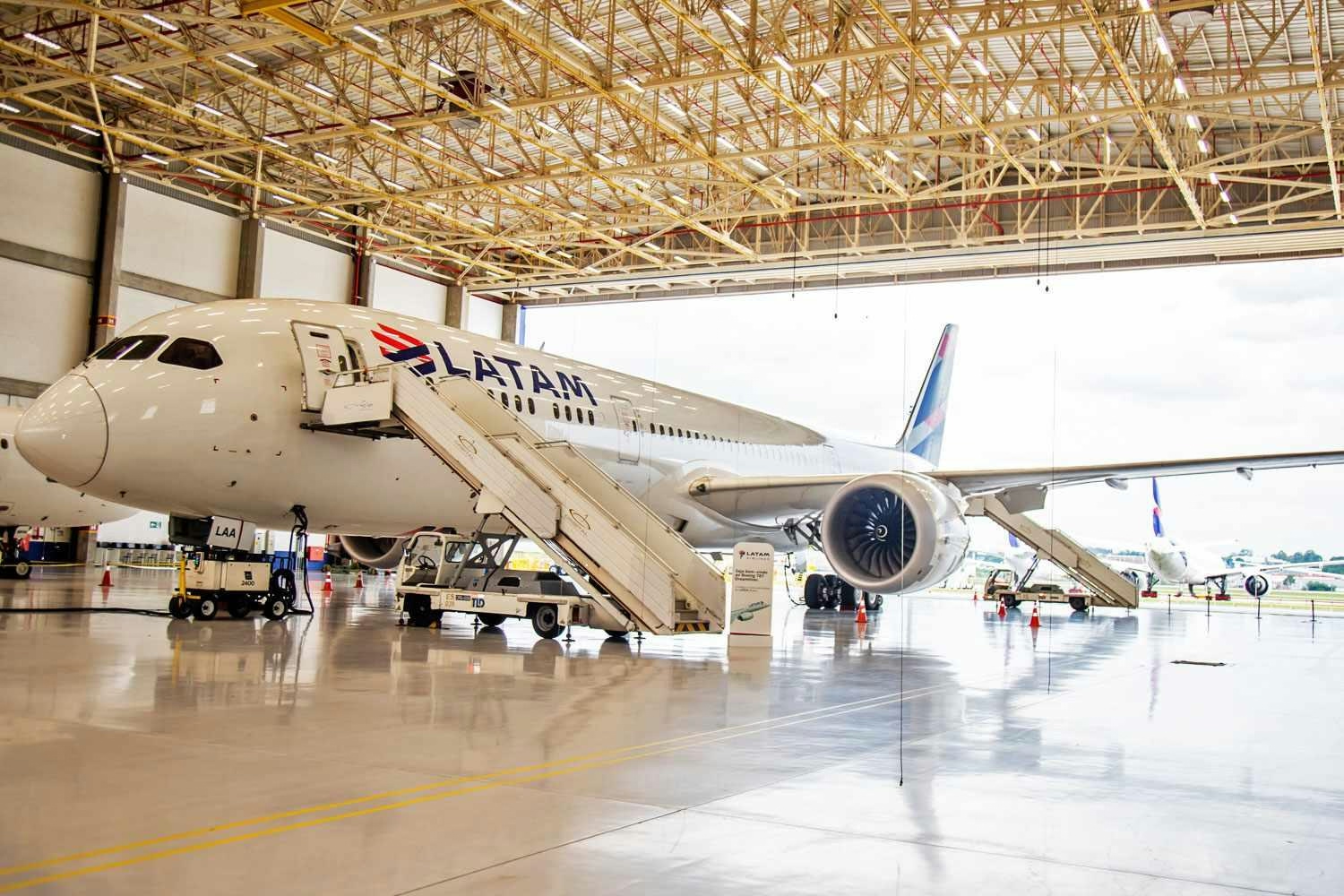
LATAM Receives First Boeing 787-9 Equipped with GEnx Engines
LATAM Receives First Boeing 787-9 Equipped with GEnx Engines
LATAM Airlines has taken delivery of its first Boeing 787-9 Dreamliner powered by GE Aerospace’s GEnx engines, marking a pivotal advancement in the airline’s ongoing fleet modernization efforts. The aircraft, registered as CC-BMB, completed its delivery flight from Charleston, United States, to Santiago, Chile, on December 30, according to flight records.
Strategic Shift in Engine Choice
The decision to equip the new widebody aircraft with GEnx engines comes amid persistent availability challenges with the Rolls-Royce Trent engines, which currently power 37 aircraft within LATAM’s fleet. Sebastián Acuto, Fleet and Projects Director of LATAM Airlines Group, emphasized the operational benefits of this transition, noting that the combination of the Boeing 787-9 and GEnx engines represents a significant step toward enhanced efficiency and sustainability. He highlighted reductions in fuel consumption and emissions, alongside increased operational flexibility to support growth across diverse markets and routes.
Challenges and Industry Implications
Integrating the GEnx-powered Dreamliners introduces several operational challenges for LATAM. The airline must adapt to new maintenance procedures, particularly as GE Aerospace advances its 360 Foam Wash technology, designed to simplify engine upkeep and boost operational efficiency. This transition will likely necessitate retraining technical personnel and revising maintenance protocols to accommodate the new engine technology.
The market response to LATAM’s fleet upgrade may intensify competition, prompting rival carriers to accelerate the adoption of comparable fuel-efficient technologies to preserve their competitive positions. Airlines utilizing alternative engine manufacturers may also emphasize their own technological innovations in reaction to LATAM’s move.
Operationally, the introduction of new aircraft types often presents logistical complexities, including the integration of new systems and ensuring the availability of spare parts. These challenges coincide with Boeing’s efforts to enhance production quality and supply chain resilience, notably through its recent acquisition of Spirit AeroSystems. This strategic move is expected to benefit customers like LATAM by improving aircraft delivery schedules and reliability.
Fleet Expansion and Future Outlook
By the end of 2025, LATAM operated a fleet of 371 aircraft, having incorporated 26 new airplanes throughout the year. The airline’s expansion plans include the receipt of 41 new aircraft in 2026, featuring its first 12 Embraer E195-E2 jets, followed by an additional 27 aircraft in 2027, highlighted by the introduction of the Airbus A321XLR—a narrow-body model with an extended range of 8,400 kilometers. Looking further ahead, LATAM aims to add more than 130 new aircraft by 2030, with advanced models expected to constitute over half of its fleet by the end of the decade.
As LATAM pursues this ambitious fleet renewal, the successful integration of the Boeing 787-9 equipped with GEnx engines will serve as a critical measure of the airline’s capacity to adapt to evolving technologies and sustain its competitive standing in a dynamic global aviation market.

Etihad Airways Suspends Airbus A380 Flights on Key Route

Aditya Birla Group Seeks Approval for Aircraft Leasing in GIFT City

Qatar Airways Highlights Innovation and Connectivity at Arabian Travel Market 2026

Hong Kong's Five-Year Plan Includes Andrew Fan's Aircraft Parts Processing Hub Proposal

ACIA Aero Leasing Delivers ATR72-600 to Air Nostrum

RTX Appoints Jill Albertelli as Head of Pratt & Whitney

TAT Technologies Joins Beyond Aero Hydrogen Aircraft Program

AURAK Study Highlights Barriers to Air Taxi Adoption in Emerging Economies

Xiamen Air Selects Altitude for 787 Maintenance at Heathrow

Etihad and Swissport Extend Global Partnership
