
图像

将人工智能洞察转化为可执行行动

立即加入 AeroGenie 候补名单!

热门趋势

Categories

Leading Aviation and Aerospace Parts Suppliers in the US
May 21, 2026By ePlane AI
Leading Aviation and Aerospace Parts Suppliers in the US
0
0
Aerospace Supply Chain
Aviation Parts Suppliers
Defense Procurement

Leading Aviation and Aerospace Parts Suppliers in the US

The United States aviation and aerospace supply chain is supported by a diverse array of manufacturers, systems providers, and parts distributors that cater to commercial aviation, defense, and maintenance operations. These companies oversee a broad spectrum of activities, ranging from the production of engineered components and avionics to the distribution of spare parts, procurement services, and logistics support. Their coordinated efforts ensure that the complex and demanding needs of the industry are met with efficiency and reliability.

Challenges Facing the Sector

Despite its critical role, the aviation and aerospace parts sector contends with persistent challenges. Fluctuations in U.S. government funding, adjustments in defense budgets, and global economic uncertainties all influence the demand for aerospace products. These factors often result in volatility in stock prices and compel suppliers to adopt strategies such as diversifying supply chains and implementing stricter cost controls to mitigate associated risks.

Key Players in the US Aerospace Supply Chain

Among the foremost contributors to the U.S. aviation and aerospace parts landscape is Asap Semi, headquartered in Anaheim, California. This company specializes in distributing aerospace and defense parts, with a particular focus on sourcing hard-to-find components. Serving both original equipment manufacturers (OEM) and maintenance, repair, and overhaul (MRO) operations, Asap Semi ensures traceability and compliance, playing a vital role in minimizing procurement delays and providing rapid access to certified replacement parts essential for maintaining aircraft operational readiness.

Stacked Purchasing offers procurement solutions tailored to the aerospace sector, emphasizing vendor management and parts sourcing. By assisting buyers in identifying compliant parts, comparing suppliers, and managing lead times, the company enhances supply chain efficiency and reliability. Its dependable purchasing support positions it as a key partner for aviation buyers navigating the complexities of procurement.

Aerospace Engineering Solutions provides specialized design and engineering services, including aircraft modification, cabin interior design, avionics integration, and structural work. Recognized as a design organization approval provider, the company supports aircraft transitions and technical modifications, directly influencing the selection and installation of parts and systems across various fleets.

RTX, through its Collins Aerospace division, stands as a leading supplier of integrated aircraft systems encompassing avionics, cabin systems, and electrical technologies. Serving both commercial and defense markets, Collins Aerospace supports major aircraft programs with comprehensive systems solutions, reinforcing its status as a cornerstone of the U.S. aerospace supply base.

GE Aerospace is renowned for its engines and propulsion systems, playing a pivotal role in the aviation sector. Engine suppliers like GE are critical due to their influence on fleet reliability and maintenance cycles. Beyond manufacturing, GE Aerospace offers extensive support services, including servicing and lifecycle management, shaping the future of commercial aviation and advanced propulsion technologies.

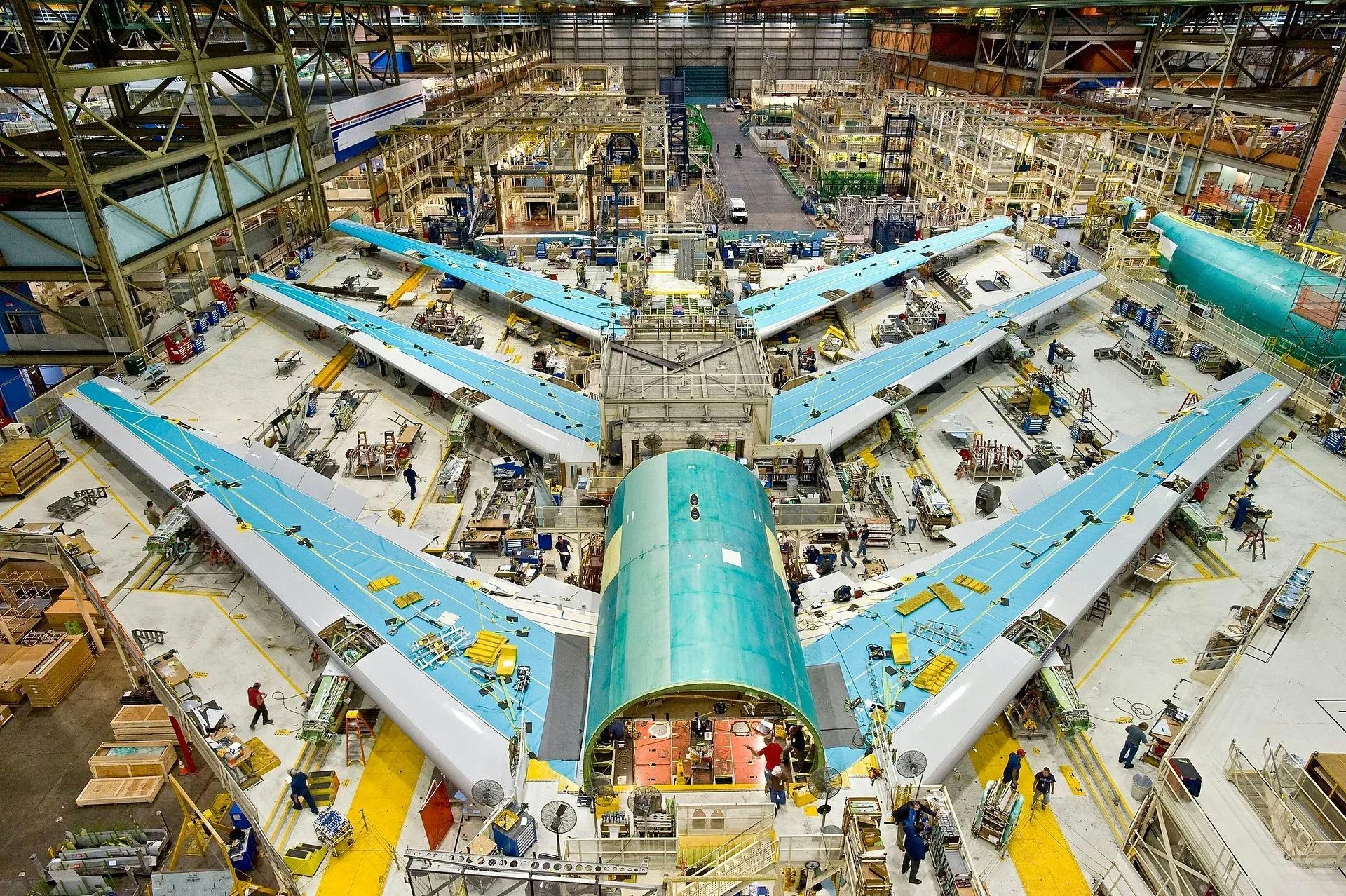
Boeing, one of the world’s largest aerospace companies, remains integral to the U.S. supply chain. Its extensive portfolio spans commercial aircraft, defense systems, and space technology. Boeing’s global reach and innovation capacity make it a key driver of industry advancement and supply chain stability.

In a landscape marked by fiscal uncertainty and evolving global dynamics, these leading suppliers continue to adapt by investing in supply chain resilience and operational efficiency to meet the changing demands of the aviation and aerospace industry.

More news
ADE Secures $100 Million Financing from QNB Group

ADE Secures $100 Million Financing from QNB Group

ADE Secures $100 Million Financing from QNB Group Asia Digital Engineering (ADE), the Maintenance, Repair, and Overhaul (MRO) subsidiary of Capital A, has secured a $100 million (RM425 million) financing facility from QNB Group, a leading financial institution in the Middle East and Africa. This significant capital injection is intended to support ADE’s expansion amid rising regional demand for MRO services, particularly within Asia’s rapidly growing aviation maintenance and engineering sector. Expansion Plans and Strategic Growth The new financing will enable ADE to scale its operations, increase capacity, and broaden its portfolio of airline customers, while continuing to serve its long-term anchor client, the AirAsia Group. ADE’s CEO, Mahesh Kumar, emphasized that the investment reflects strong confidence in the company’s operational performance and growth potential. He highlighted that in just five years, ADE has completed over 300 C-checks, underscoring the company’s consistent capabilities. Kumar stated that the funds will accelerate expansion plans, support additional capacity to meet growing MRO demand, and enhance ADE’s ability to deliver efficient, world-class maintenance services to airline customers. Capital A CEO Tony Fernandes remarked on ADE’s evolution from an internal engineering unit into a regional aviation services provider. He noted that what began as an internal capability serving AirAsia has transformed into a fast-growing business supporting multiple global airlines, including Air France, while attracting substantial institutional backing. Fernandes expressed confidence that ADE will continue to expand and capitalize on significant opportunities emerging across the regional MRO sector. QNB Group’s Strategic Support and ADE’s Capabilities Khalid Ahmed Al-Sada, Senior Executive Vice President for Group Corporate and Institutional Banking at QNB Group, highlighted the bank’s commitment to supporting aviation and MRO growth across Asia. He noted that the financing aligns with QNB’s strategic focus on the region, reinforcing its role as a key financial partner in the sector. ADE currently offers comprehensive engineering and maintenance solutions across Asia, operating a line maintenance network spanning 20 airports in ASEAN and base maintenance capabilities of up to 16 lines. These operations are supported by specialized workshops located in Kuala Lumpur. The company is also investing in digital innovation through proprietary platforms such as AEROTRADE® for aircraft parts procurement and ELEVADE™ for aircraft health management. ADE holds Approved Maintenance Organisation recognition in 18 countries, alongside EASA Part 145 approval and FAA certification. Market Implications and Competitive Landscape While the new financing positions ADE for accelerated growth, industry observers suggest that competitors may respond with their own funding initiatives or strategic moves to protect market share. This development could stimulate increased investor interest in ADE’s projects but may also invite scrutiny regarding the company’s capacity to effectively deploy the capital. Rival MRO providers might leverage their financial resources to intensify competition in market expansion and project development, highlighting the dynamic and competitive nature of the regional aviation maintenance sector.
United Airlines to Equip Former Continental Boeing 777-200ERs with Starlink

United Airlines to Equip Former Continental Boeing 777-200ERs with Starlink

United Airlines to Equip Former Continental Boeing 777-200ERs with Starlink United Airlines is preparing to enhance its long-haul in-flight Wi-Fi by installing Starlink satellite internet on its Boeing 777-200ER aircraft, originally acquired from Continental Airlines. This upgrade is scheduled for completion ahead of the peak summer travel season, addressing longstanding passenger dissatisfaction regarding the absence of reliable internet connectivity on extended routes. These specific 777 models are distinguished within United’s fleet by their powerful General Electric GE90 engines and more advanced electrical systems, factors that are expected to facilitate the integration of Starlink’s cutting-edge connectivity technology. Implementation and Fleetwide Connectivity Strategy The decision to adopt Starlink follows the discontinuation of United’s previous Panasonic internet service, which temporarily left some flights without Wi-Fi. United has already outfitted nearly 250 Embraer E175 regional jets with Starlink and is actively retrofitting its Boeing 737 fleet. The airline’s broader objective is to equip its entire widebody fleet with Starlink by the end of next year, while aiming to upgrade half of its single-aisle aircraft by the close of this year. United has publicly emphasized its commitment to improving onboard connectivity, highlighted by a two-day “Elevated” event held earlier this year at Los Angeles International Airport. The first 777-200ER to receive Starlink, tail number N37018, is currently undergoing test flights in Rio de Janeiro and is anticipated to secure regulatory approval shortly. The initial phase of the rollout will focus on 22 GE90-powered 777-224s, which are newer than other 777s in United’s fleet and are approaching significant maintenance intervals, making them ideal candidates for the installation. Market Dynamics and Competitive Challenges United’s partnership with Starlink unfolds amid a rapidly shifting landscape in the in-flight connectivity market. The satellite broadband sector remains volatile, with competition marked by uncertainty, as evidenced in other industries where Starlink operates, such as with Cable One. Rival carriers, including Delta Air Lines, have expressed reservations about Starlink’s suitability, opting instead for Amazon’s Leo satellite service, which they argue offers distinct advantages. This competitive environment is likely to accelerate satellite internet upgrades across the airline industry as carriers seek to maintain technological and service parity. Furthermore, recent adjustments to SpaceX’s pricing for Starlink’s general aviation service may impact both airline procurement decisions and passenger perceptions of in-flight internet value. As United advances its Starlink installation, it will need to address technical integration challenges and navigate evolving market conditions, all while striving to restore dependable internet access for its long-haul travelers and sustain its competitive position within the sector.
Quality Service Essential for Aviation Improvement

Quality Service Essential for Aviation Improvement

Quality Service Essential for Aviation Improvement Hawaz International Dynamics Ltd, a newly established aviation and travel services company, has officially commenced operations in Nigeria’s aviation sector, underscoring its dedication to excellence, professionalism, innovation, and timely service delivery. At the company’s launch event, Chairman Hassan Ejibunu highlighted Hawaz International’s strategic positioning within Nigeria’s rapidly evolving aviation landscape, aiming to address critical operational needs. Regulatory Compliance and Industry Positioning Incorporated in March 2025 under the Companies and Allied Matters Act (CAMA) 2020 by the Corporate Affairs Commission (CAC), Hawaz International has secured essential certifications and operational recognitions from prominent regulatory bodies. These include the Nigeria Civil Aviation Authority (NCAA), Nigerian Airspace Management Agency (NAMA), International Air Transport Association (IATA), National Association of Nigeria Travel Agencies (NANTA), and the National Hajj Commission of Nigeria (NAHCON). Such accreditations authorize the company to operate fully within Nigeria’s aviation industry, ensuring adherence to both national and international standards. Chairman Ejibunu emphasized that the company was founded to bridge existing operational gaps in Nigeria’s aviation sector by delivering reliable, efficient, and globally compliant aviation support services. He noted that one of Hawaz International’s key strengths lies in the extensive experience of its leadership team, which collectively brings over 80 years of expertise in the aviation industry. Navigating Industry Challenges and Market Dynamics Hawaz International’s entry into the market coincides with significant challenges confronting the aviation sector, including the imperative to maintain Essential Air Service subsidies amid escalating fuel costs. These financial pressures have compelled airlines to reevaluate their route networks, particularly those serving rural communities, which may lead to reduced airline capacity and diminished demand for maintenance and support services. In response, some carriers are modifying their service offerings or exploring alternative funding mechanisms to sustain operations in underserved regions. Within this context, Hawaz International aims to provide vital support to airlines and other stakeholders as they navigate these shifting market conditions. Chairman Ejibunu expressed the company’s readiness to collaborate with foreign airlines, aviation stakeholders, travel organizations, government agencies, and investors seeking dependable operational support and consultancy services both within Nigeria and across the African continent. By leveraging its experienced leadership and comprehensive regulatory compliance, Hawaz International aspires to play a pivotal role in enhancing service quality and operational efficiency in Nigeria’s aviation sector, assisting the industry in adapting to evolving market dynamics and financial challenges.
Tampa International Airport Introduces Air Taxi Concept

Tampa International Airport Introduces Air Taxi Concept

Tampa International Airport Unveils Ambitious Air Taxi Initiative Tampa International Airport has revealed an innovative plan to transform urban transportation by introducing an “air mobility hub” designed to alleviate the city’s persistent traffic congestion. The concept envisions passengers bypassing road traffic by boarding electric vertical takeoff and landing vehicles (eVTOLs) that would ferry them across the Tampa Bay Area. Airport CEO Michael Stephens presented the proposal to the Tampa City Council, outlining a system where travelers would first use the airport’s Sky Connect train to reach a new multimodal transportation center. From there, passengers would board eVTOL aircraft to reach various destinations beyond the airport. Stephens described the vision as “an eVTOL staying above the traffic, taking you from the airport to points beyond,” accompanied by renderings of the futuristic aircraft. A Multimodal Transportation Nexus The proposed hub aims to integrate multiple modes of transit, linking eVTOLs with trains, automated people movers, rideshares, and buses. This interconnected system is intended to enhance mobility across the city and reduce the strain on Tampa’s roadways. Stephens emphasized the importance of seamless connectivity, noting that eVTOL technology is expected to arrive in the near future and could revolutionize local transit. City council members expressed strong support for the initiative. District 6 Council member Charlie Miranda praised the airport’s innovative approach, stating, “We need what you have at the airport in Tampa to make it movable.” Similarly, District 1 co-chair Alan Clendenin highlighted the potential to expand transit options and improve connections between Tampa’s neighborhoods. Challenges and Industry Context Despite the enthusiasm, the project faces significant hurdles. Its success depends heavily on the Florida Department of Transportation’s ability to develop the necessary ground infrastructure to support the new hub. Additionally, regulatory approvals, market competition, and public acceptance remain critical challenges. The air taxi industry is rapidly evolving on a national scale. Joby Aviation, a prominent eVTOL developer, has already demonstrated piloted air taxi routes in New York City, showcasing the technology’s transformative potential. However, Joby must still obtain Federal Aviation Administration certification and secure funding for charging infrastructure before launching commercial operations. Complicating matters, Delta Air Lines—Joby’s strategic partner—has expressed concerns about an ongoing US International Trade Commission investigation into Joby’s trade practices, which could disrupt their collaboration. Competition within the sector is intensifying. Archer Aviation, another leading eVTOL company, is actively defending its patents, a move that may affect Joby’s development timeline and the broader deployment of air taxi services. For Tampa, the promise of air taxis represents a compelling solution to chronic traffic congestion. Yet, as Stephens acknowledged, “This is just a dream right now.” The realization of this vision will require coordinated efforts among city officials, state agencies, and private industry stakeholders. With growing momentum in the air mobility sector and local support strengthening, Tampa’s aspiration to elevate urban transportation may soon take flight.
Air New Zealand and Other Airlines Adjust Schedules at Major Hubs Amid Boeing 787 Engine Issues

Air New Zealand and Other Airlines Adjust Schedules at Major Hubs Amid Boeing 787 Engine Issues

Air New Zealand and Global Airlines Adjust Operations Amid Boeing 787 Engine Reliability Challenges Airlines around the world are confronting significant operational disruptions as ongoing reliability issues with Boeing 787 engines force widespread schedule adjustments and flight cancellations. Major carriers, including Air New Zealand, British Airways, All Nippon Airways (ANA), and LATAM, have been compelled to reroute or suspend long-haul services at key international hubs such as Auckland Airport, London Heathrow, Los Angeles International Airport, and Tokyo Narita. These disruptions are reshaping fleet strategies and prompting a reevaluation of engine procurement decisions across the industry. The Boeing 787 Engine Reliability Crisis At the heart of the crisis are persistent durability problems with the Rolls-Royce Trent 1000 engines, which power a substantial portion of the global 787 Dreamliner fleet. Aviation regulators, notably the European Union Aviation Safety Agency (EASA), have issued multiple airworthiness directives mandating frequent inspections and component replacements to address premature wear and cracking in critical engine parts. EASA has specifically highlighted the risk of cracks developing in low-pressure turbine blade assemblies, which could lead to in-flight engine shutdowns if not properly managed. These longstanding technical challenges have resulted in intensified maintenance schedules, unexpected aircraft groundings, and increased operational complexity for affected airlines. The situation is further exacerbated by global supply chain delays for replacement parts and limited overhaul capacity, causing some aircraft to remain out of service for extended periods. In response, airlines are prioritizing aircraft equipped with more reliable and readily available engines, such as the GE Aerospace GEnx-1B, both for current operations and future fleet acquisitions. Operational and Market Implications Air New Zealand has been particularly affected by these issues, facing significant aircraft availability constraints and engine maintenance delays that have led to flight cancellations and contributed to a reported net loss in its early fiscal year 2026 results. The airline, which depends heavily on its 787 fleet for international routes, has acknowledged ongoing fleet limitations and plans to introduce GEnx-powered 787s by late 2026 to enhance reliability and restore capacity. Similarly, British Airways has encountered delays in engine deliveries and has shifted its orders for six new Boeing 787 aircraft from Rolls-Royce Trent 1000 engines to GE GEnx units. The airline’s Chief Technical Officer noted that no engines were delivered on schedule in 2025, underscoring persistent supply chain and reliability challenges. Other carriers, including ANA and LATAM, have also revised their fleet plans and long-haul schedules in light of these engine reliability concerns. LATAM has recently placed orders for 787s powered by GEnx engines, while simultaneously expressing renewed confidence in the latest Rolls-Royce Trent 1000 XE variant. These schedule adjustments at major hubs have introduced additional operational costs, increased passenger dissatisfaction, and intensified competitive pressures within the industry. Airlines such as Air New Zealand, which rely heavily on the 787 for international connectivity, remain particularly vulnerable to these disruptions. Meanwhile, competitors like JetBlue appear less affected by the shifting dynamics, and market analysts suggest that heightened scrutiny of airline reliability may influence passenger preferences toward carriers operating more dependable aircraft. As the industry continues to navigate these challenges, reliance on GEnx-powered 787s is expected to grow, with airlines seeking to stabilize their networks while maintaining safety and reliability in global air travel.
SIA Engineering Opens Maintenance Facility in Subang, Citing Growth in Malaysian Aerospace Sector

SIA Engineering Opens Maintenance Facility in Subang, Citing Growth in Malaysian Aerospace Sector

SIA Engineering Expands Regional Footprint with New Maintenance Facility in Subang SIA Engineering Company (SIAEC) has inaugurated a new base maintenance facility at Sultan Abdul Aziz Shah Airport in Subang, Malaysia, marking a strategic expansion of its maintenance, repair, and overhaul (MRO) network in the Asia-Pacific region. The facility, comprising two hangars, will complement SIAEC’s existing operations in Singapore and the Philippines by providing additional capacity for servicing both widebody and narrowbody aircraft, including current and next-generation models. Operated by SIAEC’s wholly owned subsidiary, Base Maintenance Malaysia (BMM), the Subang facility is capable of handling up to six aircraft checks simultaneously. The company highlighted that this expansion not only enhances operational resilience but also offers customers greater flexibility in meeting their MRO needs across the region and beyond. BMM has already secured regulatory approval for its first hangar and completed its inaugural A350 aircraft check in November 2025. Strategic Importance of Malaysia in Aerospace Sector Growth SIAEC underscored its confidence in Malaysia’s growing role as a key aerospace hub, citing the country’s strong aviation heritage, strategic geographic location, well-established infrastructure, and an expanding pool of skilled aerospace professionals. The establishment of BMM is seen as a catalyst for further development of Malaysia’s aerospace ecosystem, creating skilled employment opportunities and fostering local technical capabilities. The company emphasized its commitment to supporting BMM through the provision of technical expertise, operational experience, governance, training, systems, and customer support. Chin Yau Seng, CEO of SIAEC, described Malaysia’s talent development and technical capabilities as having “strong potential,” characterizing the new facility as a “strategic investment” aimed at driving sustainable long-term growth. Alongside SIAEC’s three other joint ventures in Malaysia—Asia Pacific Aircraft Component Services, Eaton Aero Services, and Pos Aviation Engineering Services—the Subang facility strengthens the company’s capacity to support customers and expand its presence within the country. Competitive Landscape and Market Outlook SIAEC’s expansion occurs amid intensifying competition within the regional MRO sector. Competitors such as VSE, following its acquisition of Precision Aviation Group, and Steiner Aviation, which has increased its maintenance capacity for midsize jets, are actively pursuing market share. Additionally, MAB Engineering has doubled its maintenance capacity at Subang, reflecting a broader industry trend toward scaling operations to meet rising demand. Despite these competitive pressures, market sentiment remains optimistic, supported by robust global demand for MRO services and SIAEC’s record financial performance. Industry analysts anticipate that competitors may respond with further capacity expansions or strategic partnerships to maintain their positions in the evolving market landscape. SIAEC’s shares closed at S$3.16 on Thursday, registering a modest increase of 0.3 per cent.
Boeing and Rolls-Royce Engine Failures Prompt Market Restructuring in 2026

Boeing and Rolls-Royce Engine Failures Prompt Market Restructuring in 2026

Boeing and Rolls-Royce Engine Failures Prompt Market Restructuring in 2026 Persistent failures of Rolls-Royce Trent 1000 engines installed on Boeing 787 Dreamliners have instigated a significant transformation within the aerospace industry. Beginning in 2024 and intensifying through 2026, these issues have exposed critical vulnerabilities in Boeing’s traditional strategy of relying on a single engine supplier. The resulting operational disruptions have compelled manufacturers and airlines alike to reconsider long-standing exclusive engine agreements, with carriers increasingly demanding greater flexibility and alternative powerplant options. Engine Failures Disrupt Global Operations The Trent 1000 engines experienced reliability problems that led to unexpected failures during both flight and ground operations, impacting airlines across the globe. Major international airports such as London Heathrow, Dubai International, and Singapore Changi witnessed widespread schedule disruptions, leaving passengers stranded and airlines scrambling to manage their affected 787 fleets. Faced with these challenges, carriers confronted a difficult choice: continue operating with Rolls-Royce engines or explore alternative aircraft and engine solutions. The Federal Aviation Administration (FAA) issued over 1,000 engine-related maintenance directives between 2024 and 2026, underscoring the operational and financial burdens imposed by Boeing’s exclusive engine arrangement. Market Response and Shifting Strategies The crisis has strained the Boeing-Rolls-Royce partnership and reshaped the competitive dynamics of the widebody aircraft market. Airbus, for instance, has reported increased interest in its A350 variants equipped with alternative engine options, while manufacturers across the sector are actively pursuing secondary engine qualification pathways that were previously deemed economically impractical. Historically, aircraft manufacturers resisted offering multiple engine options due to the substantial engineering costs involved, including the need for distinct pylons, mounting structures, fuel systems, and electronic controls for each engine type. Boeing defended its exclusivity model on the basis of development efficiency and supply chain simplification. However, the Trent 1000 failures have revealed the commercial risks inherent in this approach: when a single engine supplier encounters difficulties, airlines are left with limited alternatives, resulting in operational disruptions and diminished customer satisfaction. Airlines Push for Greater Choice In response to the ongoing challenges, major carriers such as Turkish Airlines, Air China, and United Airlines have publicly advocated for the certification of alternative engines, specifically urging Boeing to consider compatibility with General Electric powerplants for the 787. The operational disruptions and financial losses stemming from the Trent 1000 failures have shifted negotiating power toward airlines, which now demand greater flexibility to mitigate supply chain risks and secure more favorable contractual terms. Signs of Recovery and Enduring Confidence Despite the turbulence, 2026 has also witnessed signs of renewed confidence in Rolls-Royce. LATAM Airlines’ recent order for Trent 1000 XE engines to power three new Boeing 787 aircraft signals a cautious restoration of trust in Rolls-Royce’s improved engine offerings. The company’s optimistic outlook for 2026, even amid geopolitical uncertainties in the Middle East, is supported by growth in its large civil engine and business aviation aftermarket sectors. Further reinforcing industry confidence, the U.S. Air Force approved the B-52H Stratofortress engine replacement program, selecting Rolls-Royce F130 engines to replace aging Pratt & Whitney TF33 turbofans. This decision highlights the enduring faith in Rolls-Royce’s engineering capabilities despite recent setbacks. A New Era for Aircraft Manufacturing The Trent 1000 crisis has catalyzed a broader industry shift away from engine exclusivity. Manufacturers now acknowledge that offering dual-engine options, despite the higher upfront costs, provides a competitive advantage and aligns with airline demands for operational resilience. As the market restructures, flexibility and reliability are emerging as paramount priorities in widebody aircraft procurement, fundamentally reshaping the future landscape of commercial aviation.
The Impact of Aircraft Leasing on Airline Financial Strategies

The Impact of Aircraft Leasing on Airline Financial Strategies

The Impact of Aircraft Leasing on Airline Financial Strategies For much of the twentieth century, airlines primarily expanded their fleets through conventional loans, bond issuances, or outright purchases. However, the contemporary aviation industry faces a complex array of challenges, including rising operational costs, unpredictable demand fluctuations, and increasingly stringent regulatory requirements. These pressures have prompted airlines to reconsider traditional asset management approaches. In this context, aircraft leasing has emerged as a critical strategy, enabling carriers to adjust fleet sizes rapidly, mitigate financial risks, and respond more effectively to volatile market conditions. Leasing Versus Ownership: Evaluating Strategic Considerations Ownership of aircraft provides airlines with the security of a tangible asset but requires substantial capital investment and exposes them to the uncertainties of the resale market. Leasing offers an alternative that circumvents these issues by allowing airlines to access the latest aircraft models without significant upfront expenditure. This model is particularly advantageous for smaller or startup carriers, which often face challenges in securing favorable financing through traditional channels. Leasing affords airlines the flexibility to explore new routes, align capacity with fluctuating demand, and replace aging aircraft with more fuel-efficient models swiftly. Such agility is essential in an industry where regulatory changes and fuel price volatility can occur abruptly. Nonetheless, leasing arrangements carry inherent risks. The accumulation of lease-related debt and long-term contractual obligations can constrain an airline’s operational flexibility and heighten vulnerability to adverse economic or sector-specific developments. For instance, sustained high oil prices may compress airline profit margins while simultaneously increasing demand for newer, more efficient aircraft from lessors. Hybrid Financing Models: Bridging Leasing and Ownership The distinction between leasing and ownership is increasingly blurred by innovative hybrid financing structures. Sale-and-leaseback transactions have become a prevalent tool, wherein an airline sells an owned aircraft to a leasing company and immediately leases it back. This approach unlocks capital that can be redirected toward strategic investments such as digital infrastructure upgrades or financial buffers against economic downturns, while preserving the airline’s operational control over the aircraft. Another notable hybrid mechanism involves equipment trust certificates, where a trust acquires the aircraft and leases it to the airline, often including an option to purchase at the end of the lease term. This arrangement combines the benefits of operational control and potential asset ownership with the reduced upfront costs characteristic of leasing. Prominent carriers such as Delta Air Lines and Southwest Airlines have employed these models to enhance financial flexibility and facilitate fleet modernization, carefully balancing risk and reward in line with their strategic priorities. Practical Implications and Industry Responses A regional Scandinavian airline exemplifies the practical benefits of leasing in managing seasonal demand variability. Historically, the carrier faced the dilemma of operating with insufficient aircraft during peak periods or incurring excessive debt during off-peak seasons. By utilizing operating leases, the airline now adjusts its fleet size dynamically, scaling down during slower months and expanding capacity when demand surges. This strategy also mitigates losses from rapid asset depreciation, a concern heightened by accelerating environmental regulations that mandate the retirement of older aircraft. Major international airlines have similarly leveraged leasing to navigate periods of industry disruption. During the COVID-19 pandemic, carriers such as Air France and Singapore Airlines renegotiated lease agreements or returned surplus aircraft to lessors, thereby avoiding the financial burden of maintaining idle assets. In response to the inherent risks of leasing, some competitors are exploring alternative financing methods or implementing operational cost adjustments to reduce financial exposure. As the aviation sector continues to evolve, aircraft leasing remains a complex but indispensable component of airline financial strategy. It offers the dual advantages of operational agility and access to modern fleets, while simultaneously introducing financial complexities that require careful management to maintain competitive positioning.
YFQ-42A CCA Resumes Flight Following Software Update After Crash

YFQ-42A CCA Resumes Flight Following Software Update After Crash

YFQ-42A Collaborative Combat Aircraft Resumes Flight After Software Update The YFQ-42A Collaborative Combat Aircraft (CCA) has returned to flight testing following a six-week suspension caused by a crash in early April. General Atomics Aeronautical Systems, the manufacturer of the drone, announced the resumption of flights on May 21 after completing a joint safety review with the U.S. Air Force. The investigation revealed that the crash resulted from an autopilot miscalculation related to the aircraft’s weight and center of gravity, which led to the drone’s destruction near a General Atomics facility in the California desert. Fortunately, no injuries were reported. Software Update and Program Continuity In response to the incident, General Atomics implemented a software update to correct the autopilot issue. The company clarified that the autopilot software, responsible for managing basic flight operations, is separate from the mission autonomy software being developed by Shield AI and Collins Aerospace for the broader CCA program. While the autopilot ensures safe and stable flight, the mission autonomy software functions as an “AI pilot,” executing complex maneuvers based on commands from human operators. During the flight suspension, General Atomics continued ground testing and other program activities. Both the Air Force and the defense contractor emphasized the critical role of rigorous safety reviews and timely software updates in maintaining operational readiness. The incident also intensified scrutiny within the defense sector regarding the reliability of the YFQ-42A, especially as competitors such as Northrop Grumman advance their own projects. Northrop’s YFQ-48A recently completed taxi tests and is a potential contender in future CCA competitions. Program Status and Future Prospects Several YFQ-42A units have been produced under low-rate production, with the Air Force currently evaluating both the YFQ-42A and Anduril’s YFQ-44A for the initial increment of the CCA program. Both platforms are designed primarily as strike aircraft, with plans to expand future increments into electronic warfare, intelligence, surveillance, and reconnaissance roles. The Air Force is expected to make a production decision by the end of fiscal year 2026. David R. Alexander, president of General Atomics Aeronautical Systems, expressed optimism about the program’s progress, stating, “It’s been said that you learn more from your setbacks than your successes. We are applying what we’ve learned to our growing fleet of CCAs, as we continue building the most dependable and cost-efficient unmanned fighters in the world.” Air Force officials highlighted the program’s acquisition strategy, which embraces risk during testing rather than operational deployment. Col. Timothy Helfrich, portfolio acquisition executive for fighters and advanced aircraft, noted, “The CCA program was and is set up to learn, even when the learning comes from ‘failing forward.’ We pushed the envelope, identified a risk, learned from the data, and have cleared the YFQ-42A to return to flight. Even when flight testing on the YFQ-42 was temporarily paused, the program was not.” As the CCA program progresses, the Air Force and its industry partners remain committed to prioritizing safety, innovation, and adaptability in the development of the next generation of unmanned combat aircraft.
Republic Airways Pilots Test Electric Aircraft in Florida

Republic Airways Pilots Test Electric Aircraft in Florida

Republic Airways Pilots Test Electric Aircraft in Florida Pioneering Electric Aviation in South Florida Republic Airways pilots recently took to the skies over South Florida to operate Beta Technologies’ Alia CX300, a cutting-edge electric aircraft designed for diverse applications including passenger transport, cargo delivery, medical missions, and military use. In collaboration with FBO Signature Aviation, Beta and Republic conducted a series of intensive demonstration flights last week, culminating in a significant arrival at Orlando International Airport (KMCO) on Sunday. Orlando is among the first U.S. airports actively developing an electrified vertiport to support next-generation electric vertical takeoff and landing (eVTOL) aircraft. These demonstration flights represent an early phase in a broader initiative to advance electric aviation. Over the coming months, Beta and other manufacturers plan to expand operations across Florida and 25 additional states as part of the Federal Aviation Administration’s (FAA) eVTOL Integration Pilot Program (eIPP). This program will facilitate operational testing for at least three years. Earlier this year, Beta and Republic completed cold-weather trials in Plattsburgh, New York, and at Beta’s headquarters in Burlington, Vermont, conducting 34 flights over four days to assess performance under varying conditions. Technical Capabilities and Operational Testing Matt Koscal, president of Republic Airways, highlighted the importance of these tests, stating, “They’re helping illuminate what’s possible as we explore new ways to expand local air services in Florida and beyond.” In 2025, Republic took delivery of a “precertified” CX300, equipped with Beta’s H500A electric motor—currently undergoing type certification—and Hartzell’s FAA-certified electric propeller. The CX300 offers a demonstrated range of 336 nautical miles, a projected top speed of 135 knots, and can accommodate a pilot plus five passengers or up to 1,250 pounds of cargo. The aircraft can recharge in under an hour and is projected to be significantly more cost-effective to operate than traditional jet-fueled planes. To prepare for real-world deployment, Beta delivered the CX300 to Republic for route studies, pilot training, and use-case testing that spans passenger shuttles to cargo delivery. Three pilots from Republic’s Brickyard Connection unit completed coursework, simulator sessions, and check rides before flying up to nine legs daily during the demonstration period. Each flight incurred approximately $16.80 in energy costs. According to FlightAware data, the aircraft—tail number N916LF—completed 27 out-and-back flights at Kissimmee Gateway Airport (KISM) over three days, followed by flights to Orlando International, Daytona Beach, Jacksonville, and further north to Georgia and North Carolina. Challenges and Industry Implications Despite the promise of electric aviation, Republic Airways faces several challenges. Regulatory approval for electric aircraft remains a significant obstacle, alongside the need to develop robust charging infrastructure at airports. Comprehensive pilot training programs will be critical to ensuring safety and operational efficiency. The growing market interest in sustainable aviation has prompted competitors to accelerate their own electric aircraft initiatives or invest in related technologies. Some industry players may pursue favorable regulatory frameworks through lobbying or form strategic partnerships to share the substantial costs associated with development and deployment. Beta Technologies continues to expand its fleet, which includes N214BT, recently involved in a European test campaign with Bristow Group, and N401NZ, formerly a test aircraft for Air New Zealand and now operating in Japan. The company’s first type-conforming aircraft, N889CD, along with N336MR, remain in testing phases in Burlington and Plattsburgh, reflecting the rapid progress in electric aviation. As Republic and Beta advance their efforts, they are laying the groundwork for a new era of cleaner, more efficient air travel—one that has the potential to transform the aviation industry and inspire innovation among competitors worldwide.
line









