
图像

AeroGenie — 您的智能副驾驶。

问任何问题。分析一切。立即行动。

热门趋势

Categories

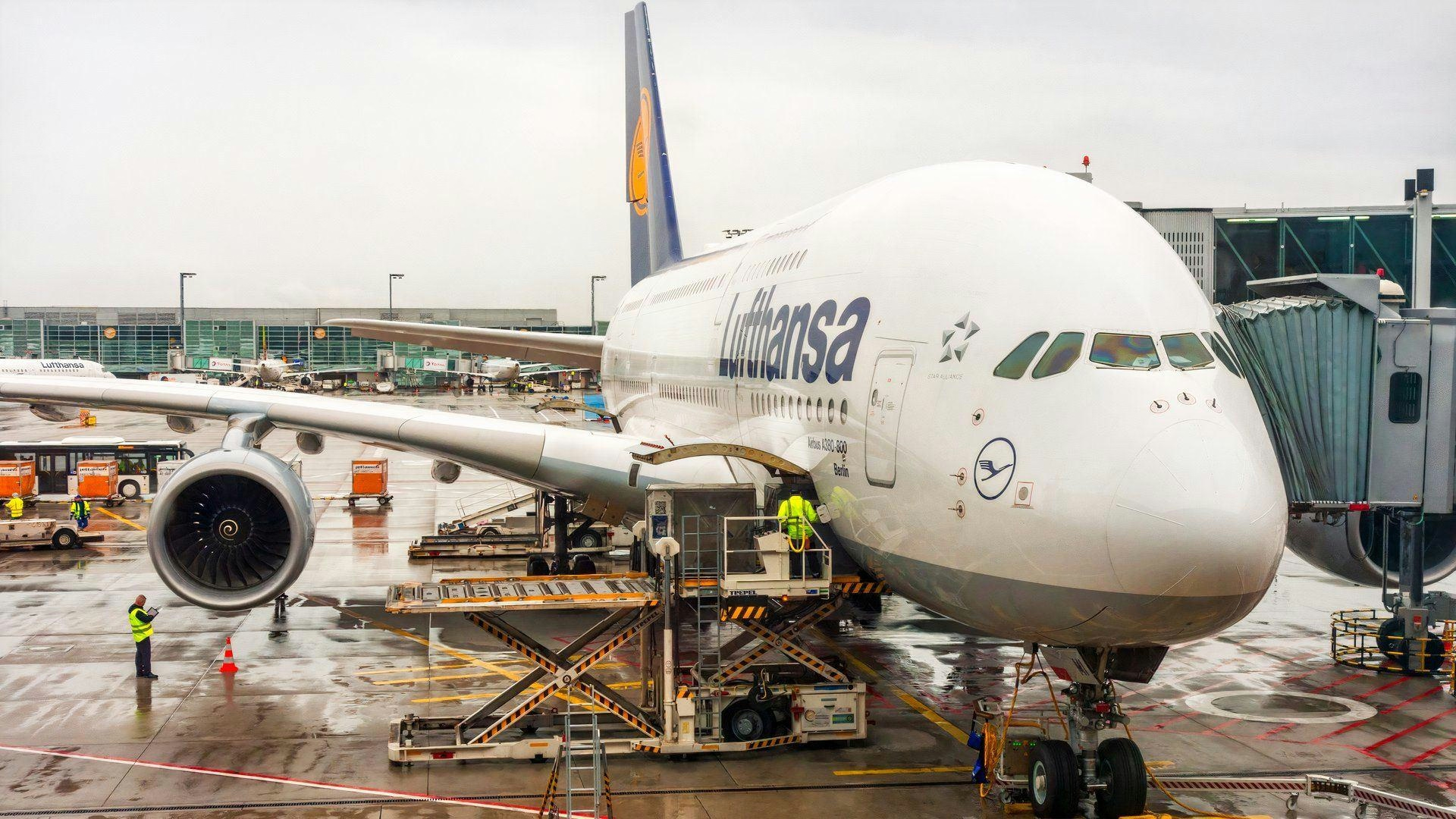
Lufthansa to Retire Quadjets Earlier Than Planned
April 24, 2026By ePlane AI
Lufthansa to Retire Quadjets Earlier Than Planned
0
0
Lufthansa
Quadjet Retirement
Airbus A340
Boeing 747

Lufthansa to Accelerate Retirement of Quadjets Amid Economic Pressures

Lufthansa has announced an expedited phase-out of its four-engine aircraft, signaling a significant shift in its long-haul fleet strategy in response to escalating economic challenges. For many years, quadjets such as the Airbus A340 and Boeing 747 were emblematic of intercontinental air travel, prized for their range, redundancy, and prestige. At its operational peak, Lufthansa maintained a fleet of over 60 quadjets, positioning it among the world’s largest operators of these aircraft. However, evolving market conditions have rendered their continued use increasingly untenable, prompting the airline to hasten their retirement.

Economic and Operational Drivers Behind the Shift

The primary impetus for this accelerated retirement is the sharp increase in jet fuel prices, which now constitute up to 35% of Lufthansa’s operating costs. Fuel prices have been further driven upward by renewed geopolitical tensions, notably the ongoing conflict involving Iran and instability in the Strait of Hormuz. These factors have exerted considerable pressure on the airline’s financial performance. In response, Lufthansa is reducing its overall capacity by approximately 1% through October, a move that includes the cessation of Lufthansa CityLine operations and the grounding of its remaining Airbus A340-600s alongside five additional aircraft. This strategy is projected to yield fuel savings exceeding 40,000 metric tons.

Compounding these challenges are labor disputes within Lufthansa’s German operations and persistent supply chain disruptions, which have constrained the airline’s ability to rely on long-term fleet planning. Initially, the retirement of quadjets such as the A340-600 and Boeing 747-400 was slated for the late 2020s. The revised timeline now anticipates the A340-600’s exit by October 2026, several years ahead of schedule, while the 747-400 is being gradually phased out, with full retirement expected by 2027. Several aircraft have already been parked or are seeing reduced utilization, underscoring the urgency of this transition.

Implications for Lufthansa’s Fleet and Network

Traditionally, widebody aircraft are operated for 25 to 30 years to maximize their economic value. Many of Lufthansa’s A340-600s, delivered in the early 2000s, have not yet reached the end of their service life. Nonetheless, the rising costs associated with fuel, maintenance, and operations now outweigh the benefits of continued use, even if this necessitates absorbing financial write-downs.

This fleet transformation will be most apparent on routes departing from Lufthansa’s primary hubs in Frankfurt and Munich, where quadjets have long been a defining feature of the airline’s long-haul identity. These aircraft will be replaced by newer, more fuel-efficient twin-engine models such as the Airbus A350 and Boeing 787 Dreamliner, with the Boeing 777X expected to join the fleet in due course. These aircraft offer enhanced fuel efficiency, reduced operating costs, and greater operational flexibility, marking a definitive end to the era of four-engine dominance in Lufthansa’s long-haul operations.

While Lufthansa is scaling back capacity and retiring older aircraft within its German operations, it is concurrently expanding its route network at other hubs, including Brussels, Vienna, and Zurich. This strategic realignment reflects the airline’s broader efforts to adapt to a high-cost, high-uncertainty environment by prioritizing efficiency and resilience amid the ongoing challenges confronting global aviation.

More news
Alibaba Introduces Voice-Activated AI for Booking Flights and Ordering Food

Alibaba Introduces Voice-Activated AI for Booking Flights and Ordering Food

Alibaba Launches Voice-Activated AI for Flight Booking and Food Ordering Alibaba Group Holding Limited (NYSE: BABA) has unveiled a new voice-activated artificial intelligence system designed to streamline everyday tasks such as booking flights and ordering food through natural language commands. Central to this initiative is Alibaba’s proprietary Qwen AI model, which the company is deploying across multiple industries to expand its service offerings and tap into emerging growth opportunities. Integration of Qwen AI Across Sectors The Qwen AI technology is being embedded in vehicles produced by leading automakers including BYD, Geely, and SAIC Volkswagen. This integration allows drivers and passengers to perform a variety of functions using voice commands, such as ordering meals, reserving hotel rooms, and navigating routes. These features are intended to provide automakers with a competitive edge amid a decelerating electric vehicle market. In addition to automotive applications, Alibaba is extending Qwen’s capabilities to consumer services. For instance, customers can now book flights with China Eastern Airlines simply by speaking to the AI, which manages ticketing, seat selection, and check-in processes. This innovation represents a departure from conventional app-based interfaces, offering a more seamless and intuitive user experience that could transform consumer interactions with digital platforms. Market Context and Industry Response Alibaba’s introduction of voice-activated AI services arrives as global competitors intensify their efforts in this space. Amazon, through its Alexa Plus platform, is developing comparable AI-driven travel planning and booking functionalities, heightening competition in the voice services market. The increasing adoption of voice-activated technologies is expected to drive consumer engagement while compelling rivals to enhance their AI capabilities. Nevertheless, some companies remain cautious about embracing automation. For example, the fast-food chain In-N-Out continues to reject automated ordering systems, reflecting an ongoing debate between the convenience offered by AI and the value of traditional customer service. This divergence highlights the complex decisions businesses face amid accelerating digital transformation. Executive Insights and Strategic Vision Jia Wu, president of the Qwen AI division, emphasized the significance of the China Eastern Airlines partnership as Alibaba’s first collaboration that opens its agentic AI to an external partner. Wu noted that traditional menu-driven interfaces limit users’ ability to express their true intentions, whereas voice-activated AI can unlock new forms of demand. Alibaba envisions evolving Qwen into a unified platform that integrates services and transactions, thereby reshaping consumer engagement. Stock Performance and Analyst Perspectives Alibaba’s shares currently trade near the midpoint of their 52-week range, reflecting prevailing market uncertainties. The stock is positioned 3.6% above its 20-day simple moving average but remains 9.6% below the 100-day average, indicating a short-term recovery within a broader challenging trend. Technical analysis points to improving momentum, though resistance is noted near $139.00, with support levels around $118.00. Looking forward, Alibaba’s upcoming earnings report, scheduled for May 14, 2026, is anticipated to be a key market catalyst. Analysts forecast earnings per share of $1.12, down from $1.73 year-over-year, alongside revenue growth to $35.23 billion from $32.58 billion. The stock maintains a Buy rating with an average price target of $191.70, although recent adjustments, such as Barclays’ reduction of its target to $186.00, suggest measured optimism. As Alibaba advances its AI-driven service platform, the company navigates a dynamic digital environment marked by shifting consumer preferences and intensifying competition.
Atlas Air Extends Maintenance Partnership with HAECO at MRO Americas

Atlas Air Extends Maintenance Partnership with HAECO at MRO Americas

Atlas Air Extends Maintenance Partnership with HAECO at MRO Americas At the MRO Americas 2026 event in Orlando, engineering and maintenance provider HAECO announced the extension of its longstanding partnership with Atlas Air. The renewed agreement, which builds on a collaboration spanning more than 25 years, covers line and base maintenance support for Atlas Air’s operations in Hong Kong. Expanded Maintenance Support in Hong Kong Under the new terms, HAECO will continue to deliver line maintenance services for Atlas Air from 2026 through 2030, with an increase in on-site manpower aimed at reducing aircraft ground time and enhancing turnaround efficiency. In addition, HAECO has secured an extension for base maintenance services for Atlas Air’s Boeing 747 fleet at its Hong Kong facility, covering the period from 2028 to 2030. This extension provides Atlas Air with greater long-term maintenance certainty in a critical operating hub and offers the potential to scale capacity in line with the airline’s ongoing expansion. Atlas Air, headquartered in White Plains, New York, is recognized as the world’s largest outsourced aviation logistics provider and operates the industry’s largest fleet of Boeing 747 freighters. For HAECO, the agreement reinforces its position as a leading provider of line and heavy maintenance services for freighter operators across Asia. Strategic Implications and Industry Context Despite the benefits, the extension presents several challenges for Atlas Air. The company must navigate a highly competitive aviation maintenance sector, ensure compliance with evolving regulatory standards, and manage the financial commitments associated with long-term maintenance contracts. The strategic value of this renewed partnership is expected to attract close attention from investors, particularly as the North American engine MRO market experiences significant growth. This dynamic market environment may influence Atlas Air’s future strategic decisions, while competitors could respond by enhancing their own maintenance capabilities or pursuing alternative partnerships to maintain their competitive advantage. Gerald Steinhoff, Chief Commercial Officer at HAECO Group, highlighted the customer-centric nature of the partnership, stating, “Atlas Air’s teams rely on fast, predictable support wherever they operate, and that starts with listening closely to what they need. We work side by side to understand their priorities and shape the right maintenance support around them—so they can keep cargo moving with confidence. This renewed commitment reflects how we put customers first: we listen, we understand, and we lead with reliable solutions built for long-term partnership.” Rich Steer, Vice President of Technical Operations at Atlas Air, emphasized the importance of the collaboration for the airline’s growth strategy in the Asia-Pacific region. “As Atlas Air continues to grow and evolve, our partnership with HAECO remains a key enabler of our technical operations strategy, particularly in the Asia-Pacific region. Their proven track record and commitment to excellence make them an ideal partner as we scale to meet increasing global demand and our customers.” The expanded agreement between Atlas Air and HAECO underscores both companies’ dedication to operational excellence amid a dynamic and competitive maintenance landscape.
ITP Aero Expands Global MRO Presence Through BP Aero Investment

ITP Aero Expands Global MRO Presence Through BP Aero Investment

ITP Aero Expands U.S. MRO Operations with Major BP Aero Investment Spanish aerospace supplier ITP Aero is poised to significantly enhance its maintenance, repair, and overhaul (MRO) capabilities in the United States through a substantial investment in its BP Aero business based in Texas. The company has unveiled plans to construct a new 120,000-square-foot facility near Dallas Fort Worth International Airport, which, upon completion by the end of 2026, will more than double BP Aero’s current component repair capacity. Expansion of Repair Capabilities and Workforce The expanded facility will enable BP Aero to undertake more advanced repairs across its existing portfolio, which includes components for CFM, CF6, CF34, and GE90 engines. Additionally, the new site will introduce repair capabilities for newer engine platforms such as LEAP, GTF, and GEnx. This strategic move aims to address increasing customer demand, reduce turnaround times, and support a wider array of engine programs. ITP Aero anticipates that the expansion will generate approximately 100 new jobs over the next two years, reinforcing its long-term industrial growth objectives within the U.S. market. Alan Jones, executive vice president of MRO at ITP Aero, emphasized the significance of the expansion, stating, “This expansion strengthens ITP Aero’s position in the US aftermarket and reflects the direction of our MRO growth strategy. By increasing capacity in component repair we are reinforcing our ability to support customers today while preparing for the requirements of newer platforms.” Strategic Acquisition and Market Challenges This expansion follows ITP Aero’s acquisition of BP Aero in February 2024, marking the company’s first MRO acquisition and its initial operational foothold in the United States. The investment represents a critical component of ITP Aero’s broader strategy to grow its global aftermarket business through targeted investments, enhanced repair capabilities, and the development of a more robust international MRO network. Despite these promising developments, ITP Aero faces several challenges as it scales its U.S. operations. The GTF-designated service provider network is highly competitive, with rival MRO providers expected to intensify efforts to secure contracts with engine manufacturers such as Pratt & Whitney. Furthermore, ITP Aero must allocate significant resources to new facilities and test cells, not only in Texas but also at its Madrid base, to meet the growing demand for maintenance of PW1500G and PW1900G engines. Fluctuations in market demand for these engines could further complicate the company’s expansion plans. Industry analysts suggest that investors will closely monitor ITP Aero’s ability to manage risk and revenue sharing as it pursues aggressive aftermarket growth. Competitors are likely to leverage their existing capabilities and networks to capture a larger share of the GTF aftermarket, potentially increasing pressure on ITP Aero to fulfill its strategic commitments. The announcement was made at the MRO Americas 2026 event in Orlando, underscoring ITP Aero’s commitment to expanding its industrial capacity and strengthening its MRO offerings in key global markets.
Boeing Cites Engine and Seat Issues for 787 Delivery Delays

Boeing Cites Engine and Seat Issues for 787 Delivery Delays

Boeing Faces Delivery Delays for 787 Dreamliner Amid Engine and Cabin Supply Challenges Boeing has announced new delays in the delivery of its 787 Dreamliner, attributing the setbacks to supply chain constraints involving engines and premium cabin seats. These issues, disclosed during the company’s first-quarter earnings call, highlight persistent challenges within the long-haul aircraft program. Supply Chain Bottlenecks Impacting Deliveries CEO Kelly Ortberg revealed that a number of completed 787 aircraft remain undelivered due to these supply disruptions. Several jets are currently awaiting certification for upgraded premium cabin interiors, a process that has particularly affected airlines introducing new business and first-class products. Lufthansa, for instance, has experienced delays in receiving its new 787s following certification setbacks related to its Allegris premium seats. Engine supply has also emerged as a critical obstacle. Ortberg described the quarter as “tough” in terms of engine deliveries, though he did not specify whether the delays involved GE Aerospace or Rolls-Royce, the two engine suppliers for the Dreamliner. The 787 is among the few widebody aircraft still offering customers a choice between GE’s GEnx and Rolls-Royce’s Trent 1000 engines. Both manufacturers, however, have faced supply chain pressures amid a resurgence in demand for long-haul travel. Production Targets and Future Outlook Despite these challenges, Boeing has reaffirmed its annual delivery target of 90 to 100 Dreamliners for 2024. The company delivered 15 aircraft in the first quarter, a modest increase over the same period last year. Demand remains strong, with Boeing ending March with 1,109 unfilled 787 orders, positioning the Dreamliner as a key driver of future widebody production. To mitigate delays, Boeing has increased the 787 production rate to eight aircraft per month, with plans to raise this to ten per month later in the year. The company is also expanding its 787-9 gear exchange program to address growing demand for landing gear overhauls. Beyond the 787 program, Boeing remains on schedule to deliver the 777-9 and new variants of the 737 Max next year. Certification for the 737 Max 10 and Max 7 models is anticipated in 2024, with initial deliveries expected in 2027. While Boeing has stabilized fuselage production following earlier manufacturing disruptions, the latest developments underscore that delivery schedules now depend heavily on the timely supply of engines and premium cabin components. The company continues to collaborate closely with suppliers to resolve these bottlenecks and achieve its production and delivery objectives for the year.
Inside Emirates’ Boeing 777X Cabin: Comparing It to the Airbus A380

Inside Emirates’ Boeing 777X Cabin: Comparing It to the Airbus A380

Inside Emirates’ Boeing 777X Cabin: Comparing It to the Airbus A380 Emirates has unveiled the first detailed renderings of its forthcoming Boeing 777X cabin, offering a glimpse into the airline’s vision for its next flagship aircraft. The new twin-engine widebody will introduce a mid-cabin social lounge accommodating up to eight passengers, featuring a self-serve snack bar. This design element echoes the popular onboard lounge of the Airbus A380, albeit tailored to fit the smaller 777X. Business class seating will adopt a more competitive 1-2-1 configuration, while the airline plans to roll out complimentary Starlink WiFi across its entire widebody fleet. With Airbus having ceased production of the A380, Emirates—currently the largest operator of the superjumbo with a fleet of 116 aircraft—has positioned the 777X as the successor to its iconic flagship. This transition raises a critical question: can the 777X match or even surpass the passenger experience that the A380 has long set as a benchmark? The 777X Program: Ambitions and Setbacks The Boeing 777X program, launched in 2013, was conceived to succeed the widely successful 777 family and to compete directly with Airbus’s A350 and A380 models. It promises increased passenger capacity alongside improved fuel efficiency. However, the program has encountered significant delays, with the anticipated entry into service now pushed back to around 2027. Emirates, as the largest customer, plans to integrate the aircraft into its fleet over a period extending from 2027 to 2038. At the 2025 Dubai Airshow, the airline notably expanded its order to 270 777X aircraft, more than doubling the commitments of any other carrier. Enhancing the Passenger Experience Emirates has demonstrated a strong commitment to innovation in passenger comfort and amenities. In response to advances in seating design, inflight entertainment, and connectivity, the airline abandoned its original 777X seat concepts, investing between €20 and €30 million to develop a more competitive product. The newly revealed business class layout suggests a significant upgrade, yet the challenge remains whether the 777X cabin can replicate the spaciousness and luxury that have become synonymous with the A380. Boeing has also prioritized cabin accessibility improvements, aiming to enhance the onboard experience for disabled passengers—a growing focus within the aviation industry. This development aligns with broader market trends, as competitors such as Lufthansa have reintroduced the A380 with upgraded business-class cabins, intensifying competition for premium travelers. Sustainability and Market Challenges Emirates is also advancing sustainability initiatives, including the launch of a cabin recycling program that may set new industry standards and encourage similar efforts among rival airlines. These measures reflect the increasing importance of environmental responsibility in aviation. At the same time, geopolitical tensions, particularly the ongoing conflict involving Iran, have disrupted traditional air routes and altered market dynamics. Airlines like Emirates are compelled to adapt their network strategies and product offerings in response to these shifting competitive pressures. Looking Forward Despite its substantial order of 270 aircraft, Emirates has yet to receive its first 777X. The airline is also exploring the possibility of a further stretched variant, tentatively dubbed the “777-10,” though this remains in the feasibility stage. As Emirates prepares to phase out the A380 and usher in the 777X era, it faces the dual challenge of preserving its reputation for luxury while responding to evolving technological, market, and environmental demands. Whether the 777X will ultimately replace the A380’s iconic passenger experience remains uncertain. Nonetheless, Emirates’ significant investments in cabin innovation, accessibility, and sustainability underscore its determination to establish new standards in long-haul air travel.
Leading Aviation Software Development Companies

Leading Aviation Software Development Companies

Leading Aviation Software Development Companies The aviation industry is increasingly embracing digital solutions to improve operational efficiency, safety, and customer experience. Software now plays a pivotal role in managing complex processes ranging from flight scheduling to maintenance tracking. As the sector evolves, aviation businesses are seeking software partners with a deep understanding of the industry’s stringent regulatory requirements and operational complexities. Challenges in Aviation Software Development Finding the right software provider has become more challenging amid a pronounced talent shortage, particularly in business aviation. The demand for professionals who combine aviation knowledge with technical expertise exceeds supply, intensifying competition among software firms. This scarcity can affect project delivery timelines and the overall quality of solutions. In addition to workforce constraints, broader market forces are shaping the aviation software landscape. Investor apprehension about artificial intelligence (AI) disrupting traditional software models has triggered a selloff in software stocks, despite strong earnings reported by companies such as IBM and ServiceNow. The industry is closely monitoring significant developments like SpaceX’s potential $60 billion acquisition of Cursor AI, which could introduce advanced AI coding tools into aerospace operations. Such innovations may redefine standards for AI-driven knowledge work and transform the development and deployment of aviation software. Leading Companies in Aviation Software Development Selecting the appropriate software partner is more critical than ever. The ideal provider delivers secure, scalable, and high-performance solutions while guiding clients through evolving technologies and workforce challenges. Several companies stand out for their specialized expertise and comprehensive offerings tailored to the aviation sector. JPLoft is recognized for its secure and scalable aviation software, including flight management systems, booking platforms, and real-time tracking solutions. Their end-to-end services and client-centric approach position them as a reliable partner for sustained growth. Sabre Corporation offers widely adopted platforms that support airline reservations, operations, and distribution. Their technology enhances efficiency in managing bookings, inventory, and customer engagement. Reckonsys specializes in user-friendly digital applications for aviation and logistics, focusing on streamlining booking processes and operational management. IBR Infotech develops robust software solutions for scheduling, tracking, and service management, helping aviation businesses optimize their workflows. Other notable companies include Leon Software, which provides flight scheduling and operations management tools; Ramco Systems, known for enterprise software in maintenance and operational control; and Amadeus IT Group, a global provider of aviation technology for reservations and customer management. Firms such as Bigscal Technologies, Concetto Labs, TELUS Digital, and Suffescom Solutions also contribute innovative mobile and web applications designed to enhance aviation services and customer experience. As the aviation industry confronts talent shortages and rapid technological advancements, partnering with experienced software developers is essential. These leading companies offer the expertise and innovation necessary to build secure, efficient, and future-ready digital solutions that support the sector’s dynamic needs.
PD-8 and PD-14 Engines to Be Reduced in Size by Half

PD-8 and PD-14 Engines to Be Reduced in Size by Half

Advances in 3D Printing Enable Significant Downsizing of PD-8 and PD-14 Aircraft Engines Recent developments in 3D-printing technology are poised to revolutionize the manufacturing of key aircraft engine components, potentially reducing their weight by up to 40% compared to parts produced through traditional methods. Russian state corporation Rostec has reported that additive manufacturing allows for the creation of complex cooling channels within engine blades, facilitating heat dissipation based on optimal physical principles rather than the constraints imposed by conventional machining techniques. This innovation is expected to enhance both the efficiency and operational economy of aircraft engines. Rostec emphasizes that modern 3D-printing materials retain the necessary strength and wear resistance required for aviation applications. The technology also enables the production of single, integral components, thereby reducing the need for assembly from multiple parts. This consolidation minimizes seams and joints, which are potential weak points, ultimately increasing the reliability of the engines. Notably, these additive manufacturing techniques are already being integrated into current aircraft engine production lines, moving beyond experimental phases. Targeted Weight Reduction and Industry Implications The PD-14 engine, which currently has a dry weight of 2,870 kilograms and delivers a takeoff thrust of 14,000 kgf, along with the PD-8 engine, weighing 2,300 kilograms with nacelle and producing approximately 8,000 kgf of thrust, are the primary candidates for this significant weight reduction. Engineers at United Engine Corporation (ODK) are actively pursuing further weight decreases by incorporating carbon fiber reinforced plastics and optimizing engine design. Despite the promising prospects, halving the size and weight of these engines presents considerable challenges. Extensive testing will be necessary to ensure that the lighter engines maintain the required reliability and safety standards under rigorous operational conditions. This drive toward smaller, more efficient engines is also eliciting responses from global competitors. For instance, MTU Aero Engines is expanding its portfolio to include smaller turbojet engines, indicating a potential shift in market demand toward compact propulsion systems. The trend toward downsized engines is particularly pronounced in the defense sector, where the demand for mini jet engines has surged. The recent supply constraints faced by Ukraine’s attack drone fleet underscore the strategic importance of reliable, lightweight engines. As demand intensifies, supply chains will need to adapt swiftly to support the production of these advanced components. While the advantages of 3D printing and novel materials are evident, the aerospace industry must address both technical and market challenges to fully harness the potential of next-generation, downsized aircraft engines.
Barfield Renews Partnership with AerFin for Component Supply

Barfield Renews Partnership with AerFin for Component Supply

Barfield Renews Partnership with AerFin for Component Supply Barfield, the Americas subsidiary of Air France Industries KLM Engineering & Maintenance (AFI KLM E&M), has extended its partnership with AerFin through a new three-year agreement focused on component repair and overhaul. AerFin, a specialist in aviation asset management, will continue to depend on Barfield’s expertise to support components for a range of aircraft, including the Airbus A320 family, A330, Embraer E170/E190, and various Boeing models. This renewal reinforces the longstanding collaboration between the two companies. Strengthening a Decade-Long Collaboration Gilles Mercier, Chief Executive Officer of Barfield, highlighted the importance of the renewed agreement, stating, “We are proud to continue our decade-long partnership with AerFin. Their trust, built on the quality and reliability of our services, means a great deal to us. I am especially grateful to our talented teams, who consistently deliver best-in-class support to our customers.” The extension reflects Barfield’s commitment to maintaining high standards in component repair and technical support, which have been central to the partnership’s success. Navigating Industry Challenges and Innovation The agreement arrives amid evolving challenges within the aviation maintenance, repair, and overhaul (MRO) sector. Both Barfield and AerFin face ongoing concerns related to supply chain reliability and adapting to shifting market dynamics. Industry observers are closely monitoring AerFin’s capacity to meet its enhanced service commitments under this expanded partnership. The deal also underscores Barfield’s established reputation for providing responsive component repair capabilities and technical expertise to airlines, lessors, and MRO partners. This renewed collaboration may prompt competitive responses across the MRO landscape, as other providers seek to enhance their service offerings or adjust pricing strategies to secure similar contracts. Furthermore, recent technological advancements, such as JetBlue’s adoption of drone inspection technology for component maintenance, are reshaping market expectations and encouraging MRO providers to pursue more advanced and efficient solutions. As Barfield and AerFin advance under this renewed agreement, their ability to manage supply chain complexities and embrace industry innovation will be pivotal in sustaining their leadership in aircraft maintenance, repair, and support services.
Smartflyer and H55 Deliver Certifiable Battery Modules for SFX1 Electric Aircraft

Smartflyer and H55 Deliver Certifiable Battery Modules for SFX1 Electric Aircraft

Smartflyer and H55 Deliver Certifiable Battery Modules for SFX1 Electric Aircraft Smartflyer has announced the successful delivery of the first batch of Adagio battery modules from H55, marking a pivotal advancement in the development of the Smartflyer SFX1 electric aircraft. Unveiled on April 20, 2026, in Sion and Selzach, Switzerland, this delivery represents a critical milestone for Smartflyer’s Proof of Concept Demonstrator program and a significant step forward in the industrialization of H55’s certified electric propulsion technologies. Advancing Integration and Testing The incorporation of these certifiable battery modules allows Smartflyer to progress from component-level validation to full system integration and testing. This next phase will involve comprehensive system-level validation of the propulsion architecture, energy management, and other essential aircraft systems. These efforts are designed to prepare the SFX1 for an upcoming ground test campaign scheduled for the summer, with the first flight planned for autumn. This timeline keeps the program aligned with its established development roadmap. For H55, the delivery highlights the company’s expanding role as a provider of scalable, commercially viable electric propulsion solutions. The Adagio battery system has successfully completed all regulator-mandated certification tests, confirming its safety, reliability, and suitability for a variety of electric and hybrid-electric aircraft applications. Recent agreements and deliveries underscore H55’s proactive approach to market readiness and regulatory compliance, positioning the company as a leader in the advanced air mobility sector. Challenges and Industry Implications Despite these achievements, both Smartflyer and H55 face considerable challenges ahead. The certification process for the battery modules demands rigorous testing and strict adherence to aviation safety standards. Market reception is anticipated to be mixed; while early adopters may welcome the innovation, more traditional industry stakeholders could approach it with caution. Meanwhile, competitors are expected to respond by developing comparable battery technologies or enhancing their existing systems to maintain market competitiveness. Rolf Stuber, CEO of Smartflyer, emphasized the significance of this milestone, stating, “Receiving the first Adagio battery modules from H55 is a major milestone for Smartflyer and a key enabler for the next phase of our development program. It also highlights the strength of our collaboration with a partner whose technology is not only innovative but ready for real-world application. Together, we are taking concrete steps toward bringing efficient and sustainable aviation solutions to market.” Rob Solomon, CEO of H55, added, “This delivery marks an important step in bringing H55’s certified battery and propulsion solutions into operational aircraft programs. Our collaboration with Smartflyer illustrates how our technology, spanning both electric and hybrid-electric configurations, is moving from development into commercial application, enabling aircraft manufacturers to accelerate their path to flight. We are proud to support the SFX1 program and contribute to the broader adoption of electric and hybrid-electric aviation.” As the SFX1 program advances, integration activities are intensifying, with teams concentrating on installation, calibration, and test readiness. The successful delivery and integration of H55’s certified battery modules not only propel Smartflyer’s ambitions but also signal a broader industry shift toward sustainable, electric-powered flight.
Delta Reduces Fuel Costs on 270 Jets Through Airbus Descent Optimization

Delta Reduces Fuel Costs on 270 Jets Through Airbus Descent Optimization

Delta Implements Airbus Descent Optimization to Curtail Fuel Costs on 270 Jets Delta Air Lines has embarked on a major initiative to reduce fuel expenses by integrating Airbus’s Descent Profile Optimisation (DPO) system across 270 of its Airbus aircraft. This extensive retrofit encompasses narrowbody models such as the A319, A320, and A321, as well as widebody A330 jets, representing the largest deployment of DPO on a mixed Airbus fleet to date. The move comes amid a $2 billion surge in jet fuel costs, driven largely by escalating prices linked to ongoing geopolitical tensions in Iran. Enhancing Efficiency Through Advanced Descent Management The DPO system addresses one of the most fuel-intensive segments of flight—the descent and approach phases—by optimizing the aircraft’s vertical flight path. Traditional “step-down” descents involve multiple level-offs that increase fuel consumption. In contrast, DPO facilitates smoother, continuous descents by utilizing idle thrust whenever possible. This method extends the cruise phase and eliminates inefficient level-off stages, allowing aircraft to calculate optimal descent profiles in real time. Airbus asserts that this technology significantly reduces fuel consumption, lowers carbon emissions, and diminishes aircraft noise. Dominik Wacht, Airbus Vice President of Customer Services North America, highlighted the collaborative nature of the project, stating, “By tailoring Descent Profile Optimisation to work across Delta’s entire Airbus fleet, we have delivered smarter performance that aligns with our customers’ fuel efficiency goals while supporting broader business objectives.” Kristen DBojko, Delta’s Vice President of Fleet, underscored the airline’s dedication to operational efficiency and sustainability. She remarked, “Implementing DPO across most of our Airbus fleet is a significant upgrade—it allows us to operate more efficiently, reduce fuel consumption, and maintain a high standard of operations. This collaboration with Airbus reflects the kind of thoughtful, data-driven approach that supports both operational excellence and long-term performance.” Broader Strategic Responses to Rising Fuel Prices Fuel costs represent between 20% and 30% of airline operating expenses, making even modest efficiency gains highly impactful. Beyond technological enhancements, Delta is also adjusting its operational strategy in response to soaring fuel prices. The airline plans to reduce capacity, particularly on lower-revenue routes, and intends to increase charges to offset the rising costs. These measures are anticipated to lead to higher airfares for passengers as Delta seeks to mitigate the financial pressures of volatile fuel markets. Industry analysts suggest that Delta’s approach may foreshadow a wider industry trend, with other carriers likely to adopt similar capacity reductions and fare adjustments to manage escalating fuel expenses. As airlines strive to enhance efficiency and sustain profitability, digital innovations like DPO, combined with operational recalibrations, are becoming central to strategic planning. Delta’s adoption of Airbus’s DPO system marks a significant advancement in fuel efficiency and sustainability efforts. However, the airline’s broader response—including capacity cuts and fare increases—reflects the multifaceted challenges confronting the aviation sector amid an unpredictable global economic landscape.
line









