
图像

AeroGenie — 您的智能副驾驶。

问任何问题。分析一切。立即行动。

热门趋势

Categories

M1 Support Services Secures $601 Million MRO Contract with U.S. Army
January 8, 2026By ePlane AI
M1 Support Services Secures $601 Million MRO Contract with U.S. Army
0
0
M1 Support Services
U.S. Army Aviation
Military MRO Contracts

M1 Support Services Secures $601 Million MRO Contract with U.S. Army

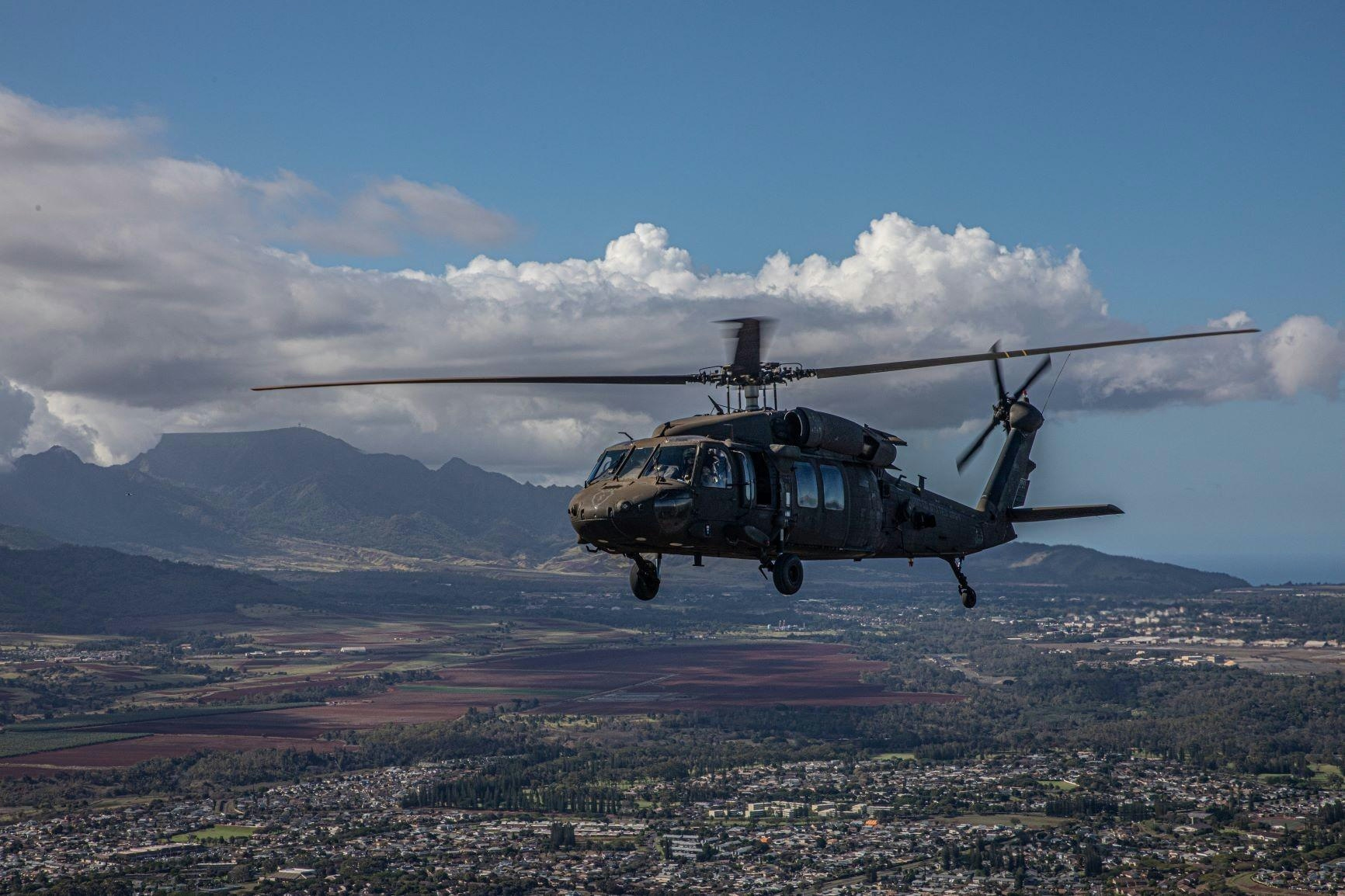
M1 Support Services (M1) has been awarded a $601.1 million contract modification to continue providing maintenance, repair, and overhaul (MRO) services for the U.S. Army’s aviation training operations at Fort Rucker, Alabama. The contract extension, which runs through January 15, 2027, underscores M1’s critical role in supporting one of the largest military flight training programs globally.

Scope of Services and Operational Demands

Under the terms of the agreement, M1 will deliver a full range of maintenance services, including organizational, intermediate, and limited depot-level support for a fleet exceeding 500 rotary-wing aircraft. This fleet comprises key platforms such as the AH-64 Apache, UH-60 Black Hawk, CH-47 Chinook, UH-72 Lakota, and TH-1 helicopters, operated by both the U.S. Army and U.S. Air Force. These aircraft are stationed across five primary airfields at Fort Rucker, reflecting the extensive scale and complexity of the training environment.

M1’s operations support a demanding training tempo, with aircraft conducting up to 400 sorties daily and accumulating over 200,000 flight hours annually. To sustain this high operational tempo, the company employs more than 3,000 personnel, including maintenance technicians, aircrew, and support staff. These teams work continuously in three shifts to ensure aircraft availability, safety, and mission readiness throughout the year.

George Krivo, Chairman and CEO of M1 Support Services, highlighted the company’s dedication to the Army Aviation Center of Excellence, stating, “M1 stands for ‘Mission First,’ and we dedicate ourselves every day to ensure aircraft are well-maintained and available to train the next generation of Army Aviators.”

Industry Challenges and Strategic Context

The contract award arrives amid broader challenges within the defense sector and shifting priorities in military aviation. Maintaining legacy aircraft remains a complex undertaking, as recent Government Accountability Office (GAO) recommendations have urged the Army to improve tracking of partner feedback on aging platforms. This evolving landscape may require M1 to adapt its maintenance approaches to meet changing operational and technical requirements.

The extension also intensifies competition among defense contractors, with rival firms poised to demonstrate their capabilities in managing sophisticated military equipment to secure future contracts. Market responses to M1’s contract win are likely to be influenced by ongoing defense budget considerations and the Army’s focus on emerging technologies, including efforts to identify a replacement for the Gray Eagle unmanned aircraft. Such modernization initiatives could potentially redirect resources and attention away from existing support contracts.

Furthermore, recent financial activities and contract developments involving major industry players like RTX Corporation are shaping market dynamics, as investors evaluate the broader implications for competitors and the defense sector at large.

As the U.S. Army seeks to balance modernization with the imperative to sustain current training operations, M1’s contract extension highlights both the enduring significance and the evolving challenges of maintaining military aviation readiness.

More news
ATR Airlines Misses Targets Amid Aircraft Delivery Delays

ATR Airlines Misses Targets Amid Aircraft Delivery Delays

ATR Airlines Misses Targets Amid Aircraft Delivery Delays Delivery Shortfalls Amid Industry-Wide Supply Chain Disruptions France’s ATR Airlines has fallen short of its 2025 aircraft delivery targets, a setback largely attributed to ongoing supply chain disruptions affecting the global aviation sector. The Toulouse-based manufacturer had set an ambitious goal to deliver at least 35 aircraft this year but managed only 32, missing both its internal objectives and the minimum financial quota of 40 units. This shortfall occurred despite a strong order intake, with net orders reaching 50 aircraft and a backlog now totaling 160 units. ATR’s delivery challenges reflect a broader trend impacting major manufacturers worldwide. Industry leaders such as Boeing and Airbus have encountered similar difficulties, with Boeing’s delays in the 737 Max program notably affecting airlines like Allegiant Air, which have had to adjust their capacity plans accordingly. AerCap CEO Aengus Kelly recently highlighted that reliability issues across the sector are compelling airlines to expand their fleets to offset longer maintenance downtimes, thereby intensifying pressure on aircraft supply. At a press conference held on February 18 at ATR’s Blagnac headquarters, CEO Nathalie Tarnaud Laude acknowledged the difficulties but emphasized a measured approach to the year’s performance. She stated, “We do not measure the success of a transition year like 2025 on one number. We are determined to raise our delivery rate and have taken concrete steps to address the issues that limited our output. We have strengthened every part of our organisation and laid the groundwork for a safe, sustainable, and credible increase in production.” Strategic Market Focus and Financial Outlook Despite the delivery setbacks, ATR remains focused on growth, particularly in the Asia-Pacific region, which has emerged as a strategic priority. The company is also working to reestablish its presence in the competitive North American market, where rivals such as Embraer and Airbus continue to maintain strong positions amid persistent delivery challenges industry-wide. Financially, ATR reported revenues of €1.2 billion in 2025, supported by approximately 100 recorded transactions. The company described 2025 as a “transition year,” with CEO Tarnaud Laude expressing optimism about future prospects. ATR aims to increase production and delivery capacity by up to 20% in 2026, targeting around 60 aircraft deliveries annually in the years that follow. Commitment to Sustainability and Future Prospects In parallel with addressing supply chain issues, ATR is advancing its environmental initiatives. The company is progressing with the HERACLES programme and collaborating with the European Union’s Clean Aviation Joint Undertaking (CAJU) to develop low-emission, sustainable aircraft. These efforts align with a broader industry movement toward greener aviation solutions. As ATR and its competitors continue to navigate persistent supply chain and reliability challenges, the company’s initiatives to strengthen operations and expand in key markets will be crucial to achieving future delivery targets. The ongoing delays across the aviation industry underscore the importance of resilience and adaptability for both manufacturers and airlines in the near term.
Sen. Jerry Moran Proposes Bipartisan Bill to Improve FAA Certification for Advanced Air Mobility

Sen. Jerry Moran Proposes Bipartisan Bill to Improve FAA Certification for Advanced Air Mobility

Sen. Jerry Moran Introduces Bipartisan Bill to Reform FAA Certification for Advanced Air Mobility U.S. Senator Jerry Moran, in collaboration with a bipartisan group of lawmakers, has introduced the Aviation Innovation and Global Competitiveness Act, a legislative proposal aimed at reforming the Federal Aviation Administration’s (FAA) certification process for Advanced Air Mobility (AAM) aircraft. The bill seeks to enhance transparency and efficiency in the FAA’s type certification procedures, a development proponents argue is essential for preserving the United States’ leadership in the rapidly evolving aviation industry. Objectives and Industry Support The legislation sets forth several key objectives, including the establishment of clear timelines for FAA certification of AAM aircraft, improvements to the process for issuing compliance documentation, and updates to delegation guidance to better accommodate emerging aircraft technologies. These measures are intended to address current regulatory challenges and facilitate the timely approval of innovative aviation solutions such as electric vertical takeoff and landing (eVTOL) aircraft. The bill has garnered broad support from industry stakeholders who emphasize its potential to accelerate the deployment of next-generation aviation technologies. Senators Peter Welch and Cynthia Lummis, co-sponsors of the legislation, highlighted the necessity of modernizing certification processes to sustain U.S. competitiveness in aerospace. “Modernizing certification is essential for the U.S. to remain at the forefront of aerospace technology,” Sen. Lummis stated. Regulatory Challenges and Market Implications The push for reform arises amid growing concerns regarding the FAA’s capacity to effectively evaluate and certify new AAM technologies. Recent industry analyses indicate that resource constraints within the FAA could delay the approval of advanced aircraft, thereby impeding innovation. These challenges have prompted calls from both lawmakers and industry leaders for clearer regulatory guidelines and more predictable certification timelines. Market analysts observe that companies capable of successfully navigating the FAA’s certification process are likely to attract increased investor interest, as competition to commercialize AAM technologies intensifies. An analysis by CleanTechnica on eVTOL certification timelines suggests that regulatory clarity may prove decisive in determining which firms emerge as leaders in this burgeoning market. Broader Economic and Societal Impact In response to the evolving regulatory environment, stakeholders are already adapting their strategies. For instance, Ohio has submitted a proposal to the FAA’s eVTOL Integration Pilot Program (eIPP), aiming to harness advanced aviation technology to improve healthcare delivery. Such initiatives underscore the broader economic and societal implications tied to the modernization of aviation regulations. As the United States endeavors to maintain its competitive edge in aerospace, the Aviation Innovation and Global Competitiveness Act represents a concerted bipartisan effort to ensure that regulatory frameworks evolve in step with technological advancements. The bill’s progress will be closely monitored by industry participants, investors, and policymakers alike.
US Audit Identifies FAA Oversight Gaps at United Maintenance

US Audit Identifies FAA Oversight Gaps at United Maintenance

US Audit Identifies FAA Oversight Gaps at United Maintenance Federal Audit Reveals Deficiencies in FAA Supervision A recent audit conducted by the U.S. Department of Transportation’s Office of Inspector General (OIG) has exposed significant deficiencies in the Federal Aviation Administration’s (FAA) oversight of United Airlines’ maintenance operations. The report highlights concerns about the FAA’s capacity to ensure airline safety amid persistent staffing shortages and inadequate training within its inspection workforce. The audit, which examined FAA activities from May 2024 through December 2025, found that the agency has not fully implemented prior recommendations aimed at strengthening oversight. Key issues identified include insufficient workforce planning, limited inspector capacity, and ineffective training programs. These shortcomings have resulted in inadequate evaluation of safety risks associated with United’s extensive and complex fleet. Impact of Staffing Shortages and Inspection Practices The OIG report points to chronic staffing shortages and high turnover rates at FAA inspection offices as primary factors contributing to reduced inspections and diminished surveillance of maintenance operations. Inspectors reported being instructed by front-line managers to conduct certain reviews virtually, despite agency policies mandating on-site inspections when remote assessments are deemed inappropriate. The reliance on virtual inspections raises safety concerns, as it increases the likelihood that inspectors may overlook or misidentify critical maintenance issues that would be more apparent during in-person evaluations. Additionally, inspectors face challenges in accessing United Airlines’ safety data systems, limiting the FAA’s ability to analyze maintenance trends and detect emerging risk patterns. The report underscores that ineffective workforce training and restricted data access further impair the agency’s oversight capabilities. Context of Recent Maintenance-Related Incidents These oversight gaps come against the backdrop of several high-profile maintenance-related incidents involving United Airlines. In March 2024, passengers were evacuated after a United jet rolled off a runway in Houston. The following day, another United aircraft lost a tire during takeoff from San Francisco but managed to land safely in Los Angeles. More recently, in December 2025, a United flight experienced an engine failure during takeoff from Washington Dulles but returned safely to the airport. Recommendations and Responses The OIG report calls for a comprehensive reevaluation of FAA staffing models and regulatory rules, alongside an independent workplace survey to assess inspector workload and organizational culture. It also recommends enhanced training focused on accessing and analyzing United’s safety data systems to improve oversight effectiveness. In response, the FAA acknowledged agreement with most of the recommendations and outlined plans to implement corrective measures by the end of the year. These include strengthening training programs and reassessing workforce needs to address the identified deficiencies. United Airlines emphasized its ongoing collaboration with the FAA and reaffirmed its commitment to maintaining a robust internal safety management system. The airline also highlighted the necessity of adequate regulatory resources to support effective oversight. The FAA declined further comment beyond its letter to the inspector general’s office. The audit’s findings underscore persistent challenges in federal oversight of airline maintenance, particularly as the aviation industry contends with increasing operational complexity and heightened safety demands.
The Impact of Agentic AI on Airport Operations

The Impact of Agentic AI on Airport Operations

The Impact of Agentic AI on Airport Operations As airports around the globe pursue modernization, agentic artificial intelligence (AI) is emerging as a pivotal technology with the potential to transform fragmented operational tools into integrated, goal-oriented systems. In anticipation of the International Airport Review’s breakfast briefing in London during PTE on 18 March, Jordi Valls, Global Director at SITA Labs, outlined how agentic AI could fundamentally reshape airport operations, contingent upon the establishment of robust data infrastructures, governance frameworks, and sustained human oversight. Advancing Beyond Traditional AI Traditional AI applications in airports have predominantly centered on predictive analytics, dashboards, and alert systems. According to Valls, agentic AI represents a significant evolution beyond these capabilities. Unlike conventional AI, which primarily forecasts delays or assists with isolated tasks, agentic AI is designed to reason across multiple objectives, constraints, and operational roles. It can propose or autonomously execute coordinated actions by evaluating options and balancing trade-offs across various systems and teams. This transition from isolated, assistive tools to systems exhibiting goal-driven behavior is particularly consequential in the complex and time-sensitive environment of airport operations. Partial Autonomy Within Operational Domains While the concept of fully autonomous airports remains a distant prospect—complicated by regulatory, labor union, and safety considerations—agentic AI is expected to introduce partial autonomy in targeted operational areas. Functions such as disruption management, resource reallocation, and interdepartmental coordination stand to benefit from streamlined processes, with agentic AI serving as the integrative mechanism linking disparate systems. Valls emphasizes that progress over the coming decade will be measured not by fully unmanned operations but by reductions in operational friction and accelerated recovery times. The Imperative of Unified Data Architecture A critical prerequisite for the effective deployment of agentic AI is the establishment of a unified operational data architecture. Consistent and shared data regarding flight statuses, resource availability, and passenger flows are essential to prevent decision-making based on incomplete or conflicting information—a risk that could have severe consequences in safety-critical airport environments. Valls clarifies that a common operational data layer is not about centralizing data but about achieving alignment across systems. Neglecting this foundational step could lead to fragile automation, undetected errors, and erosion of trust among operational personnel, thereby exacerbating fragmentation rather than resolving it. Immediate Applications and Benefits In the short term, agentic AI is poised to deliver significant improvements in disruption recovery, turnaround coordination, and baggage exception handling. These operational areas are data-rich but often suffer from delayed or suboptimal decision-making under pressure. Agentic AI can integrate inputs from airlines, ground handlers, and airport operations to generate prioritized, real-time action plans, thereby reducing coordination delays and enabling more informed decisions even when data is incomplete. For instance, during severe weather disruptions, agentic AI can continuously reassess priorities related to aircraft scheduling, crew legality, gate assignments, and passenger connections. Rather than relying on static contingency plans, the system can dynamically adjust operations by reallocating gates, resequencing services, alerting relevant teams, and flagging critical issues as they emerge. Emerging Challenges and Industry Implications The adoption of agentic AI also introduces new challenges for airports and airlines. Increased competition from AI-enabled rivals may compel industry players to reevaluate their strategic approaches and accelerate the development of advanced AI capabilities. Additionally, the growing reliance on AI heightens exposure to data scraping and cybersecurity threats, raising concerns about operational vulnerabilities and potential liabilities, particularly when third-party AI solutions are involved. As agentic AI becomes more deeply embedded in airport operations, the sector must address these risks through comprehensive governance, enhanced cybersecurity protocols, and clearly defined accountability mechanisms. Agentic AI holds considerable promise for enabling smarter, faster, and more resilient airport operations. However, realizing these benefits will depend on meticulous attention to data integrity, sustained human oversight, and proactive management of emerging risks within an increasingly competitive and complex operational landscape.
West Star Aviation Announces Expansion in Chattanooga

West Star Aviation Announces Expansion in Chattanooga

West Star Aviation Expands Chattanooga Facility to Meet Growing Demand West Star Aviation has announced a significant expansion of its Chattanooga Airport campus, responding to increasing demand for aircraft maintenance services and aiming to solidify its competitive standing in the regional market. Scheduled for completion by February 2027, the project will enlarge the facility to approximately 400,000 square feet, incorporating substantial upgrades across two primary areas of the campus. Facility Enhancements and Operational Upgrades Central to the expansion is the construction of Hangar 26, which will provide 40,000 square feet of hangar space alongside 15,000 square feet allocated for shop and office use. This new space will accommodate customer and program offices as well as climate-controlled storage designed to protect aircraft interiors and property during maintenance operations. The facility will also feature enhanced safety and operational improvements, including an overhead crane, fall-protection systems, fire-rated document storage, and an upgraded customer lounge, all intended to boost efficiency and enhance the client experience. In addition, the existing Hangar 27 will be extended with a new two-story, 30,000-square-foot addition. This expansion will house a larger Aircraft Service Department, Accessories Shop, Composites Shop, and Sheet Metal Shop, consolidating critical functions to streamline workflows and reduce turnaround times. Mike Ditmeyer, Vice President and General Manager of the Chattanooga location, emphasized the significance of the development: “This is a very exciting time for West Star Aviation as we continue to grow here at Chattanooga Airport. The site expansion strengthens our foundation to support our customers’ maintenance needs and further develop our team’s expertise. The pride, quality, and teamwork of this group are at the heart of this facility.” Economic Impact and Regional Market Dynamics The expansion is expected to generate up to 200 skilled jobs over the next five years, augmenting the company’s existing workforce of more than 500 employees in Chattanooga. This growth reflects West Star Aviation’s commitment to bolstering Tennessee’s workforce and contributing to the regional economy. The announcement comes amid intensifying competition within the regional maintenance, repair, and operations (MRO) sector. Established providers such as Sheltair, which is actively pursuing a major maintenance provider in Tampa, and Baykar’s new Piaggio MRO facility in Oklahoma, are expanding their presence. Industry analysts note that West Star’s capacity to integrate new mission systems and maintain its growth trajectory will be closely observed, particularly as the broader aviation industry faces challenges impacting major manufacturers like Airbus and Boeing. Competitors in the Chattanooga area may respond by enhancing their own service offerings to retain or attract clients, potentially fostering a more dynamic and competitive market environment. West Star’s Chattanooga facility, as a full-service location, enables customers to complete all necessary work—from scheduled maintenance to avionics upgrades, interior refurbishment, and paint—under one roof, simplifying scheduling and minimizing aircraft downtime. Strategically located with convenient access across the Southeast, East Coast, and North Central United States, West Star Aviation is positioning its Chattanooga campus as a key hub for reliable maintenance support amid a rapidly evolving MRO landscape.
Signs Point to Easing of Aerospace M&A Backlog by 2026

Signs Point to Easing of Aerospace M&A Backlog by 2026

Signs Point to Easing of Aerospace M&A Backlog by 2026 The commercial aerospace mergers and acquisitions (M&A) landscape is expected to undergo a significant transformation by 2026, following a turbulent period marked by aggressive U.S. tariffs, shifting regulatory policies, and evolving market dynamics. According to Ryan Kirby, junior partner, and Joseph Lakaj, analyst at Alderman & Company, the sector experienced a fundamental shift in 2025 as protectionist policies under a new U.S. administration redirected capital inward and encouraged domestic consolidation. Concurrently, a more permissive U.S. Federal Trade Commission (FTC) began approving historic megadeals, including Union Pacific’s $85 billion acquisition of Norfolk Southern and Netflix’s $83 billion purchase of Warner Bros—transactions that would have been unimaginable just a few years earlier. Market Dynamics and Sector Performance in 2025 The Aerospace and Defense sector in 2025 exhibited a “K-shaped” recovery. Smaller financial buyers encountered liquidity constraints and extended holding periods, while well-capitalized strategic buyers advanced aggressively, driving premiums higher in the U.S. aviation market. This trend was exemplified by notable acquisitions from companies such as TransDigm, VSE, and HEICO. Despite a challenging start to the year, overall M&A activity reached record highs in both deal count and aggregate value. Within the commercial aviation segment, however, the situation was more complex. Although 398 transactions were completed across the broader aerospace and defense sector in 2025, this represented a 14% decline from 2024 and a 37% decrease from the 2021 peak. The annual total concealed a significant shift: the first half of 2025 was subdued due to tariff-related uncertainty, but the second half experienced a marked increase in deal volume compared to the same period in 2024. By late 2025, aerospace accounted for approximately 38% of all M&A activity, driven largely by industry-wide efforts to address aging fleets and persistent original equipment manufacturer (OEM) backlogs. Strategic Responses and Emerging Opportunities Market conditions for major aerospace players remain uneven. Airbus continues to dominate single-aisle aircraft sales, while Boeing struggles to regain its narrowbody market share. These disparities are prompting strategic decisions regarding production rates and backlog management, with consequential effects throughout the supply chain. Meanwhile, companies such as Honeywell report strong demand momentum and record backlogs, contributing to a cautiously optimistic outlook for the sector. The aftermarket and Maintenance, Repair, and Overhaul (MRO) segments are attracting growing interest from both financial and strategic buyers, as OEM backlogs extend for several years. This shift in focus is fueling a surge in the M&A platforms market, suggesting that the backlog of aerospace M&A deals may begin to ease by 2026. Despite ongoing challenges—including uneven recovery among buyers, evolving regulatory frameworks, and competitive pressures—the outlook for aerospace M&A is improving. As market participants adapt to new realities and seize emerging opportunities, indicators point toward a more active and balanced deal environment in the near future.
Aviation Design Software Market Projected to Reach $2.8 Billion

Aviation Design Software Market Projected to Reach $2.8 Billion

Aviation Design Software Market Projected to Reach $2.8 Billion The global Aviation Design Software Market is on track for significant expansion, driven by increasing demand from commercial aerospace, defense modernization efforts, and the growing complexity of aircraft architectures. Verified Market Reports estimates the market was valued at $1.5 billion in 2024 and forecasts it will reach $2.8 billion by 2033, reflecting a compound annual growth rate (CAGR) of 7.5% between 2026 and 2033. Market Drivers and Technological Advancements The growth of the aviation design software sector is underpinned by advances in digital engineering, model-based design, and simulation optimization. These technologies facilitate faster aircraft development cycles, enhanced cost management, and more efficient regulatory compliance. Cutting-edge solutions incorporating cloud deployment, artificial intelligence (AI), and digital twin technologies have become indispensable for design validation, aerodynamic analysis, and systems integration. Additionally, the integration of additive manufacturing-ready design modules and adherence to global regulatory standards are accelerating time to market and enabling strategic program execution for original equipment manufacturers (OEMs) and Tier 1 suppliers. In 2025, global aerospace digital engineering expenditures surpassed $9 billion, with design-focused platforms representing nearly 30% of this investment. This surge is fueled by expanding aircraft order backlogs, which now exceed 15,000 units worldwide, alongside sustainability mandates and the imperative to shorten development timelines. OEMs and suppliers are increasingly shifting from fragmented software tools to integrated environments that support concurrent engineering, lifecycle traceability, and real-time collaboration. Defense modernization budgets across the United States, Europe, and the Asia-Pacific region are further propelling investments in digital design technologies. Emerging sectors such as urban air mobility and electric aircraft programs are also driving early adoption of advanced design tools. Cloud-enabled platforms are reducing upfront capital expenditures by up to 40% for mid-sized suppliers, while regulatory digitization initiatives by authorities like the Federal Aviation Administration (FAA) and the European Union Aviation Safety Agency (EASA) are streamlining software-driven certification processes. Market Trends and Competitive Landscape Several key trends are shaping the market’s trajectory. The demand for advanced modeling capabilities is rising, particularly in response to electric propulsion and hydrogen-powered aircraft concepts. Regulatory bodies are increasingly supporting digital thread adoption, which enhances traceability and safety throughout the design and manufacturing lifecycle. The shift toward recurring subscription revenue models is improving vendor margin stability, while digital collaboration across aerospace supply chains is helping to reduce program delays. Furthermore, increased venture capital funding is broadening the user base beyond traditional OEMs. AI-driven generative design techniques are demonstrating early success by reducing component weight by 10 to 20 percent, while automation in meshing and simulation processes is cutting engineering hours by up to 30 percent. Cloud-native architectures facilitate collaboration among global teams and enable remote certification reviews. Innovations in digital twin technology are also strengthening long-term customer relationships. Despite these positive developments, the market faces challenges in transitioning to cloud-based subscription models and integrating AI tools effectively. Dassault Systèmes recently experienced a 20 percent decline in market share following a weak outlook for 2026, highlighting the competitive pressures within the industry. The sector is witnessing a surge in mergers and acquisitions, with the U.S. M&A market increasing by 111 percent amid an AI-driven supercycle. In response, companies are pursuing strategic pivots: Saab has partnered with Divergent Technologies to develop software-defined fuselage solutions, while Embraer is focusing on E2 aircraft sales rather than launching new airliner programs. Major aerospace players such as Airbus and Boeing are managing increased production rates and making critical decisions regarding future aircraft development, underscoring the vital role of agile and innovative design software solutions in this rapidly evolving market. Outlook As the aviation industry continues its digital transformation, the Aviation Design Software Market is poised to play a central role in shaping the next generation of aircraft. This market will support both established manufacturers and emerging entrants as they navigate a highly competitive and technologically dynamic landscape.
The Future of Aviation in Africa Amid Digital Transformation

The Future of Aviation in Africa Amid Digital Transformation

The Future of Aviation in Africa Amid Digital Transformation Digital transformation is fundamentally altering industries across the globe, with the aviation sector experiencing profound shifts. In aerospace and defense, digitalisation has become indispensable for enhancing operational efficiency, accelerating product development, and managing increasingly complex systems. Despite substantial investments, many organisations struggle to achieve the anticipated return on investment (ROI). This challenge is particularly acute in African aviation, where limited financial and human resources intersect with intricate operational demands. Siemens’ “Five Levels of Digital Transformation Maturity” provides a strategic framework that is especially relevant for African aviation stakeholders, notably airports, as they navigate this evolving landscape. The framework highlights that digital maturity extends beyond the mere adoption of new technologies; it requires a fundamental rethinking of organisational operations and value delivery. Understanding Digital Transformation Maturity Digital transformation maturity assesses the extent to which digital processes are embedded within an organisation. At its most basic, digitisation replaces manual or paper-based workflows with digital alternatives, improving efficiency without fundamentally changing operations. More advanced stages involve system integration, cross-functional data utilisation, and the deployment of sophisticated tools such as digital twins, advanced analytics, and automation to optimise decision-making and overall performance. Siemens’ roadmap delineates five progressive stages, guiding organisations from isolated digital tools to fully integrated, intelligent, and adaptive enterprises. However, a Siemens-sponsored survey conducted across the Aviation Week network reveals that many aerospace companies remain in intermediate stages. While they have invested in technology, they often lack the organisational alignment and data integration necessary to unlock full value—a scenario that resonates strongly within African aviation. African Aviation: Complexity, Constraints, and Opportunity Airports represent some of the most complex business environments, functioning as ecosystems that encompass airlines, ground handlers, security agencies, regulators, retailers, and passengers. In Africa, this complexity is compounded by infrastructure deficiencies, fragmented legacy systems, and constrained budgets. Unlike major global hubs, many African airports operate with small IT teams and limited capital expenditure, yet they face comparable expectations regarding safety, security, punctuality, and passenger experience. The future of aviation in Africa will be shaped by several critical challenges and opportunities. Upgrading both physical and digital infrastructure remains a pressing priority, as many airports require modernised systems to support digital transformation initiatives. Regulatory harmonisation across countries is essential to facilitate seamless operations and technological integration, particularly as initiatives like the Single African Air Transport Market (SAATM) gain momentum. Furthermore, integrating new digital tools with existing legacy systems presents a complex but necessary task to achieve higher levels of digital maturity. Pathways to Progress: Applying the Maturity Model For African airports and aviation authorities, Siemens’ maturity model offers a pragmatic, incremental approach. Initial efforts should concentrate on standardising and digitising core processes such as asset management, maintenance scheduling, and passenger flow monitoring. Advancing to intermediate stages involves integrating these systems to enable data sharing across departments, thereby enhancing visibility into costs, performance, and capacity constraints. While advanced maturity levels—such as predictive analytics and digital twins—may appear ambitious, they are increasingly attainable and relevant. Predictive maintenance, for instance, can enable airports to anticipate equipment failures and optimise resource allocation, thereby improving operational resilience. Market and Competitive Dynamics Market responses to digital transformation are already evident. Initiatives like SAATM and visa reforms are stimulating increased intra-African travel demand. In turn, competitors are enhancing regional connectivity and leveraging digital tools to improve operational efficiency and customer experience. Ultimately, the trajectory of African aviation will hinge on the sector’s capacity to navigate digital transformation strategically. Success will require balancing ambition with pragmatism and harnessing technology to deliver safer, more efficient, and more connected air travel across the continent.
Gyeongnam Province Unveils Mid- to Long-Term Aerospace Industry Roadmap

Gyeongnam Province Unveils Mid- to Long-Term Aerospace Industry Roadmap

Gyeongnam Province Unveils Mid- to Long-Term Aerospace Industry Roadmap South Gyeongsang Province, commonly known as Gyeongnam, has revealed an ambitious mid- to long-term strategy aimed at establishing itself as a premier hub for the aerospace industry. The province’s plan targets the cultivation of 20 companies each generating annual sales exceeding 100 billion won, alongside achieving a total aerospace production value of 30 trillion won by 2035. This initiative aligns with South Korea’s broader “K-space” vision and the national aspiration to rank among the world’s top five aerospace powers. Strategic Pillars and Industrial Development At a press briefing held on the 23rd, provincial officials detailed four core strategies designed to elevate Gyeongnam’s aerospace sector. These include upgrading the advanced aviation industry ecosystem, establishing a foundation for the next-generation space industry, fostering a technology ecosystem for future aviation, and completing the infrastructure necessary to become a global aerospace capital. Central to this roadmap is the development of a specialized high-tech aviation engine complex within the Changwon National Industrial Complex. This site will be designated as a national high-tech strategic industry zone focused on defense. The complex is set to host leading aerospace firms such as Hanwha Aerospace, Doosan Energy, and Seah Changwon Special Steel, supported by comprehensive facilities for testing, evaluation, certification, and maintenance of aviation engines. The province aims to achieve technological self-reliance in aviation engine manufacturing by creating an integrated ecosystem that spans materials and parts production through to repair and certification. In parallel, Gyeongnam plans to accelerate growth in the Maintenance, Repair, and Overhaul (MRO) sector. The Sacheon Aviation MRO Industrial Complex is scheduled for completion next month, complementing existing clusters of aviation parts suppliers in Jinju and Sacheon centered around Korea Air Service (KAEMS). The roadmap includes establishing a comprehensive Air MRO Support Center and an Air Defense MRO Cluster as national projects, positioning the region as a consolidated MRO hub serving both civilian and military aviation needs. Advancing Space Industry and Addressing Global Challenges To bolster its space industry capabilities, Gyeongnam will invest 174.3 billion won by 2028 in the development of a satellite innovation center in Sacheon and a space environment test facility in Jinju. The province also plans to host an Aerospace Defense Industry Exhibition and advocate for the enactment of a special law to facilitate the creation of aerospace complex cities, further strengthening its industrial ecosystem. These ambitions come amid significant global challenges. The International Air Transport Association has underscored persistent supply chain disruptions impacting airlines and manufacturers worldwide, including major players such as Airbus and Boeing. Market competition is intensifying, with Boeing recently reporting a financial turnaround and increasing production of its 737 MAX and 777X aircraft. Meanwhile, competitors are advancing rapidly in unmanned aerial vehicle technology, exemplified by Korea Aerospace Industries’ unveiling of two Collaborative Combat Aircraft models ahead of the Singapore Airshow 2026. Geopolitical tensions and the imperative to reduce emissions are also shaping the aerospace sector’s strategic landscape. Gyeongnam’s roadmap reflects the complex interplay of opportunities and challenges inherent in building a globally competitive aerospace industry within this dynamic environment.
Delta Flight to Atlanta Suffers Engine Trouble, Sparks Grass Fire at Airport

Delta Flight to Atlanta Suffers Engine Trouble, Sparks Grass Fire at Airport

Delta Flight Experiences Engine Failure, Ignites Grass Fire at Savannah Airport A Delta Air Lines flight bound for Atlanta was forced to return to Savannah/Hilton Head International Airport on Sunday evening after encountering engine trouble shortly after takeoff. The incident resulted in a grass fire near the runway and caused significant disruptions to air travel. Incident Details and Response Flight 1067, operated by a Boeing 737-900, departed from Savannah but soon after takeoff experienced a mechanical failure in its left engine. Passengers reported hearing a loud boom during the aircraft’s initial ascent. Although the plane briefly lifted off, it maintained a low altitude before safely returning to the airport. The malfunctioning engine ignited a grass fire adjacent to the runway around 7 p.m., prompting an immediate response from local fire crews who extinguished the blaze within approximately 30 minutes. Passengers disembarked at the gate about an hour after landing, and no injuries were reported. Broader Impact on Delta Operations The engine failure and resulting fire contributed to delays and diversions at Savannah’s airport, exacerbating a weekend already marked by widespread travel disruptions for Delta. On Saturday alone, the airline canceled over 500 flights, with many issues concentrated at its Atlanta hub. These disruptions affected thousands of travelers across major U.S. airports, including Chicago, Washington D.C., and Newark. Delta also faced additional challenges earlier in the weekend. A separate flight from Houston to Atlanta experienced engine trouble, leading to an emergency landing and another grass fire. Furthermore, the airline dealt with a security incident involving a passenger attempting to breach the cockpit on a different flight, which necessitated an emergency landing in Houston. These events have underscored ongoing operational difficulties for Delta, encompassing both mechanical failures and passenger-related security concerns. Official Statements and Ongoing Investigation In an official statement, Delta confirmed the mechanical issue with Flight 1067’s left engine and emphasized the safe landing and evacuation of passengers. The airline reiterated that customer and crew safety remains its highest priority and expressed regret for the travel delays caused. Delta is actively working to rebook affected passengers on alternate flights. The Federal Aviation Administration has launched an investigation into the engine failure and the subsequent fire. While Delta continues to manage the situation, the timeline for resuming normal service and completing passenger travel remains uncertain. Travelers are advised to consult Delta for the latest flight status updates as the airline addresses these ongoing disruptions.
line









