
将人工智能洞察转化为可执行行动

热门趋势
Categories
NASA Studies Public Response to Air Taxi Noise
NASA Studies Public Response to Air Taxi Noise
Investigating Community Reactions to Emerging Air Mobility
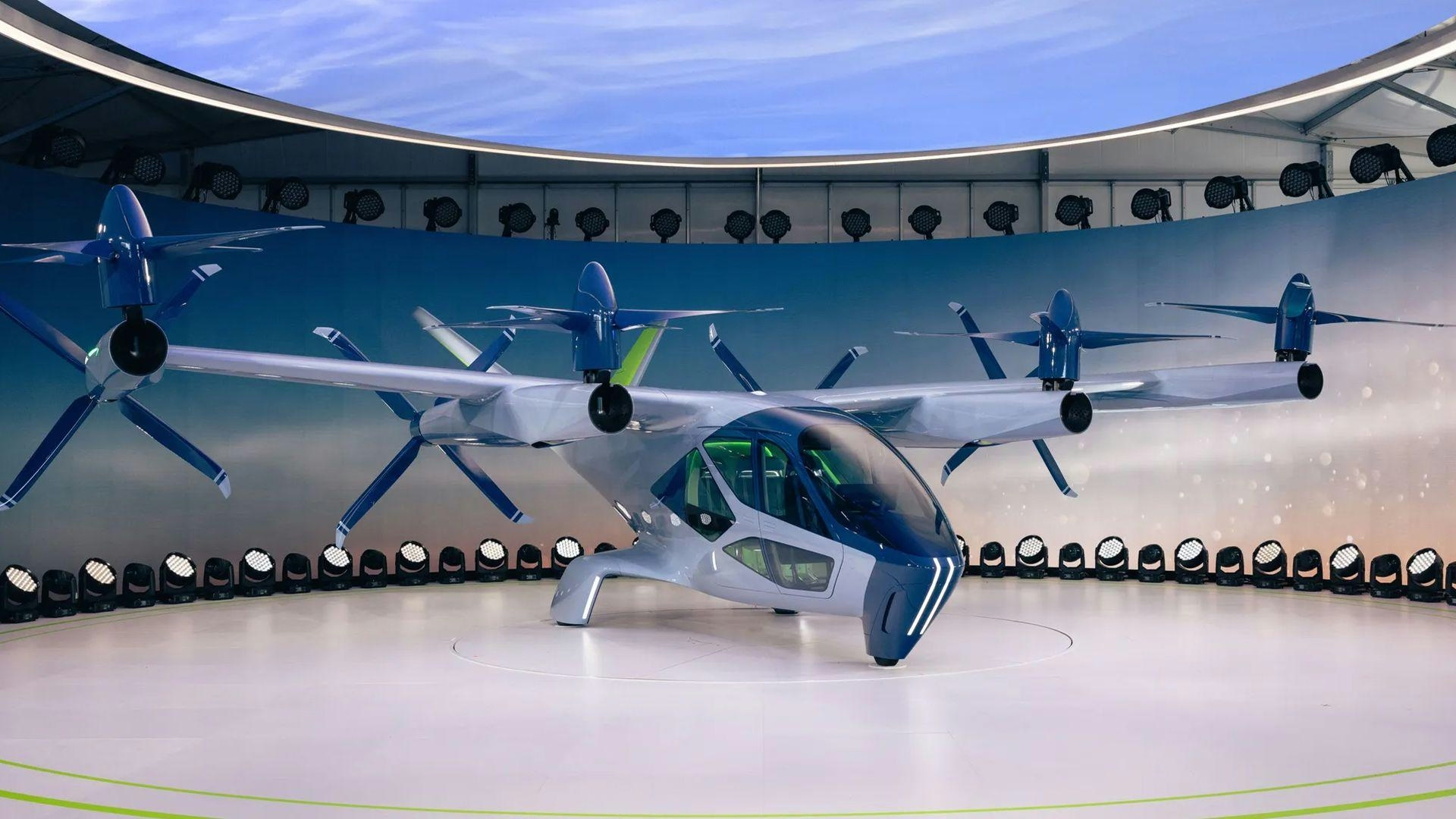
As advanced air mobility (AAM) aircraft prepare to enter U.S. airspace, NASA is conducting research to understand how communities might respond to the novel sounds these vehicles will introduce. The focus of this investigation is on air taxis—small aircraft intended for short-distance passenger transport, including personal travel and emergency medical services. NASA’s aeronautics division recently completed a study designed to assess public annoyance and sensitivity to these new noise sources.
The research, titled the Varied Advanced Air Mobility Noise and Geographic Area Response Difference (VANGARD) test, involved 359 participants from Los Angeles, New York City, and Dallas-Fort Worth. Conducted between late August and September 2025, the study exposed participants to 67 simulated aircraft sounds derived from NASA and industry concept designs. To ensure impartial feedback, participants were not informed of the manufacturers nor shown images of the aircraft. This methodology aimed to isolate auditory perception from visual or brand biases.
Key Findings and Methodology
Preliminary results indicate that residents in noisier urban environments reported higher levels of annoyance from air taxi sounds compared to those living in quieter suburban areas. While researchers continue to analyze the data, early interpretations suggest that individuals accustomed to elevated background noise may exhibit increased sensitivity to additional sound disturbances. Participants rated their annoyance after hearing each aircraft flyover simulation and provided their zip codes, allowing researchers to classify their home environments by ambient noise levels.
Most participants completed the study remotely using personal audio devices, while a control group of 20 individuals participated on-site at NASA’s Langley Research Center using standardized listening equipment. The consistency of responses between these groups reinforces the reliability of the findings.
Addressing Public Concerns Amid Industry Progress
The introduction of air taxis has sparked community opposition in certain regions, notably Southern California, where petitions have circulated expressing concerns over noise pollution and the impact of low-flying aircraft. These public apprehensions underscore the significance of NASA’s research in guiding both industry stakeholders and policymakers.
Despite skepticism, companies such as Vertical Aerospace and Archer Aviation continue to advance their air taxi initiatives, aiming to secure regulatory certifications from the Federal Aviation Administration (FAA) and UK authorities by 2028. Their progress highlights the pressing need to understand and mitigate community reactions to the noise generated by these emerging aircraft.
NASA’s ongoing studies, including the VANGARD test, seek to facilitate the safe and considerate integration of air taxis into communities. The insights gained are expected to inform future aircraft design and operational strategies, balancing technological innovation with the comfort and well-being of residents.

Etihad Airways Suspends Airbus A380 Flights on Key Route

Aditya Birla Group Seeks Approval for Aircraft Leasing in GIFT City

Qatar Airways Highlights Innovation and Connectivity at Arabian Travel Market 2026

Hong Kong's Five-Year Plan Includes Andrew Fan's Aircraft Parts Processing Hub Proposal

ACIA Aero Leasing Delivers ATR72-600 to Air Nostrum

RTX Appoints Jill Albertelli as Head of Pratt & Whitney

TAT Technologies Joins Beyond Aero Hydrogen Aircraft Program

AURAK Study Highlights Barriers to Air Taxi Adoption in Emerging Economies

Xiamen Air Selects Altitude for 787 Maintenance at Heathrow

Etihad and Swissport Extend Global Partnership
