
图像

将人工智能洞察转化为可执行行动

立即加入 AeroGenie 候补名单!

热门趋势

Categories

National Airlines Completes Nearly 10,000-Nautical-Mile Nonstop Engine Part Delivery
August 5, 2026By ePlane AI
National Airlines Completes Nearly 10,000-Nautical-Mile Nonstop Engine Part Delivery
0
0
National Airlines
Boeing 777 Freighter
Engine Part Delivery

National Airlines Completes Nearly 10,000-Nautical-Mile Nonstop Engine Part Delivery

A Record-Breaking Flight to Resolve Aircraft Downtime

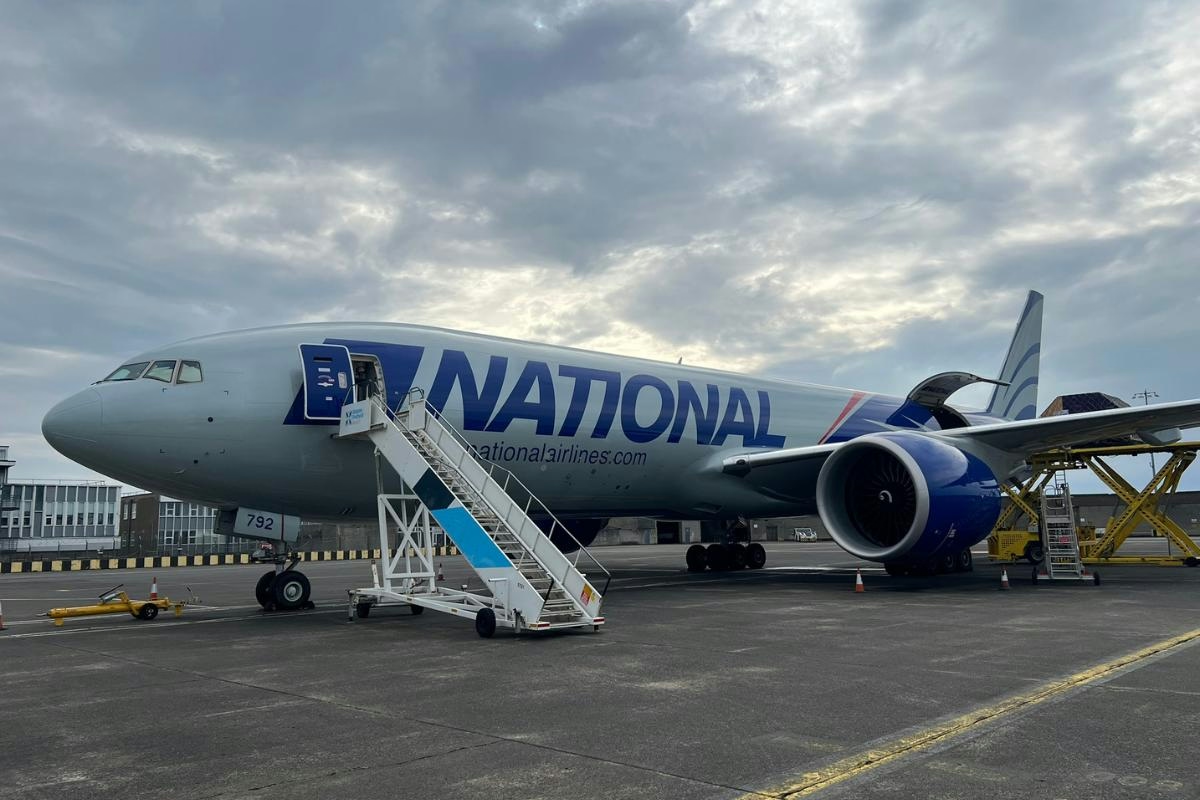
National Airlines has set a new benchmark in cargo aviation by completing a nonstop Boeing 777 freighter flight covering 9,849 nautical miles to deliver a critical engine component. The Florida-based carrier reported that the journey lasted 19 hours and 23 minutes, marking what it claims to be the longest nonstop commercial flight ever operated by a Boeing 777 freighter. This mission underscores the urgency and precision required when an aircraft is grounded due to missing parts, where every hour of delay translates into significant operational and financial consequences.

Precision and Planning Behind the Mission

The delivery involved transporting a single, urgently needed engine part intended to return a grounded aircraft to service without delay. National Airlines chose a direct, nonstop route to avoid the risks and time lost through multiple stops. The flight was conducted on behalf of Golden Aviation using one of National’s newest Boeing 777Fs, registered N792CA, an aircraft designed for long-range operations but pushed to the limits of its commercial capabilities on this mission.

The flight connected Prestwick Airport in Scotland with Melbourne, Australia—two locations nearly on opposite sides of the globe. While local sources suggest the engine part originated from an aerospace supplier near Prestwick, National Airlines has not officially confirmed this. To achieve the unprecedented nonstop distance, the airline carefully managed the aircraft’s payload and fuel load, ensuring it remained light enough to avoid refueling stops. Such ultra-long-haul cargo flights require meticulous planning around factors including wind conditions, weight restrictions, and contingency airports.

Operational Stakes and Industry Implications

For airlines and leasing companies, a grounded aircraft represents a substantial financial burden, with lost revenue and potential passenger compensation mounting with each day of inactivity. This urgency often justifies the expense of dedicated charters, even those involving nearly a full day of continuous flight. National Airlines specializes in Aircraft on Ground (AOG) services, where rapid delivery of critical parts can save days compared to scheduled cargo routes that involve transfers and layovers.

The Boeing 777F typically has a maximum range of approximately 4,970 nautical miles at full payload. By carrying only a single engine part, National Airlines was able to significantly reduce weight and maximize fuel capacity, effectively nearly doubling the aircraft’s standard range. This strategic adjustment was key to enabling the record-setting nonstop journey.

National Airlines’ achievement highlights the logistical complexities, regulatory compliance, and operational risks inherent in such demanding missions. The successful delivery not only demonstrates the airline’s expertise in managing ultra-long-haul flights but also positions it as a leader in high-stakes cargo charters. The industry has taken note, and this accomplishment is likely to attract further urgent and specialized cargo contracts.

Competitors may respond by expanding their ultra-long-range aircraft fleets or refining their logistics networks to match National Airlines’ efficiency in executing demanding operations. As the cargo aviation sector evolves, the standards for rapid, global delivery continue to rise.

More news
Air India Appoints Tewolde Gebremariam as CEO

Air India Appoints Tewolde Gebremariam as CEO

Air India Appoints Tewolde Gebremariam as CEO Air India has announced the appointment of Tewolde Gebremariam as its new Chief Executive Officer and Managing Director, succeeding Campbell Wilson. This leadership change occurs at a critical juncture in the airline’s transformation, as it strives to establish itself as a world-class global carrier. Leadership Selection and Experience The Air India board emphasized that their search prioritized a leader with a demonstrated ability to manage large-scale airline turnarounds, operational excellence, safety, service quality, and profitable growth. After a comprehensive evaluation process, Gebremariam was unanimously chosen for his combination of leadership skills, operational expertise, and strategic vision, which are deemed essential for the airline’s forthcoming phase of expansion. Gebremariam brings extensive experience from his previous role as CEO of Ethiopian Airlines Group, where he spearheaded a multi-billion-dollar expansion that elevated the airline to Africa’s largest and most profitable carrier. Under his leadership, Ethiopian Airlines’ revenue increased more than fourfold, and its fleet size nearly tripled. The board highlighted his proficiency in managing complex operations, driving cultural transformation, developing global hubs, and establishing world-class maintenance and training facilities. Strategic Vision for Air India’s Growth As Air India transitions from its foundational turnaround phase into a period focused on growth and execution, Gebremariam’s expertise in expanding international long-haul networks and building hub operations is considered particularly valuable. He is widely recognized for his unwavering commitment to safety, engineering quality, operational reliability, and sustained profitability, even amid challenging economic conditions and volatile global markets. His strengths in workforce development and fostering a high-performance, customer-centric culture further reinforce his suitability for the role. N. Chandrasekaran, Chairman of Tata Sons and Air India, welcomed the appointment, noting that with the initial phase of stabilization, integration, and fleet commitments completed under Campbell Wilson, the airline is now entering a critical era of execution and expansion. Chandrasekaran praised Gebremariam’s track record in building one of the world’s most efficient and profitable airline groups, describing him as uniquely qualified to lead Air India. He emphasized that Gebremariam’s operational expertise, dedication to safety, and vision for hub development will be pivotal in establishing Air India as a premier global carrier and a source of national pride. Gebremariam expressed his enthusiasm for the new role, stating that it is a profound honor to lead Air India at such a historic moment. He acknowledged the airline’s rich legacy and the unique opportunity to build a world-class global airline that reflects India’s remarkable economic potential. He pledged to work closely with Chairman Chandrasekaran, the Board, employees, and government and industry partners to deliver exceptional operational reliability, warm Indian hospitality, and sustained long-term growth. Challenges Ahead Gebremariam’s appointment comes as Air India confronts significant industry challenges, including the ongoing effects of the COVID-19 pandemic and intensifying competition from other major carriers. Market analysts are expected to closely observe his crisis management capabilities, which were demonstrated during his tenure at Ethiopian Airlines. Competitors may respond with strategies aimed at countering any improvements Air India implements under his leadership, as the airline seeks to reclaim its position as a leading force in global aviation.
How A Bankrupt Carrier Handed Delta Air Lines Its Most Valuable Widebody

How A Bankrupt Carrier Handed Delta Air Lines Its Most Valuable Widebody

How a Bankrupt Carrier Handed Delta Air Lines Its Most Valuable Widebody Airline mergers often present significant operational, logistical, and strategic challenges, particularly when it comes to fleet integration. Aircraft represent one of the largest investments for any carrier, and mergers frequently result in a heterogeneous mix of plane types, each with unique operating, maintenance, and ownership costs. This complexity can lead to inefficiencies and redundancies, prompting some airlines to retire or divest certain models acquired through mergers. For example, Alaska Airlines phased out Virgin America’s Airbus A320s, while Southwest Airlines retired AirTran’s Boeing 717s. Delta Air Lines encountered a similar situation following its 2008 merger with Northwest Airlines. At the time, Northwest operated a varied fleet that included the Airbus A320 family, A330, Boeing 747, 757, and McDonnell Douglas DC-9, whereas Delta’s fleet comprised the Boeing 737, 757, 767, 777, MD-80, and MD-90. Over time, Delta retired the DC-9s and 747s, but retained the A320s due to their operational similarity with the 737. However, it was the Airbus A330s inherited from Northwest that emerged as Delta’s most valuable widebody aircraft. The A330s Delta Inherited Northwest Airlines was the first U.S. carrier to place orders for the Airbus A330, initially in the late 1980s. Although early plans were abandoned amid financial difficulties, Northwest renewed its commitment to the A330 in 2000, ultimately taking delivery of 21 A330-300s and 11 A330-200s between 2003 and 2007. Many of these aircraft were relatively new when Delta acquired them through the merger. These A330s were powered by Pratt & Whitney PW4000 engines, which aligned with the engines used on Delta’s existing 767-300ER fleet, thereby simplifying maintenance and operational logistics. With a maximum takeoff weight of 233 tons, the A330s were well-suited for transatlantic routes, and the smaller A330-200s were capable of serving select transpacific flights. Following the merger, Delta gradually transitioned the A330s from transpacific to transatlantic service, operating them alongside its 767s. Initially concentrated at Northwest’s Detroit and Minneapolis hubs, the A330s were later deployed at Delta’s Atlanta and New York bases. Over time, seating configurations were adjusted to better align with market demand and enhance passenger experience. Strategic Impact and Market Response The Airbus A330’s efficiency and range have established it as a cornerstone of Delta’s transatlantic operations, outperforming the Boeing 767 in both popularity and economic performance. This strategic advantage has attracted attention within the industry, bolstering investor confidence and contributing positively to Delta’s stock performance. Competitors such as American Airlines and United Airlines have taken note of Delta’s success with the A330 fleet, prompting internal reviews of their own fleet strategies. Some have responded with cost-cutting measures, fleet modernization programs, or by exploring merger opportunities to maintain competitive parity. Notably, United Airlines had previously considered a merger with Delta, and Delta’s strengthened position through its A330 fleet could potentially revive such discussions. While integrating the assets of a bankrupt carrier presents challenges—particularly in maintaining service quality and operational consistency—Delta’s experience with the A330 demonstrates how a carefully managed merger can transform a potential liability into a strategic asset, reshaping the competitive dynamics of the U.S. airline industry.
APOC Aviation Appoints Darren Naughton as Head of Engine Business

APOC Aviation Appoints Darren Naughton as Head of Engine Business

APOC Aviation Appoints Darren Naughton as Head of Engine Business APOC Aviation has announced the appointment of Darren Naughton as vice president of engines, a strategic move aimed at strengthening its leadership team amid plans to expand its global engine leasing and trading operations. With 13 years of experience in aircraft and engine leasing, Naughton has held various commercial, pricing, and trading roles at multiple lessors. In his new capacity, he will oversee the company’s engines division, managing leasing, exchanges, teardowns, and component sales, while fostering collaboration with airlines, lessors, maintenance, repair and overhaul (MRO) providers, and original equipment manufacturers (OEMs). Expanding Engine Capabilities Amid Market Challenges Naughton’s appointment comes at a time when demand for green-time engine leasing is increasing, driven by rising MRO costs, persistent labor shortages, and ongoing supply chain disruptions. APOC aims to leverage these market dynamics by broadening its engine capabilities alongside its existing airframe, landing gear, and component businesses. The company’s engine strategy will maintain a broad focus, emphasizing disciplined asset management, strong customer partnerships, and the pursuit of opportunities across diverse engine types and geographic markets. Despite these ambitions, the aviation engine leasing sector remains highly competitive. APOC faces the challenge of managing escalating MRO expenses and workforce constraints while striving to meet evolving customer needs. Industry observers will be closely monitoring how effectively APOC utilizes Naughton’s expertise to enhance its flexible engine solutions. Meanwhile, competitors are expected to intensify efforts to attract top talent and strengthen their own engine leasing portfolios to sustain their market positions. APOC’s leadership expresses confidence that Naughton’s extensive experience and industry insight will be pivotal in driving growth and innovation within the engine business, positioning the company to navigate current challenges and capitalize on future opportunities in the global aviation market.
GetJet Unit Expands Maintenance Operations in Vilnius

GetJet Unit Expands Maintenance Operations in Vilnius

GetJet Unit Expands Maintenance Operations in Vilnius Strategic Expansion at Vilnius International Airport GetJet Group’s subsidiary, Airhub Aviation (Airhub), has secured a pivotal site at Vilnius International Airport, marking a significant advancement in the company’s aircraft maintenance, repair, and overhaul (MRO) capabilities. Through a land lease auction conducted by Lithuanian Airports, Airhub obtained the rights to lease an 11,200 square meter plot for a duration of 40 years. The company intends to invest approximately €25 million to develop a new MRO hangar on this site, a project anticipated to create over 100 jobs once operational. This development forms a core part of GetJet Group’s broader strategy to enhance its in-house MRO infrastructure. By building its own technical facilities, the group aims to increase operational flexibility, reduce dependence on external maintenance providers, and expand its service portfolio for airline clients. The new hangar will be situated adjacent to a 4,700 square meter plot previously leased by GetJet Group, where an additional €10 million investment is planned between 2025 and 2029 to construct another maintenance facility. Challenges and Market Dynamics Despite the promising outlook, the expansion presents several challenges. GetJet must navigate complex regulatory environments and adapt to varying infrastructure standards across different jurisdictions as it scales its operations in Vilnius. Furthermore, the company is entering a competitive MRO market where increased activity could elevate operational costs, necessitating strategic adjustments to sustain efficiency and profitability. The move is likely to intensify competition within the sector, with established players such as Lufthansa Technik continuing to invest heavily in technical aircraft services. The MRO industry remains subject to volatility, and GetJet’s pursuit of technical independence is viewed as a proactive approach to mitigate risks associated with market fluctuations and reliance on external service providers. Commitment to Growth and Technical Self-Sufficiency Despite these challenges, GetJet Group’s substantial investment highlights its commitment to long-term growth and technical autonomy. The new facilities are expected to strengthen the company’s position within the European MRO sector, supporting both its own fleet and offering expanded maintenance services to airline customers across the region. This strategic expansion underscores GetJet’s ambition to become a more resilient and competitive player in the evolving aviation maintenance landscape.
How Pilots Use Autoland to Land Widebody Aircraft in Near-Zero Visibility

How Pilots Use Autoland to Land Widebody Aircraft in Near-Zero Visibility

How Pilots Use Autoland to Land Widebody Aircraft in Near-Zero Visibility Dense fog presents one of the most formidable challenges in aviation. While passengers may perceive only a gray wall outside their windows during an approach, pilots are executing one of commercial aviation’s most advanced procedures: the autoland. Even when visibility is so limited that the runway becomes visible only after touchdown, widebody aircraft can land safely by relying on a sophisticated integration of automation, radio signals, and onboard sensors rather than human eyesight. Autoland is often misunderstood as a fully autonomous system that lands the aircraft without pilot involvement. In reality, it is a carefully coordinated process involving certified aircraft, specially equipped airports, advanced avionics, and highly trained flight crews. During a Category III instrument approach, multiple autopilot computers, radio navigation signals, radio altimeters, and redundant flight control systems work in unison to guide a large airliner from thousands of feet above the ground to a precise touchdown on the runway centerline. Throughout this process, pilots remain fully engaged, continuously monitoring the aircraft’s performance, verifying flight modes, and prepared to intervene immediately should any parameter deviate from expectations. This seamless integration of technology and human oversight stands as one of modern aviation’s most impressive achievements, enabling safe operations in weather conditions that would otherwise ground flights and disrupt airport activity. The Instrument Landing System: Precision Guidance in Low Visibility The foundation of every autoland procedure is the Instrument Landing System (ILS), the global standard for precision approaches in low visibility conditions. Prior to the approach, flight crews tune and verify the correct ILS frequency for the assigned runway. Despite advances in satellite navigation, the ILS remains indispensable because it provides highly accurate lateral and vertical guidance directly to the runway. The ILS consists of two primary radio signals. The localizer projects a beam along the runway centerline, allowing the aircraft’s navigation systems to determine whether it is left or right of the intended course. The autopilot continuously makes subtle corrections to maintain alignment with this beam. The glideslope provides vertical guidance, establishing a descent path—typically around three degrees—ensuring the aircraft remains centered on the electronic glide path until reaching the runway threshold. During autoland, pilots engage multiple autopilot channels before intercepting the ILS signals. As the aircraft captures both the localizer and glideslope, cockpit displays confirm that the automation is correctly tracking these signals. Pilots vigilantly monitor these indications, ensuring that every system functions as intended throughout the approach and landing. Certification, Market Dynamics, and Industry Competition The implementation of autoland capabilities on widebody aircraft in near-zero visibility conditions involves significant challenges. Certification processes are rigorous; for instance, Boeing’s 737-10 has encountered difficulties in demonstrating system reliability to regulatory authorities. As airlines increasingly prioritize safer landing solutions, demand for advanced avionics has surged. This trend has driven avionics manufacturers to innovate rapidly. Garmin, for example, has already installed its Emergency Autoland system on over 2,000 aircraft. Competitors are responding by enhancing their own autoland technologies, striving to match or exceed the capabilities of market leaders. Ultimately, autoland represents a convergence of engineering excellence, regulatory oversight, and operational expertise. It enables airlines to uphold schedules and maintain safety standards even under the most adverse weather conditions, reflecting the aviation industry’s ongoing commitment to continuous improvement and passenger safety.
NASCII Initiative Aims to Strengthen U.S. Aerospace Supply Chain

NASCII Initiative Aims to Strengthen U.S. Aerospace Supply Chain

NASCII Initiative Aims to Strengthen U.S. Aerospace Supply Chain Amid Rising Global Pressures The National Aerospace Supply Chain Integrity Initiative (NASCII) has been launched as an independent effort to enhance the resilience, traceability, and security of the U.S. aerospace supply chain. This move comes in response to escalating challenges faced by the commercial aviation and defense sectors, including supplier risk, counterfeit components, documentation integrity, and ongoing supply chain disruptions. NASCII seeks to address these critical vulnerabilities at a time when global aerospace supply chains are becoming increasingly complex and production demands continue to grow. Addressing Industry Vulnerabilities Through Collaboration and Innovation Founded by Yane Brunacio, a seasoned aerospace supply chain executive with prior experience at Embraer, NASCII underscores the urgent need for coordinated action within the industry. Brunacio highlights the “acute” vulnerabilities revealed by recent shortages and the heightened risk environment confronting aerospace manufacturers and suppliers. The initiative’s core strategy revolves around fostering collaboration among industry stakeholders to develop practical frameworks that enhance supply chain governance and reliability. NASCII plans to leverage research and artificial intelligence-assisted methodologies to support manufacturers, suppliers, and maintenance, repair, and operations (MRO) organizations. These tools aim to improve supplier oversight, traceability, regulatory compliance, and predictive risk management. In addition to these efforts, NASCII serves as a platform for disseminating research findings, technical articles, and implementation frameworks, thereby promoting knowledge exchange and continuous improvement across the aerospace ecosystem. Focus on Safety-Critical Components and Governance Integration The initiative’s inaugural white paper, titled “Strengthening Integrity, Traceability, and Resilience for Safety-Critical Forged Aerospace Components,” addresses persistent shortages of essential forged parts, constrained qualified manufacturing capacity, and extended lead times. Rather than advocating for a purely software-based solution, the paper recommends an integrated governance approach that unites procurement, quality assurance, engineering, maintenance, and regulatory functions into a cohesive model. This holistic framework is designed to enhance the integrity and resilience of safety-critical components vital to aerospace operations. Navigating Geopolitical and Competitive Challenges Despite its ambitious goals, NASCII faces considerable obstacles in implementing its vision. The U.S. aerospace supply chain remains susceptible to disruptions stemming from geopolitical tensions and intensifying competition from foreign aerospace sectors. These pressures have led to increased scrutiny of domestic supply chains and may prompt shifts in procurement policies as both government agencies and private companies seek to mitigate risk. Moreover, foreign aerospace firms are expected to respond by reinforcing their own supply chains and market positions. Some may engage in lobbying efforts aimed at influencing U.S. policy decisions, adding further complexity to the operating environment for domestic stakeholders. In this challenging context, NASCII’s emphasis on collaboration and research-driven, practical solutions seeks to position the U.S. aerospace supply chain for enhanced security and resilience amid an evolving global landscape.
Asia-Pacific Air Cargo Volumes Rise Again in June Driven by AI Shipments

Asia-Pacific Air Cargo Volumes Rise Again in June Driven by AI Shipments

Asia-Pacific Air Cargo Volumes Rise in June, Led by AI-Related Shipments Air cargo volumes for Asia-Pacific airlines continued their steady growth in June, driven primarily by increased demand for AI-related semiconductor and hardware shipments. The Association of Asia Pacific Airlines (AAPA) reported a 3.2% year-on-year rise in freight tonne kilometres (FTK), while capacity saw a marginal increase of 0.2%. This combination resulted in a 1.8 percentage point improvement in the average international freight load factor, which reached 62.6%. Shifting Cargo Mix and Emerging Trade Routes The growth in air cargo is largely attributed to a significant shift in the cargo composition. AI and semiconductor shipments have overtaken traditional e-commerce goods as the dominant outbound cargo from Southeast Asia. According to recent analysis by logistics firm Dimerco, this shift is reshaping trade routes across the region. Countries such as Vietnam, Malaysia, Thailand, and Singapore have emerged as critical manufacturing and assembly hubs for AI servers, reinforcing their strategic importance in global supply chains. This surge in demand has also influenced market dynamics, with air cargo rates from Northeast and Southeast Asia to North America rising sharply. In the final week of June, rates increased by 41% and 42% respectively. Infrastructure capacity is under pressure, exemplified by Taipei’s air cargo hub reaching full capacity in July and reports of constrained freight space on routes to the United States and within Asia. Industry Response and Ongoing Challenges In response to these developments, carriers are expanding their services to meet the heightened demand for high-value, time-sensitive goods. Emirates SkyCargo, for instance, has increased flight frequencies to Hong Kong and introduced new routes from Zhengzhou to Dubai. Wong Hong, director general of AAPA, highlighted the sustained strength of international air cargo markets, noting a 7.0% growth in demand during the first half of the year. This growth is underpinned by continued demand for AI-related semiconductor shipments amid evolving trade dynamics. However, the industry continues to face significant challenges. The ongoing conflict in the Middle East has contributed to fuel price volatility, exerting additional pressure on operating costs. Wong cautioned that moderate business confidence, coupled with geopolitical and trade policy uncertainties, could moderate growth prospects in the coming months. Despite these challenges, the Asia-Pacific region remains a dominant force in global air cargo, accounting for 40.7% of worldwide revenue in 2025. The region is projected to sustain a compound annual growth rate (CAGR) of 5.72% through 2031. As the market adjusts to the rapid expansion of AI and semiconductor shipments, both opportunities and operational pressures are expected to shape the future landscape of air cargo in the Asia-Pacific.
Airlines Favor Airbus A321XLR Over Boeing 737 MAX 10

Airlines Favor Airbus A321XLR Over Boeing 737 MAX 10

Airlines Favor Airbus A321XLR Over Boeing 737 MAX 10 Certification Challenges Delay Boeing 737 MAX 10 Deliveries The Boeing 737 MAX 10, the largest model in Boeing’s narrowbody aircraft family, maintains a substantial order book from prominent carriers including United Airlines, Ryanair, American Airlines, and Delta Air Lines. However, the program has encountered significant setbacks, primarily due to prolonged certification delays and an extensive delivery backlog. The aircraft is not anticipated to receive operational certification until late 2024, leaving more than 1,000 orders unfulfilled and customers awaiting the realization of their investments. The certification process has proven particularly arduous. The Federal Aviation Administration (FAA) demands comprehensive system safety assessments, each generating voluminous documentation often exceeding 10,000 pages. As of May, 31 such assessments remained incomplete. Boeing engineer Nathan Bement explained the rigorous approach: “If it’s theoretically possible, it’s something we have to explore. Even if we are not aware of something ever happening in service, we are analyzing the system to ensure it accounts for that and other failure scenarios.” Although Boeing is now in the final stages of testing and aims to commence deliveries in 2027, the magnitude of the backlog suggests it will take several years before all customers receive their aircraft. Airbus A321XLR Gains Market Traction In contrast, the Airbus A321XLR has swiftly gained favor among airlines, largely due to its enhanced range and capacity. Scheduled to enter service in late 2024, the A321XLR has been embraced by numerous carriers. Its extended range, achieved without significant design modifications, allows airlines to operate longer routes that were previously impractical for single-aisle jets. This operational advantage is prompting airlines to pivot away from the MAX 10 as they seek to expand into new markets more efficiently. Market Dynamics and Industry Implications The growing preference for the A321XLR introduces complex market dynamics. Airlines choosing Airbus may face mixed reactions from investors and industry observers, who are closely monitoring how both manufacturers address their respective challenges. Competitor airlines are capitalizing on the situation by highlighting their own safety records and operational reliability, further shaping market perceptions. Meanwhile, Boeing’s capacity to meet revised delivery schedules and manage costs remains under intense scrutiny. The company’s success in resolving certification issues and reducing its backlog will be pivotal in restoring confidence among customers and investors. Concurrently, heightened regulatory oversight and ongoing industry-wide safety discussions continue to influence the competitive environment for both Boeing and Airbus. Order Distribution for the Boeing 737 MAX 10 Among the key customers for the 737 MAX 10, United Airlines leads with 165 orders, followed by Alaska Airlines with 168, Ryanair with 131, American Airlines with 115, Delta Air Lines with 100, WestJet with 107, and Pegasus Airlines with 100. With the operational advantages of the A321XLR becoming increasingly apparent and Boeing grappling with certification hurdles, the balance of power in the narrowbody market is shifting. The responses of both manufacturers to regulatory, operational, and market pressures will be decisive in shaping their future positions.
Sarla Aviation Advances Urban Air Mobility in Partnership with Siemens

Sarla Aviation Advances Urban Air Mobility in Partnership with Siemens

Sarla Aviation Advances Urban Air Mobility in Partnership with Siemens Accelerating eVTOL Development through Digital Integration Siemens has announced a strategic collaboration with Bengaluru-based Sarla Aviation to advance the development of next-generation electric vertical take-off and landing (eVTOL) aircraft, aiming to revolutionize urban transportation in India. Leveraging the Siemens Xcelerator portfolio, Sarla Aviation intends to commence electric air taxi operations in Bengaluru by 2028, aspiring to make aerial commuting as accessible and convenient as premium ride-hailing services. Central to Sarla Aviation’s ambitious plan is the adoption of Siemens’ integrated digital thread, which consolidates product design, simulation, and lifecycle management into a unified platform. This integration facilitates seamless data exchange across various development disciplines, significantly reducing design iterations through early-stage simulation. It also enhances collaboration among engineering teams and strengthens traceability and validation processes, which are critical for meeting stringent regulatory certification requirements. Rakesh Gaonkar, Co-Founder and CTO of Sarla Aviation, emphasized the company’s commitment to safety and innovation, stating, “Our ambition is to make electric air mobility accessible at scale while maintaining the highest standards of safety and performance. Working with Siemens and its integrated digital technologies supports our ability to innovate faster and move closer to delivering reliable and sustainable urban air transport.” Comprehensive Software Suite and Industry Implications Sarla Aviation is employing a broad range of Siemens software solutions to support its development efforts. Designcenter™ is utilized for product engineering, Simcenter™ for advanced simulation and performance validation, and Capital™ for the intricate electrical system design essential to eVTOL aircraft. Additionally, Polarion™ software addresses the complexities of eVTOL development and certification, while Teamcenter® serves as the digital backbone for product data management and collaborative workflows. Mathew Thomas, Vice President and Managing Director for India at Siemens Digital Industries Software, highlighted the importance of digital transformation in the mobility sector. He noted, “By adopting a comprehensive digital thread, companies like Sarla Aviation can accelerate development, improve collaboration, and support certification processes for next-generation aircraft.” Despite the promising outlook, Sarla Aviation faces considerable challenges. Regulatory hurdles remain significant, as urban air mobility must navigate evolving aviation standards and safety protocols. Potential delays in technological development and the high costs associated with operations could affect project timelines and scalability. Market responses have been mixed; while there is optimism regarding the potential of electric air taxis to alleviate traffic congestion and improve emergency transportation, skepticism persists due to the protracted path toward commercialization. Competitors in the urban air mobility sector are closely monitoring these developments. Some are expected to increase investments in similar technologies or pursue strategic partnerships with technology firms to maintain competitiveness in this rapidly evolving industry. Sarla Aviation plans to present its latest technological advancements at Realize LIVE India, where Rakesh Gaonkar will discuss how the digital thread approach is accelerating innovation in advanced air mobility. For further details on Siemens Digital Industries Software and its aerospace solutions, visit Siemens Aerospace & Defense.
Lufthansa Cargo Revenue Rises 27% on AI Hardware and Asia Demand

Lufthansa Cargo Revenue Rises 27% on AI Hardware and Asia Demand

Lufthansa Cargo Reports 27% Revenue Growth Driven by AI Hardware and Asian Market Demand Lufthansa Cargo, the freight division of Deutsche Lufthansa AG, announced a 27% increase in second-quarter revenue, reaching €1 billion ($1.2 billion). This growth was primarily fueled by strong shipping demand in Asia and a significant rise in air transport for artificial intelligence (AI) hardware. Despite ongoing market volatility and elevated fuel costs linked to the U.S.-Iran conflict, the company posted a 26% increase in adjusted operating profit to $1.21 billion, while adjusted income surged 58% to $133.6 million. Market Dynamics and Strategic Positioning The company’s robust performance reflects heightened demand from AI-driven cloud service providers and businesses shifting from ocean to air freight to ensure greater reliability amid disruptions in the Middle East. Lufthansa Cargo benefited from reduced capacity among Middle Eastern competitors such as Emirates and Qatar Airways Cargo, resulting in a 27% year-over-year increase in yields. Yields on routes to Asia and new intra-Asia services rose by 30%, with even higher increases on Middle Eastern routes. Fuel surcharges also played a role in offsetting rising operational expenses, thereby supporting overall profitability. In line with its “Bold Moves” strategy, Lufthansa Cargo has recently launched a full-service, cross-border e-commerce logistics subsidiary by merging two internal companies. Additionally, the company completed the first phase of a major modernization project at its Frankfurt airport hub. These initiatives aim to restore Lufthansa Cargo to the top three global cargo airlines by 2030. Currently ranked 14th worldwide by traffic volume, the company operates 12 Boeing 777 freighters and markets capacity on six additional 777s through AeroLogic, its joint venture with DHL Express, totaling 18 widebody freighters. Lufthansa Cargo also manages belly cargo space on Lufthansa Airlines, Austrian Airlines, Brussels Airlines, Discover Airlines, and SunExpress. Emerging Challenges and Competitive Landscape Despite these gains, Lufthansa Cargo faces emerging challenges as the AI hardware transport market expands. Industry analysts have raised concerns about cybersecurity risks and limited battery endurance for AI-related equipment, particularly within the growing drone sector. These vulnerabilities could affect operational reliability and security as demand for high-value, sensitive shipments intensifies. Competitive pressures are also mounting. Major aerospace manufacturers such as Airbus, Mitsubishi, and BAE Systems are expected to expand their cargo services in response to rising AI hardware transport demand, especially in Asia where trade flows remain robust. This development may increase competition for market share as the sector adapts to evolving technological and logistical requirements. In a strategic adjustment, Lufthansa Cargo has abandoned plans to reinstate four Airbus A321 freighters previously deployed on European and North African routes. Analysts attribute this decision to challenging operating and market conditions for the aircraft. Despite these headwinds, Lufthansa Cargo’s first-half revenue increased by 16%, with profit margins improving by 2.2 percentage points to 10.4%. CFO Gregor Schleussner emphasized the company’s focus on innovation and efficiency, stating, “Companies that want to succeed in the long term must be faster, more efficient, and more adaptable than their competitors. Our goal is clear: by 2030, we aim to return to the ranks of the world’s top three cargo airlines.”
line









