
将人工智能洞察转化为可执行行动

热门趋势
Categories
Nepali Researchers Develop AI System to Enhance Mountain Flight Safety
Nepali Researchers Develop AI System to Enhance Mountain Flight Safety
Addressing a Persistent Aviation Hazard
Kathmandu — Nepal’s challenging topography, marked by steep mountains and unpredictable weather, has long posed significant risks to aviation. Between 2013 and 2022, the Civil Aviation Authority of Nepal (CAAN) reported that 13 out of 24 aircraft accidents were classified as Controlled Flight Into Terrain (CFIT). These accidents occur when an aircraft, under full control, unintentionally collides with terrain or obstacles, often due to poor visibility caused by clouds or fog.
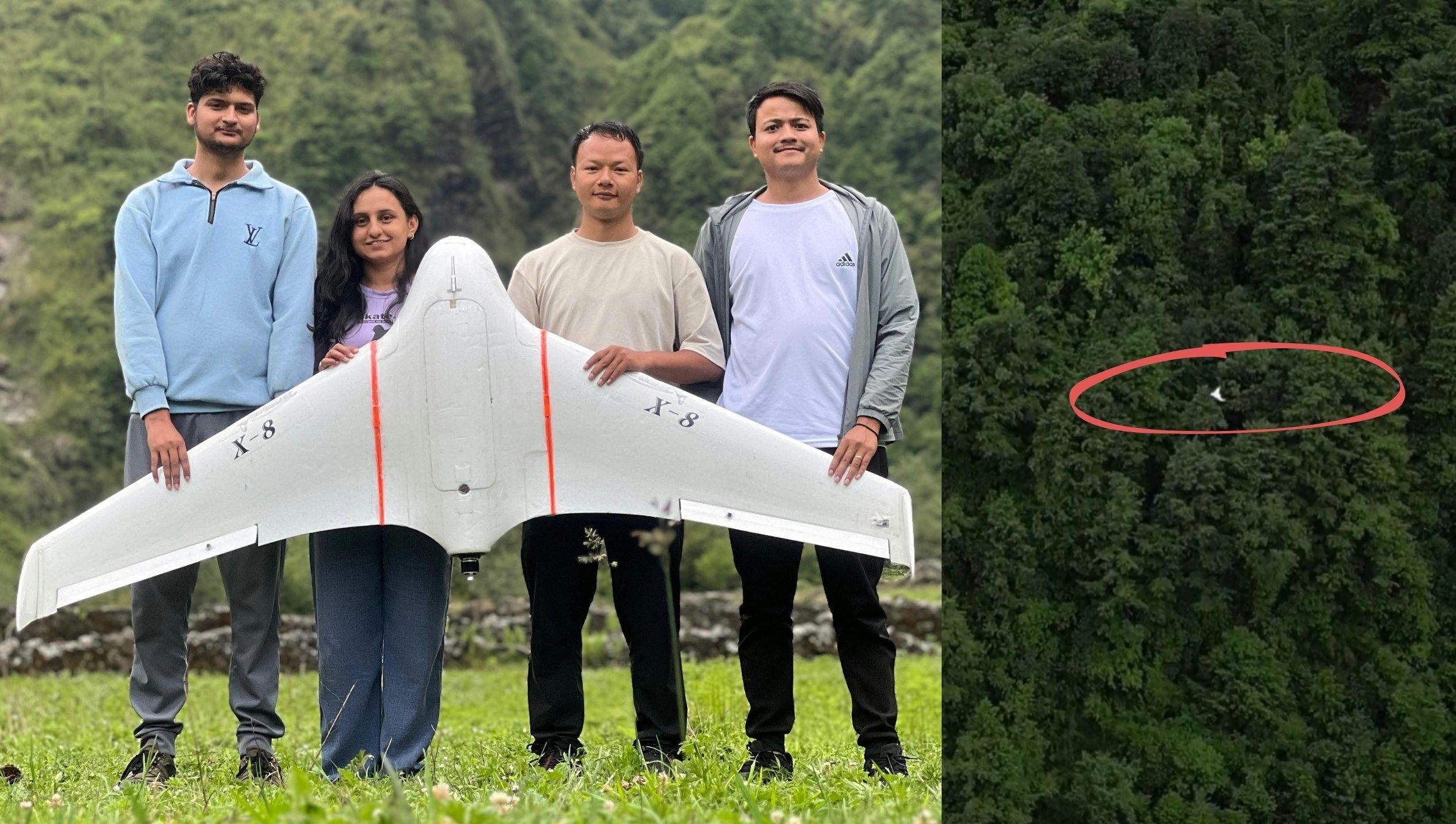
In response to this ongoing threat, a team of researchers at the Institute of Engineering, Tribhuvan University, has developed an innovative artificial intelligence system designed to enhance flight safety in Nepal’s rugged environment. Over the past 18 months, the team has focused on creating a real-time terrain analysis and autonomous navigation system aimed at preventing CFIT accidents.
Development and Capabilities of the AI System
The project, funded by the U.S. Air Force, is led by Dr. Sudip Bhattarai, with Professors Mahesh Chandra Luintel and Surya Prasad Adhikari serving as co-researchers. The team also includes Kamal Darlami, Ayush Bhattarai, Pratibha Bhandari, Nabin Bhandari, and Nischal Paudel. Dr. Bhattarai emphasized that the primary goal is to eliminate CFIT accidents in Nepal by ensuring aircraft safety even when visibility is severely limited.
The AI system continuously analyzes the surrounding terrain during flight and can autonomously guide the aircraft to avoid collisions if a risk is detected. This capability is particularly vital in Nepal, where natural disasters such as floods and landslides frequently isolate communities, making air delivery of emergency supplies both essential and hazardous.
Challenges and Industry Reception
Despite its potential, integrating this advanced technology into Nepal’s existing aviation infrastructure presents considerable challenges. The system’s reliability must be rigorously tested against the country’s volatile weather conditions. Additionally, the research team faces skepticism from pilots and aviation authorities who may be cautious about adopting automated systems in an industry where safety is paramount. Dr. Bhattarai acknowledged the resistance often encountered when introducing new technologies in aviation.
Market reactions are expected to focus on the promise of enhanced safety and accident reduction. However, traditional operators may hesitate to replace established procedures with AI-driven solutions. Meanwhile, international competitors are also advancing similar AI-based safety technologies, striving to maintain their competitive edge by emphasizing proven safety records.
Global Context and Future Prospects
CFIT accidents represent a significant global concern, causing billions of dollars in losses annually, particularly in the United States, where related research is ongoing. Although U.S. teams have developed systems enabling rapid aircraft climbs to avoid collisions, these technologies have yet to see widespread adoption. In Nepal, the consequences of CFIT accidents are often more severe, frequently resulting in tragic loss of life alongside financial costs.
As the Nepali research team continues to refine their AI system, its success will depend on overcoming technical, regulatory, and cultural barriers within the aviation sector. This development marks a crucial step toward safer mountain flights in Nepal, with the potential to transform aviation safety in similarly challenging environments worldwide.

Etihad Airways Suspends Airbus A380 Flights on Key Route

Aditya Birla Group Seeks Approval for Aircraft Leasing in GIFT City

Qatar Airways Highlights Innovation and Connectivity at Arabian Travel Market 2026

Hong Kong's Five-Year Plan Includes Andrew Fan's Aircraft Parts Processing Hub Proposal

ACIA Aero Leasing Delivers ATR72-600 to Air Nostrum

RTX Appoints Jill Albertelli as Head of Pratt & Whitney

TAT Technologies Joins Beyond Aero Hydrogen Aircraft Program

AURAK Study Highlights Barriers to Air Taxi Adoption in Emerging Economies

Xiamen Air Selects Altitude for 787 Maintenance at Heathrow

Etihad and Swissport Extend Global Partnership
