
图像

将人工智能洞察转化为可执行行动

立即加入 AeroGenie 候补名单!

热门趋势

Categories

New Long-Range Aircraft Delivery Signals Shift in Global Connectivity and Network Expansion
April 26, 2026By ePlane AI
New Long-Range Aircraft Delivery Signals Shift in Global Connectivity and Network Expansion
0
0
Long-Range Aircraft
Narrow-Body Jetliner
Network Expansion

New Long-Range Aircraft Delivery Signals Shift in Global Connectivity and Network Expansion

In April 2026, the aviation industry witnessed a significant milestone with the delivery of a new generation long-range narrow-body jetliner, designed to enhance passenger connectivity across continents. This advancement marks a notable evolution in aircraft technology, bridging the gap between traditional short-haul routes and those historically served by larger wide-body jets. The introduction of this aircraft signals a transformative shift in how airlines approach route planning and network expansion.

Next-Generation Capabilities Take Flight

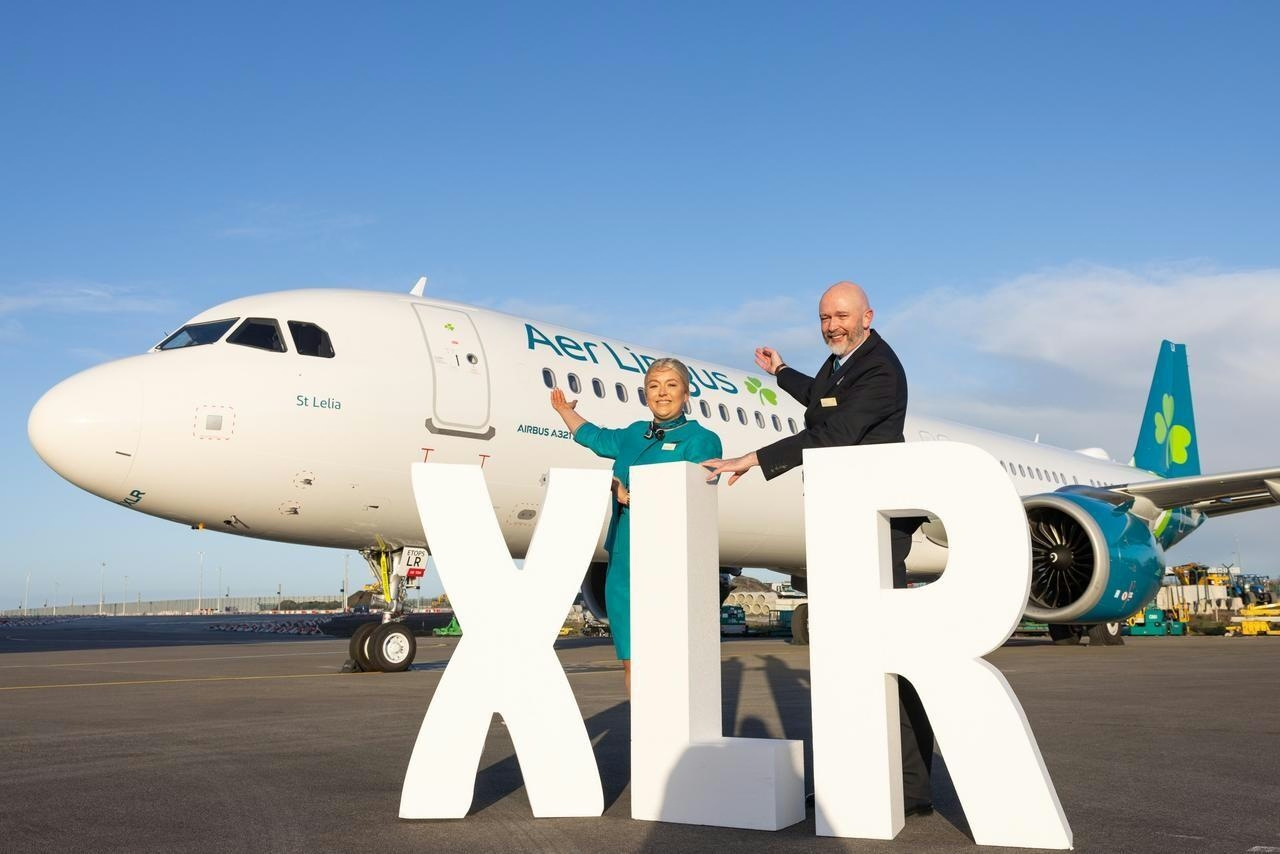
On April 24, 2026, the first extended-range version of a widely used single-aisle aircraft was officially delivered at the manufacturer’s facility in Hamburg, Germany. Developed by a leading European aerospace company, this model builds upon a family of aircraft initially launched in 2019. It incorporates a permanent rear center fuel tank alongside aerodynamic refinements, enabling longer nonstop flights, enhanced fuel efficiency, and greater operational flexibility. These technical improvements allow airlines to explore new direct routes that were previously unfeasible for narrow-body jets.

The delivery is significant for its potential to reshape airline networks by enabling frequent long-distance services without exclusive reliance on wide-body aircraft. This development opens opportunities for direct connections between secondary markets, reducing dependence on connecting flights and streamlining passenger travel.

Enhancing Global Connectivity

The extended-range technology embedded in this aircraft facilitates the expansion of route networks by linking distant cities, including underserved secondary markets. It offers airlines the ability to better match aircraft capacity to passenger demand without resorting to larger, less efficient jets. Additionally, the improved fuel performance supports both passenger and cargo operations over longer distances, enhancing overall operational efficiency.

Traditionally, single-aisle jets were confined to short- and medium-haul routes. The introduction of this extended-range variant now positions narrow-body aircraft as viable options for transcontinental and transoceanic flights, broadening their role within global aviation.

Strategic Fleet Renewal Amid Industry Shifts

This delivery forms part of a wider fleet modernization strategy, with plans to introduce up to 30 additional aircraft—through both leasing and purchases—over the coming years. This initiative supports airlines in upgrading aging fleets while expanding their long-range capabilities to meet evolving market demands.

The broader aviation landscape, however, remains influenced by geopolitical and competitive challenges. Ongoing tensions between the United States and China have disrupted Boeing’s delivery schedules and order book, prompting airlines to diversify their fleet strategies. Concurrently, airlines are negotiating compensation related to a costly, multi-billion-dollar project aimed at updating altimeters to prevent interference from 5G networks, with a new compliance deadline set for the end of 2029.

Competitive and Market Responses

The introduction of these advanced aircraft has elicited varied responses across the industry. In Brazil, authorities are actively encouraging the establishment of new long-haul air services connecting Europe and Asia, while GOL Linhas Aéreas is planning to expand its long-haul network utilizing Airbus A330 aircraft. Boeing’s ongoing industrial restructuring and efforts to restore profitability are expected to influence its competitive stance in the long-range market.

Looking forward, emerging technologies such as Panasonic’s multi-network low Earth orbit (LEO) connectivity, anticipated to launch in 2027, promise to further enhance the passenger experience and optimize airline operational strategies.

Implications for Travelers

For passengers, these developments translate into more direct flight options and improved connectivity between cities, potentially resulting in more efficient and comfortable journeys across continents. As airlines continue to modernize their fleets and integrate new technologies, travelers can anticipate access to a broader range of destinations and a new era of global air travel.

More news
Pilots' Union Calls for Judicial Review of AI-171 Crash, Opposes Interim Report Release

Pilots' Union Calls for Judicial Review of AI-171 Crash, Opposes Interim Report Release

Pilots' Union Demands Judicial Review of AI-171 Crash, Opposes Interim Report Release The Federation of Indian Pilots (FIP) has reiterated its demand for a judicial probe into the Air India AI-171 crash, urging authorities to withhold the release of any interim investigation report. The union cautioned that disclosing preliminary findings could lead to confusion and unfounded speculation surrounding the tragic incident. The AI-171 flight, a Boeing 787 Dreamliner bound for London, crashed into the BJ Medical College hostel in Ahmedabad’s Meghaninagar area shortly after takeoff on June 12 of the previous year. The disaster claimed 260 lives, marking one of the deadliest aviation accidents in recent Indian history. Concerns Over Investigation Transparency and Safety Standards The FIP’s position emerges amid intensified scrutiny of Air India’s operational and safety standards. The airline has been under pressure following a series of operational lapses and safety violations in recent years, with the AI-171 tragedy further amplifying concerns about its safety protocols. The pilots’ union insists that only a comprehensive judicial review can guarantee transparency and help restore public trust in the investigation process. Industry analysts have noted that the union’s opposition to releasing an interim report may delay the publication of the final investigation findings. Such a delay risks exacerbating damage to Air India’s already fragile reputation and could have wider repercussions for the aviation sector. The controversy surrounding the cause of the crash has attracted international attention, particularly given the involvement of a Boeing 787 Dreamliner. Questions about the investigation’s integrity may undermine investor confidence not only in Air India but also in Boeing, as the global aviation industry confronts renewed safety concerns. Calls for an Independent and Credible Inquiry The FIP emphasized the necessity of a credible and independent inquiry, warning that premature disclosure of incomplete findings could compromise the investigation’s integrity. As the debate over the investigation’s direction continues, stakeholders across the aviation industry remain vigilant, recognizing that the outcome may establish significant precedents for future accident investigations in India and beyond.
OlivePoint Capital Acquires Aviation R&D Facility Near Hawthorne Airport

OlivePoint Capital Acquires Aviation R&D Facility Near Hawthorne Airport

OlivePoint Capital Acquires Aviation R&D Facility Near Hawthorne Airport OlivePoint Capital has completed the acquisition of 3507 Jack Northrop Avenue, a 40,553-square-foot research and development and advanced manufacturing campus located adjacent to Hawthorne Municipal Airport in Los Angeles. This transaction, executed in partnership with a global alternative asset management firm, represents a strategic entry into Southern California’s aerospace and advanced manufacturing corridor, a region known for its concentration of high-technology industries. A Unique and Specialized Facility The property is fully leased under a long-term agreement to an investment-grade electric vehicle and advanced manufacturing company. Central to the campus is a rare fee-simple hangar structure, a form of ownership that accounts for less than 1% of comparable aviation hangar inventory nationwide, according to OlivePoint. The facility offers direct runway access and aviation zoning, complemented by a fully improved campus featuring specialized infrastructure. This includes a column-free airplane hangar with 40-foot clear heights, industrial R&D space, flexible office areas, and tenant improvements designed to support engineering, testing, and research activities. Adrian Bejarano, Managing Partner and Co-Founder of OlivePoint Capital, emphasized that the acquisition aligns with the firm’s strategy of investing in mission-critical properties characterized by strong tenant credit, functional scarcity, and enduring demand. He noted, “3507 Jack Northrop is exactly the type of differentiated real estate we seek to own, a highly specialized facility, in a supply-constrained market, leased to high-quality credit and deeply embedded in the tenant’s operations.” Bejarano further highlighted the potential for specialized R&D and advanced manufacturing facilities with long-duration cash flow to provide a compelling balance of downside protection and long-term value creation, particularly in markets with robust innovation ecosystems and limited competitive supply. Strategic Location and Market Context Situated near major technology and aerospace companies such as SpaceX, Tesla, and The Boring Company, the property benefits from its position within the South Bay region, which has emerged as a significant hub for advanced manufacturing, defense technology, and aerospace engineering. This area is supported by a skilled labor force and strong transportation infrastructure, factors that contribute to its appeal for high-tech industries. OlivePoint underscored the durability of the property’s income profile, citing its long-term lease structure, contractual rent escalations, mission-critical nature, and fee-simple ownership as key attributes that provide stable cash flow and long-term optionality. The acquisition also reflects OlivePoint’s broader investment focus on middle-market opportunities across industrial, retail, multifamily, credit-oriented, and special situations sectors, with an emphasis on assets offering durable cash flow and downside protection. Competitive Dynamics in California’s Aerospace Sector The acquisition occurs amid intense competition within California’s aerospace industry, dominated by major players such as SpaceX, Boeing, and Lockheed Martin. Market analysts suggest that OlivePoint’s entry into this specialized segment may stimulate further investment and interest in aviation R&D facilities. Competitors are likely to respond by intensifying their own research and development efforts, pursuing similar technological advancements, or forming strategic partnerships to leverage innovation opportunities and meet the growing demand for specialized infrastructure. As the aerospace and advanced manufacturing sectors continue to evolve rapidly, OlivePoint’s acquisition positions the firm to capitalize on long-term industry trends while navigating the complexities of a dynamic and competitive market environment.
GIFT City Seeks to Develop Aircraft Leasing and Global Treasury Hubs with Tamil Nadu Firms

GIFT City Seeks to Develop Aircraft Leasing and Global Treasury Hubs with Tamil Nadu Firms

GIFT City Pursues Aircraft Leasing and Global Treasury Hubs in Partnership with Tamil Nadu Firms India’s aviation sector is on the cusp of significant growth, with approximately 800 to 900 aircraft currently in operation and airlines having placed orders for nearly 2,200 additional planes. Despite this rapid expansion, the majority of aircraft financing and leasing activities continue to be conducted through established global hubs such as Dublin, Singapore, and Dubai. Officials at Gujarat International Finance Tec-City (GIFT City) are now aiming to shift this paradigm by promoting the financing of aircraft operating within India to be managed domestically. Regulatory Reforms and Strategic Initiatives A senior official at GIFT City emphasized the ambition to localize aircraft financing, describing India’s burgeoning aviation market as a once-in-a-generation opportunity for the International Financial Services Centre (IFSC) at GIFT City. This vision has gained momentum following recent regulatory reforms. The implementation of the Cape Town Convention framework earlier this year has enhanced lenders’ rights over aviation assets, providing stronger legal protections. Additionally, the International Financial Services Centres Authority (IFSCA) introduced a special purpose vehicle (SPV) framework in May 2026, which separates lenders and lessors. This structural innovation offers greater assurance to financiers and could position India as a more attractive destination for aviation finance. In pursuit of this goal, GIFT City is actively seeking collaboration with firms in Tamil Nadu to develop hubs focused on aircraft leasing and global treasury operations. This partnership aims to leverage regional expertise and resources to build a competitive financial ecosystem. Challenges and Competitive Landscape Despite these promising developments, the initiative faces considerable challenges. Regulatory complexities persist, and India must contend with well-established financial centers such as Singapore and Hong Kong, which benefit from mature infrastructure and regulatory certainty. Developing comparable infrastructure at GIFT City will require substantial investment and coordinated efforts. Market responses to GIFT City’s ambitions have been mixed. While the recent regulatory changes are viewed positively, skepticism remains regarding India’s capacity to attract significant foreign investment. Concerns about political stability and the consistency of regulatory policies continue to weigh on investor confidence. This is reflected in the recent trend of declining net foreign direct investment (FDI) in India, despite strong gross inflows, underscoring the ongoing challenge of sustaining investor trust. Furthermore, established hubs like Singapore and Hong Kong are expected to respond competitively, potentially enhancing incentives to retain their positions as preferred destinations for global investors and lessors. As India’s aviation market expands, the success of GIFT City’s efforts to establish itself as a center for aircraft leasing and global treasury operations will hinge on its ability to overcome regulatory and infrastructural obstacles, build investor confidence, and effectively compete with entrenched international financial centers.
Why First Class Is Disappearing on Major Airlines

Why First Class Is Disappearing on Major Airlines

The Decline of First Class on Major Airlines The airline industry is experiencing a profound transformation, most notably reflected in the steady disappearance of traditional first class cabins. Over recent years, global first class capacity has diminished by more than 40%, driven by evolving market dynamics, technological progress, and increasing financial pressures. What was once the epitome of luxury travel—characterized by lavish service and generous personal space—is now being systematically phased out by legacy carriers. Instead, airlines are reconfiguring their long-haul fleets with denser, revenue-optimized layouts that prioritize business travelers and corporate contracts, signaling a shift in focus from exclusivity to profitability. The Evolution of Premium Travel This change does not indicate a decline in demand for premium travel but rather its transformation. The distinction between business class and first class has become increasingly blurred as airlines enhance business class offerings to meet modern travelers’ expectations for privacy and comfort. A decade ago, business class typically featured lie-flat seats with limited privacy. Today, it boasts fully enclosed suites, wireless charging, advanced climate controls, and custom mattresses—amenities that rival or even surpass the standards of first class in the past. Consequently, the rationale for paying a premium of three to four times the business class fare for first class has largely eroded. Airlines have developed business class products so competitive that maintaining a separate, low-density luxury tier is often commercially unjustifiable on most routes. Economic factors further reinforce this trend. Industry profits are projected to halve this year amid surging fuel costs and geopolitical disruptions, including the ongoing Middle East conflict, which has driven up prices and disrupted critical air corridors. In response, airlines are cutting unprofitable routes and concentrating on premium seating to safeguard margins. The emphasis is firmly on high-yield business travelers, often at the expense of both economy and first class cabins. Even budget carriers such as Frontier are grappling with these pressures, managing the fallout from Spirit Airlines’ collapse while striving to enhance customer service amid rising operational costs. A Global Shift in Premium Offerings A clear polarization is emerging worldwide. While many U.S. and European airlines lead the retreat from first class, some East Asian and Middle Eastern carriers continue to offer ultra-luxury suites as a brand differentiator, though these remain confined to select flagship routes. For the majority of flights, business class now delivers the privacy, comfort, and amenities that once defined first class, rendering a separate luxury cabin increasingly unnecessary. Ultimately, the disappearance of first class reflects not a decline in premium travel but its ongoing evolution. As business class absorbs the finest elements of first class, airlines are adapting to a new landscape where luxury is being redefined and profitability remains paramount.
SimpliFlying’s Shashank Nigam on How Agentic AI Will Shape the Future of Airline Travel

SimpliFlying’s Shashank Nigam on How Agentic AI Will Shape the Future of Airline Travel

SimpliFlying’s Shashank Nigam on How Agentic AI Will Shape the Future of Airline Travel The Transformative Role of Agentic AI in Airline Retailing At the recent APEX FTE EMEA and Ancillary & Retailing event, Shashank Nigam, Founder and CEO of SimpliFlying, delivered a keynote address emphasizing the profound impact that artificial intelligence—specifically agentic AI—will have on the future of airline travel. Nigam cautioned that AI will not merely enhance existing airline retailing practices but will fundamentally determine which carriers succeed in engaging tomorrow’s travelers. Nigam detailed how airlines generate revenue through passenger services, cargo, and ancillary products, highlighting the urgent need for smarter, AI-driven retail strategies. He positioned agentic AI as the next pivotal evolution in airline distribution, following the transformative web and mobile revolutions. Unlike previous digital channels, these AI agents will act autonomously on behalf of travelers, performing tasks such as searching, comparing, recommending, and even completing transactions without direct human involvement. Reflecting on the industry’s progress, Nigam remarked, “Ten years ago, we thought transforming airlines into retailers was the destination. But that was just preparation for the age of AI.” He stressed that as AI agents become the primary interface between travelers and airlines, carriers with clear, structured, and easily comparable offers will be best positioned to thrive. Conversely, complex fare rules, fragmented ancillary services, and opaque bundles will become significant commercial liabilities in an AI-driven marketplace. Industry Perspectives and Emerging Challenges Dr. Joe Leader, CEO of the APEX Group, reinforced Nigam’s message by noting that agentic AI will not reward airlines that have simply digitized existing complexities. Instead, success will favor those that have made travel easier to understand, compare, and ultimately appreciate. This shift underscores the necessity for airlines to simplify and clarify their offerings to remain competitive. However, the integration of agentic AI introduces new challenges. As airlines accelerate efforts to embed AI into their retail and distribution frameworks, concerns around governance, security, and data quality are intensifying—particularly in high-value segments such as luxury travel. The industry faces the delicate task of harnessing AI’s potential to personalize and enhance customer relationships while safeguarding control over customer data and direct interactions. Market reactions to agentic AI remain varied. Some stakeholders view AI as a transformative opportunity to streamline operations and elevate the customer experience. Others perceive it as a threat that could undermine brand differentiation and erode customer loyalty. In response, competitors are investing in proprietary AI models and deploying agentic AI for specialized functions, with a strong emphasis on reliability, data integrity, and privacy to maintain a competitive advantage. Navigating the AI-Driven Future of Airline Travel Nigam emphasized that thriving in the AI era will require more than competitive pricing. Airlines must clearly communicate the value of their fares and ancillary products, as AI agents will interpret traveler intent—whether seeking the least stressful family trip or the optimal loyalty redemption—and translate these preferences into actionable options. In this evolving landscape, carriers offering transparent, structured, and easily comprehensible products will be favored by both AI agents and travelers alike. As the airline industry stands on the cusp of this technological transformation, Nigam’s message is unequivocal: airlines must adapt their retail strategies for an AI-first world or risk being left behind as agentic AI reshapes how travelers select and experience air travel.
Aerospace Experts Question the Goals of AI Integration in Aviation

Aerospace Experts Question the Goals of AI Integration in Aviation

Aerospace Experts Question the Goals of AI Integration in Aviation Industry Challenges and the Role of AI The AIAA AVIATION Forum in San Diego commenced with a candid examination of the true objectives behind incorporating artificial intelligence into aerospace. The discussion centered on whether AI can effectively address the industry's most urgent challenges: increasing complexity, rising costs, and the imperative for enhanced speed and safety. A panel moderated by Graham Warwick, executive editor of Aviation Week, convened leaders from prominent aerospace manufacturers, defense contractors, and the U.S. Air Force Research Laboratory (AFRL). The fundamental inquiry posed was: what specific problems is AI intended to solve within the aerospace sector? JD McFarlan, vice president of Air Vehicle Engineering at Lockheed Martin Aeronautics, contended that the primary issue confronting the industry is not AI itself but the escalating complexity of systems. With an expanding array of sensors, software platforms, and mission scenarios, conventional tools have become inadequate. McFarlan emphasized that engineers currently spend excessive time sifting through decades of data rather than making timely decisions. He asserted that the objective extends beyond accelerating activity to achieving faster, validated decision-making. Lockheed Martin exemplifies this approach through initiatives such as Project Overwatch, which employs AI to retrain F‑35 combat identification algorithms between flights. Additionally, MARVIN, a Retrieval Augmented Generation large language model, analyzes over 40 years of F‑16 quality data to assist engineers in resolving production challenges more efficiently. These projects illustrate AI’s function as an enabler of more rapid and informed engineering and operational decisions, rather than as an independent solution. Accelerating Innovation and Overcoming Integration Challenges Venke Sankaran, chief scientist in the Air Warfare Directorate at AFRL, highlighted AI’s potential to expedite technology discovery and the transition of new capabilities into deployable systems. He noted that traditional development processes are often too slow, relying heavily on sequential risk mitigation. Sankaran advocated for overlapping tasks and embracing calculated risks to accelerate progress. AFRL’s recent organizational restructuring and investments in modular, scalable unmanned systems, hypersonics, and cost-effective mass production reflect a strategic shift toward capability-driven portfolios where affordability is paramount. Despite these promising prospects, integrating AI into aviation presents significant challenges. Initial deployment typically incurs substantial costs and demands comprehensive training for existing personnel. There is also a risk of underestimating AI’s complexity, which can disrupt operations if foundational business processes are not optimized beforehand. Industry data underscores the necessity of addressing these fundamental processes prior to layering AI technologies, emphasizing the importance of a strategic approach that balances technological innovation with organizational readiness. Market Dynamics and Industry Responses Market reactions to AI integration remain varied. Established industry players often exhibit skepticism, reluctant to abandon proven practices in favor of emerging, unproven technologies. Conversely, more progressive companies are accelerating AI investments to secure a competitive advantage, potentially widening the divide between early adopters and more cautious firms. Global original equipment manufacturers such as Airbus and Boeing are advancing digital transformation efforts. Gil Perez-Abraham, head of Engineering at the Airbus Engineering Center in Wichita, Kansas, described how AI and digital tools are instrumental in managing global engineering teams, addressing increasing complexity, and expediting aircraft development—all while upholding stringent safety and certification standards. As the aerospace sector contends with high demand and persistent production backlogs, experts agree that AI’s greatest promise lies in its capacity to streamline decision-making and boost productivity. However, realizing these benefits will require deliberate planning, investment in human capital and processes, and a readiness to embrace calculated risks.
Uganda-Boeing Agreement Sparks Competition for Dreamliner Engines

Uganda-Boeing Agreement Sparks Competition for Dreamliner Engines

Uganda-Boeing Agreement Sparks Competition for Dreamliner Engines A Landmark Deal for Uganda Airlines Uganda Airlines has taken a decisive step in its fleet expansion strategy by committing to a significant order of Boeing aircraft, resolving longstanding questions about the national carrier’s future direction. Announced on June 10, the agreement encompasses ten aircraft: four Boeing 787 Dreamliners, four Boeing 737 MAX 8s, and two converted cargo freighters—a Boeing 767 freighter and a Boeing 737 Boeing Converted Freighter (BCF). Valued at approximately Ush3.7 trillion ($984 million), this deal represents one of the largest aviation investments in Uganda’s history and marks a clear pivot toward Boeing after an extended competition with Airbus. Government officials confirmed that an initial deposit of Ush460 billion ($122 million) was scheduled for release on June 11, converting the commitment into a firm order and enabling Boeing to commence production planning. Deliveries are expected to begin in 2027 with the cargo freighters, while the new passenger aircraft are slated for arrival around 2031. To manage capacity in the interim, Boeing has committed to supporting Uganda Airlines with leasing arrangements. This order is a notable victory for Boeing in the African aviation market, particularly as Uganda Airlines currently operates Airbus A330-800neos on its long-haul routes to London, Mumbai, and Dubai. Industry analysts had anticipated that Airbus would leverage this existing relationship to secure future fleet growth. However, Uganda Airlines ultimately selected the Boeing 787 Dreamliner, viewing it as a more suitable long-term solution for its intercontinental expansion ambitions. The Engine Supplier Contest While Boeing has secured the airframe order, the choice of engine supplier for the Dreamliners remains undecided, setting the stage for a competitive battle between General Electric Aerospace and Rolls-Royce. The Boeing 787 is distinctive among widebody aircraft in allowing airlines to choose between two competing engine models: the GE GEnx-1B and the Rolls-Royce Trent 1000. This decision carries heightened significance amid recent industry concerns over engine supply shortages. United Airlines CEO Scott Kirby has publicly criticized aircraft manufacturers for their reliance on single engine suppliers, citing global shortages that have disrupted airline operations. Uganda Airlines’ engine selection will be critical in avoiding similar operational challenges and ensuring reliability. Rolls-Royce, the incumbent supplier powering Uganda Airlines’ Airbus A330neo fleet with its Trent 7000 engines, faces scrutiny from airline executives who have expressed dissatisfaction with the Trent 7000’s limited time-on-wing and higher maintenance requirements. These issues have contributed to growing interest in the Dreamliner platform and the GE GEnx engine, which is widely regarded for its reliability and longer maintenance intervals. Broader Market Implications The Uganda-Boeing agreement unfolds against a backdrop of shifting dynamics in the global aviation market, including major recent deals such as the U.S.-China aircraft agreement, which may intensify competition among engine suppliers. As Uganda Airlines embarks on this next phase of growth, the outcome of the Dreamliner engine selection will not only influence the carrier’s operational future but could also have broader implications for Boeing and the leading engine manufacturers competing for market share.
Aerospace Company Partners to Develop Next-Generation High-Thrust Jet Engines

Aerospace Company Partners to Develop Next-Generation High-Thrust Jet Engines

Aerospace Giants Expand Partnership to Advance Next-Generation High-Thrust Jet Engines GKN Aerospace and GE Aerospace have announced an expanded collaboration aimed at accelerating the development of next-generation high-thrust jet engines. Building on a partnership that has spanned over four decades, the renewed agreement focuses on integrating advanced technologies, manufacturing and assembling fan cases, and enhancing repair capabilities for complex engine components. This strategic alliance underscores both companies’ commitment to innovation and sustainability in aerospace propulsion. Collaboration Focus and Technological Advancements GKN Aerospace, a UK-based tier 1 supplier renowned for its expertise in airframes, engine structures, landing gear, and electrical systems, will deepen its cooperation with GE Aerospace, a global leader operating more than 40,000 commercial and 26,000 military jet engines worldwide. The partnership will concentrate on several of GE’s flagship engines, including the GEnx, CF6, GE90, and the latest GE9X model. Under the terms of the agreement, GKN Aerospace will introduce sustainable material solutions and secure life-of-program contracts for the production and assembly of fan cases. The company will supply 100% of the fan cases for the GEnx, CF6, and GE90 engines, and 50% for the GE9X. These efforts are designed to support GE Aerospace’s objectives of reducing carbon emissions and lowering manufacturing costs, aligning with broader industry goals for environmental sustainability. The GEnx engine, which powers the Boeing 787 Dreamliner and 747-8, remains GE’s fastest-selling high-thrust engine, with over 3,000 units either in operation or on order. The partnership will prioritize the development and validation of upgraded components between 2024 and 2030, with a particular emphasis on alternative materials to reduce the environmental impact of manufacturing processes. Joakim Andersson, President of GKN Aerospace’s Engines business, highlighted the significance of the collaboration, stating, “GKN Aerospace will contribute component design expertise and advanced technology to help the GEnx program achieve its emissions reduction and cost targets.” He further emphasized that the partnership positions both companies to “develop the right technologies and solutions for world-leading engines such as the GEnx and CF6 for today and the future.” Expanded Maintenance Role and Industry Challenges In addition to manufacturing, the agreement expands GKN Aerospace’s role within GE’s maintenance network, enabling the company to provide specialized repair services for the GEnx engine. This extension leverages GKN’s global expertise in structural design and complex fabrications, enhancing the overall lifecycle support for GE’s high-thrust engines. Despite the promising outlook, the partnership faces several challenges common to ambitious aerospace projects. Securing adequate funding, managing technological risks, and ensuring compliance with evolving regulatory standards will be critical to the initiative’s success. Investor interest in innovative engine technologies has increased, reflecting market confidence, yet competition remains intense. Rivals such as Hanwha Aerospace are expected to accelerate their own development programs in response to this collaboration. Furthermore, recent geopolitical developments, including the breakdown of the Franco-German FCAS fighter jet project, highlight the potential impact of international tensions on collaborative aerospace ventures. Both GKN Aerospace and GE Aerospace will need to carefully navigate these complexities as they strive to deliver the next generation of high-thrust, sustainable jet engines.
Clean Aviation Expands Regional Innovation Network in Germany

Clean Aviation Expands Regional Innovation Network in Germany

Clean Aviation Expands Regional Innovation Network in Germany The Clean Aviation Joint Undertaking (CAJU) has formalized a strategic partnership with the German states of Brandenburg and Saxony to accelerate the development of low-emission aircraft technologies. Announced at the ILA Berlin Air Show, this cooperation agreement aims to bolster Europe’s leadership in sustainable aviation by fostering closer collaboration between CAJU and regional governments. Advancing Low-Emission Aircraft Technologies The agreement commits the partners to develop a joint technical roadmap aligned with Clean Aviation’s Strategic Research and Innovation Agenda. This roadmap will prioritize the advancement of next-generation low-emission aircraft tailored for regional and short-to-medium-haul markets. Brandenburg and Saxony have pledged over €10 million in new regional funding through 2028 to support projects under this initiative. This investment builds upon several hundred million euros already allocated since 2021 toward research programs and technology infrastructure, focusing on critical areas such as hybrid-electric propulsion and other disruptive technologies essential for future aircraft development. Strengthening Europe’s Aerospace Ecosystem Beyond accelerating technological innovation, the partnership seeks to reinforce Europe’s industrial capabilities and competitiveness in the aerospace sector. By linking regional industry clusters, research institutions, and small and medium-sized enterprises (SMEs) with Clean Aviation’s broader European innovation network, the agreement aims to enhance the resilience of the aerospace supply chain. The composites sector, in particular, is expected to benefit from new opportunities in lightweight structures, advanced manufacturing processes, and next-generation aircraft architectures—key elements in reducing aviation emissions. Brandenburg and Saxony, home to a dense concentration of aerospace companies and research centers, are positioned as pivotal contributors to future aircraft development programs. Clean Aviation, a public-private partnership under Horizon Europe, has set an ambitious goal of reducing CO₂ emissions from future short- and medium-range aircraft by 30% through the deployment of disruptive technologies. Challenges and Strategic Implications Despite the promise of this expanded collaboration, significant challenges remain. Scaling up emerging technologies and securing sustained funding are critical hurdles, particularly as Europe faces intensifying competition from China and the United States in the race to lead next-generation aviation. Market analysts anticipate that the agreement will stimulate increased investment in European cleantech firms, while global competitors may accelerate their own research, development, and market entry strategies in response. The success of these initiatives will depend heavily on the European Union’s legislative framework and funding mechanisms. Strong EU-level support is deemed essential for the development and deployment of zero-emission and hybrid-powered aircraft, ensuring Europe’s continued leadership in the transition toward sustainable commercial aviation. This agreement with Brandenburg and Saxony expands Clean Aviation’s growing network of regional partnerships, which already includes regions such as Occitanie, Campania, Piedmont, Hamburg, Andalusia, and Portugal. It reflects a broader European strategy to align regional investments with the aviation sector’s decarbonization goals and to safeguard Europe’s competitiveness in the global aerospace industry.
New Software Brings Native Runway Lighting to Simulators

New Software Brings Native Runway Lighting to Simulators

Lasa Dynamics Launches LightPath Software for Enhanced Runway Lighting in Simulators Lasa Dynamics has unveiled LightPath, an innovative software solution that introduces native light objects within the Prepar3D v5 simulation platform. This advancement enables the accurate modeling of runway, taxiway, and approach lighting by employing real photometric parameters such as candela intensity, beam spread, color temperature, and elevation profiles. Unlike traditional texture or sprite-based lighting methods, LightPath integrates directly into the simulation environment, allowing for a more authentic and dynamic lighting experience. Native Integration and Real-Time Rendering Ignacio Soriano, Chief Technology Officer of Lasa Dynamics, highlights that Prepar3D v5’s graphics engine processes these light objects in real time through Direct3D 12. This native integration ensures that the lighting behavior adjusts correctly based on the pilot’s position within the simulated scene, enhancing realism and immersion. The software’s approach moves beyond visual approximations by defining each light source through precise physical parameters, thereby delivering a higher level of fidelity. Meeting Certification Standards for Flight Simulators LightPath is specifically designed for simulator manufacturers utilizing Prepar3D who require runway lighting fidelity compliant with FNPT-II certification under the European Union Aviation Safety Agency’s (EASA) CS-FSTD(A) standards. The software is particularly valuable for Approved Training Organizations (ATOs) and academic institutions certifying simulators up to the FNPT-II level. Soriano emphasizes that LightPath’s configurations align with ICAO categories I, II, and III, and are fully auditable and reproducible. This capability provides certification authorities with objective evidence during the approval process, addressing a critical need for verifiable and standardized lighting simulation in flight training devices.
line









