
将人工智能洞察转化为可执行行动

热门趋势
Categories
ODK Unveils Technologies for PD-35 Engine: 400-Ton Unit and New Manufacturing Methods
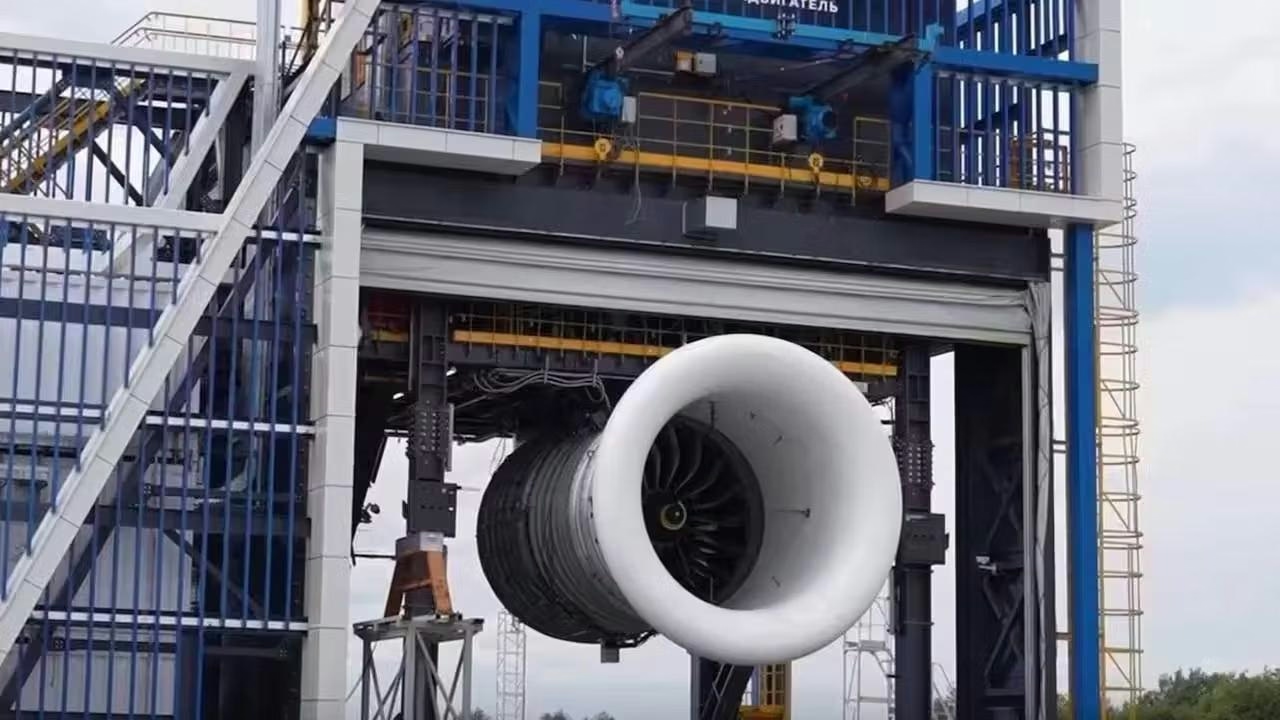
ODK Introduces Advanced Technologies for PD-35 Engine Production
United Engine Corporation (ODK) has unveiled a range of cutting-edge manufacturing technologies designed to support the development and production of next-generation aircraft engines, including the PD-35 demonstrator. These innovations were presented at the ODK-Salut facility during a meeting of the scientific department of the Academy of Aviation and Aeronautics Sciences, which gathered over 40 industry experts.
Innovations in Manufacturing Techniques
A centerpiece of the presentation was the PSTI-400 friction welding unit, a powerful machine capable of exerting more than 400 tons of force. This technology facilitates the joining of dissimilar materials by generating heat through friction and subsequently pressing the components together under high axial pressure. The process creates strong, durable joints without melting the materials, a critical advantage in engine manufacturing. A model rotor section for the PD-35 demonstrator has already been successfully fabricated and tested using this method.
ODK also highlighted advancements in the production of blisks—integral rotor components where the disk and blades are manufactured as a single piece. Electrochemical processing emerged as a key technique, enabling the creation of complex geometries with exceptional precision. Additional technologies discussed included isothermal forging, laser shock peening, and additive repair methods for monowheels. These approaches collectively aim to improve production efficiency and allow for the restoration of expensive parts, reducing the need for full replacements.
Industry Implications and Challenges
While these technological advancements position ODK at the forefront of engine manufacturing innovation, they also introduce significant challenges. The implementation of sophisticated methods such as friction welding and electrochemical processing requires substantial capital investment and operational expertise. Market responses have been varied; some investors express concern over the financial and logistical demands of adopting these technologies, whereas others remain optimistic about the potential improvements in engine performance and efficiency.
The competitive environment further complicates the landscape. The global turbofan engine market is currently dominated by established manufacturers including GE Aerospace, Rolls-Royce, and Safran. ODK’s new manufacturing capabilities may prompt these competitors to adopt similar techniques or develop alternative innovations to preserve their market share. Industry analysts suggest that ODK’s advancements could serve both as a competitive threat and as a catalyst for broader technological progress within the sector.
Some of ODK’s newly introduced solutions have already been validated through practical application in previous projects. Notably, experience gained from the PD-14 engine program—especially in the use of high-efficiency brush seals—is being considered for integration into ground-based gas turbine units.
As ODK advances the PD-35 program, its commitment to pioneering manufacturing technologies highlights both the opportunities and the complexities inherent in developing the next generation of aircraft engines.

Etihad Airways Suspends Airbus A380 Flights on Key Route

Aditya Birla Group Seeks Approval for Aircraft Leasing in GIFT City

Qatar Airways Highlights Innovation and Connectivity at Arabian Travel Market 2026

Hong Kong's Five-Year Plan Includes Andrew Fan's Aircraft Parts Processing Hub Proposal

ACIA Aero Leasing Delivers ATR72-600 to Air Nostrum

RTX Appoints Jill Albertelli as Head of Pratt & Whitney

TAT Technologies Joins Beyond Aero Hydrogen Aircraft Program

AURAK Study Highlights Barriers to Air Taxi Adoption in Emerging Economies

Xiamen Air Selects Altitude for 787 Maintenance at Heathrow

Etihad and Swissport Extend Global Partnership
