
将人工智能洞察转化为可执行行动

热门趋势
Categories
Philippine Airlines Plans Next Phase of Fleet Renewal as Growth Resumes
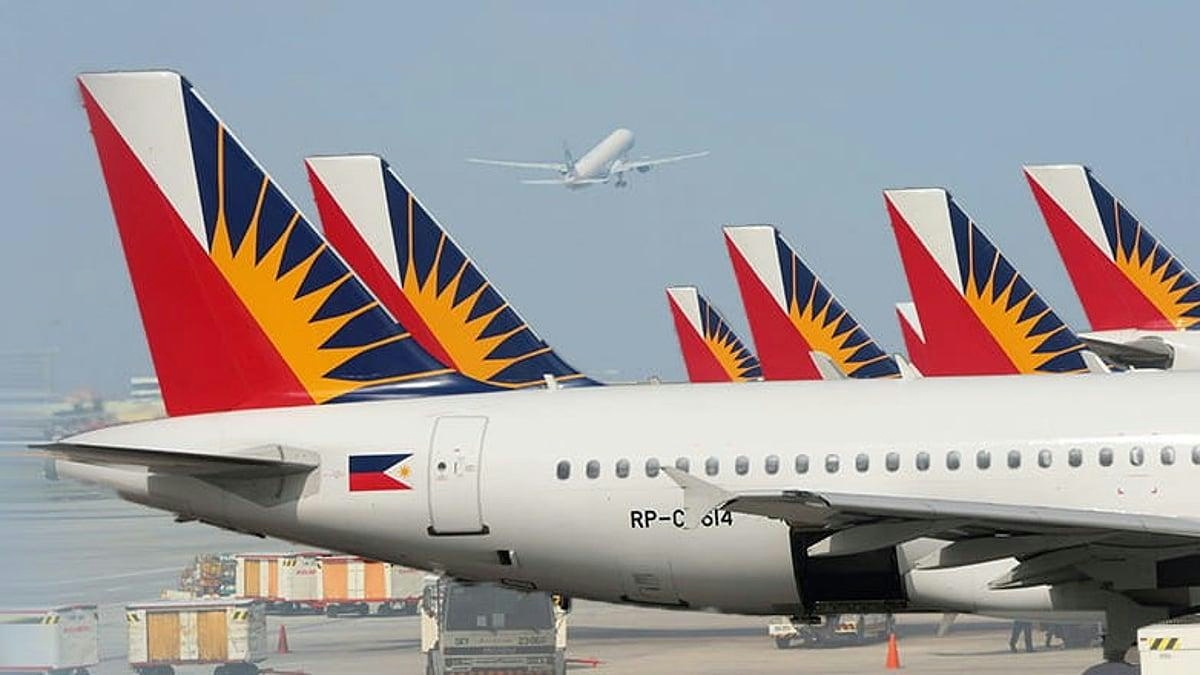
Philippine Airlines Advances Fleet Renewal Amid Industry Evolution
Philippine Airlines (PAL) is preparing for a pivotal year in 2025, marked by a leadership change and significant developments in its fleet modernization strategy. The airline is set to receive its first Airbus A350-1000 aircraft later that year, a milestone in its ongoing efforts to upgrade its fleet. Additionally, deliveries of the Airbus A321neo will resume in 2026 after a lengthy hiatus, with further orders under consideration as PAL seeks to expand and refresh its aircraft lineup.
Strategic Leadership and Market Positioning
This new phase of fleet renewal coincides with the appointment of Richard Nuttall as president in May 2025. The introduction of the A350-1000s is expected to strengthen PAL’s operations in North America, its most critical international market. Domestically and regionally, the airline faces mounting competition from low-cost carrier Cebu Pacific. This competitive landscape compels PAL to strategically target market segments that complement its full-service business model, ensuring it maintains a distinct value proposition amid intensifying rivalry.
Challenges and Competitive Dynamics
Despite the promise of modernization, PAL’s ambitious fleet renewal presents considerable challenges. The substantial financial outlay required for new aircraft acquisitions, coupled with the complexities of integrating advanced aviation technologies, raises concerns among investors about potential financial pressures. These challenges are particularly pronounced given the prevailing economic uncertainties. The airline’s capacity to effectively manage these risks will be a key factor in its success during this critical period.
Competitors are expected to respond to PAL’s fleet enhancements. Cebu Pacific and AirAsia Philippines may recalibrate their strategies to remain competitive against PAL’s upgraded fleet. This regional dynamic reflects a broader global trend, exemplified by Austrian Airlines’ recent order of 22 A320neo-family aircraft. Such moves highlight the industry-wide emphasis on fleet modernization aimed at improving operational efficiency and reducing environmental impact, factors that will continue to shape competitive strategies in the region.
Infrastructure Developments and Future Outlook
Both PAL and its competitors stand to gain from ongoing airport expansion and infrastructure projects in the Manila metropolitan area. These developments are anticipated to alleviate congestion and accommodate the expected growth in air travel demand, providing a supportive environment for the airlines’ growth ambitions.
As Philippine Airlines embarks on this next chapter, the interplay between fleet modernization, competitive pressures, and evolving market conditions will be instrumental in defining its future trajectory.

Etihad Airways Suspends Airbus A380 Flights on Key Route

Aditya Birla Group Seeks Approval for Aircraft Leasing in GIFT City

Qatar Airways Highlights Innovation and Connectivity at Arabian Travel Market 2026

Hong Kong's Five-Year Plan Includes Andrew Fan's Aircraft Parts Processing Hub Proposal

ACIA Aero Leasing Delivers ATR72-600 to Air Nostrum

RTX Appoints Jill Albertelli as Head of Pratt & Whitney

TAT Technologies Joins Beyond Aero Hydrogen Aircraft Program

AURAK Study Highlights Barriers to Air Taxi Adoption in Emerging Economies

Xiamen Air Selects Altitude for 787 Maintenance at Heathrow

Etihad and Swissport Extend Global Partnership
